





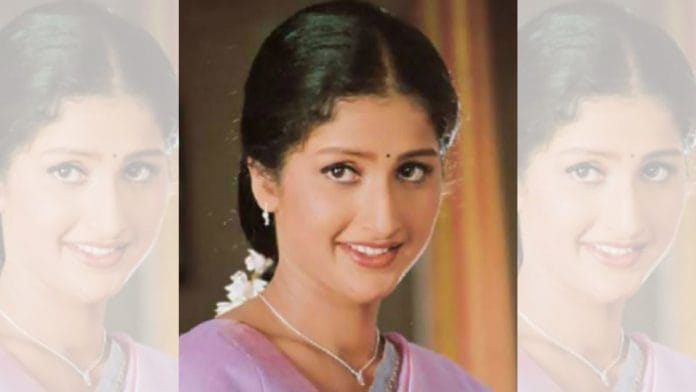



New Delhi: Upholding the conviction of engineering student Gudipalli Siddhartha Reddy for abetment to suicide of 21-year-old Indian actor Pratyusha in a 2002 case, the Supreme Court has concluded that it was a “suicide pact”.
With this decision, the top court closed the appeal that was filed against a 2011 Andhra Pradesh high court judgment in a case that had gripped public attention for over two decades, with allegations of murder and rape complicating the case.
The court said: “in light of the deceased’s own statement, hospital records, forensic reports and expert opinions, allegations of rape or murder are devoid of legal or factual foundation.”
“The convergence of multiple independent expert opinions lends overwhelming credibility to the conclusion that the deceased died of poisoning,” the top court said.
On Tuesday, a bench of justices Rajesh Bindal and Manmohan, in a 60-page ruling directed Siddhartha Reddy to surrender within four weeks to serve his sentence, 24 years after the incident. Reddy will have to serve two years in jail, as per the top court order.
Dismissing the appeals filed by both Reddy and the victim’s mother (a government school teacher), the court confirmed that the 2002 tragedy was the result of a suicide pact gone wrong rather than the sensationalised claims of murder and gang rape that initially shadowed the investigation. While Reddy challenged his conviction, the victim’s mother sought the case’s trial under rape and murder charges.
In 2004, a sessions court had convicted Reddy for abetment to suicide, a decision upheld with modifications in the fine component by the high court in 2011, and finally affirmed by the Supreme Court in 2026.
The case dates back to the morning of 23 February 2002, when Siddhartha Reddy informed Pratyusha that his parents were vehemently opposed to their decade-long relationship, with his mother even threatening suicide if they married. Following an emotional meeting outside a salon later that afternoon, the couple left in Reddy’s car. By 8 pm, both were admitted to a hospital in Hyderabad after consuming Nuvacron, a highly toxic pesticide.
While Pratyusha passed away the following day, Reddy survived and was eventually discharged from the hospital within a month. The initial investigation was diverted by a controversial postmortem report by Dr B. Muni Swamy, who claimed the actor was gang-raped and strangled—claims he aired on television even before receiving the forensic report or submitting the postmortem to the police, as per procedure.
The SC noted that Dr Swamy had gone out of turn to conduct the post-mortem even though he was not the doctor on duty; and even after the forensic report confirmed that the couple had consumed an insecticide, Dr Swamy had “stuck to his opinion that the death was due to manual strangulation and sexual assault”.
After this difference in opinion on the cause of death, the Andhra Pradesh government constituted a three-member expert committee which, in its report, also concluded that the death was due to poisoning and there were no signs of strangling or sexual assault.
The SC noted: “Dr Swamy in his affidavit in March 2002 filed before the high court wrongly represented that there was swelling of the neck of the deceased and that there were injuries on the back of the thighs even though he had not mentioned these injuries in his postmortem report in February 2002.”
Petitions were filed before the high court to transfer the case to the CBI, and in March 2002, this was done.
Medical truth vs sensationalism
A core component of the Supreme Court’s reasoning was the dismissal of the murder and rape allegations. The court relied on medical and visual evidence. It specifically relied on the mother’s “particularly telling” testimony where the mother “admitted that when she saw her daughter in the ICU of CARE Hospital, the latter was not only alive but also conscious, able to respond in a feeble voice to the doctor’s questions and her legs were trembling. Such a condition is medically inconsistent with strangulation. The fact that the deceased was able to speak and exhibit motor activity demonstrates beyond doubt that strangulation was not the cause of death.”
The court also noted that Pratyusha was “conscious” upon hospital admission as she personally informed Dr Laxmi Kantaiah that she had consumed pesticide, a statement the court viewed as having “great evidentiary weight”.
Plus, three witnesses confirmed that they observed no external injuries on the actor’s body. “The absence of injuries is significant because strangulation ordinarily leaves tell-tale signs such as abrasions, bruises or hemorrhages,” the court said.
About the allegations of rape, the court took into consideration the three-member expert committee report of March 2002 which recorded that “it was not possible to identify with a naked eye examination whether the fluid collected from the vagina was semen or vaginal secretion and that clothes had been removed to facilitate the treatment. The three member expert committee also pointed out that postmortem report dated 25 February 2002 (conducted by Dr Swamy) itself did not find any evidence of sexual assault prior to death, inasmuch as, it did not find any bite marks on the lip, cheeks, neck or breast or injury marks or scratch marks that are normally found in cases of sexual assault.”
The court sharply criticised Dr Muni Swamy’s unprofessional conduct, stating the AIIMS expert-committee’s observation that his findings were a “misinterpretation of therapeutic injuries”—marks actually caused by life-saving medical procedures—as signs of violence.
He had “gone to the press with premature sensational claims and his actions were not only medically unsound but also irresponsible, as they created unnecessary public controversy” noting that his actions go against medical ethics and are a contempt of court. However, since Dr Swamy had died during the trial, the court refrained from imposing further consequences.
“The court emphasises that justice is not served by following majority sentiment or public pressure. Justice is served by truth, established through evidence and impartial investigation. While public outrage is understandable in high-profile cases, it should never dictate the course of inquiry. Investigations require careful collection of evidence, impartial analysis, and conclusions grounded in fact. Allowing public sentiment to shape outcomes risks miscarriages of justice. A society committed to fairness must recognise that investigators and courts serve the truth, not popularity. Their independence is not a luxury but the foundation of justice itself,” the SC said.
Abetment and the ‘suicide pact’
The court’s decision to uphold the conviction under Section 306 (abetment to suicide) and Section 309 (attempt to die by suicide) of the IPC rested on two primary legal pillars of intentional aiding and mutual pact. Section 309 (attempt to die by suicide) is no longer a crime under the Bharatiya Nyaya Sanhita.
The prosecution proved that Reddy purchased the pesticide Nuvacron and a knife to open it on the day of the incident. The court noted, “The appellant-accused has abetted the offence… by purchasing the pesticide with the knowledge of its lethal nature.”
The court introduced a significant legal perspective on mutual suicide pacts, stating that the reciprocal commitment provides the “necessary impetus/support to the other to go through with the act”. The judgment concluded that “the accused’s conduct in entering into and acting upon the suicide pact falls squarely within all the three situations envisaged in Section 107 of the IPC (abetment)”.
Furthermore, the court drew an “adverse inference” against Reddy due to his complete denial of the relationship and his hospital admission in his Section 313 CrPC statement, despite overwhelming evidence to the contrary. The court remarked that since Pratyusha is no more, it was for Reddy to explain the circumstances of the poison’s consumption, which he failed to do.
(Edited by Viny Mishra)
Also read: Ghaziabad suicides show social media is the new opium. India’s policy must curb it