





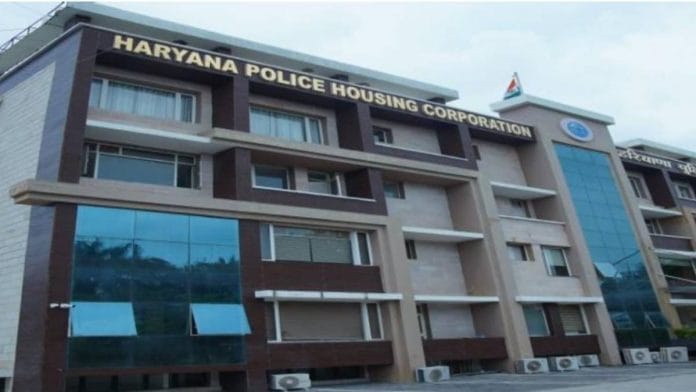



Gurugram: Reaffirming the principle of equal treatment, the Punjab and Haryana High Court has quashed orders by the Haryana Police Housing Corporation that denied medical reimbursement to retired employees. The court emphasised that because medical aid is a service condition, the corporation cannot differentiate between retired and serving employees by citing financial constraints.
The judgment, delivered by Justice Harpreet Singh Brar on 3 December, brought relief to dozens of retired employees who had spent years fighting for benefits that were never denied to them while they were in service. The question before the court was whether an organisation could deny to retired employees benefits that were guaranteed to them as part of their service conditions, simply because they are no longer working actively.
The petitioners, Gurcharan Dass and others, former employees of the Haryana Police Housing Corporation, had approached the Punjab and Haryana High Court after their medical reimbursement claims were systematically rejected by their former organisation.
In its defence before the court, the corporation cited financial constraints as the reason for its failure to extend these benefits to those who had retired.
The court found the argument legally untenable. Medical aid, it said, is not a charity or benevolence but a service condition. It noted that medical reimbursement was explicitly part of the service conditions under which they had been employed. Many had chosen to join the corporation over other opportunities, influenced in part by the promise of comprehensive medical coverage that would extend into their retirement years.
The order said that when an employee serves an organisation with the understanding that certain benefits will be available throughout and after their tenure, these cannot be withdrawn arbitrarily once they retire.
“Further, this court cannot lose sight of the fact that a public body such as the respondent/corporation cannot shrug off its responsibility to extend the medical reimbursement benefits to its retired employees by simply citing financial difficulties.”
“The corporation has availed the services of these employees during the prime and youthful years of their lives. After retirement, when age-related health problems begin, these employees need medical care and reimbursement the most. To deny medical reimbursement, at this stage, is wholly arbitrary and unreasonable,” the order read.
It gave the Haryana Police Housing Corporation four weeks to file a compliance report.
Also Read: Don’t rely on AI, Google mid-argument—Punjab & Haryana HC warning divides legal practitioners
Court observations
Deciding the case, the court emphasised a fundamental principle that resonates beyond this particular case: of equal treatment.
It noted that retired employees cannot be treated as a separate, lesser category of beneficiaries simply because they are no longer on active duty. “The corporation cannot create two classes. Those who serve and those who have served, when the service conditions make no such distinction,” it said. “To do so would be to undermine the very foundation of employment contracts and the trust that employees place in their employers.”
Another important aspect of the judgement was the court’s categorical rejection of “financial constraints” as justification for denying legitimate claims. “If financial difficulties were accepted as valid grounds to deny service benefits, it would open floodgates for organisations to escape their obligations whenever convenient,” it reasoned.
Adding, “Today it may be medical reimbursement; tomorrow it could be pensions or other retirement benefits.”
The judgment underscored that financial planning and resource allocation are the responsibility of the employer. Employees cannot be made to bear the consequences of administrative or fiscal mismanagement by being deprived of their rightful entitlements.
(Edited by Nida Fatima Siddiqui)
Also Read: How a verandah has brought SC and Punjab & Haryana HC on different sides of the same fence