





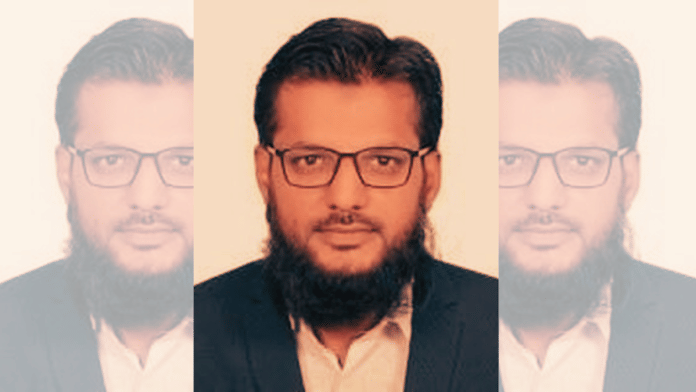



New Delhi: For Iliyas Hangargekar’s family, the struggle for survival was over. The vegetable vendor in Maharashtra’s Solapur had gotten his two daughters married, his younger son was employed with a private firm, and his eldest, Zubair, was a software engineer bringing home an annual salary of Rs 22.5 lakh.
Iliyas had retired, believing the family could look beyond its humble beginnings.
But this upward journey came unstuck when the Maharashtra Anti-Terrorism Squad (ATS) arrested 37-year-old Zubair from Pune on 27 October.
The techie, who worked for a private firm in Pune, was charged under the Unlawful Activities (Prevention) Act for allegedly radicalising youngsters in speeches made at mosques and online. Investigators also found on Zubair’s digital devices magazines released by terror groups the likes of al-Qaeda and Islamic State, with details on building explosive devices.
His arrest, roughly two weeks before the Red Fort blast in Delhi killed 12 people, underscores the emerging challenge of “white collar” terror modules in India. A group of radicalised doctors is believed to be behind the 10 November blast in the national capital.
The speaker & orator
“My ability to communicate effectively and collaborate with cross-functional teams ensures the delivery of high-quality solutions,” Zubair wrote in his LinkedIn profile, identifying himself as a ‘senior quality assurance analyst’ at Pune-based IT firm Cybage.
Those communication skills, investigators allege, were weaponised to deliver dars—lectures on Islamic holy books and scriptures, in which speakers interpret chapters or verses, mix them up with current affairs, and make predictions for the community.
“Zubair constantly gave dars, with the focal point of perceived inequality and injustice to Muslims. He delivered speeches in mosques in Kondhwa (Pune), and among other things, gave multiple speeches on Babri Masjid demolition,” a Maharashtra police officer told ThePrint.
Zubair’s knowledge of issues affecting his community and passionate oratory skills made him persuasive, investigators say, adding that it was his digital footprint that proved more damaging.
The techie was a member of several Telegram groups where users were urged to establish “khilafat (caliphate) rule in India through jihad, including lone wolf attacks”, the police officer said.
When ATS searched Zubair’s house in Pune, they recovered three mobile phones, a laptop, a desktop and a hard disk containing online magazines published by al-Qaeda and IS.
“He was involved in radicalising impressionable youth of Pune, Solapur and Thane region and lecturing them about ways to commit jihad, and how jihad is the only way to bring khilafat and establish sharia rule through secret dar programmes,” another Maharashtra police officer said.
Also Read: Red Fort blast echoes 2011 Delhi HC bombing—’white-collar’ terror cell, doctors & Jaish footprint
How the engineer was radicalised
Zubair enrolled for a B.Tech at the Walchand Institute of Technology in Solapur in 2005. On LinkedIn, he claimed to have maintained a “strong academic record, excelling in information technology and software engineering coursework” and said that he graduated with distinction.
“Balanced academic and extracurricular achievements, showcasing versatility and commitment,” he wrote of his college years.
Campus placement took him to global IT giant Cognizant, and he worked at its Hinjewadi campus in the Pune suburb for nearly three years, from November 2009 to June 2012. He then switched to Cybage in Kalyani area of Pune and worked there until his arrest last month.
Investigators trace the roots of his radicalisation to 2015, when he allegedly got in touch with members of terror modules operating from Pune and Hyderabad. It was during this period, police say, that the operatives identified Zubair as a promising recruit for their digital operations.
“He was sharp, intelligent, and precisely in the kind of job that terror operatives look for. This profile helps them hide their actual conspiracy and designs. Many convicts and ex-members of the modules got in touch with him. He was a promising young man,” the second police officer quoted above said.
Under their influence, police said, Zubair began reading books by radical preachers and accumulating material from the internet.
“Slowly, he started building his book collection, and began searching on the internet,” the officer said.
By then, Zubair had also moved to a house in Kondhwa, a Pune locality where Maharashtra ATS has busted several terror modules over the past three to four years.
The pandemic pivot
Working from home after the Covid-19 pandemic struck India, Zubair shifted his activities entirely to Telegram. Already a member of groups discussing jihad and sharia rule, he began creating his own groups on the mobile application.
“They (members) discuss establishing khilafat and implementing sharia law. They discuss how democracy shall be superseded and national boundaries dissolved and superseded by the global Ummah (a nation bound by religion),” the officer said.
After Zubair’s 14-day custody ended this week, ATS conducted additional searches in Solapur and Pune premises linked to him and the alleged module. Investigators seized devices belonging to around 20 people and sent them for forensic examination.
A chargesheet will be filed based on the findings, ATS sources told ThePrint.
(Edited by Prerna Madan)
Also Read: Dr Umar Nabi has shattered a popular misconception about terrorism