





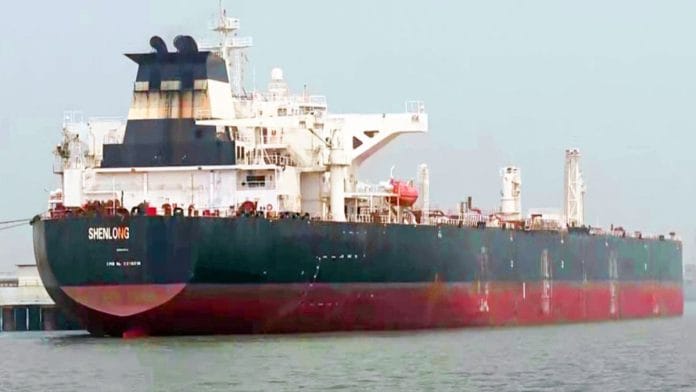



New Delhi: In response to disruptions in global energy markets caused by three weeks of war between the United States, Israel, and Iran, Washington on Friday temporarily waived sanctions on the sale of Iranian crude oil that is already at sea
The 30-day waiver announced by the US Treasury Department, indicates that the Trump administration is beginning to feel the weight of the political costs of the war with Tehran.
“Today, the Department of the Treasury is issuing a narrowly tailored, short-term authorisation permitting the sale of Iranian oil currently stranded at sea,” Scott Bessent, the US Treasury Secretary said in a statement on X.
Bessent added: “At present, sanctioned Iranian oil is being hoarded by China on the cheap. By temporarily unlocking this existing supply for the world, the United States will quickly bring approximately 140 million barrels of oil to global markets, expanding the amount of worldwide energy and helping to relieve the temporary pressures on supply caused by Iran. In essence, we will be using the Iranian barrels against Tehran to keep the price down as we continue Operation Epic Fury.”
The limited waiver comes a year after the US returned to its “maximum pressure” campaign to sanction Tehran and curtail its avenues to earn revenues. The waiver on Iranian oil sale will allow roughly 140 million barrels of crude to enter the market. This comes a week after the US eased sanctions on sale of Russian crude stranded at sea.
Washington had spent months pressuring India to curtail Russian crude oil purchases, however, since the war with Iran began, the US has pushed New Delhi to do the opposite to stabilise global energy markets.
For Trump, higher energy prices are politically untenable, especially as mid-term elections are scheduled for November for the US Congress. The US President had during his campaign in 2024 railed against his predecessor—Joseph R. Biden Jr—for high energy prices following the start of Russia’s war with Ukraine in 2022.
“So far, the Trump Administration has been working to bring around 440 million additional barrels of oil to the global market, undercutting Iran’s ability to leverage its disruptions in the Strait of Hormuz,” said Bessent.
He added: “This temporary, short-term authorisation is strictly limited to oil that is already in transit and does not allow new purchases or production. Further, Iran will have difficulty accessing any revenue generated and the United States will continue to maintain maximum pressure on Iran and its ability to access the international financial system.”
The worries over the stability of the global energy markets spiked earlier this week after Israel launched strikes at Iran’s largest natural gas field, the South Pars field. In response, Tehran warned all regional countries to evacuate their energy production facilities and launched strikes at Qatar, the United Arab Emirates, Saudi Arabia and Kuwait.
The strike targeting the Ras Laffan industrial city Wednesday by Iran, wiped out roughly $20 billion per annum worth of liquefied natural gas for the Qatari state-owned company QatarEnergy. The Qatari firm exports up to 8.5 million tonnes per annum of LNG to India, further indicating the damage from Tehran’s attacks on QatarEnergy’s facilities beyond the region.
Iraq announced a force majeure, removing itself from commercial liabilities for the export of petroleum products due to the ongoing war. Kuwait was forced to suspend operations Friday at some oil fields due to strikes by Iran.
For Trump, the war has seen the price of gasoline in the US make its way to roughly $4 a gallon, which is almost a full dollar higher than a year ago. The US President has been promoting the fall in gasoline prices across the country as a part of his successful management of the economy, in comparison to the higher prices witnessed during the previous administration led by Joseph R. Biden Jr due to the Russia-Ukraine war.
However, with prices inching up, and external energy shocks remaining, the US President announced Friday that Washington is “winding down” its operations in West Asia. Trump moved quickly earlier this week to distance the US from the Israel strike on the South Pars field, which led to the current spike in energy prices.
(Edited by Viny Mishra)
Also read: Trump says US considering ‘winding down’ Iran ops, as US moves to ease global energy disruptions