








In Episode 1822 of Cut The Clutter, ThePrint Editor-in-Chief Shekhar Gupta explains why India’s long-delayed three-stage nuclear programme has reached a crucial milestone, with the second stage finally going critical. As global tensions dominate headlines, this breakthrough—centred on fast breeder reactor technology—marks a key step towards unlocking India’s vast thorium reserves and long-term energy independence. He is joined by ThePrint’s Science Editor Soumya Pillai to break down what this means, how the programme works, and why it has taken decades to get here.
Here’s the full transcript for clarity:
Something of profound strategic importance has come up in India, and that is the second stage of what is famously called the three-stage Indian indigenous nuclear programme.
Why is it called a three-stage? What are the three stages? I will try to give a layperson’s explanation for you, and then Soumya Pillai, who heads our science team, will join in. She will give us a better explanation.
The second stage has now come alive. “Come alive” means it has attained criticality. Criticality, in the nuclear sense, means when inside a reactor a nuclear reaction starts which is self-sustaining, which can carry on by itself. It is not a stop-start thing. That is what we mean when we say a reactor has gone critical. It has begun to produce energy, heat, whatever your outputs are. That has now started with a unit called PFBR—Prototype Fast Breeder Reactor. Why it is called a fast breeder reactor? We will explain to you.
As you drive out of Chennai southwards along the East Coast Road, just after you pass the temples of Mahabalipuram, to the left you will see, hugging the coastline, a very large nuclear installation with high gates, a lot of security, etc. That is Madras Atomic Power Station 1 and 2. This started in 1984. These are among India’s older power-generating plants, not safeguarded.
Alongside them, you also have India’s first fast breeder reactor, which was for testing— that was the Fast Breeder Test Reactor, FBTR—that went critical on 18 October 1985. Count backwards from today: that was 41 years ago. That test reactor proved a certain process, and that process was that you could use a particular fuel mix to produce electricity, thermal energy, and also plutonium as a by-product. That plutonium could then further be used in the next process, which would be called stage two in this three-stage programme.
That stage two has now come to fruition. It has now become effective with the Prototype Fast Breeder Reactor going critical. That will produce about 500 megawatt of power, so it is a bigger one. The two MAPS units are 200 megawatt each. That would be comparable to small modular reactors, up to 220 megawatt. This one, the fast breeder or Prototype Fast Breeder Reactor, is called “prototype” because this is the first; based on this, more will come up, maybe of a higher capacity, because a new technology is now being proven.
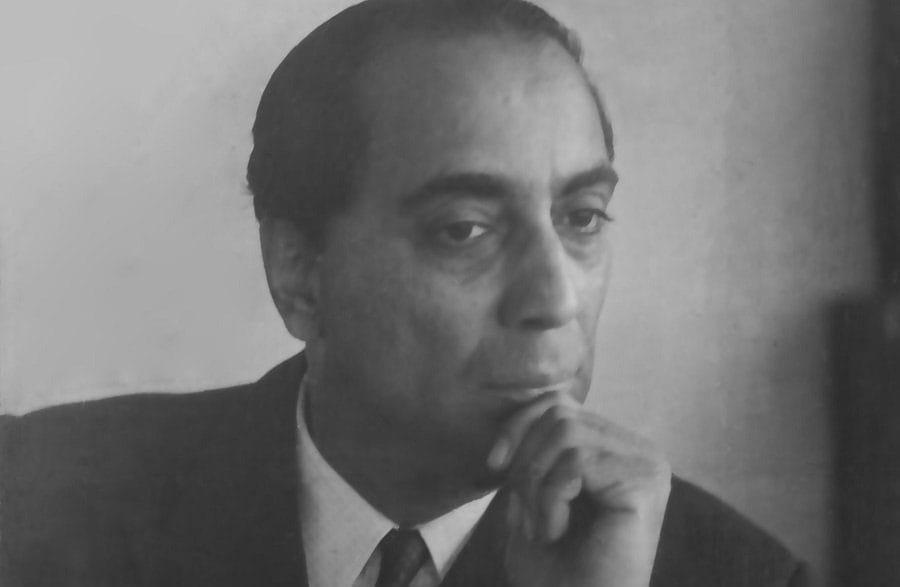
This is a technology that Dr Homi Bhabha had imagined in the 1950s because he knew India had a lot of thorium. How thorium matters, we will explain to you.
This second stage — the first stage produces plutonium. The second stage will produce another kind of fuel that will be uranium-233. That uranium-233 can then be mixed with thorium, of which we have plenty available, mostly in our beach sands in Andhra, Odisha, Kerala, in all our coastal states, particularly our southern and south-eastern coastal states. Plenty of thorium is available. In fact, 25 percent of all the thorium in the world is available in India. You can just scoop it off the beaches. The ore is called monazite.
Now you convert this into fuel material. How? Thorium by itself is not radioactive. It is not fissile in a certain condition, and that is what will happen in this third stage. When the third-stage reactors come up, in that condition this thorium will be combined with U-238 obtained from the second stage.
So remember: the first stage gives you plutonium. The second stage gives you U-233. That U-233 is now combined with thorium. In the process, the way this structure will be, thorium will form a kind of blanket in this reactor. As the fission takes place, there will be lots of neutrons flying around, and those neutrons will then go and, in a way — I am using very simplistic language — strike this blanket of thorium and yield more uranium-233.
What is the effect? You will use uranium to fuel this reactor, and you will get your electricity. But through this process, this reactor will give you more uranium-233 than you put inside it. That is why it is a fast breeder reactor. And that is how India’s thorium will be used.
Thorium is not a fuel, but through this process thorium can be made into a fuel — only in this process. You cannot put thorium in a bomb and drop it somewhere. It will yield no kind of bomb, but it will yield some kind of uranium for you.
Remember also that out of India’s 22 fully functional nuclear plants, one is now shut down. For example, there is a 40 megawatt plant at Tarapur. Tarapur is the home of India’s weapons-grade plutonium because the first reactor that was built there — a 100 megawatt reactor, Dhruva— gave the first supply of plutonium for the Indian nuclear weapons programme. It yields about 20 to 25 kilos of plutonium every year. That was the premier source, the first source.
Then a few more unsafeguarded plants have come up, and now after the Indo-US nuclear deal, India has carried out a clear separation of what is civil and what is military. So what is civil is put under full-scope IAEA safeguards. What is military is clearly demarcated. It is called military. So no ambiguity remains. That is something that actually works towards improving safety in these plants, because if you continued on in this messy situation where nobody knew what was secret and what was civil or public, then lots of confusion could take place. That is now over.
At this point, India has 12 plants which are fully safeguarded under IAEA safeguards, and 10 others which are not. Some of these are sizable plants. Madras plants, for example, also some plants in Kaiga in Karnataka — those are also bigger plants. All of these plants can produce weapons grade plutonium for India’s weapons programme. India is also stockpiling quite a bit of non-weapons-grade plutonium. It can be used in the course of time, but right now it is just there because India is not building thousands of nuclear weapons. Also, for that plutonium to become weapons grade, it has to go through other processes. We are not going there right now.
We are just telling you that India’s ambitious programme, which goes back 70 years, of converting its beach sands into nuclear fuel, has now moved another step forward. It is not as if the third step will take place tomorrow. So that will take time, and before you can build reactors of larger sizes to truly realise the potential of this thorium reserve, it will still be a long time.
However, if India has a target of 100 gigawatt of power by 2047, some of that will need to come from this three-step process.
Now that I have brought you this far, we need Soumya Pillai to join us.
SG: The Fast Breeder Test Reactor, FBTR, went critical on 18 October 1985. Why has it taken us 41 more years to reach the second stage now?
SP: Essentially, what we need to understand is that we need to be critical of why these delays have happened, but we also need to understand that we are dealing with a technology that is novel and also very challenging.
The second stage of the nuclear programme, which has the PFBR — the fast breeder reactor — uses sodium as a coolant. Across the world, we have seen countries start experimenting with this technology much before India, like Japan, France and South Korea. The US also joined the list of countries.
But the biggest challenge that all of these countries have faced is to handle sodium as a coolant, because sodium is extremely volatile. It reacts extremely fast with air and water.
SG: Is it like liquid sodium?
SP: Yes, molten sodium is used as a coolant in these reactors. But we need to be extremely careful. This is a point at which most countries have abandoned the programme, but India continued to experiment with this technology. We saw in Japan in the 1980s that there was an accident after which the programme was called off. So safety has been a concern. When you are experimenting with a technology which is this volatile, the challenges become much larger.
SG: But India’s compulsion, or India’s urgency, or India’s need to persist with this programme comes from two factors, two sides of the same coin. One is that India hardly has any uranium at this point. India mines about 500 tons in a year, if at all. That is out of a total global output of about 60,000 tons. So India has less than 2 per cent of the global output in a good year. Very little uranium.
So you can import uranium and run your nuclear plants, but one, you will be dependent on imports, and second, those will have to be safeguarded. That is the law; otherwise nobody can export it to you. That is part of the non-proliferation regime.
The other side of the same coin is that while India has hardly any uranium, India has plenty of thorium. Thorium does not become uranium like that; you cannot put it through a process and it becomes uranium. It is not a fuel; it is not something that can be used in weapons. But it has potential, and that is why India needed to persist with this three-stage programme.
The tough question for you now: explain the three-stage programme.
SP: A lot of it you have already explained in your introduction, and I just want to take it from there. India realised the potential of nuclear energy very, very early. So in the 1950s, the father of India’s nuclear programme, Homi J. Bhabha, came up with a three-stage plan for India. It was not something that was supposed to go off like a light bulb. Scientists knew that it was going to take decades and that it was going to be a challenging process.
It happens in essentially three stages.
The first stage involved the setting up of PHWRs, which is Pressurised Heavy Water Reactors. Now India has around 22 of these, which are most of our own-built reactors. They are all pressurised heavy water reactors.
What essentially happens is that because it is the first stage, it utilises uranium in its natural form. The heavy water bit is deuterium oxide. That acts as a coolant in this phase. Of course the reaction takes place, and ultimately what we get is plutonium.
Plutonium is not a naturally occurring element in the Earth. Plutonium is produced when you have uranium which undergoes an extreme reaction which happens in the reactor itself. Plutonium is also extremely critical to the process of nuclear fission. So that is the first stage, which we have already achieved.
We already have around 8,180 megawatt of electricity which is produced through these power plants apart from PHWR.
SG: So if I simplify this: she is giving you the technical details and the names of the chemicals and all. I am simplifying it. When you squeeze this uranium through this fission reaction, what comes out as a kind of by-product is plutonium.
And that plutonium is either yours if it came out of an unsafeguarded plant, or it belongs to IAEA, or you can reuse it for civil purposes under IAEA’s watch if it comes out of a safeguarded plant.
This three-stage programme was also explained to us by Dr Professor Anil Kakodkar, the former head of the Department of Atomic Energy and one of India’s topmost nuclear scientists of all time, and a man with national interest always in his heart. So he explained this.
So, okay, from our unsafeguarded plants we get this plutonium. Then what happens?
SP: These stages are not independent of each other. They are almost like a chain reaction that we also need to complete to finally complete the circuit of India’s nuclear programme. So once the first stage has been achieved, the second stage, where we have achieved criticality on Monday in the PFBR — the fast breeder reactor — but since the Kalpakkam reactor is a prototype of this, that is where we have achieved criticality.
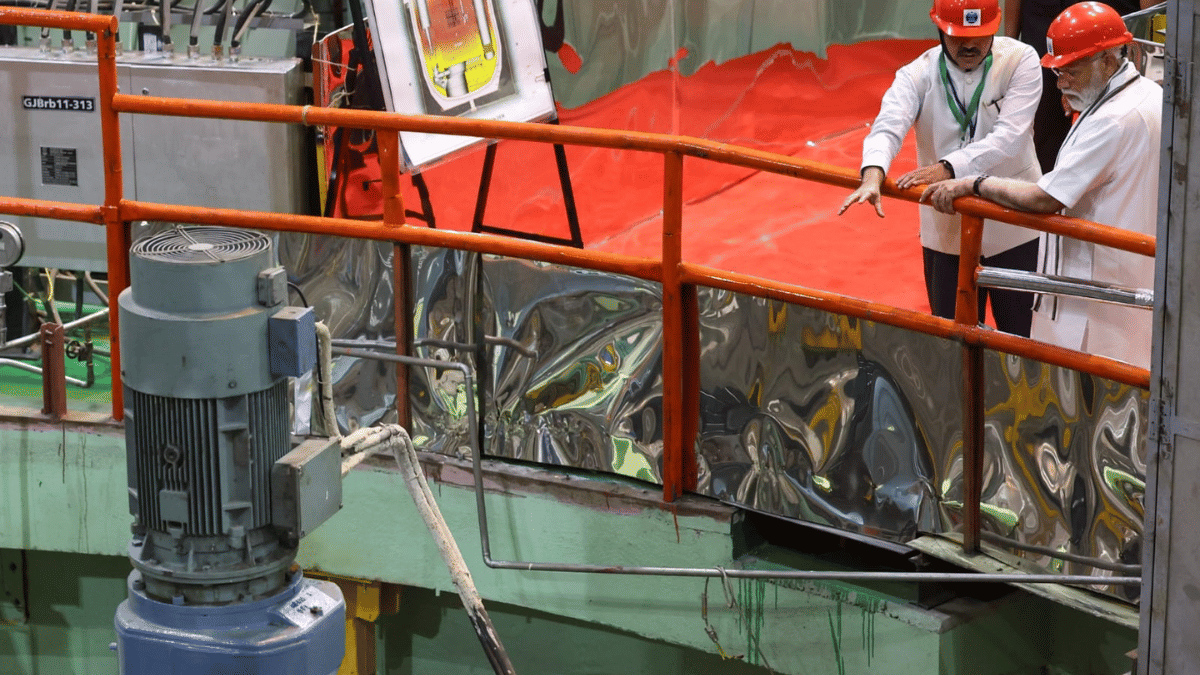
Essentially what happens is that in the fast breeder reactors you have a mix of plutonium that we have already got through our first stage. In the first stage we have uranium, and there is a mixed oxide that we use as fuel. So plutonium plus uranium oxides, which is called MOX. The fuel is called MOX. Then we have uranium-238, which acts as a blanket in the core reactor. Once that happens, the reaction takes place, and ultimately we are left with uranium-233.
I also want to explain the science of it. Uranium-233 is not, again, a naturally occurring isotope of uranium. You have uranium-238, which is the most available isotope of uranium. You have uranium-235 and uranium-234. Since 238 is what is abundantly available — around 98 per cent of the global availability of the uranium isotope is 238 — most countries rely on 238 for it.
That is what happens in the second phase.
SG: When we produce electricity after criticality, then we get uranium-233.
So that is the yield of the second stage. Then, once again, what you can do with this will be determined by whether your plant in the first and second stages was from the safeguarded lot or the unsafeguarded lot. So you would have had to classify them as civil or military in the very beginning.
Right. So what happens with this U-233 which comes out in stage two?
SP: This is where we are at right now. Our ambition is to scale this up into the third stage, which is going to be your advanced fast breeder reactors — or advanced heavy water reactors. It can be interchangeably used. So what we get from the second phase is uranium-233, which we combine with thorium-232, which is what our reserves give us. The blanket fuel is also thorium.
Ultimately, what we get is more uranium-232 again
SG: Because of this neutron activity, because these neutrons fly around and they go and strike this thorium blanket, and that reaction produces more uranium-233.
SP: So essentially the advantage of both the second stage and the third stage is that we are — which is something that you also mentioned — utilising less fuel but producing more fuel. So it is going to be energy-efficient in the longer run. Once this comes to capacity, the ultimate fuel that we are going to produce from these plants will be much higher than what they consume to operate it.
SG: And if this works out, then India can become energy-independent almost forever. I mean, I see calculations that say 400 years, some say 60,000 years. I do not know. But the fact is that you have all this thorium, and this process is by no means final yet because thorium has not gone inside any reactor as yet. But if this works, then that is a kind of panacea to India’s clean energy problem.
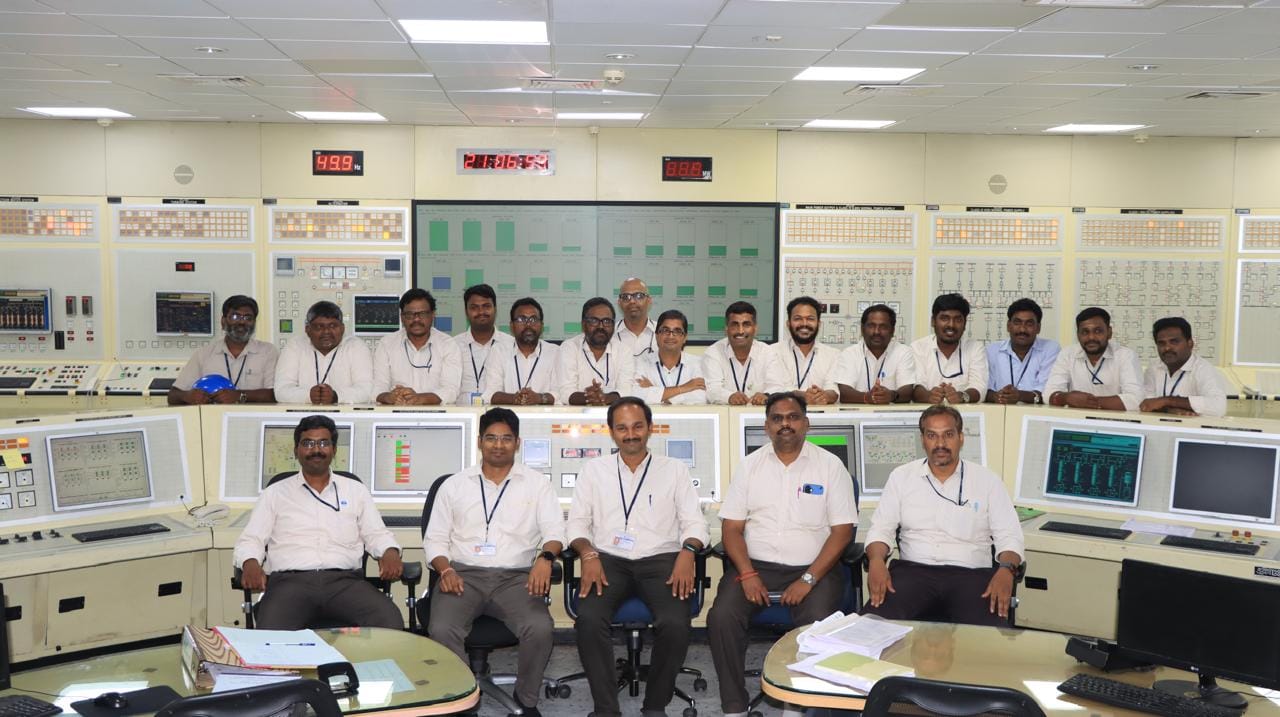
SP: I want to add to the point that you made right now. Just the Kalpakkam PFBR has the capability of 500 megawatt electric, which is enough to power around five to six lakh households. So that is just one plant that we are talking about, and we do have a plan to make more of these fast breeder reactors. So that is actually going to lead India to energy independence.
We also have our net zero targets of 2070, with thorium as our fuel in these reactors, which is also something that we can achieve.
SG: And at Kalpakkam itself, I read that we have another reactor, an experimental reactor called Kamini, which is working on U-233, and that is the experimental test bed for the third stage. So that work on the third stage is going on.
Would you have any idea where that work is right now?
SP: Because the focus has been so much on achieving the second stage, we are still hoping — because when you say that we have achieved criticality, we do not really mean that it is producing that much power at first stage. So once that stability is attained, of course we can think of going to the third stage. But I am thinking that, because the second stage from the first stage took a little less time when you compare it to the first stage, I am assuming at least another five to six years. That is a conservative deadline for the government, but hopefully they will be able to achieve that.
SG: And once again, the choice of whether we keep these for civil or military use is ours. So would you presume that those where we use basic uranium fuel, which is imported, will go in the civil category and the rest will go in the military category?
SP: That is the agreement that we had initially — that we did not have any other option but to abide by the International Atomic Energy Agency’s safeguards when it came to all uranium that was imported. That is something that for future reactors also we will have to abide by.
SG: At this point, we might think we produce about 500 tons, maybe a bit less, because it is not that efficiently produced. There is a company, a government company, called Uranium Corporation of India Limited, and that does that work. But we also import almost 1,500 to 1,800 tons every year, and we are negotiating with many countries lately, with Canada now, to import more uranium. We buy from Australia, from France, and most importantly from Kazakhstan and Russia. So we are in the market to buy uranium from everywhere.
What we have available as our own for future military use will still remain quite limited. But once you start mixing thorium with that, and that produces even more uranium than you had, then you can work on that if you need to.
SP: That is a very good point. And I think you can weigh in on this as well. Especially in recent years, we have realised that we need to be not just energy-independent, but also independent when it comes to our security — around the development of weapons and the infrastructure around it.
Especially around Operation Sindoor, we did see a lot of indigenous work happening around it. So I think this technology, because it can be — uranium can be enriched to weapons grade — it will be extremely helpful in multiple aspects of our security.
SG: This is a very tricky business, and there are many sidelines as you read up more on this.
For example, I told you earlier that the essential fuel plutonium for India’s first nuclear weapons came from the Dhruva reactor, a 100 megawatt reactor in the BARC campus, Tarapur, and thereabouts in Mumbai. Another significant point is that there was one more reactor there — the CIRUS reactor — a 40 megawatt reactor that ran on imported Canadian fuel. It is the output of that reactor that was used in Mrs Gandhi’s era for the Pokhran-I test, and the Western world had never forgiven us for it.
So when the Indo-US nuclear deal was signed, one of the concessions — maybe it was just symbolic, one of the concessions or one of the actions taken under the Indo-US nuclear deal — was to permanently shut down the CIRUS unit of 40 megawatts.
These are very tricky equations, and that is why it is even more important for a country like India, given its threat scenario and given what our neighbours are doing and given what is happening in the world, to liberate ourselves from this dependence on foreign uranium to the extent possible, definitely fully for our deterrence, because for that we cannot access any imported uranium or fuel material.
Once again, to make us understand how important this thorium is, look at the uranium picture. I told you right now about 60,000 tons are taken out in the world, of which India might have 500, but 500, I will repeat again, might be a bit exaggerated. It is a bit less in reality. But the top producer is Kazakhstan: 22,451 tons. Currently, global production is 59,370 tons. Kazakhstan is more than 40 per cent of it at 22,451 tons. Canada is number two at 9,331. Australia 6,350. And after that you have Russia, France and so on.
Against all of this, you have 25 per cent of the global thorium reserves. So the holy grail that the Indian scientists are after is the full utilisation of these thorium reserves, and for that this three-stage programme is critical.
The two are done now. Are you fairly convinced that the technology has matured with the second stage?
SP: Yes, I mean it is a challenging technology. It is not something that a lot of countries around the world have done. So apart from India, only Russia has a commercially operational reactor which can be compared to India’s. So for the first time, we are not late to the party. So I guess that is promising. I think we have a lot to look forward to in this programme.
SG: Yes. So compliments to the scientists who have done it, and who have been so persistent. And you know what, if you travel along coastal Tamil Nadu, you will find a bunch of nuclear units. There is the Kalpakkam complex, which is not far from Chennai. But if you go further down, then you find really big ones — the plants. These are Russian-made plants. They use Russian uranium. Those are fully safeguarded as well.