





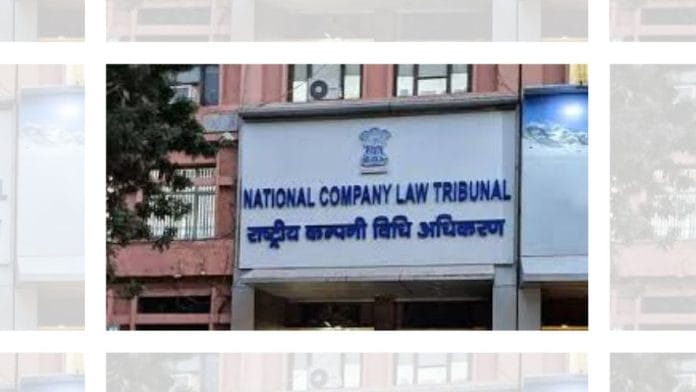



New Delhi: India’s Insolvency and Bankruptcy Code (IBC) is struggling to deliver on its core objective—the timely resolution of cases. In 2024-25, the average duration of insolvency resolution stretched 853 days, far exceeding the mandated 330-day limit. With 30,600 cases pending, it would take at least a decade to clear the backlog at the current 30-bench strength of the National Company Law Tribunal (NCLT).
This issue was revealed in a parliamentary panel report tabled by the Standing Committee on Finance Tuesday. The NCLT is a judicial body that regulates and resolves corporate disputes, and the IBC was enacted in 2016.
While the government is considering proposals to increase bench capacity, the panel led by Bharatiya Janata Party MP Bhartruhari Mahtab Tuesday recommended setting up special, designated fast-track courts to resolve cases on time.
The parliamentary panel, reviewing the working of the Insolvency and Bankruptcy Code and the linked issues, has attributed the delay to an acute shortage of NCLT benches, vacant judicial and administrative positions, and widespread frivolous litigation and appeals tactics deployed by promoters and unsuccessful resolution applicants.
Moreover, it raised a concern that despite creditors recovering a high percentage (170%) of the liquidation value, the overall recovery (32.8%) against the total admitted claims remains low. The panel members attributed this gap to companies entering insolvency processes too late in the cycle, often after most assets had already been depleted.
To overcome this, the parliamentary panel has recommended transitioning the valuation model from liquidation value to enterprise-based value. Expand global outreach and increase competition among resolution applicants to enhance valuation, it said.
Also Read: New cess on ‘pan masala’ to fund national security and healthcare programmes
Issue of diversion of funds
The standing committee, in its report titled ‘Review of Working Insolvency and Bankruptcy Code and Emerging Issues’, has highlighted the staggering level of funds diversion, along with avoidance transactions within distressed companies.
Of 1,326 applications, citing suspected avoidance transactions worth Rs 3.76 lakh crore, in total, the actual recovery has been a mere Rs 7,500 crore.
Avoidance transactions are undertaken by the corporate debtor before the initiation of the insolvency process to defraud its creditors or to benefit related parties, as well as its own management.
Noting that the Reserve Bank of India (RBI) considers funds diversion a “critical concern”, the committee has underscored the need for stronger forensic audit capabilities during the insolvency process.
It has recommended empowering resolution professionals to conduct a deeper and time-bound investigation into avoidance transactions, urging closer coordination among the Ministry of Corporate Affairs, RBI, Insolvency and Bankruptcy Board of India, and the Enforcement Directorate (ED).
No cross-border insolvency code
Another key concern regarding the IBC is the absence of a cross-border insolvency code. According to the parliamentary panel, it is the “need of the hour” for developing countries—for instance, India—where companies that operate across jurisdictions continue to grow
According to the panel’s report, “the current vacuum in a well-established framework to handle cross-border insolvency disputes under IBC, 2016, is causing significant losses in high-value cases and making asset recovery and settlement tedious.”
The committee invoked its earlier 32nd report of the 17th Lok Sabha, which had recommended adopting the United Nations Commission on International Trade Law (UNCITRAL) model on the cross-border insolvency framework.
The committee noted that while concerns were raised, adopting the model law would give priority to foreign creditors over domestic creditors; these concerns can be addressed under the UNCITRAL model, but with modifications suited to India’s financial system.
Also Read: Farming to banking—at India’s 1st cooperative university, an MBA launchpad for young change-makers
Overlap with PMLA
The standing committee is also concerned about the growing statutory overlap between the Insolvency and Bankruptcy Code and the Prevention of Money Laundering Act (PMLA), a law combating money laundering.
While IBC prioritises the revival of stressed assets via time-bound resolutions, PMLA empowers the ED to attach properties linked to alleged proceeds of crime, even when the company is already under insolvency. “… simultaneous application of the IBC and the PMLA often creates a conflict, as the attachment of assets by the Enforcement Directorate can undermine the immunity granted to the new management under Section 32A of the IBC,” the report said.
In this regard, the committee has observed that the Insolvency and Bankruptcy Board of India, a statutory body regulating insolvency and bankruptcy proceedings, has issued a clarification on this matter.
In cases where the ED attached the assets of corporate debtors under the PMLA, an insolvency professional can seek the restitution of these assets by applying to the PMLA special courts to expedite the process, boosting asset value and improving recovery under IBC.
Ease of doing business
Despite structural issues, the parliamentary panel acknowledged the role of IBC—it improved the ease of doing business in India via a more structured insolvency resolution process.
The report stated that the enactment of the IBC had led to a significant improvement in the “Resolving Insolvency” parameter in the World Bank’s Ease of Doing Business Report 2020. In just a few years, India’s rank spiked to 52 from 136.
As of 31 March 2025, a total of 1,194 companies have been successfully resolved under the IBC framework, generating creditor realisations of Rs. 3.89 lakh crore—more than 170 percent of the liquidation value and over 93 percent of the assessed fair value at the time of admission.
Of 8,715 corporate insolvency resolution processes admitted under the code till 31 October 2025, the IBC rescued 1,322 corporate debtors through resolution plans. It can be established that companies’ sales spiked by 76 percent after the resolution. This has led to a settlement of Rs 13.94 lakh crore of debt outside the formal insolvency process.
(Edited by Madhurita Goswami)
Also Read: 172 countries & counting, India looks to hit new record in rice exports. But there’s a flip side