








Bengaluru: At Bengaluru-based Mossant Craft Kombucha, co-founder Shishir Sathyan has been scrambling to source glass flasks for their premium fermented drinks over the past month.
“There’s nothing out there for us to buy right now,” he said, as India’s glass-making industries, built on gas-fired furnaces, are struggling to sustain production in the wake of the Middle East conflict. “It’s the worst time of the year to have this problem,” Sathyan said, noting demand for beverages typically surges during the summer months.
He said his start-up is now looking to tighten its budget for marketing and discounts to offset the rising procurement costs.
From milk bottles to jam jars and medicine vials, glass is getting harder to find in India. Supply chains for at least half a dozen glass-using sectors have been impacted by severe energy shortages at the country’s glass factories. The Indian government has abruptly diverted liquefied petroleum gas (LPG) and liquefied natural gas (LNG) away from factories to households after Middle East tensions disrupted fuel imports.
While Iran and the US are in a two-week ceasefire, Indian manufacturers say any easing of gas shortages is still at least several weeks away. Some worry the halt in Gulf hostilities may be short-lived.
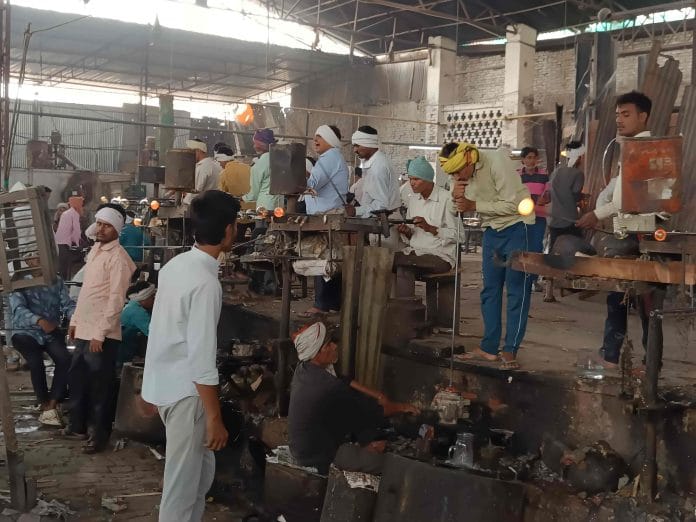
The epicenter of India’s glass supply shock is in Firozabad — the country’s four-century-old glassmaking hub in the northern state of Uttar Pradesh — but the repercussions are winding their way throughout the broader economy. Glass manufacturers in the town depend on cleaner-burning natural gas as higher-emission fuels are banned due to the proximity of the Taj Mahal, one of India’s most popular tourist attractions.
Firozabad’s economy revolves around furnaces that feed a supply chain that extends around the world. The molten glass factories must run day and night at temperatures approaching 1,500 degrees Celsius to avoid seizing up. If they cool, restarting the equipment would cost billions of rupees and weeks of downtime.
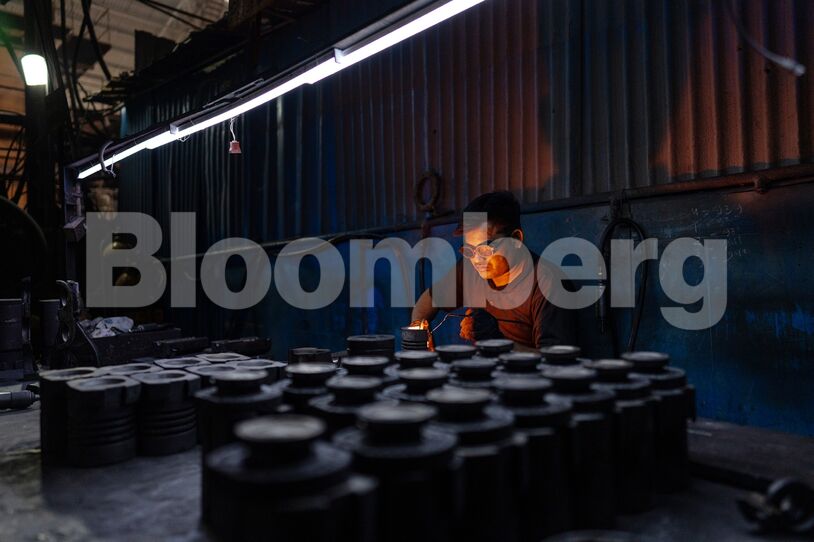
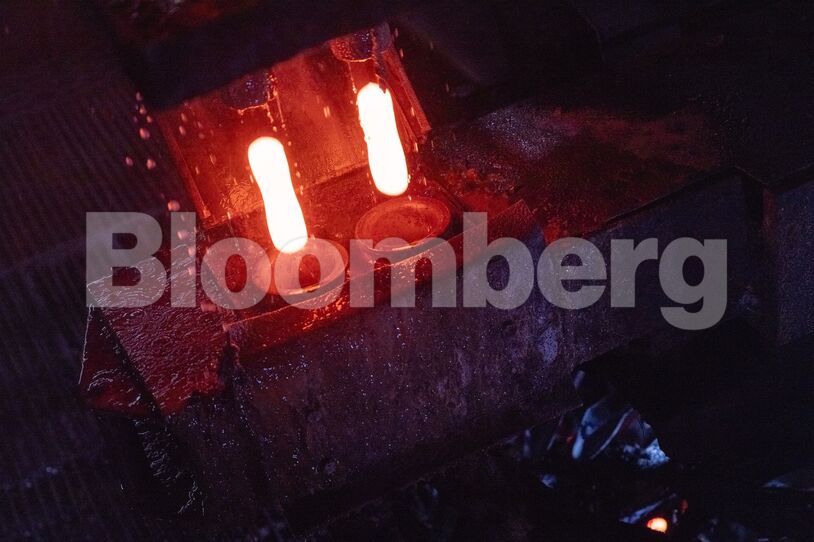
For Mukesh Kumar Bansal, a bottle supplier in northern India serving global clients such as Diageo Plc, Pernod Ricard SA and local food giant Haldiram Snacks Food Pvt., the energy supply disruption comes just as his company prepares for peak seasonal demand. Bansal, a partner at Shri Sitaram Glass Works, one of the region’s largest producers, said that in four decades in the business he’d “never seen such a sudden squeeze.”
The consequences are already visible across consumer sectors that rely on glass. Exporters like Bansal — he also supplies decor items to global retailers including Walmart Inc. and Target Corp. — warn of delays.
The fragile ceasefire between the US and Iran has raised hopes of reopening the Strait of Hormuz — a critical waterway through which about a fifth of global oil and liquefied natural gas supplies typically flow — but Bansal said there’s little clarity on the outlook for LNG shipments.
With the Indian government prioritizing gas supplies to households, Bansal’s firm has cut output by as much as 50% after its vendor, GAIL India Ltd., reduced supply. Saddled with rising overhead from producing more than 100 tons of glass daily, his company has raised prices by as much as 20%.
GAIL India and the Ministry of Petroleum and Natural Gas did not respond to an emailed request for comment. The Indian government said at the end of March that there was no war-related LPG crunch as domestic production and imports from western countries increased.
Experts are skeptical about a quick return to normalcy in the global energy markets. “We’re still in the fog of war without a settlement,” Sanam Vakil, director of the Middle East and North Africa program at London-based Chatham House, told Bloomberg Television on April 8.
India’s dependence on Middle East fuel has magnified its exposure to energy imports. The country relies on overseas sources for roughly half its natural gas, with Qatar alone supplying about 40% of its LNG. Nearly 90% of India’s LPG imports come from the Middle East, largely via the Strait of Hormuz.
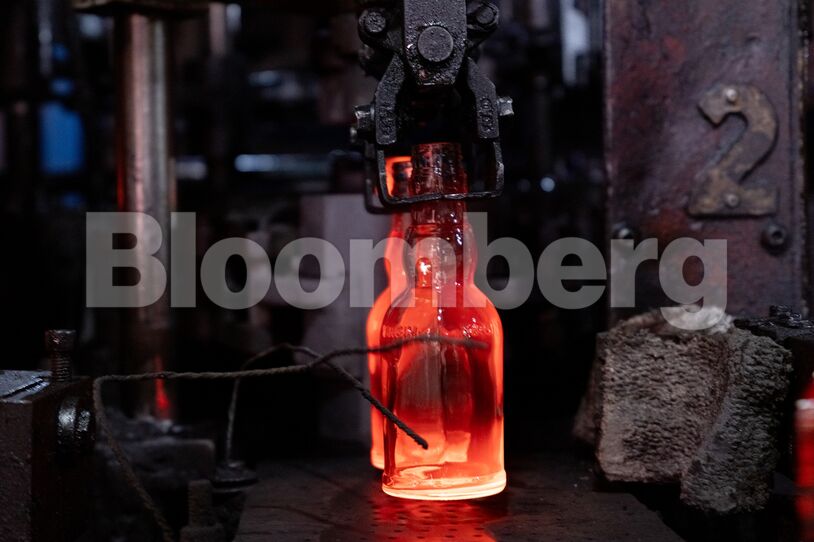
Costs for glass and other expenses have risen over 20%, and are “very difficult to manage,” said Sanjit Padhi, chief executive officer at International Spirits & Wines Association of India. Since liquor is a price-controlled sector in the country, Padhi, who represents firms including Moët Hennessy and Diageo, expects state governments to assess this impact and allow the costs to be passed through to consumers.
A dusty neighborhood in Firozabad is home to S R Glass Industries, a closely held firm that supplies liquor bottles to companies such as Radico Khaitan Ltd. and jam jars to a local brand Tops. It has paused plans to bring on new customers as output shrinks and shelved its expansion plans. S R Glass Managing Director Pranjal Mittal expects the disruption in glass production to drag on for months.
“If the war extends by one week, our business scenario gets disturbed by one month. That means the next four months have been disturbed right now,” Mittal said.
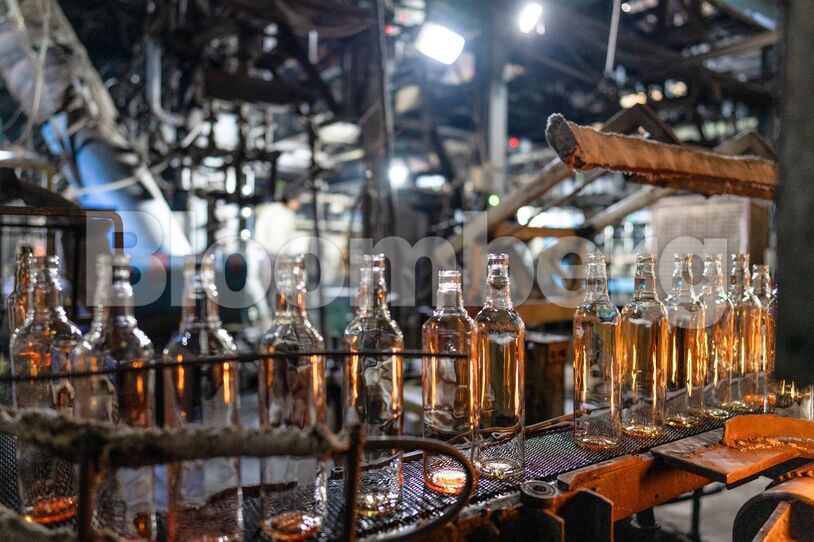
The glass industry is critical for a number of consumer and industrial goods, ranging from milk bottles to car headlights and test tubes. New Delhi-based Pharmakon Health & Beauty Care Pvt., a contract manufacturer for cosmetics brands, is spending as much as 30% more on the packaging used for its face serums and cream jars, according to its director, Kuldip Sharma.
Isak Fragrances, which makes perfumes, diffusers and attars, will have to raise prices from July as production costs have soared, according to its Chief Executive Officer Vidushi Vijayvergiya. “It’s absolute mad house these days,” she said, adding that she’s paying 40% more for glass bottles and containers.
Read More: Iran War Catapults Asia to the Frontline of a Global Fuel Crisis
Beyond Firozabad, glass makers across India have also reduced operations or shut down plants entirely. Maaricha Glass, based in Kosamba in the western Indian state of Gujarat, has closed two of its five production lines and stopped taking new export orders for jars and bottles, according to one of its partners, Nilesh Agrawal.
Ayush Gupta, founder of Guwahati-based Iconic Glass LLP, halted his container plant last month after failing to source 425-kg LPG cylinders needed to fuel production. The only glass manufacturer in the state of Assam, its clients include local drugmakers as well as consumer firms such as Dabur Ltd.
Gas shortages also have hit restaurants, hostels and informal food establishments after a sudden squeeze in LPG availability, disrupting India’s spring wedding season and daily cooking across the country.
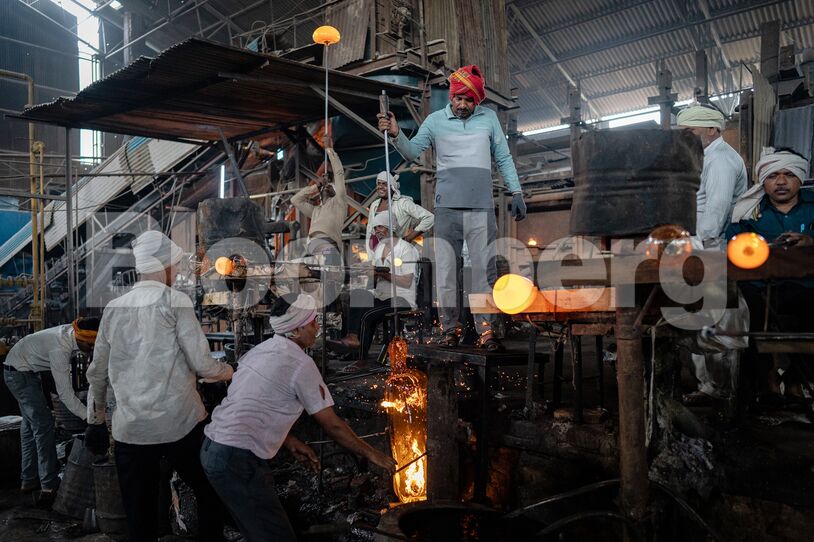
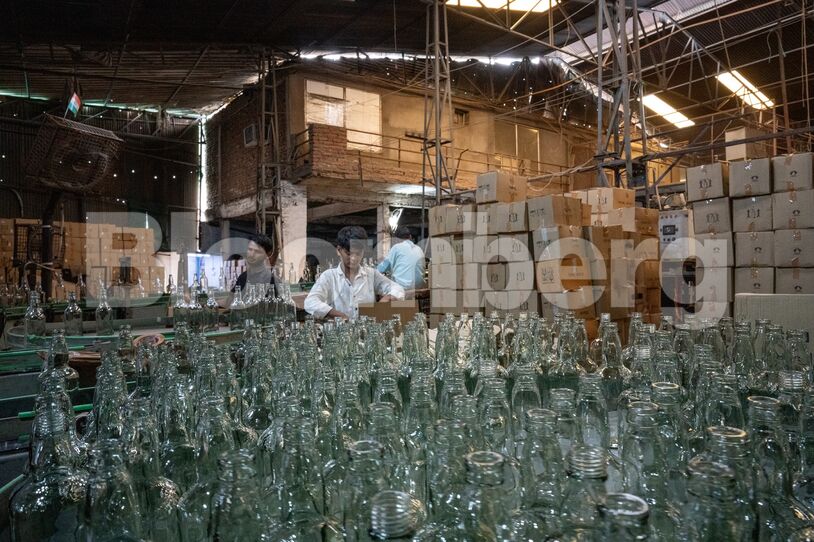
In March, India’s manufacturing activity slumped to its lowest level in nearly 4.5 years, according to a flash survey by HSBC Holdings Plc, as factories curtailed output due to Iran war-led gas shortages. Manufacturers suffered the most and “companies indicated that the Middle East war, unstable market conditions and inflationary pressures all dampened growth,” said Pranjul Bhandari, HSBC’s chief India economist.
Back in Firozabad, the town of 2.5 million people known for its Mughal-era techniques in glass making, the gas supply shortfalls threaten the existence of about 200 small and mid-sized factories, as well as thousands of related decoration manufacturers and retail shops.
Mittal, the S R Glass Industries executive, owns seven bangle factories in addition to his bottle-making business and was forced to cut production across all of them. He doesn’t expect a surge in gas supplies anytime soon and worries about the hovering uncertainty given US President Donald Trump’s penchant for brinksmanship.
“You never know what is Trump’s next statement and the situation could change with any statement he makes,” he said.