





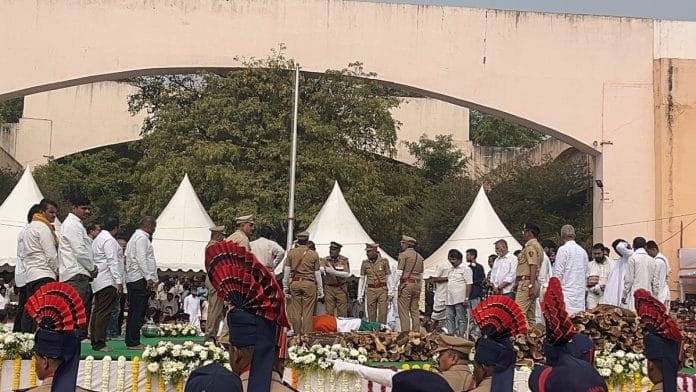



Baramati: The Pawar family bastion in Pune district slipped into an uneasy silence Thursday as thousands gathered for the funeral procession and last rites of Ajit Pawar, whose political presence had shaped Baramati and much of Maharashtra for decades.
The streets, usually bustling with routine life, were lined instead with grieving faces—political workers, farmers, students, women, the elderly—all drawn by a shared sense of loss.
Supporters began gathering on the Vidya Pratishthan grounds from 9 am onwards to pay their final respects to their leader. The tricolour-draped mortal remains of the Nationalist Congress Party (NCP) chief and seven-time MLA were kept on a concrete podium built overnight as slogans of remembrance rose intermittently from the crowd.
Many stood with folded hands; others wept openly. Shops remained shut and daily activity came to a standstill as the town mourned one of its most influential sons.
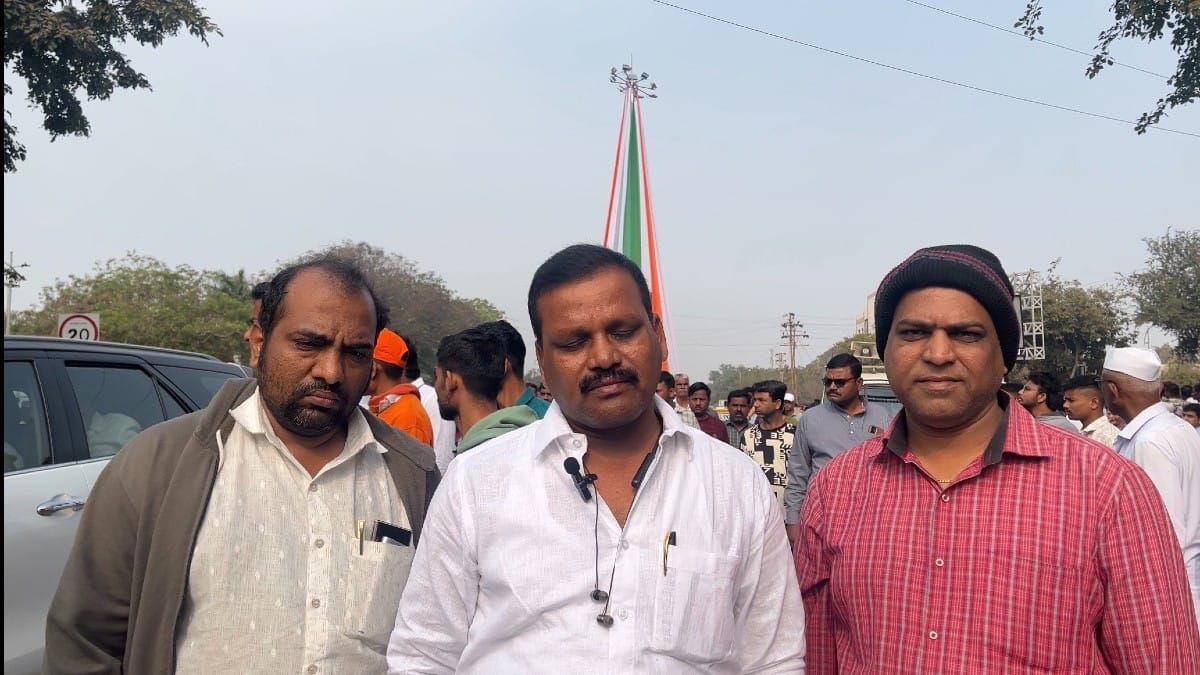
Among those present was Vijay Kolte, a senior NCP worker from Baramati, who worked closely with Pawar for decades. His voice trembled as he spoke of a relationship built over a lifetime.
“I worked with Ajit dada for the last 40 years. We were blessed to have worked with him. He was hardworking and fearless. That he is not amongst us today is an unbearable feeling… We are worried about the future and about the youth who have lost a chance to know and work with him. We don’t think anyone can take his place and lead with that much resilience. We will keep him in our memory and work to keep his name alive,” said Kolte.
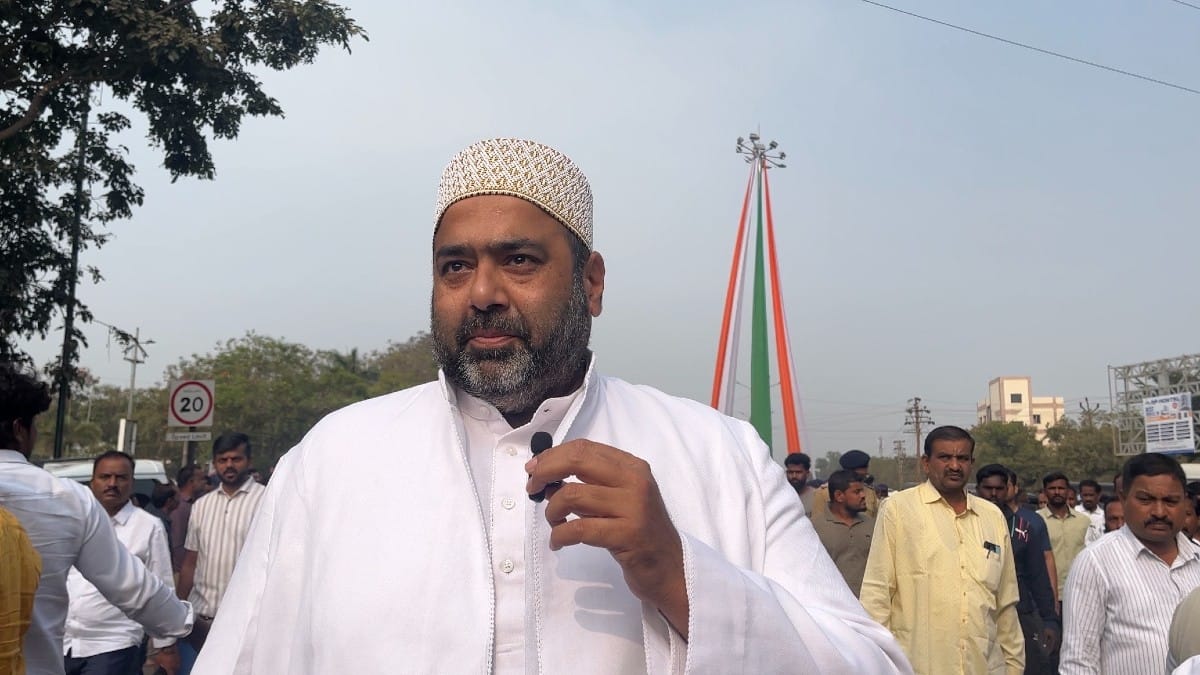
The crowd at the Vidya Pratishthan grounds reflected Baramati’s social diversity, underscoring Pawar’s image as a leader whose appeal cut across community lines. Juzer Kayamkani, a member of the Bohri community and a lifelong Baramati resident, described the loss as deeply personal.
Speaking to ThePrint he said, “I have lived in the presence of dada since I was born in Baramati. We are here today because for us this is the biggest loss of my life…He was connected with everyone, the whole society and our entire community. We don’t have words to express our feelings. It’s a very great loss for us.”
Women from nearby villages, many of whom credited Pawar for improving the state of education and infrastructure in Baramati, were also present in large numbers.
Kavitha Dattatreya Gadhavi, who travelled from a village in Baramati taluka, recalled her last glimpse of the leader. “When dada left, everything and everyone was quiet and numb. I have come for dada, to pay him my respects. He has done a lot for the children especially; built schools and colleges and made sure that students get the best education.
“I saw dada for the last time when I went to see the cycle race. I did not know that that would be the last time I will ever see him.”
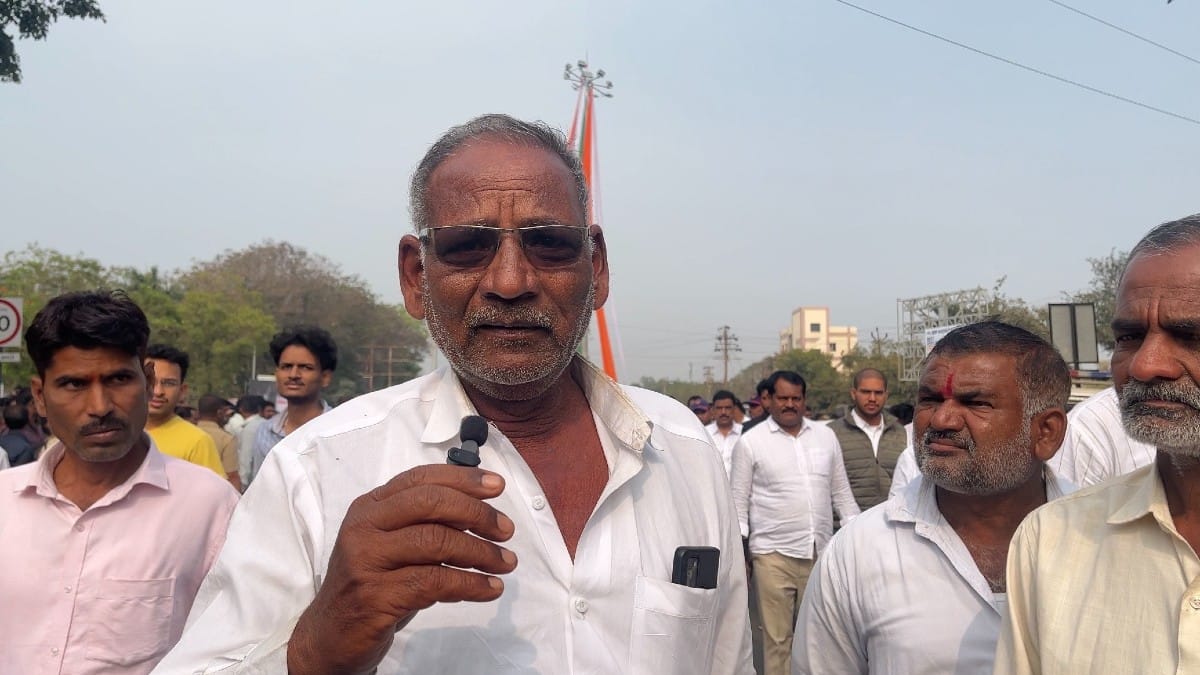
The funeral drew people from far beyond Baramati. Bhaskar Bhise, a differently-abled resident of Nanded district, stood amid the crowd, speaking with intensity about Pawar’s work ethic and developmental legacy. “He was a person who could break stones. He could break rocks. He was a person who could develop. From 6am till night, he was a person who could work…There will never be a person like him again.”
Party workers who had migrated to cities but retained close ties with Baramati also returned for the funeral. Maruti Kadam, who travelled from Mulund in Mumbai, said Ajit Pawar’s approach to politics was rooted in problem-solving rather than power.
“I am originally from Baramati. I have been working in Mumbai in various official positions in NCP since 2008–2009. Whenever we have to deal with the problems of the people, our dada, the leader of the people, would always say that we can solve the problems of the people, if we wish to solve them. The future seems grim,” said Kadam.
For Yahya Ahmad Chaush from a village in the Beed district in Marathwada region, Ajit Pawar was a “good man with a clean heart” and was the “face of development”.
“I left for Baramati at 5.30am in the morning and reached here at 10.30am. All of the development will now stop after dada‘s demise. He looked after us, and just last week he had mentioned about developing our zilla with an airport, among other things. He also made a road for us to go to the kabristan (graveyard) in our village. He was a good man with a clean heart and walked alongside everyone,” Chaush told ThePrint.
He added, “Our entire village and Beed is also in shock and mourning. He was running the government as part of Mahayuti with the BJP. Who is able to do that? We had just given our nagar palika to him this time. I work with the NCP there. This is a personal loss for me and my people. There will never be another man like him again.”
Ajit Pawar’s death in a plane crash Wednesday sent shockwaves across Maharashtra and the rest of the country, triggering an outpouring of grief from political allies, opponents and ordinary citizens alike.
As the final rites were performed and the pyre was lit, many in the crowd broke down, while others stood motionless, watching the smoke rise into the afternoon sky.
For Baramati, the farewell was not merely to a political leader, but to a figure woven into everyday life—a presence whose absence, many said, would be felt for years to come.
(Edited by Amrtansh Arora)