





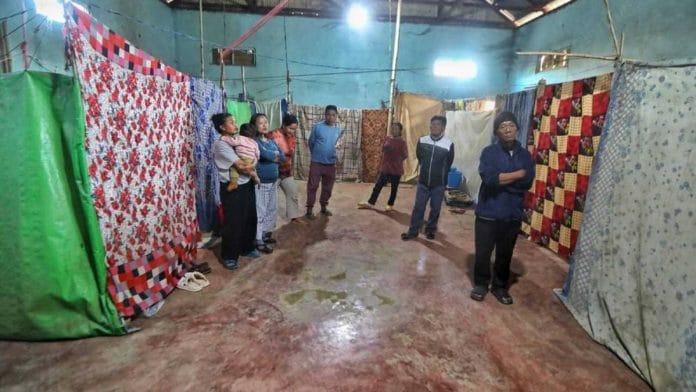



Churachandpur: Children play nearby as cooked rice is spread out on a plastic sheet to dry. A few men sit on a raised platform overlooking a church, while women wash utensils and prepare food in a cramped corner of a large hall.
This is the D. Phailien relief camp in Manipur’s Churachandpur, where Kuki families who once lived in capital Imphal have been staying since they were displaced in the wake of the Kuki-Meitei ethnic violence that broke out in May 2023.
Last year, the government revised its guidelines for internally displaced persons (IDPs), replacing the supply of relief items—including rice, dal and drinking water—with financial assistance of Rs 84 per person per day through direct benefit transfer (DBT), amounting to about Rs 25,000 per month per family. Since the announcement in November last year, IDPs have been protesting, saying the allowance is too low to meet even basic needs.
“When we moved to Churachandpur, before the government gave us relief, our Kuki groups used to contribute food and other supplies. Life was better then—we were able to survive,” said Tinkhohata, a 60-year-old woman who earlier lived in Imphal West.
With President’s Rule in Manipur set to end by mid-February, ThePrint visited the Kuki relief camp to assess living conditions and to understand the residents’ demands for their future. However, nothing much has changed and the administration under President’s Rule has failed to accommodate the IDPs, say the camp residents who are still living in poor conditions.
The camp is housed in a large hall, divided into small enclosures using sticks and bedsheets to create a semblance of privacy. Each space—barely enough for a single person—is home to entire families of four or five.
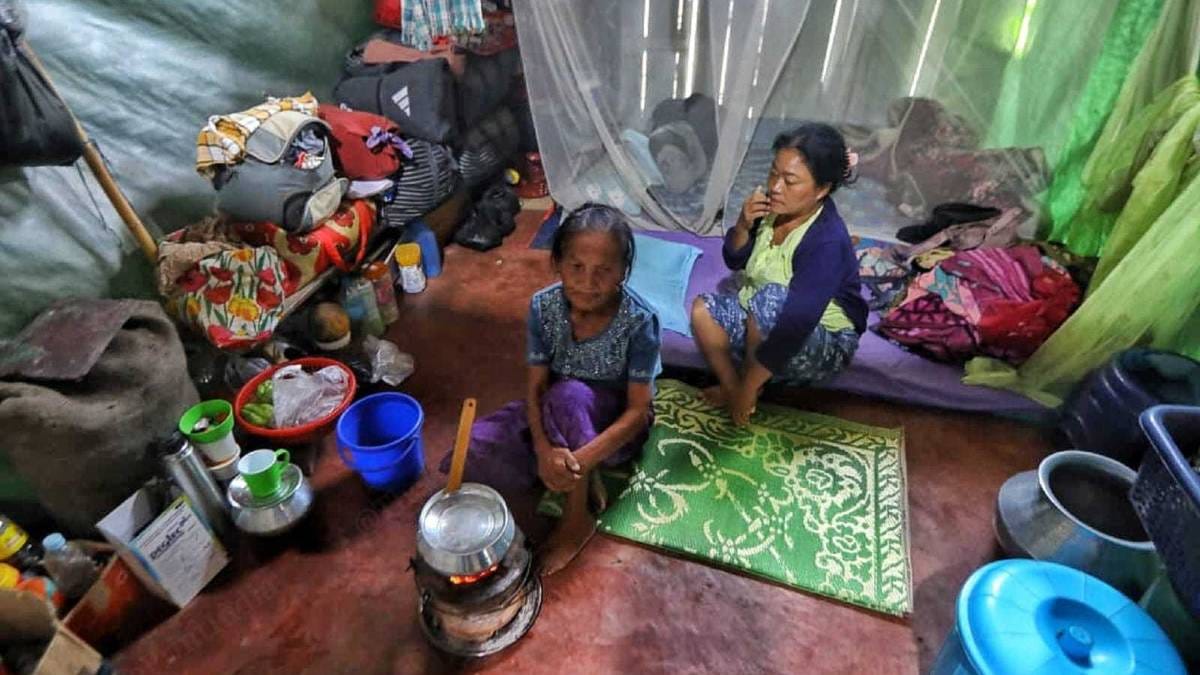
For many residents, returning home is not an option.
“The conditions here are miserable, but we can’t go back to Imphal. They will kill us there. They will not accept us,” said Tinkhohata.
Forty-year-old Gracie came to Churachandpur to escape the violence, like many others from her community. Now, all she dreams of is a new home in Churachandpur—or “CCpur”, as she calls it—and a separate union territory identity for the hill areas of the state.
“The violence made me realise that I am no longer safe with the Meiteis. The conditions where I am living are horrible, but at least I am not dead,” Gracie said. “Now I want to build a small house here, and I want a separate UT identity so that the government listens to my community.”
She is not alone to demand so. The Kuki IDPs living in the relief camp are strong proponents of a separate administration. This aligns with the demand of Kuki-Zo groups, who have said they will not support the formation of any government in Manipur after the end of President’s Rule.
Every morning, the occupants queue up to bathe at the camp’s only washroom—a foul-smelling space enclosed with plastic sheets.
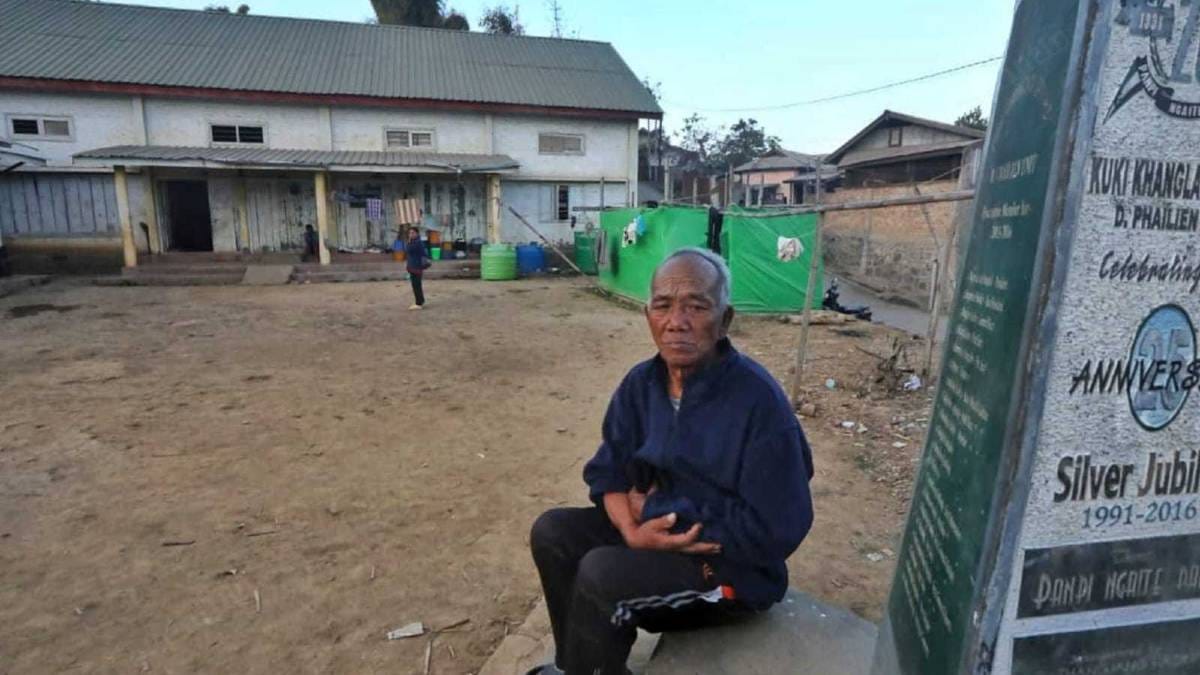
For Phoukasa, a separate administration is now his only dream. He earlier lived in a rented accommodation in Imphal East. It was a better life, he said.
“After the violence, nothing feels the same. I am alive now only to see the day when we get a separate administration. That will be my happy day,” he said, as children gathered around him.
Speaking to ThePrint, senior government officials said it is difficult to accommodate IDPs in their original places of residence as the situation is still not conducive or safe for their return.
(Edited by Nida Fatima Siddiqui)
Also Read: In Manipur, Meitei man’s funeral procession becomes a public reckoning, with a ‘martyr’s burial’