





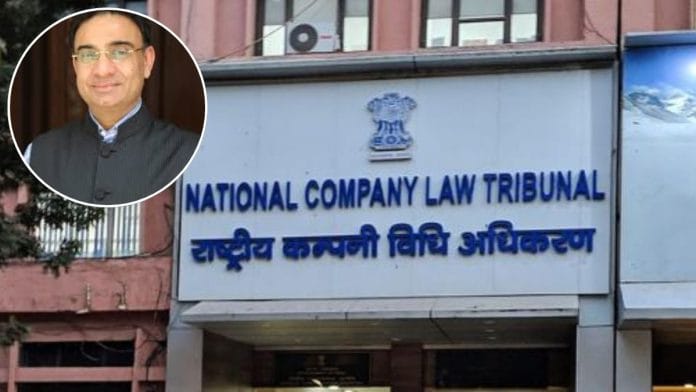



New Delhi: The National Company Law Tribunal (NCLT), on 3 February, terminated Alchemist Limited’s insolvency proceedings, observing that the committee of creditors (CoC) remained dominated by the same group of entities that were the alleged conduits and beneficiaries of the proceeds of crime of the firm, which operates pharma, agri, and hospitality businesses.
Former Rajya Sabha MP Kanwar Deep Singh founded and headed the Alchemist group of companies. He transitioned to the role of chairman emeritus in 2012 to focus on politics. His son, Karan Deep Singh, serves as the director of some of the group companies now.
The NCLT terminated the insolvency proceedings Tuesday at the Enforcement Directorate’s request. The ED has been investigating two money laundering cases against the Alchemist Group and its group companies.
The tribunal observed that the CoC—the ultimate decision-making body under the Insolvency and Bankruptcy Code (IBC) 2016, containing financial creditors who vote on resolution plans to revive a company or maximise asset value—involved in the Alchemist Ltd insolvency proceedings included group companies, such as Technology Parks Ltd, and that they held an approximately 97 percent voting share in Alchemist Ltd’s shares.
The NCLT also observed that CoCs accused of criminal misconduct exercising near-total control over proceedings is completely contrary to the established mechanism under the IBC, eroding the independence and commercial wisdom envisaged under the IBC, 2016.
“The code presupposes a CoC acting at arm’s length from the corporate debtor, not a self-controlled loop, where the alleged wrongdoers sit in judgment over their own claims,” it said. “These very entities are alleged recipients, conduits, or beneficiaries of proceeds of crime, arising out of large-scale cheating and fraudulent mobilisation of public funds, and are facing prosecution and attachment proceedings under the PMLA (Prevention of Money Laundering Act).”
The NCLT also observed that if the insolvency proceedings were completed under a resolution plan prepared by the group entities, it would allow claims of tainted transactions. Additionally, a successful insolvency proceeding would open the door to invoking Section 32A immunity in a manner not considered by the legislature. A reform introduced in the IBC in 2020, Section 32A provides immunity to new owners from wrongdoings of a company’s former management, while ensuring accountability for those wrongs.
The ED submitted to the tribunal that the resolution professional appointed for the proceedings was an employee of the Alchemist group and that the CoC recommended him only to provide undue benefits to Alchemist Ltd during the proceedings.
The agency submitted before the tribunal that the PMLA probe into the group and its associated companies revealed that Alchemist Infra Realty mobilised more than Rs 1,916 crore from the public under the Collective Investment Scheme (CIS), without even registering with the Securities and Exchange Board of India.
Another probe allegedly revealed that Alchemist Holdings Ltd and Alchemist Township India Ltd had collected more than Rs 1,840 crore from the general public across various states on the pretext of offering high returns, as well as plots, villas, and flats to investors. However, nothing was returned to them. Instead, the funds were diverted to other Alchemist Group companies, such as Technology Parks Ltd, under the pretext of providing inter-corporate loans.
Also Read: 60% shareholder battles in India are settled or withdrawn. It’s the model corporate law
‘Vitiated by fraud’
The ED alleged before the NCLT that during the search of premises linked to Alchemist Ltd in December 2023, the agency learned of the ongoing insolvency proceedings. It claimed that it also learned that Gaurav Misra had been appointed as the resolution professional.
In his statement to an investigating officer, Misra revealed that five creditors had admitted claims to the NCLT under the 2016 IBC provisions. Of them, only Bank of India and Punjab National Bank—which had dues of Rs 5.05 crore and Rs 1 crore, respectively—turned out to be the bona fide creditors. The remaining three firms, Technology Parks Limited, Alchemist Township, and Alchemist Realty—all entities of the same group—admitted claims of over Rs 900 crore.
The ED submitted to the tribunal that all three companies have since been charged under the PMLA as beneficiaries of proceeds of crime generated by the Alchemist management, with Technology Parks Ltd the largest beneficiary, holding a whopping 97 percent of the resolution process voting rights.
Voting rights under IBC are generally granted in proportion to the debt owed to any creditor.
The ED alleged before the tribunal that insolvency proceedings had been initiated to legitimise the proceeds of crime, retain control over the assets attached under PMLA proceedings, and ultimately obtain immunity under Section 32A of the code. The insolvency proceedings, under these circumstances, would frustrate the proceedings under PMLA, ED’s counsel Zoheb Hosain argued before the tribunal.
“The insolvency process cannot be allowed to be converted into a laundering mechanism cloaked in statutory legitimacy,” the tribunal observed Tuesday. “Considering the totality of circumstances, the nature of allegations, confirmed attachments under PMLA, domination of the CoC by accused group entities, prima facie layering of funds, and the risk of misuse of insolvency immunity, this adjudicating authority is satisfied that the CIRP (e Corporate Insolvency Resolution Process) has not been initiated or conducted for the genuine purpose of insolvency resolution.”
The NCLT held that “permitting the CIRP to continue would not only prejudice statutory proceedings under the PMLA but would also undermine the integrity of the insolvency regime itself. This Tribunal cannot be a silent spectator to such abuse.” “Accordingly, this tribunal holds that this is a fit and appropriate case to invoke the powers under Section 65 of the Code suo motu, and to recall the CIRP initiated against the Corporate Debtor, as the process stands vitiated by fraud, collusion and malicious intent.”
(Edited by Madhurita Goswami)
Also Read: Why the delay? SC raps ED, CBI for slow probe into Anil Ambani group loan fraud case