





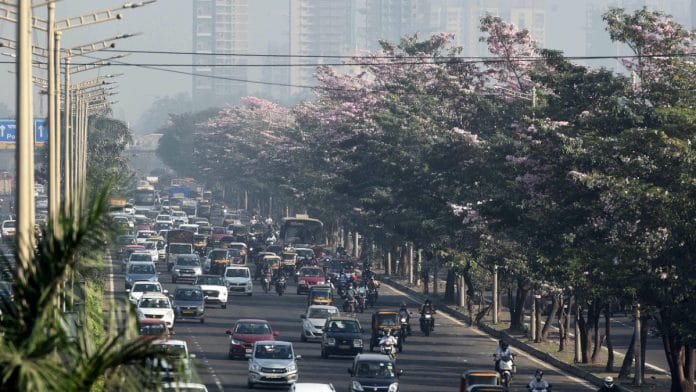



Mumbai: For a few weeks each winter, one of Mumbai’s busiest traffic corridors turns into a tourist spot. Along the Vikhroli stretch of Eastern Express Highway, the pink trumpet trees burst into bloom, their soft rose and magenta flowers spilling over central dividers and service roads, momentarily transforming a concrete artery into a seasonal landmark. The sight resembles that of the iconic Japanese spring flower, the sakura or cherry blossom.
The pink trumpet trees, botanically identified as Tabebuia heterophylla (commonly known as pink trumpet or pink poui), flower at a time when much of the city’s greenery lies subdued. As the mercury dips and humidity eases, the trumpet-shaped blossoms appear almost overnight, 20-40 feet in size, carpeting pavements and medians with fallen petals and catching the eye of motorists inching forward in traffic.
The transience is part of the appeal. Photographers stop along service roads, pedestrians slow their pace, and social media fills with images of pink canopies framed against flyovers, buses and passing trucks.
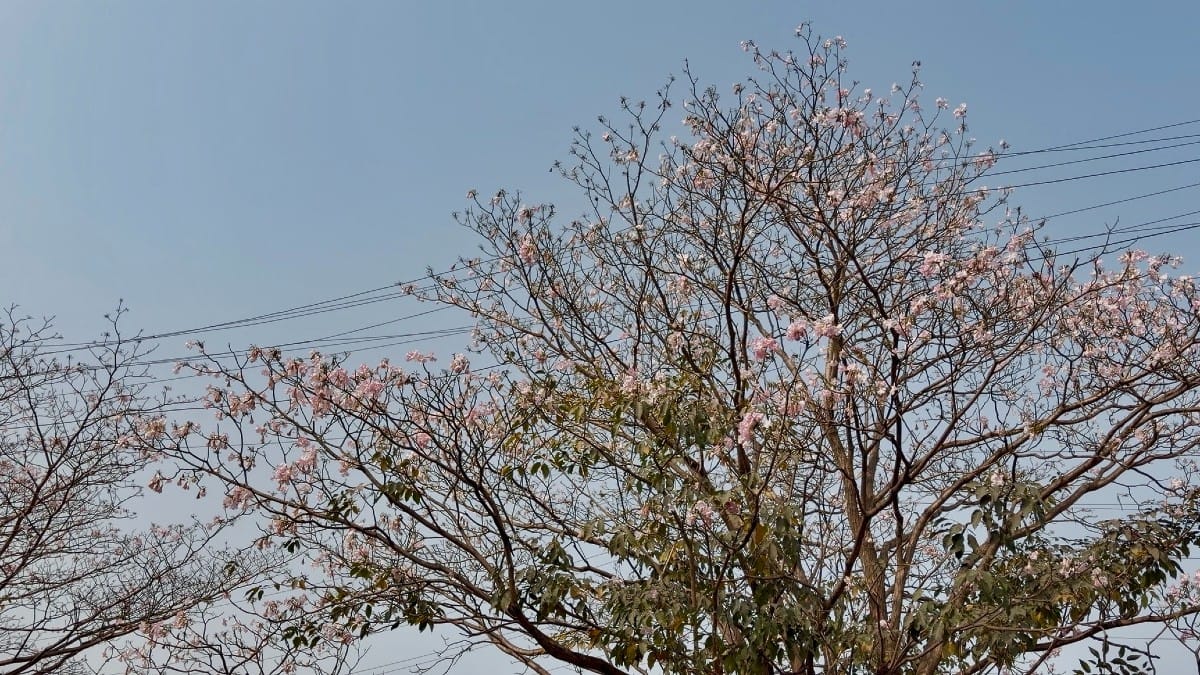
Comparisons with the Japanese cherry blossoms, though botanically inaccurate, are common, reflecting the city’s hunger for moments of beauty that break routine. A photographer by profession, Thane resident Rahul Shrinivas told ThePrint that he has been coming to Vikhroli during winters along with his friends for a few years now, to capture the beauty.
“The best time to come here is early morning before sun is at its peak and before the traffic movement begins. I get my camera because I love photography and it is my profession too. I wanted to capture the trees in their real essence and the flowers are of a different shape with different shades of pink on the trees,” he said.
The trees have also found their own identity on Google Maps. If one wishes to witness the beautiful sight along the highway, one may just type ‘Vikhroli Pink Blossoms’ and it will lead them there with ease.
Also Read: Goan bakers brought bread to Mumbai. Then passed the mantle to Iranians
A non-native tree that found a home
Native to parts of Central America and the Caribbean, Tabebuia heterophylla is not indigenous to India. Yet in the last decade, it has become one of Mumbai’s most recognisable seasonal trees, especially along major roads such as the Eastern Express Highway, Jogeshwari-Vikhroli Link Road, and parts of the Western Express Highway.
Urban horticulturists said the tree’s popularity lies in its resilience. It tolerates pollution, requires relatively little water once introduced into the soil, and sheds its leaves before flowering, allowing the blossoms to stand out sharply against bare branches and grey skies. For city planners, it offered a rare combination: ornamental appeal without high maintenance.
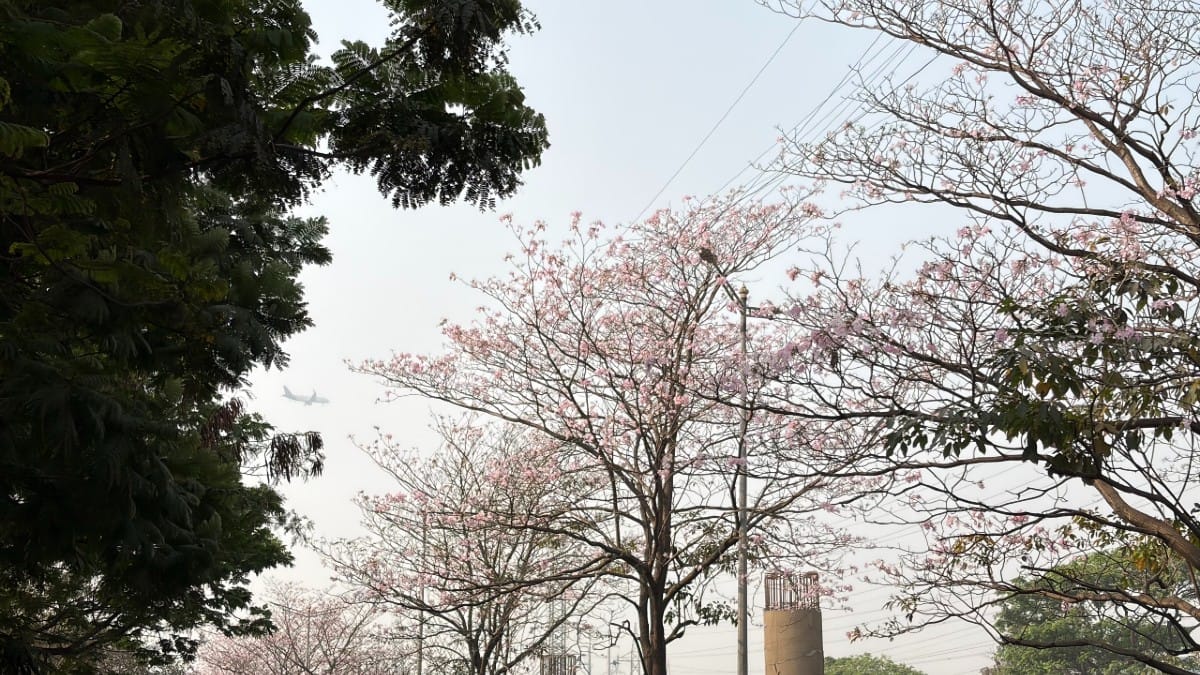
“The pink trumpet is dramatic but disciplined,” said Dr Satish More, botanist and Deputy Superintendent of Gardens at the Byculla Zoo. “It doesn’t spread aggressively, it flowers predictably, and it gives the city a seasonal identity,” he added.
More also said these trees are imported and then cultured or introduced by nurserymen by the process of vegetative propagation. “The branches of the trees are cut into small pieces about 6 to 8 inches, mixed with cow dung and manure and planted in a polybag,” he explained.
Unlike gulmohar trees that flower over months, the pink trumpet’s display is brief. At its peak, which usually falls between late December and early February, entire stretches of the highway appear dusted in pink.
Within weeks, the flowers wither, leaves return, and the trees recede once more into the background of the city.
Blooming amid uncertainty
In October 2025, the Mumbai Metropolitan Region Development Authority (MMRDA) began the construction of an elevated bridge spanning about 12.95 kms on the Eastern Express Highway directly connecting Chedda Nagar in Ghatkopar to Thane’s Anand Nagar, placing these roadside trees under threat of cutting or transplantation.
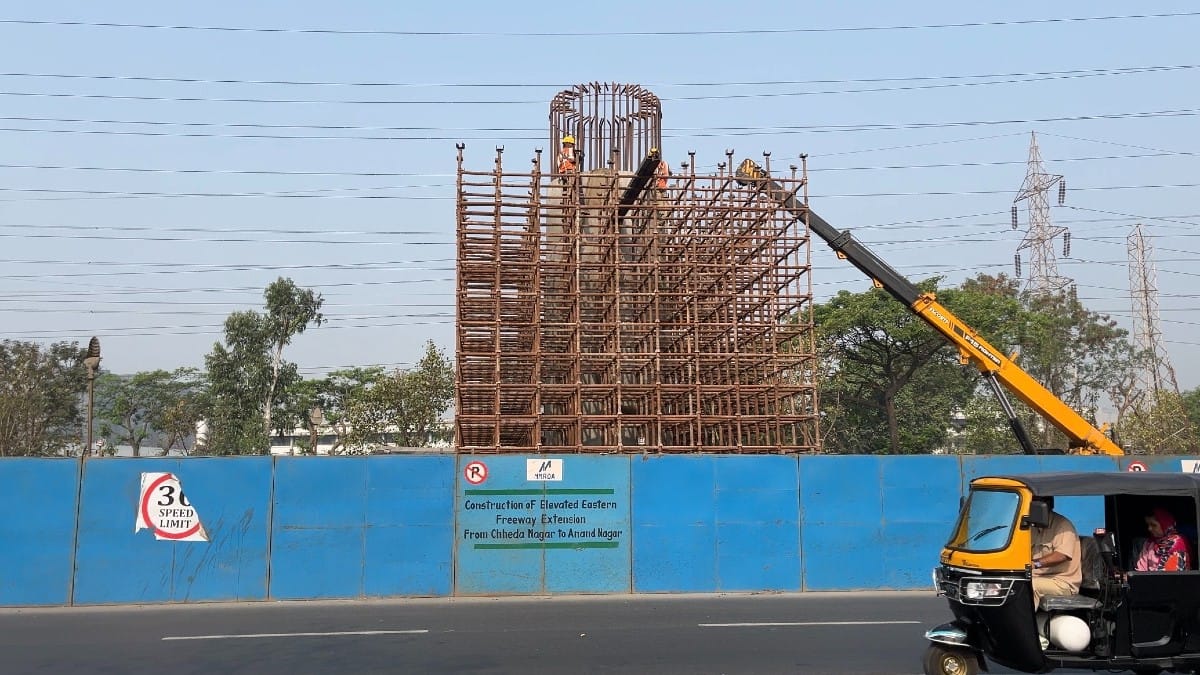
Speaking to ThePrint, an MMRDA official said on condition of anonymity that they changed the proposed alignment to save the trees. “As you can see, the pillars of the bridge are in the centre and trees are on the side of the road. We have changed the alignment of the bridge to save the trees,” the official said but refrained from commenting on whether this means that the pink trumpets will not be touched at all.
For residents of Vikhroli and other neighbouring areas who regularly visit the spot to witness the scenic view, the winter bloom symbolises more than just seasonal beauty.
Akash Patil, a Class 12 student from Vikhroli studying at S.K. Somaiya Degree College in Ghatkopar told ThePrint, “These trees give a different look to the city every winter season.” For Vikhroli residents Prajakta Salunke and Sakshi Sawant, high school best friends and now working professionals, the pink trumpet trees embody a link to the city.
“We have been coming here every season for the past 10 years, since our college days. These trees with their unique pink flowers that don’t seem native to our city and country, gives Mumbai a different look and they become an attraction point for people from all across the city,” said Salunke.
In a city where change is constant and speed unavoidable, the pink trumpet trees of Vikhroli offer something rare—a predictable, gentle interruption. For a short while each year, Mumbai’s rush slows not because it must but because something beautiful insists on being noticed.
(Edited by Amrtansh Arora)
Also Read: White lions, jaguars, pumas. BMC floats tender for exotic animal zones at Byculla zoo