





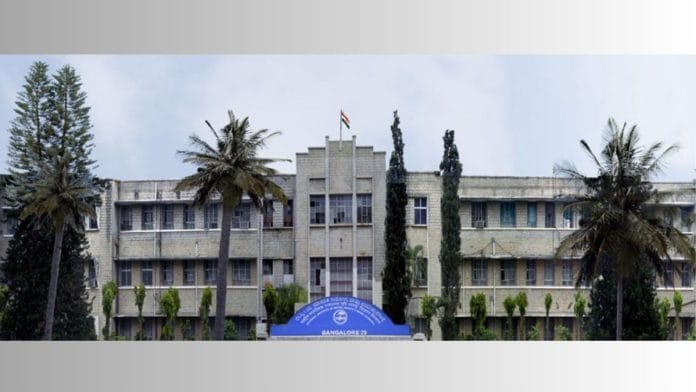



New Delhi: The announcement of a ‘NIMHANS of the north’ in the Union Budget is a move that could strengthen India’s mental health system, psychiatrists have said. The new national institute is expected to be along the lines of Bengaluru’s National Institute of Mental Health and Neuro Sciences (NIMHANS).
In her Budget speech, Finance Minister Nirmala Sitharaman said the government was “reaffirming our commitment to mental health” by setting up a NIMHANS-2 and upgrading other institutions.
“There are no national institutes for mental healthcare in North India. We will therefore set up a NIMHANS-2 and also upgrade National Mental Health Institutes in Ranchi and Tezpur as Regional Apex Institutions,” she said.
As of now, NIMHANS is the only mental health institution with ‘Institute of National Importance’ status. Based in Bengaluru, it has emerged as an apex centre for mental health education and neuroscience research in India. Initially started as an ‘asylum’ in 1847, it was established in its present form in 1974 and brought under the wing of the Ministry of Health and Family Welfare.
A counterpart to it in the north could bring advanced mental healthcare to many underserved communities in the region, according to Dr Praveen Tripathi, consultant and psychiatrist at The Renowa Care in Noida.
“It is a very welcome step to strengthen the country’s health system. Mental health infrastructure needs an expansion. India is facing a rising burden of stress, depression, and trauma across age groups,” Tripathi told ThePrint. “This is the top institute to handle complex psychiatric, neurological, and trauma-related cases that district and even state hospitals cannot manage. It will improve access to specialised care in underserved areas.”
In recent Budgets, mental health has largely been addressed within the wider public health framework rather than through separate funding. A major initiative came in 2022-23 with the launch of Tele-MANAS, a national helpline that offers free mental health counselling, especially in areas where clinics and specialists are not easily available. Funding for the National Mental Health Programme is often mixed with larger health budgets, making it difficult to track how much actually reaches states and districts for mental health services.
Also Read: Economic Survey flags digital addiction risk for India’s youth, advocates for balance over bans
‘Don’t include Ayurveda & homeopathy’
Tripathi said NIMHANS trains a large share of the country’s psychiatrists, psychologists, and psychiatric social workers, and helps shape national programmes and guidelines.
“Expanding this model through NIMHANS 2.0 has the potential to strengthen the entire mental health system, not just in North India but nationwide,” he added.
On social media platforms, several mental health experts and doctors celebrated this move by thanking Nirmala Sitharaman, but some voiced concerns about treatment modalities.
Dr Rajinder K Dhamija, director of the Delhi-based Institute of Human Behaviour & Allied Sciences (IHBAS), called it a “visionary step”.
“This will go a long way for providing quality mental health care to citizens of this part of India & capacity building,” he wrote on X.
Thank you Honourable Prime Minister , Madam Finance Minister , Hon’ble Health Minister for this visionary step towards Mental Heath &Brain Heath in India . This will go a long way for providing quality mental health care to citizens of this part of India &capacity building. pic.twitter.com/rMu1YwQij9
— Rajinder K Dhamija (@DrRKDhamija) February 1, 2026
But Dr Shaurya Garg, a third-year MD psychiatry resident at AIIMS Delhi, urged the government not to blend alternative systems into the new institute—an apparent reference to NIMHANS’ integrative medicine department set up in 2019.
“Pls dont include Ayurveda & homeopathy with NIMHANS 2.0. Let it remain free from the already struggling psychopharmacology. Thank you for your attention to mental health,” Garg posted on X.
(Edited by Asavari Singh)