








Lucknow: Dr Niraj Rai’s ground-floor laboratory in Lucknow is straight out of Indiana Jones’ dream: skeletal remains from 4,000-year-old Indus Valley civilisation sites, to 10,000-year-old Mesolithic sites in Uttar Pradesh, to even 800-year-old Ahom kingdom burials. All have been brought here for analysis. But Rai is no archaeologist. His team at the Birbal Sahni Institute of Paleosciences in Lucknow goes much deeper — literally and figuratively — in their analysis of human remains from India’s historical sites.
They are reconstructing the human history of India using DNA one strand at a time.
They’re South Asia’s only lab capable of extracting and studying DNA from ancient bones, and their mission is to decode the subcontinent’s history.
“India is one of the most genetically diverse countries in the world, and that has been known for a while. But where and how did this diversity originate?” said Rai, Scientist E at BSIP and the lead researcher of the Ancient DNA lab.
Lucknow’s eight-year-old Ancient DNA lab is pioneering India’s contribution to the growing field of ancient genome analysis. The BSIP scientists’ work ranges from finding Tajikistan ancestry in 2,000-year-old skeletons found in Gujarat’s Vadnagar, to explaining the Tibetan, South Asian and Central Asian origins of Ladakh’s present-day population. Their cutting-edge ancient genome sequencing work has even drawn the attention of India’s state governments, and over the last two years, BSIP has signed MoUs with Assam, Maharashtra and Gujarat to conduct further research into some key archaeological sites in the states. From the genetic histories of Ahom kings in Assam to Neolithic settlements in UP’s Pratapgarh, the MoUs are almost a hunt for legitimacy, for genetic continuity, by Indian states.
The lab has achieved breakthroughs like the first-ever ancient genomic study of Kashmir, using 5,000-year-old bones from Burzhoum near Srinagar, in collaboration with the Archaeological Survey of India. But Rai’s broader project, which is a culmination of his ancient DNA research across time periods and regions in India, seeks to answer one question – is the Aryan migration theory true? Using DNA, he wants to understand exactly when the Central Steppe pastoralists – the Aryans, in common parlance – entered the subcontinent and what their influence was on Indian society. While the question has become politically sensitive over the last decade, Rai said it is still necessary to determine precisely which genes make up Indians today.
Rai has been on this quest for close to 15 years, first as a researcher at the Centre for Cellular and Molecular Biology in Hyderabad before he joined BSIP. At BSIP, the project began in 2024, in collaboration with the Archaeological Survey of India, which has custody of all skeletal remains excavated from places like Harappa, Mohenjo-Daro, and other Neolithic sites.
Global archaeogenetic scholars, such as Priya Moorjani, a population geneticist at the University of California, Berkeley who completed genome sequencing for 2000 South Asians, agree with Rai.
“There are still many open questions about India’s deep and recent population history, and unlike Europe and Africa, India has remained underrepresented in genomic studies,” Moorjani told ThePrint.
“Ancient DNA has fundamentally reshaped our understanding of human history. In India, it can help further understand human adaptation, disease and resilience.”
Also read: How Lucknow’s DNA lab is decoding Indian cheetah’s genetic history from 200-yr-old samples
What is the current ongoing research?
In October last year, Rai’s lab published the first-ever ancient genomic study of Kashmir, linking the current population to Neolithic people that lived in the valley over 5,000 years ago. The study, conducted by BSIP researcher Aparna Dwivedi under Rai’s guidance, extracted DNA from the ear bones and teeth of the individuals buried in the Neolithic (3000-1000 BCE) site of Burzhoum, near Srinagar.
“Archaeology could tell us about the pottery designs and tools of Burzhoum, but my analysis gave the first direct evidence that the people of Burzhoum shared genetic ancestry with Central Asia, Tibet, China and the Swat Valley in Pakistan,” said Dwivedi.
Her study confirmed the prevailing theories about Burzhoum’s genetic linkages that had been proposed since the site was first discovered in the 1930s. However, Rai’s team made another major discovery.
“We found that Kashmiris today have similar genetic material, meaning that the site has been continually occupied for thousands of years,” said Dwivedi excitedly. “This is the first such evidence.”
Importantly, Dwivedi’s study also showed that even though the Burzhoum site existed at the same time as the Mature Harappan period and there was contact and trade, it wasn’t part of the Indus Valley Civilisation. Dwivedi, who just submitted her PhD thesis on the genetic history of Kashmir’s Burzhoum site, spoke about the laborious process of DNA extraction from ancient samples.
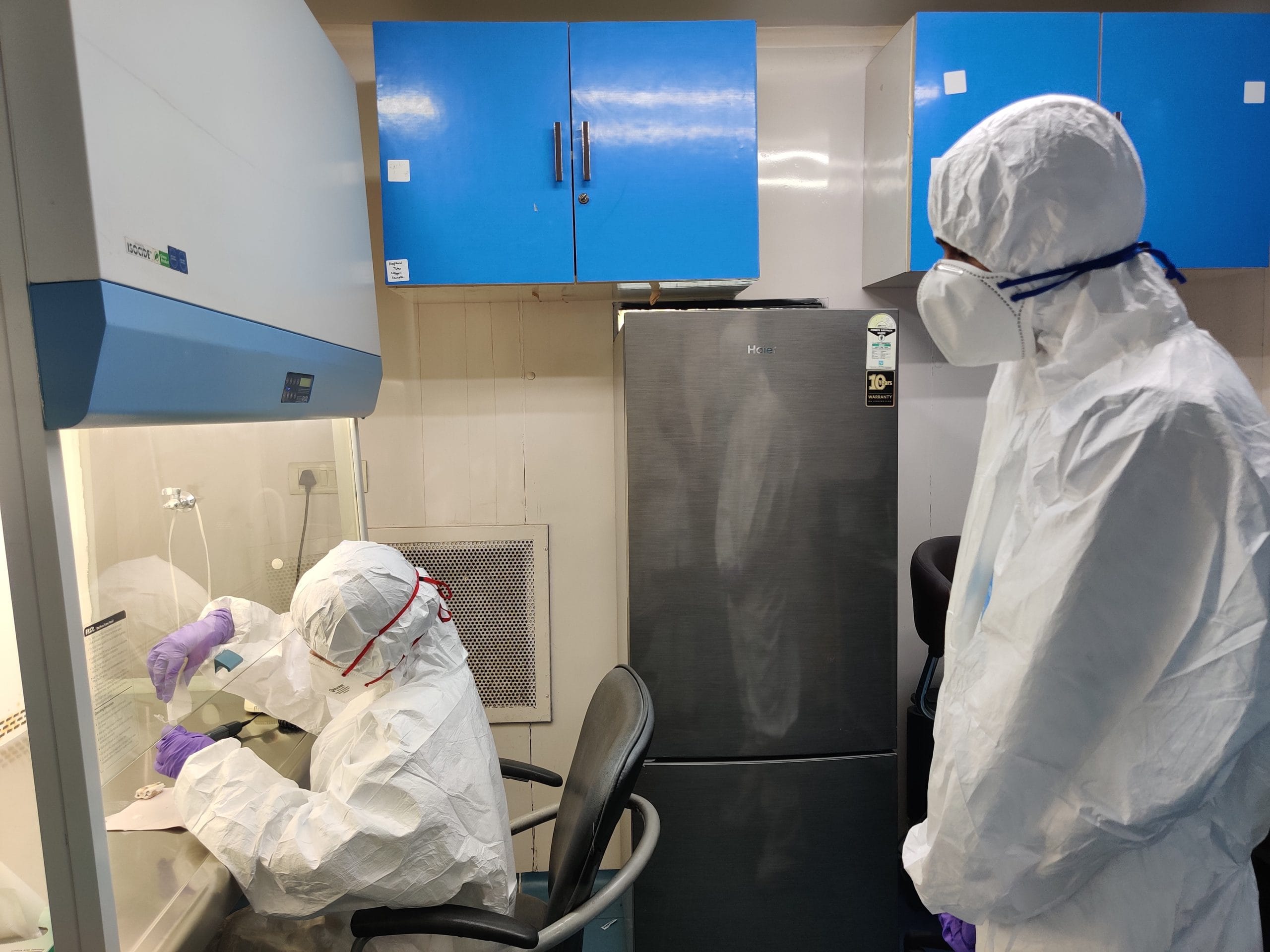
“We can’t risk contamination in the slightest, because the samples are centuries old. We don’t even dare breathe around them,” she laughed, before putting on her surgical gloves and mask to enter the lab’s clean room. “Often we’ll need to extract seven-eight samples from the same bone, just to find enough DNA to conduct our analysis properly.”
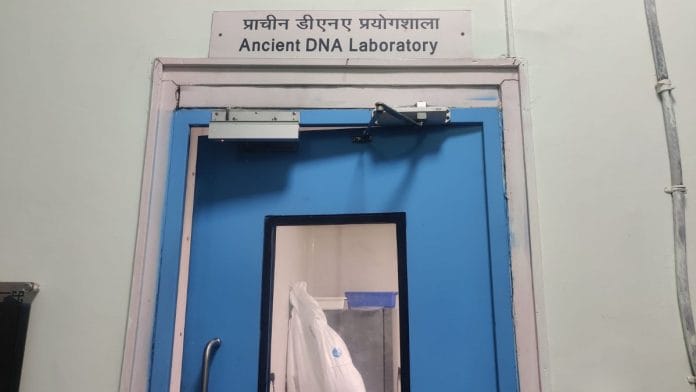
Situated on the ground floor of the BSIP, the Ancient DNA laboratory is unnoticeable at first glance. Inside, it is a maze of rooms opening into each other, coloured sterile white and blue, stocked with everything — extra PVC suits, refrigerators, and biosafety cabinets.
Like most of the other labs at BSIP, the Ancient DNA lab too is an extremely controlled environment where even the slightest contamination could put years of research into jeopardy. However, unlike the radiocarbon dating laboratory or the paleomagnetism laboratory, Rai’s lab deals with geologically ‘recent’ history.
“Most of the fossils we study here are millions of years old, at least. That is the geological timeline we’re working on,” said Mukesh Thakkar, Director, BSIP. “This is why the Ancient DNA lab is unique, and important. Their samples might go back thousands of years, but they are the youngest samples in this institute!,” he added, with a laugh.
Also read: Srinagar land prices soar as high as Mumbai, Delhi now. Non-Kashmiris just can’t afford it
Why BSIP for Ancient DNA?
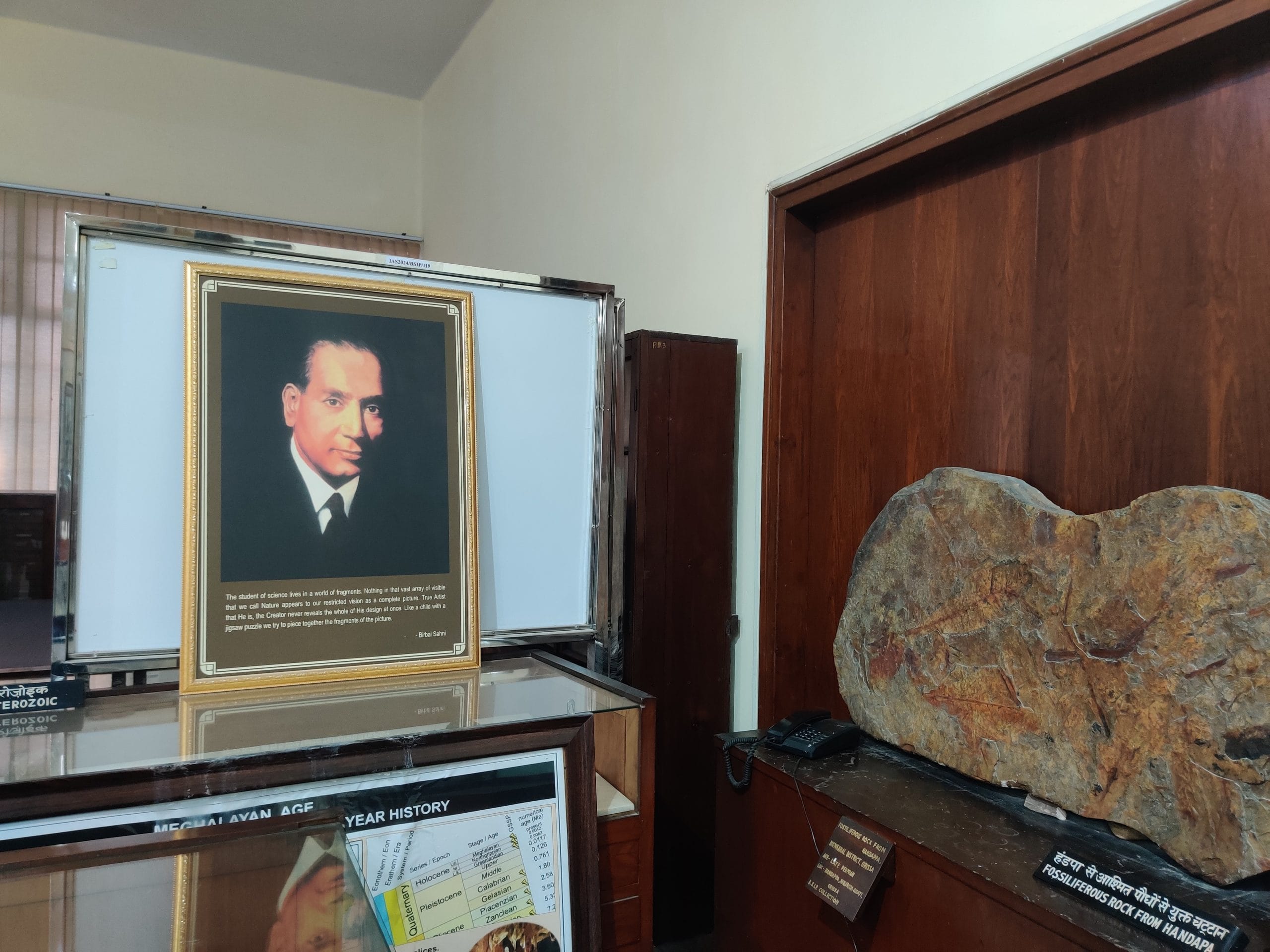
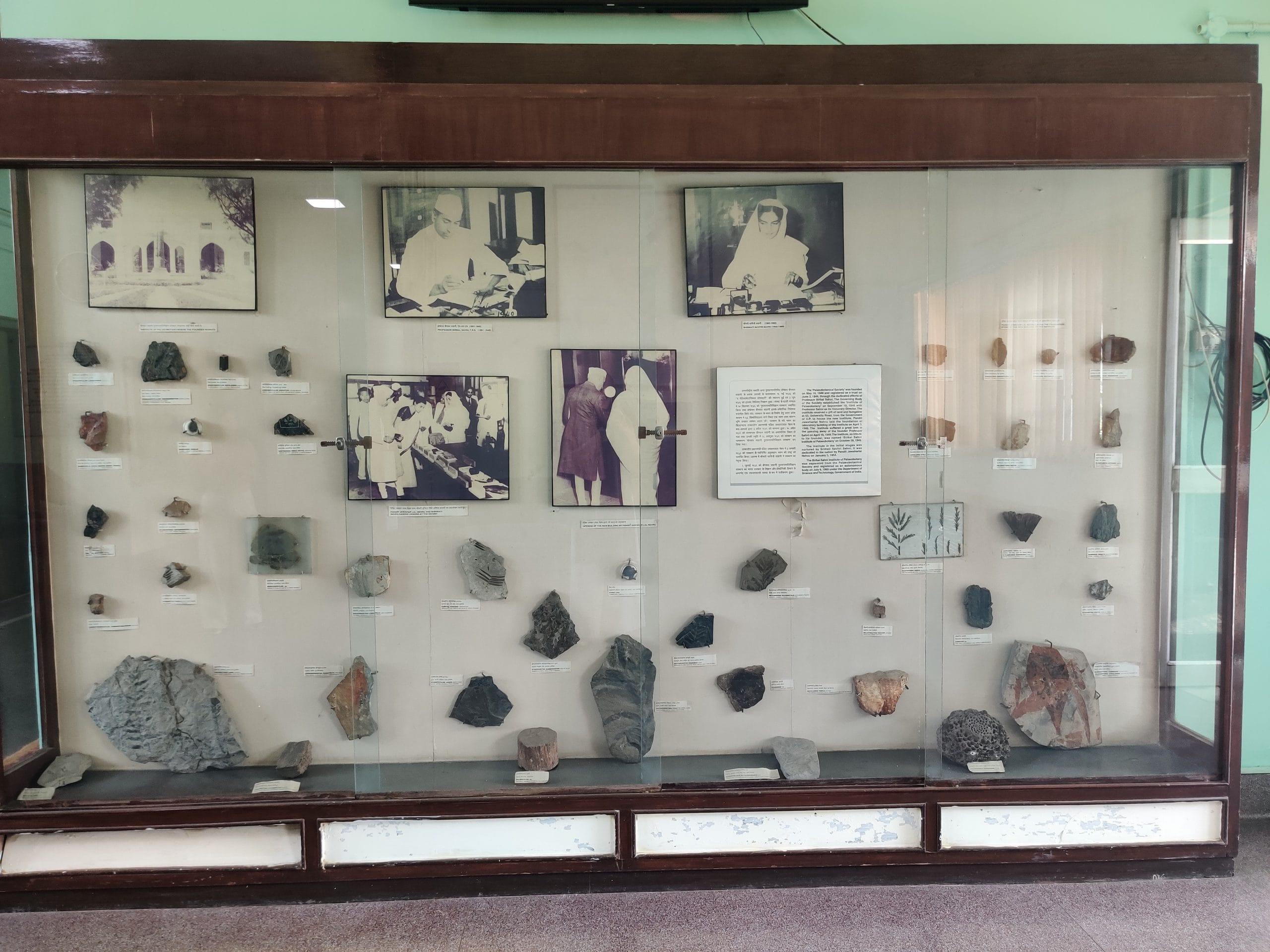
The Lucknow-based institute owes a lot more than just its name to paleobotanist Birbal Sahni, who founded BSIP by accumulating his own personal collection of fossils and books on paleobotany. Even now, the BSIP museum, adjacent to the DNA laboratory, is stocked with Sahni’s collections, including the famous Glossopteris.
At the centre of the one-room museum hall, surrounded by wooden specimen boxes, stands a display box with the mighty Glossopteris leaf fossil; it is a thin, long leaf with veins running down the middle and sides. More than 250 million years old, this fossil was definitive evidence of the fact that all continents were once part of a large super continent called Gondwana.
By studying the Glossopteris fossils found in India, Australia, and China, Sahni himself made major contributions to the Gondwana theory.
“That was the origin of our institute – we’ve been studying the Earth’s history from its origin, using evidences like fossils and even ancient pollen signatures,” said Thakkar. “From unicellular life to dinosaurs, we’ve studied them all. It was only natural that we also study the origins and evolution of human life, and human communities.”
As a DNA-focused laboratory though, the way Rai and his researchers treat their samples is different from his colleagues in radiocarbon dating, paleomagnetism, or geochemistry labs. After all, DNA is fundamentally a destructive process.
“The way to take out DNA is by grinding the sample into a fine powder and treating it with chemical reagents,” said Rai. “It might surprise most people, but we do drill and grind centuries old bones for our analysis.”
But they must attempt multiple times to get it right.
On a working Monday, Snigdha, a final year PhD student under Dr. Rai, entered his office to ask how many samples of an ancient dog bone recovered from an Indus Valley Civilization site were enough. The process is tedious; Snigdha must sit in an isolated clean room, with gloves, masks, and a special white PVC suit that would prevent her from coming into any contact with the piece of history that sits in her hands.
“To hope to recover any genetic material, we target the ears and teeth of the specimen,” said Rai.
“But the older a sample, the more degraded the DNA. So unlike other DNA laboratories, we often have to repeat the process of extracting a sample and recovering DNA twice, thrice, even four times in case the first time yields no results.”
Also read: Fight for clean air must continue, says MC Mehta as SC closes 40-year-old case
Theories of India’s genetic history?
The existing genetic make-up of present-day Indians, based on the few studies conducted by US scientists, including Priya Moorjani, is a combination of Central Steppe genes, Iranian hunter-gatherer genes, and Ancient Ancestral South Indian (AASI) genes. But there remains little clarity on how and when these genetic communities arrived, interacted, and mixed to form the Indians we see today.
Burzhoum forms one piece of the larger puzzle of India’s genomic history. There was also the Indus Valley Civilisation at the same time period, and earlier Neolithic sites like Mehrgarh 7,000 years ago, and the hunter-gatherers in UP’s Sarai Nahar Rai 12,000 years ago – known for the earliest human skeletal remains found in India.
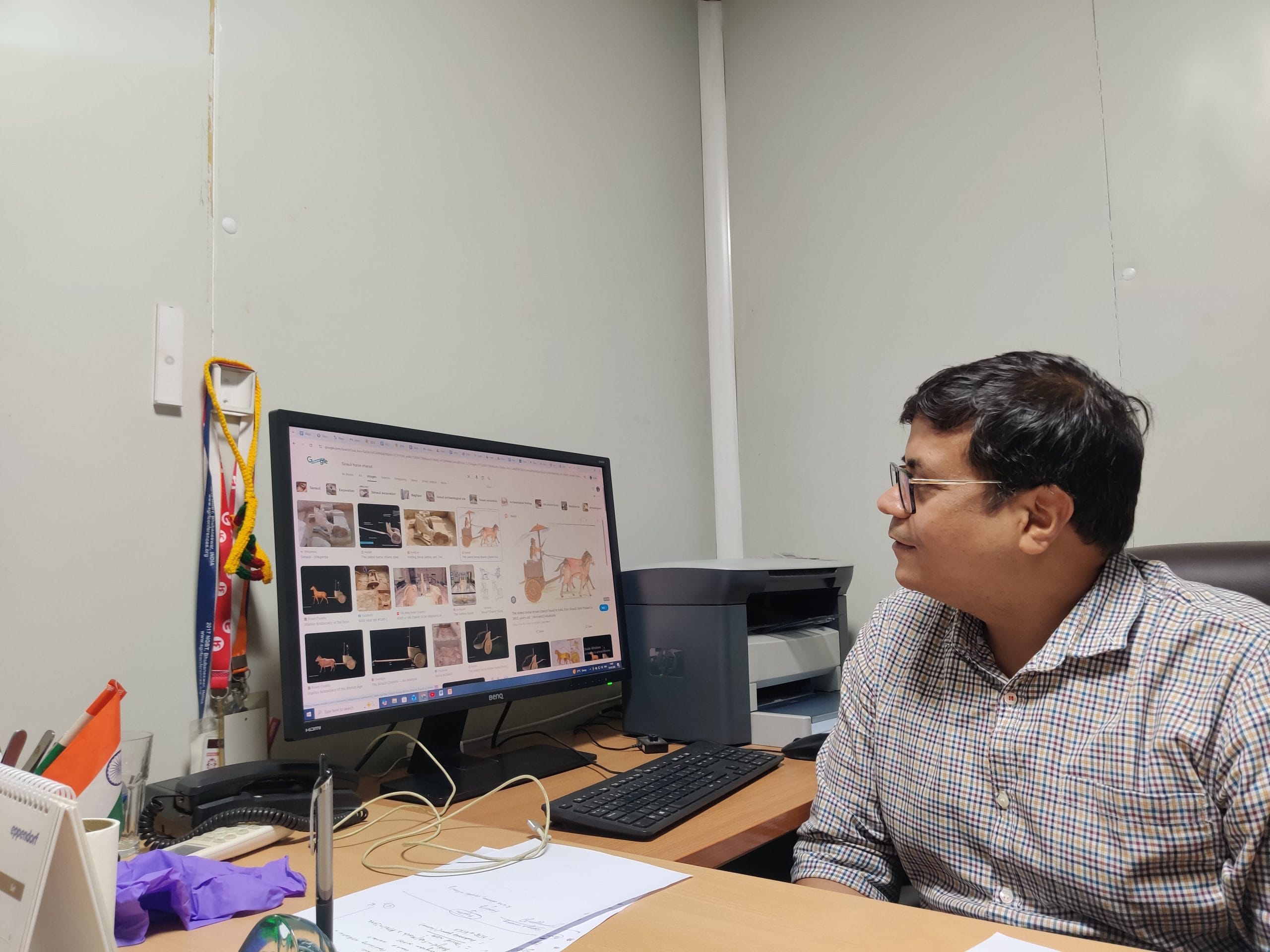
While a timeline of human population history in India exists, it remains fragmented and disjointed. The work Rai is doing attempts to tie it all together, which is why he remains at the centre of the latest archaeological developments in India, from the 4000-year-old chariots and copper weapons found in UP’s Sinauli, to the 700 CE skeletal remains found in the Roopkund lake in Uttarakhand.
Currently, the lab is in the process of analysing archaeological DNA samples from seven different regions – Rakhigarhi, Lothal and Harappa from the Indus Valley civilisation, UP’s Sinauli from the Bronze Age, Guajrat’s Vadnagar from 800 BCE, and Assam’s Ahom burials from 800 CE.
“At a primary level, we will be able to determine whether the ancient DNA of these regions matches the DNA of the people living their today,” said Rai. “But on a deeper level, we can also say what is the exact mixture of genes in the skeletons found, and how are they connected to each other. For example, did the Indus Valley people have any connection with Sinauli or Vadnagar?” he added.
Also read: Four engineers in Greater Noida are building robots for the world
How DNA has already changed India
Travelling across India, collecting samples and meeting archaeologists and geologists for his work, Rai has a unique perspective on the places and people he visits — he looks at them both as they are now and as they must have been thousands of years ago.
“Archaeology has done a marvellous job in finding that humans lived in parts of India centuries ago, but who were these humans? Who were the people in the Indus Valley? What is the genetic difference between North and South Indians? Who wrote the Rig Veda?” quipped Rai, explaining how his interest evolved in genetic history studies. “These are questions we have only hypothesised about before, but genome studies can give us definitive answers.”
Ancient genome analysis is conducted through two main processes – one is the extraction of the ancient DNA itself, and the second is its analysis. But to analyse it, scientists need a ‘reference point’ in the form of present-day population DNA. Based on archaeological records, existing literature and knowledge about the location where the ancient skeletons were found, Rai’s team will compare the ancient DNA with existing DNA samples from the modern day or the past.
“If we extract DNA from Lothal in Gujarat, we will compare it to the present-day Gujarat population, but we will also compare it to DNA extracted from Rakhigarhi because it is another Indus Valley site,” said Rai. “This will tell us the genetic relationships this individual had, their history and their future too.”
Also read: Tale of 2 drains—how Delhi’s drinking water flows dangerously close to Haryana sewage drain 6
Aryan migration theory VS research gains
The association of genetic studies with political narratives has been around since the time of Hitler, who claimed that certain genetic races like the Aryans were ‘superior’ to others. The advancement of ancient DNA analysis in the 1990s and 2000s brought back certain debates in Europe too, of the ‘purity’ of certain communities like the Vikings in Scandinavia.
A major study in 2020 showed that unlike previously believed, Viking communities weren’t continuous or isolated groups but showed a lot of genetic admixture with groups within and outside of Europe too.
In India too, ancient DNA studies come loaded with political questions about Aryan migration, the ‘true’ lineage of Indians, and the role played by Aryan migrants in ‘Indian’ texts such as the Rig Veda. Questions of purity and a ‘continuous’ Indian legacy dominate public discussions on Indian genetic data, despite evidence suggesting that a large part of Indian and global history is one of migration, intermingling and admixing of cultures.
“When approached carefully, genomic research offers a powerful opportunity to illuminate the past using empirical evidence,” said Moorjani. “But it is essential to avoid deterministic or politically charged interpretations and to communicate clearly the uncertainties and limits of what genetic data can and cannot tell us.”
Also read: Genetics, biotechnology, robotics—India’s MoU with Iranian universities are in limbo
Impact of ancient DNA research
Rai is aware of the politically sensitive nature of his research, even as his team diligently works on sequencing ancient Indian genomes from Sinauli and Vadnagar. As he sees it, the benefits of this knowledge outweigh the external concerns around it.
“As we popularise ancient DNA and genetic analysis, we’re also contributing towards greater scientific and health developments,” he said. “We’re able to fully trace the rise and transmission of pathogens, disease resistance, and immunity in different communities.”
Globally too, genome sequencing is seen as the next big revolution in precision medicine. The Indian government’s Genome India Project, launched in 2025, is an attempt at successfully conducting genome sequencing for over 20,000 distinct Indians, for advances in biotechnology.
Rai’s research thus sits squarely at the intersection of historical analysis and future opportunities for the country and the world. Additionally, the Ancient DNA lab’s work has sparked an interest in local communities in knowing their own personal histories.
“The last time I was in Vadnagar, the village in Gujarat, people were excited about DNA. It is an inherent need in humans to know their history, to know where they come from,” said Rai. “We are glad that we can help fulfil that need, help them feel closer to their history.”
(Edited by Anurag Chaubey)