








Dehradun/Haridwar: Zubair Ahmad and Akriti’s love story is far from conventional. It was a battle filled with threats from Hindutva mobs, pressure from the Hindu groups’ relentless fights, and the constant fear that their love could land them in jail.
Fear now surrounds young love in Uttarakhand—especially the audacious kind that crosses religious lines. To them, jail always feels dangerously close.
Even Akriti’s father, an RSS member, was pressured by Hindutva groups to betray his own daughter, told to plant drugs on her scooter. “They said both Akriti and I would go to jail. They’ll get her out in 15 days—but with me, they’ll decide what to do,” Ahmad said.
It was only then that her father realised that this is the matter of life and death. He was faced with a choice: uphold his image as the ideal Hindutva loyalist, or save Ahmad from the hands of a fanatical crowd. People from the vigilante groups were showing up at homes, workplaces and friends’ houses to make threats.
He chose the latter. He stood up for them against all odds and ensured the couple was married.
Few are lucky enough to find the kind of support that stood by Ahmad. Uttarakhand, long revered as Devbhoomi, is witnessing deepening fractures driven by exclusionary actions against non-Hindus. Calls to bar non-Hindus from 48 pilgrimage sites–including Char Dham shrines like Badrinath and Kedarnath in the name of preserving sanctity—have coincided with repeated attacks on Muslim religious sites.
Fear is now part of everyday life. Demolitions of Muslim religious sites and mob violence, often justified in the name of law or faith, are becoming increasingly frequent. Hotels have begun refusing rooms to interfaith couples, and for affected communities, silence now feels safer than resistance. Muslims are the second-largest religious community in Uttarakhand, numbering 1,406,825 and accounting for 13.95 per cent of the state’s population.
Many other interfaith couples have learned to live in hiding and constant fear. They meet in secrecy, always looking over their shoulders. Even something as ordinary as sitting together in a restaurant comes with the fear that someone is watching, that a stranger could turn violent at any moment.
In places like Haldwani and Dehradun, rising tensions have already forced several young interfaith couples to give up on their relationships altogether. Some have gone underground, unable to register their live-in relationships or marriages for fear of Hindutva mobs. Others have chosen silence, worried that speaking out will only make things worse.
Many say Uttarakhand has never experienced this kind of climate of fear before.
“These people (Hindutva groups) harassed us endlessly and tried to intimidate us at every step. Ahmad is an advocate himself, and through his professional connections with other lawyers, we were able to find our way,” said Akriti. “It was incredibly difficult — emotionally exhausting and mentally draining — but we refused to give up. No one should have to fight so hard simply to stand beside the person they love, yet that has become the reality for so many.”
Love, UCC and other threats
“While I was on leave, they came to my office and questioned my boss about why he employed someone who, according to them, had no respect for religion,” said Akriti.
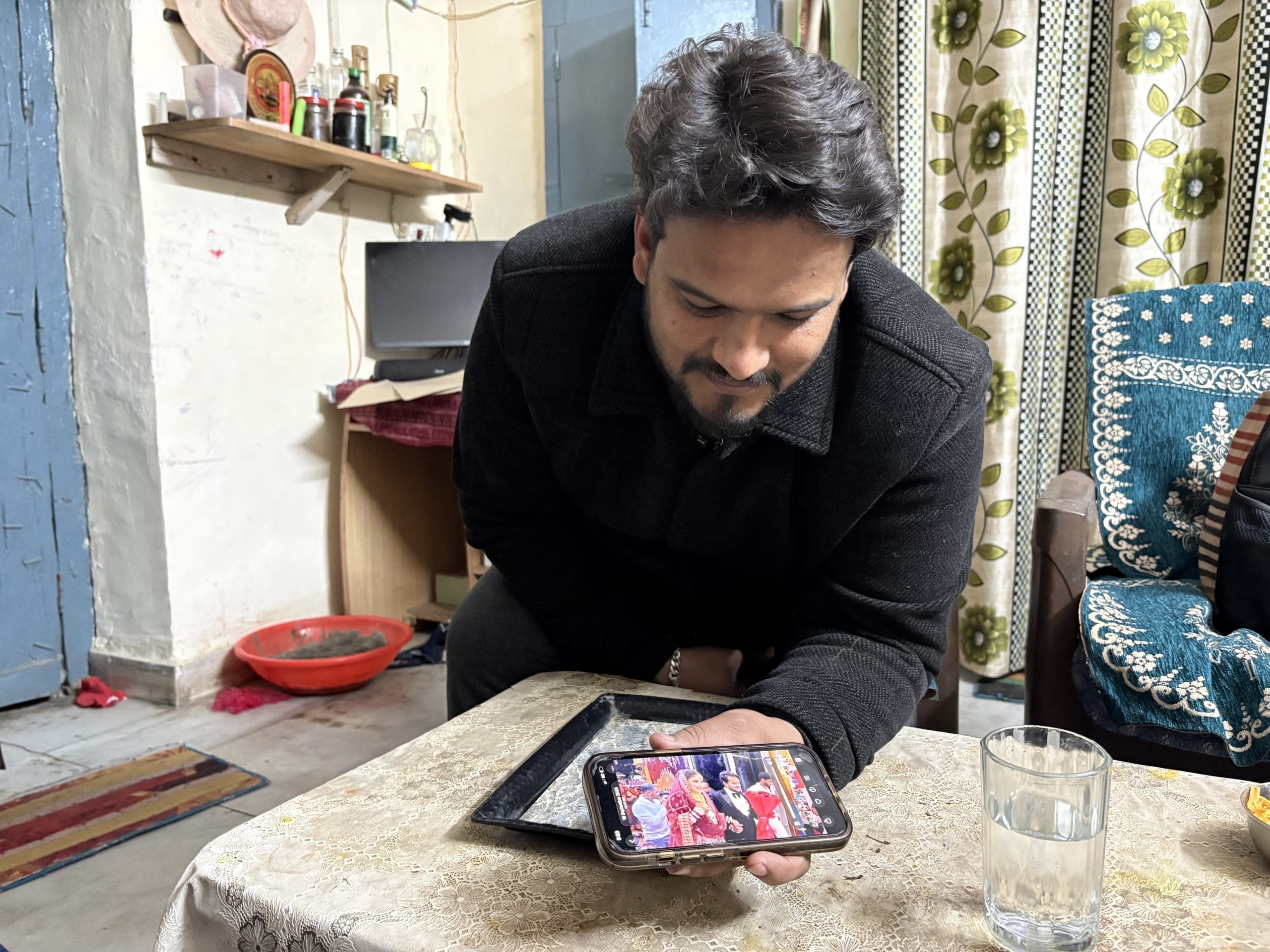
Ahmad was scrolling through wedding photos from last year on his phone, smiling as he remembered how it felt like winning a battle. He laughed at the pictures and videos of friends celebrating with them, even though many had once tried to caution them at every turn.
Friends had warned them about the growing hostility toward interfaith couples in Uttarakhand. In February 2025, Mohammad Shanu and Akanksha Kandari’s marriage notice went viral as “love jihad,” drawing Bajrang Dal threats and forcing the high court to order police protection. Earlier, in 2020, harassment had driven couples like Sushma and Arshad to leave the state.
These cases are part of a wider trend. Post-Uniform Civil Code, hotels refuse to host interfaith couples, and POCSO cases against Muslim teens spiked fourfold between 2016 and 2022.
Ahmed and Akriti studied together from class 9, graduated from the same university and later pursued post-graduation in different cities. Over the years, their friendship turned into love, and they were fully aware of the social and religious faultlines it crossed, especially in the overheated situation in Uttarakhand. The state issued new rules for compulsory registration of live-in couples.
The rules apply to all couples, including interfaith pairs, and require a statement within 30 days of cohabitation, a 16-page form, Aadhaar verification, fees, and, in some cases, certification from a religious leader to confirm marriage eligibility.
They decided to get married under the Special Marriage Act, secure the marriage certificate, and then inform the families. But there were many hurdles in securing a court date. Lawyers discouraged them, some refused outright, one registration was cancelled, and intermediaries demanded a bribe to ‘manage’ the process.
On 28 May, 2025, Ahmad and Akriti applied again before the SDM. Then they met Anuradha Maindola, a Dehradun-based advocate, who agreed to take up their case and guide them through the entire process. Known for her fearlessness, she has become a prominent legal voice in the town for handling cases of interfaith couples.
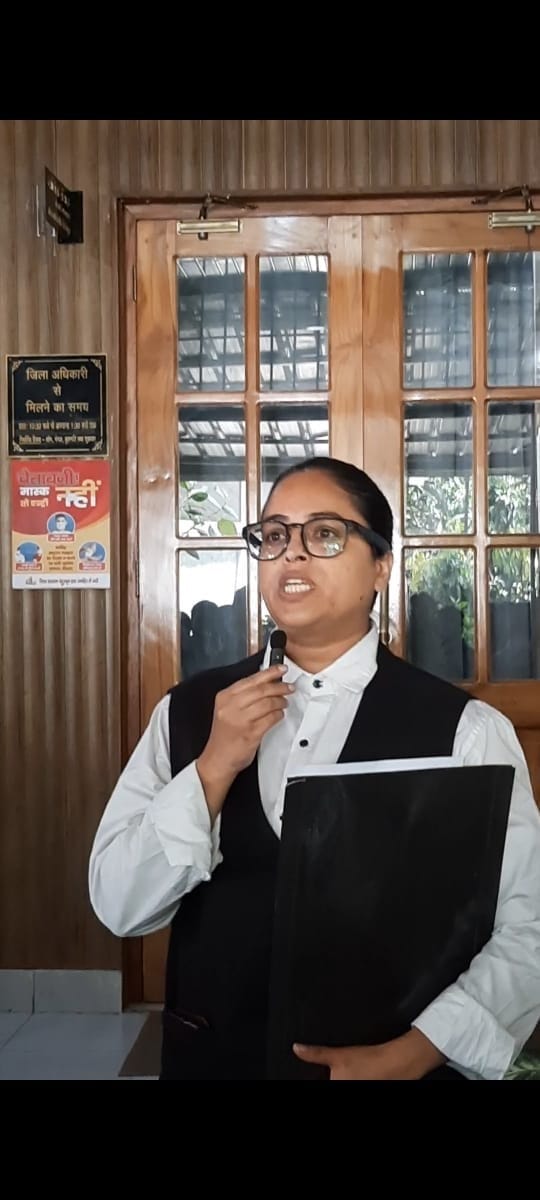
No objection was raised to their notice, but what followed shook Akriti deeply.
“While I was on leave, they came to my office and questioned my boss about why he employed someone who, according to them, had no respect for religion,” she said, referring to Hindu vigilante groups. She works as an Operating Technician in a hospital in Dehradun. “They also started turning up at my home unannounced and harassing my family.”
On 22 July 2025, members of Hindu vigilante groups arrived at her house. For the first time, Akriti’s family learned that a marriage application had been filed. They showed her the notice PDF and demanded answers.
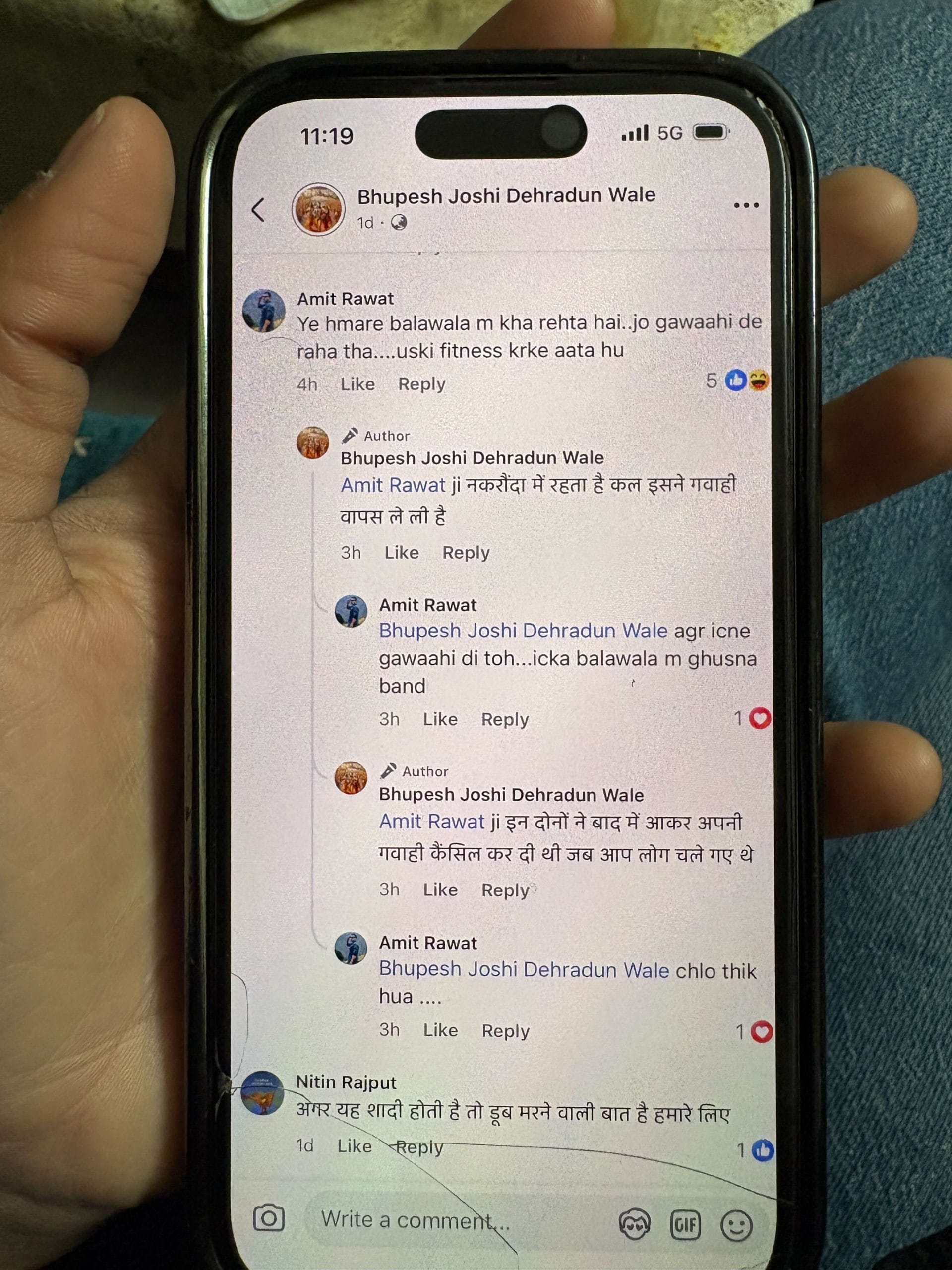
The situation escalated rapidly. Threats circulated on social media. Facebook posts called for violence. “Is mulle ki humne puri history nikal li hai. Isne pehle bhi do Hindu ladkiyon se shadi kar rakhi hai, aur unko musalmaan bana diya hai. Iske upar Saharanpur me ek murder ka bhi case chal rha hai (We’ve uncovered this Muslim man’s full history. He had previously married two Hindu women and converted them to Islam. There’s also an ongoing murder case against him in Saharanpur),” read one comment on a Facebook post.
“This is Zubair Ahmad, who allegedly trapped Akriti Tiwari in a case of love jihad,” Ahmad read aloud from his phone, denying all allegations.
Pressure mounted on Akriti’s parents. The couple sought protection from the court. Members and advocates allegedly associated with the Hindu Jagran Party and the Hindu Raksha Dal even landed in court. But eventually, Akriti and Ahmed got protection.
Then Akriti’s father received a call from a member of a Hindutva group, who allegedly suggested another option: planting narcotics in Akriti’s scooter so that both she and Ahmad could be arrested in a drugs case.
The plan involved Akriti being released after 15 days while Ahmad remained in jail. Her father was deeply shaken by the suggestion. Although he had opposed the marriage, he could not justify framing his daughter or destroying Ahmad’s life with false criminal charges.
The family decided to step back.
A battle won
“The reception felt like celebrating a hard-won battle. I couldn’t stop crying—it was overwhelming,” said advocate Anuradha Maindola.
When the couple returned after the notice period for the second motion, the process stalled. Officials cited vague reasons—“The atmosphere is not safe right now”, law-and-order concerns, and upcoming local body elections.
As the deadline for the second motion approached, the original witnesses, who were the couple’s friends, backed out after facing intimidation and threats at their homes. With only hours remaining before the entire legal process expired, Maindola stepped in as a witness herself. She was furious at how anyone could be harassed when the Constitution clearly allows it.
The SDM initially refused to accept the change of witness, insisting that the previous witnesses be called. When they did appear, they admitted they had been forced and threatened, which led to the witness change being allowed. “According to the law, witnesses can be changed at any time, but we were still made to bring our previous witnesses,” Maindola said.
She also recalled the SDM questioning her: “You are a Brahmin—why are you doing this? Why are you facilitating a Hindu-Muslim marriage?”
On the very last day, the SDM said he would accept the papers at 6 pm—but he left the office at 5 pm. Seeing this, Maindola, Ahmad, Akriti, their family members, advocates, and local media staged a protest outside the office, which lasted until 9 pm. Finally, the SDM returned, accepted the papers, and the next day, the couple signed their marriage certificate.
“The reception felt like celebrating a hard-won battle. I couldn’t stop crying—it was overwhelming. For me, this case is about how law and identity can be weaponised,” said Maindola.
Advocates and love jihad
‘Many lawyers are aligned with Hindutva groups.’
Countless interfaith couples in Uttarakhand face hurdles just to go out on dates in public, let alone living together or getting married. And alongside these struggles are advocates who, even if they wanted to help, often cannot.
One Muslim advocate explained how deeply the system is compromised. Many lawyers, she said, are aligned with Hindutva groups. As soon as a case involving a Hindu-Muslim marriage reaches the courts, the groups are immediately informed, and the wedding is blocked.
She described how, while it is relatively easy for a Hindu man to marry a Muslim woman, the reverse often results in the girl being pressured to accuse the man of rape, leaving him in jail.
A couple from Uttarkashi, who declined to be named, said they had endured “harassment, police visits, and endless court proceedings—but now our marriage is done, and we want to move on.”
In conversations at the Bar Association Dehradun canteen, they explained daily cases involving interfaith couples—either seeking live-in registration or trying to formalise their marriage.
“The only piece of advice I give them,” said one Muslim advocate with a sad smile, “is to go to a Hindu lawyer. If I handle the case, people will accuse me of promoting ‘love jihad.’”
Finding an advocate who could help without alerting the Hindutva groups is a struggle for couples. Even couples who are relatively privileged face scrutiny.
“Last Christmas, police arrived early in the morning at the home of our Hindu-Christian friends, asking how they planned to celebrate. But when there are all-night jagratas, or Diwali or Holi celebrations, no one ever comes to check,” they said.
They had considered live registration under the proposed Uniform Civil Code, but felt it would compromise privacy and invite constant surveillance, especially because the man was a former army officer.
Hero of India
‘Targeting one community is neither humanitarian nor patriotic.’
And then there are those who choose to stand up against forces that seek to divide, only to face consequences that threaten their livelihoods and put their families at risk. Deepak Kumar, a 43-year-old gym owner from Pauri Garhwal district, is one of them.
On an ordinary day in Kotdwar, Uttarakhand, Kumar’s decision to take a stand changed his life. A mob, allegedly linked to the Bajrang Dal, was harassing an elderly Muslim shopkeeper over his shop’s name. When they asked Kumar’s name, he replied, “Mera naam Mohammad Deepak (My name is Mohammad Deepak).” For him, it was a statement meant to show how absurd and divisive the confrontation was.
While his courage caught the attention of the nation—politicians like Rahul Gandhi called him a “hero of India,” and social media users, YouTubers, and activists amplified his story—he also faced threats, a protest outside his gym, and an FIR registered against him.
The consequences quickly spilled into his personal life. Kumar’s five-year-old daughter stopped going to school for several days.
“She is very young and became frightened after seeing many people and police officers coming to our home. She fell sick and refused to go to school,” Kumar said. Kumar’s gym—his family’s only source of income—was also targeted. He was being forced to shut it down.
“Now that it has reopened, only seven to eight people come each day. They are also scared after the incident. The rent of the gym is Rs 40,000 a month, and I just hope it doesn’t push me into any financial distress,” Kumar told ThePrint.
Despite all this, Kumar has not stepped back. He said that targeting one community is “neither humanitarian nor patriotic.”
Testing ground for communal clashes
“Many of the now-vandalised sites were central to mountain culture, built and maintained by local communities over decades.”
One advocate painted a picture of a state where ordinary lives are increasingly monitored, controlled, and politicised.
According to the official website of Uttarakhand Uniform Civil Code, 70 couples are currently registered, while two have already terminated their live-in arrangements.
Lawyers said that the current atmosphere of communal tension is manufactured rather than organic. Between 2000 and 2017, under successive Congress governments, Uttarakhand actively encouraged social integration by offering Rs 50,000 cash incentives to legally registered inter-caste (where one spouse was SC) and inter-faith couples—a policy that continued under the BJP until it was reviewed in 2020.
After 2017, however, the terrain visibly shifted. Under BJP governments, the state has witnessed a series of communal flashpoints—Purola (2023), Haldwani (2024), and Nainital (2025)—often triggered by “love jihad” rumours or state-led demolitions. The advocate views Uttarakhand as both a testing ground for such clashes and a model for neighbouring regions like western Uttar Pradesh.
This growing tension over culture and identity has had real consequences on the ground. Hari Om Pali, a social activist in Dehradun, linked the rise of religious intolerance in Uttarakhand to broader ideological shifts.
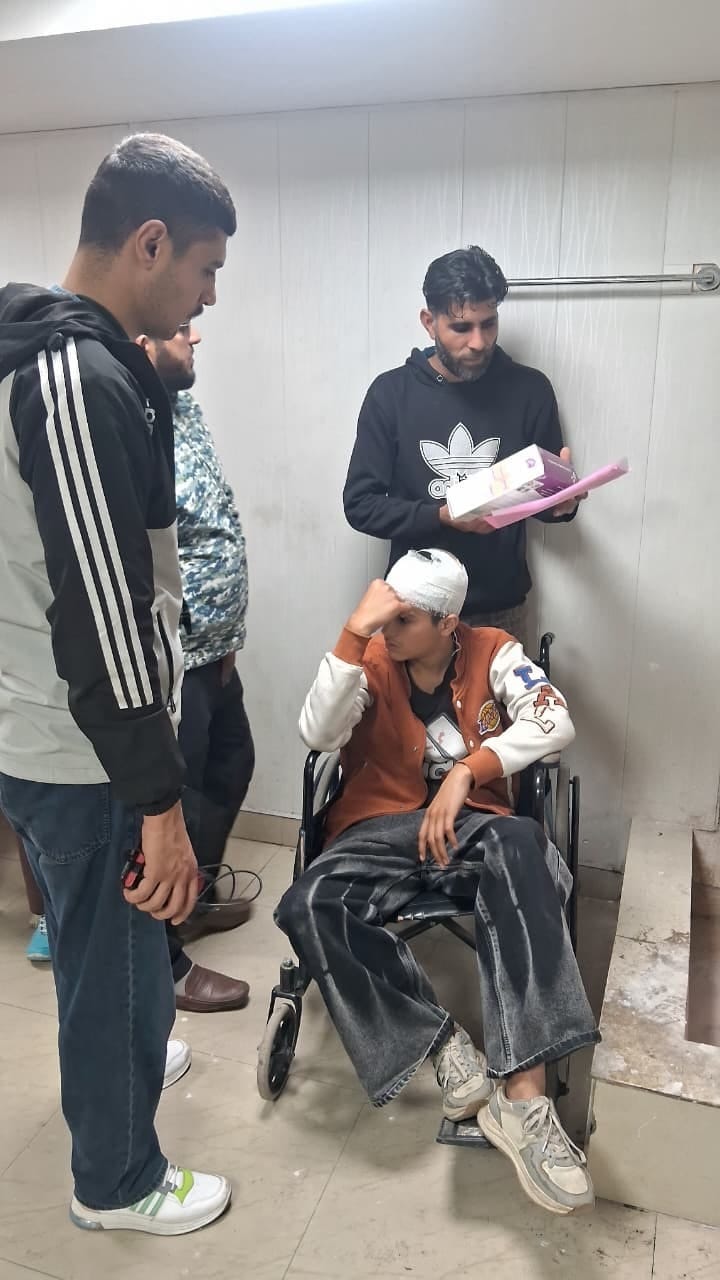
“Many of the now-vandalised sites were central to mountain culture, built and maintained by local communities over decades. Last year, they demolished the Mazar at Doon Medical College Hospital in Dehradun, and it has hurt me deeply,” said Pali. “My father took me there when I was just 40 days old as part of a ritual. We are a Hindu family, but many people visited Mazar because it is an important part of our culture.”
He said that while authorities justified the sites’ removal under the Indian Forest Act of 1927 and state anti-encroachment rules, disregarding these traditions has fueled fear and resentment across the hills.
According to Pali, recent events in Uttarakhand are mere distractions from deeper issues—employment, healthcare, water, electricity, and mass migration from villages.
No non-Hindus allowed
“Sanatanis have the right to protect their religion, just as others have the right to protect theirs.”
Now, after love and land, comes a new rule to remove non-Hindus from pilgrimage trails.
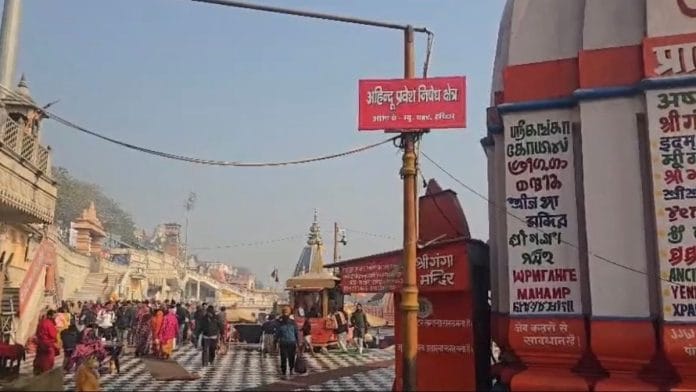
At the entrance to Har Ki Pauri, new signboards warn that non-Hindus are not allowed, turning the sacred ghat into a flashpoint over faith and access.
And this diktat has put a spotlight on Muslim labourers who work to facilitate the journey as pony carriers.
Har Ki Pauri in Haridwar is believed to be the spot where the Ganga becomes especially pure. The ghat is always crowded, with pilgrims bathing, praying, and continuously moving. Most wear tilaks—sometimes by choice, sometimes applied forcefully by pandits who then ask for dakshina. Between rituals, the pilgrims spill into nearby restaurants with their heavy bags at their feet.
The ghat came under fresh scrutiny after the Ganga Sabha installed the boards barring non-Hindus on 16 January 2026. The move followed a viral video showing two men in Arabic attire kanduras at the ghat. The footage sparked claims that the sanctity of Har Ki Pauri was under threat and revived demands to declare the wider Kumbh area a “Hindu zone” ahead of the 2027 Ardh Kumbh.
It was later revealed that the two men in the video were Hindus filming content for YouTube. The clarification, however, did not lead to the removal of the signboards.
The Ganga Sabha has justified the restrictions by citing the 1916 Haridwar Municipal Bylaws, framed during the tenure of Madan Mohan Malviya. These by-laws restrict the entry, residence, and business activities of non-Hindus in certain areas of Haridwar, ostensibly to preserve ritual purity.
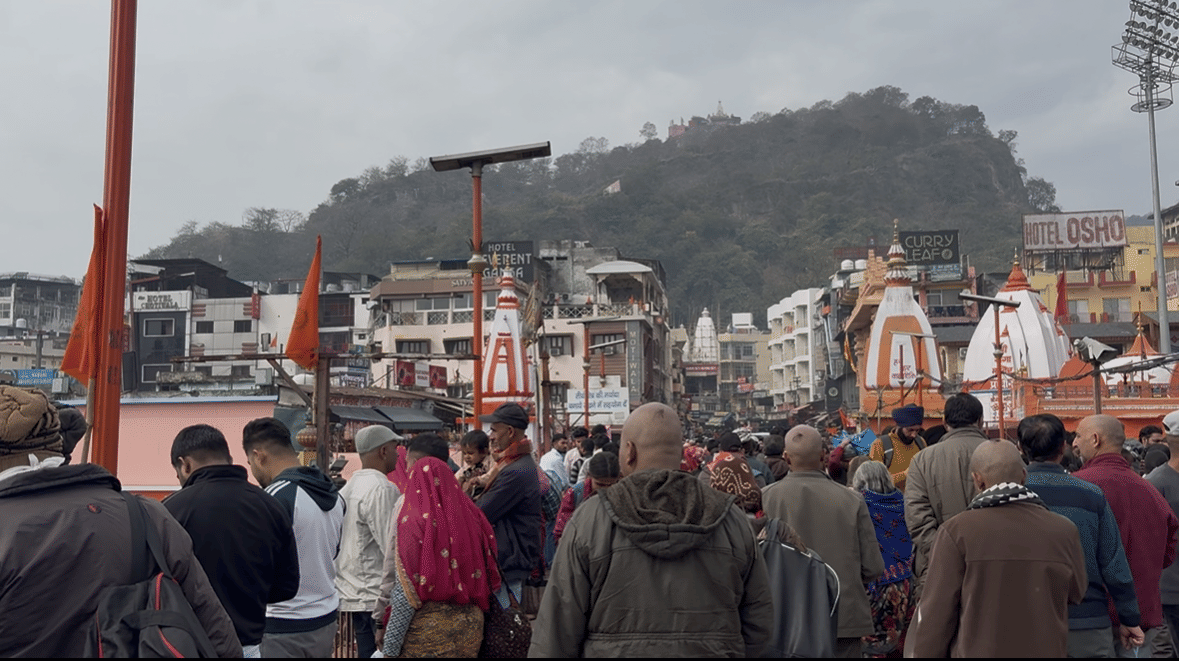
Under these rules, a large stretch, spanning nearly eight kilometres and covering Har Ki Pauri, Brahmkund, and surrounding localities, was declared off-limits for non-Hindus.
“In today’s environment, this law needs to be strictly followed,” Nitin Gautam, president of the Ganga Sabha, said. “The kind of activities being carried out in Haridwar and other teerth spots by non-Hindus—kulla jihad, mutra jihad, land jihad—make this necessary. Sanatanis have the right to make arrangements for the security of our teerth areas and our religious beliefs.”
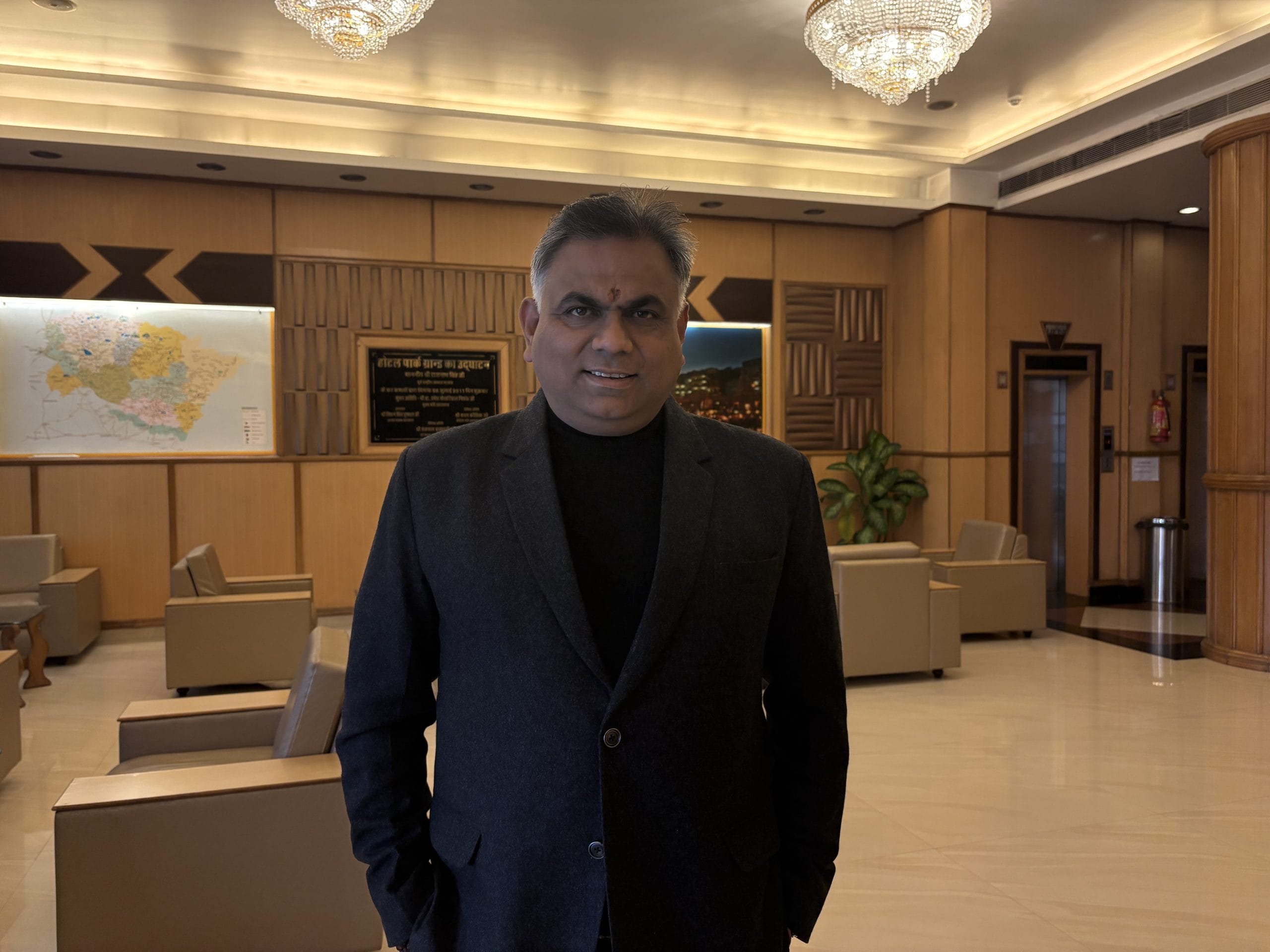
He said dangerous people can be identified easily.
“Because of their attire, their language, their work habits, and the fact that they don’t participate in our worship, there are many things that mark them as different from us,” he said.
The restrictions, he added, are meant for them (Muslims), not for other religions, and will remain in place.
“Sanatanis have the right to protect their religion, just as others have the right to protect theirs,” he added.
On the ground, the impact of this scrutiny is already visible. Muslims rarely visited the ghats; instead, they worked in the informal tourist economy created by Har Ki Pauri, taking up the same kinds of odd jobs seen around other religious sites, such as Vaishno Devi in Jammu and Kashmir and the Golden Temple in Amritsar.
Rohan, an auto-rickshaw driver at Har Ki Pauri, said the police have often stopped people who looked Muslim or anyone they suspected. “There aren’t many Muslims here, but I still meet some who work around this area. They don’t go down to the ghat anymore; they stay outside,” he said.
Also read: Mathura mass killing mystery—tantric baba ‘brainwashing’ or mental distress?
Threat to pilgrimage circuit
“The moment a Hindu-Muslim couple arrives, Bajrang Dal people show up and start harassing them.”
On a foggy morning in Mussoorie, three drivers stood by their vehicles, talking quietly. One of them raised a question that now circulates among those who ferry tourists and pilgrims across Uttarakhand: should they start asking passengers for identity cards?
The friends were discussing whether they should check the IDs of couples they believed to be Hindu-Muslim before letting them into their cabs. Being seen transporting such couples, they said, could draw unwanted attention and accusations of facilitating “love jihad.”
Shomu, a 32-year-old Muslim driver, owns his own cab and regularly works across Uttarakhand’s pilgrimage circuit. “There’s an election next year. That’s why the atmosphere has already started getting worse here,” he said.
He recalled an incident in Dehradun, where he once dropped a couple at a hotel, only to see them denied a room because they were Hindu and Muslim. According to Shomu, this has become increasingly common. “There are many hotels in Dehradun where, the moment a Hindu-Muslim couple arrives, Bajrang Dal people show up and start harassing them,” he said.
Drivers worry that if they are stopped or questioned, they could be accused of playing a role in interfaith relationships and dragged into trouble themselves.
Across Uttarakhand’s pilgrimage circuit, the fear finds resonance among those who have lived off tourism for decades.
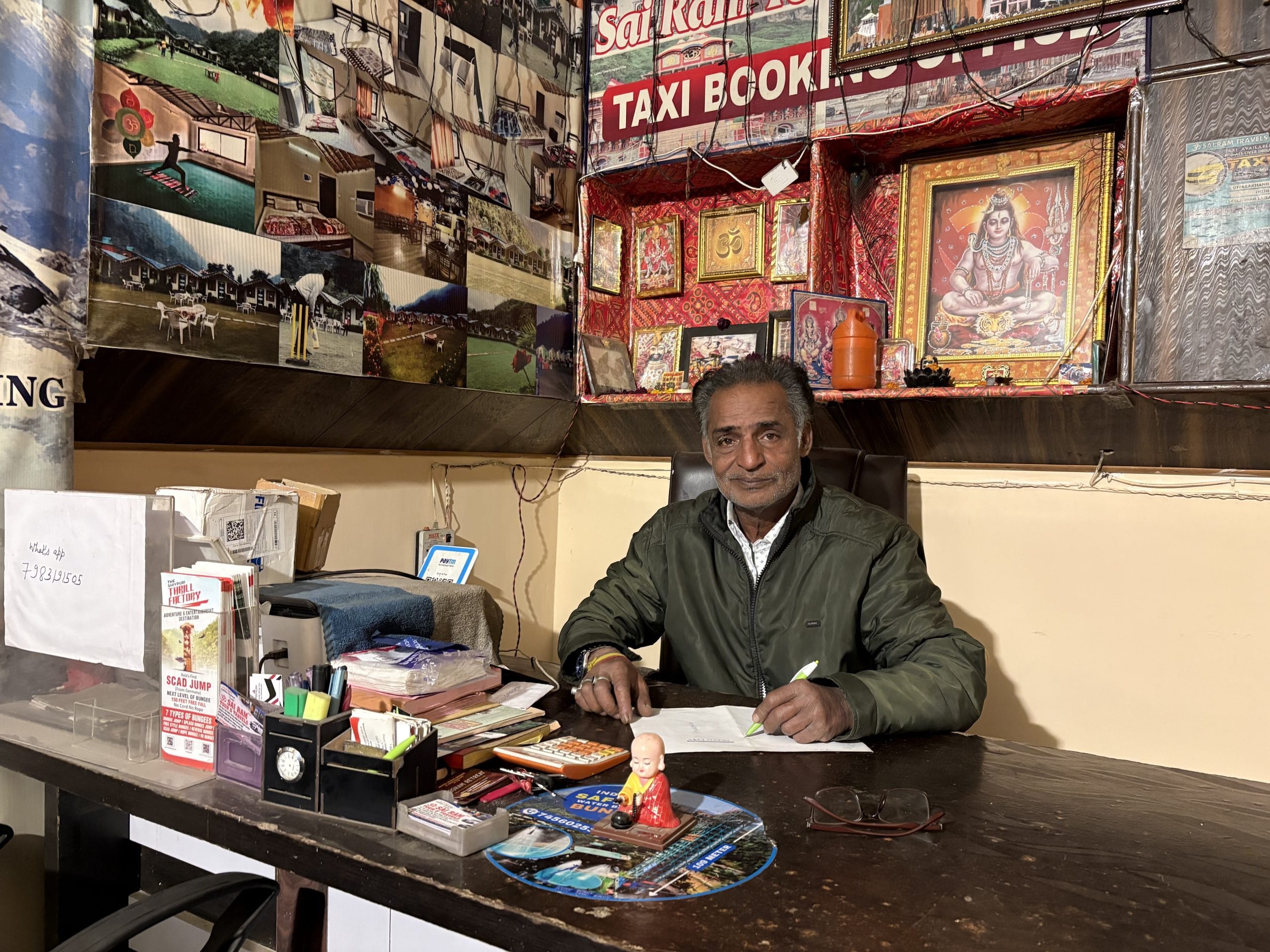
Shankar, a 60-year-old tour operator, has worked and lived in Rishikesh for decades. He owns Sai Ram Tour and Travels, based in Rishikesh, with branches across the state.
During peak season, even basic transport struggles to keep up.
“People come from Punjab, Delhi, Haryana,” he said. “In May and June, when work picks up, there are long queues; one vehicle leaves, another arrives. If restrictions keep increasing, pilgrims will be the ones who suffer the most.”
(Edited by Ratan Priya)
There appears to be no protest on the exclusion of non-Muslims from prominent Muslim religious sites such as Mecca and Medina? Heck, even women are not allowed in Masjids.
No reporting on the threats to non-Muslims who want to marry Muslim girls.
Sakshi appears to lack balanced reporting?
This is naked Hinduphobia from the blogger Fake characters a. d fake relations, fake situations, being used to deliberately spread a false narrative.