








Solan: If there’s one thing, after fresh and juicy tomatoes, that disappears almost instantly, it’s ICAR-Directorate of Mushroom Research’s training slots in Solan. This is the ground zero of India’s mushroom revolution.
Mushrooms in Solan, Himachal Pradesh, were once just a pre-Independence experiment. Today, the town is home to the ICAR-Directorate of Mushroom Research (DMR), India’s only institute dedicated to mushroom research and development. The 43-year-old institute conserves germplasm, studies health benefits, and trains farmers from states such as Uttar Pradesh, Bihar, and Odisha on popular varieties like button or oyster mushrooms, as well as specialised strains like shiitake and milky mushrooms.
The institute’s work has given Solan the tag of Mushroom City of India since 1997.
Ramnath Shinde first visited Solan in 2006 from Maharashtra and underwent training at ICAR-DMR for a few days. That trip changed his fortunes from being a failed grocery store owner earning Rs 10,000 a month to the head of a mushroom empire with a Rs 75 crore annual turnover. His garage today boasts Range Rovers and Audis, and he donates Rs 3-4 crore to charity every year.
His rags-to-riches fairytale passes through the mushroom farm in Baramati, Maharashtra.
Spread across 45 acres, his farms produce 400-500 tonnes of button mushrooms every month. Under the Tirupati Balaji brand, they reach kitchens across India.
“Through my farm I try to bring change in the lives of workers who work with me. So many villages can be transformed if farmers are taught mushroom farming. And, there is a lot of scope because of the demand in the country as well as abroad,” said Shinde.
In our gene bank, we have collected around 4,000 varieties of mushrooms from across India in the last 15 years alone
-BL Attri, acting director at ICAR-DMR
Long before mushrooms became fashionable on restaurant menus, Solan had already done the hard work. It built knowledge, capacity, and confidence among thousands of farmers, from Uttar Pradesh to Tamil Nadu. In the last five years alone, nearly 4,000 farmers have returned home with a business model that promises profit, predictability, and control. These hands-on programmes are priced at Rs 7,500 for five days and Rs 15,000 for nine.

Such has been the impact that India’s annual mushroom production has grown from around 6,000 tonnes in the late 1990s to 4 lakh tonnes now, according to figures provided by ICAR-DMR. Globally, the institute says, India ranks third after China and Poland, although it contributes only 0.4 per cent to total world production.
“Even with current annual production, we cannot fulfil the demand of the country,” said Dr B L Attri, acting director, ICAR-DMR.
Attri rued that current production translates to just 220-250 grams of mushrooms per person in India per year.
“We should ideally eat mushrooms three times a week. Because it’s a complete meal in itself. But our production cannot meet this as of now,” he added.
Also Read: Himachal farmers are ditching apples for persimmons. ‘Earnings on par with JEE packages’
Mushroom money bank
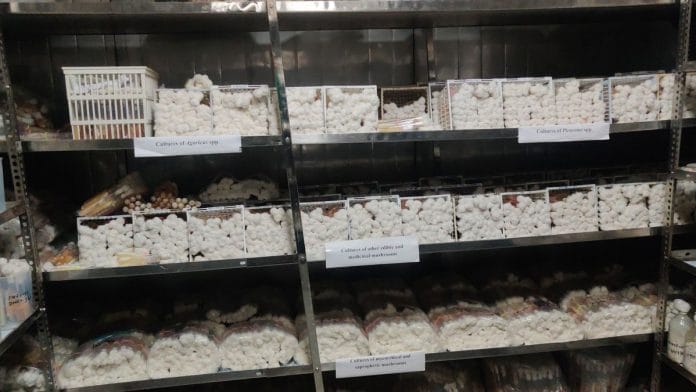
Dr Attri leads the way into a cold storage-like room, where the temperature drops to -4 degrees. Not everyone has access to this facility. This is their little money bank. Stacked not with currency, but something far more precious: germplasm.
It’s living genetic tissue, much like the seeds of a plant, that has the hereditary blueprint for every mushroom strain. This ever-expanding genetic treasure of wild and cultivated species is the core of DMR’s research, enabling scientists to study everything from adaptability and yield potential to disease resistance. It’s called the National Mushroom Gene Bank.
“In our gene bank, we have collected around 4,000 varieties of mushrooms from across India in the last 15 years alone,” Attri said. “It’s our khajana.”
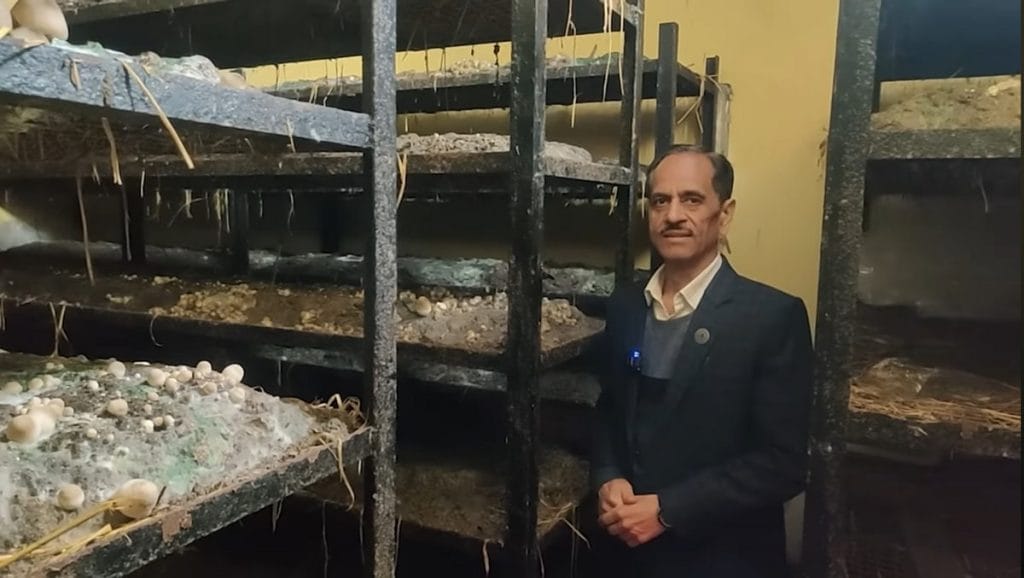
The centre aims to collect at least 250-300 mushroom varieties from across India every year. Dr Shweth Kamal, principal scientist at the institute, stresses that preserving germplasm is one of the centre’s most critical responsibilities.
“Without germplasm, there can be no research,” he said, adding that it forms the foundation for improving quality, controlling disease, and developing new hybrid varieties. By combining desirable traits from different germplasms, scientists are able to create improved strains.
Whether the temperature outside is 4 or 45 degrees, mushrooms can be grown easily. Temperature, aeration, oxygen, and light are regulated. Less land is required since cultivation can be done vertically and there is high profitability
-Dr Shweth Kamal, principal scientist at ICAR-DMR
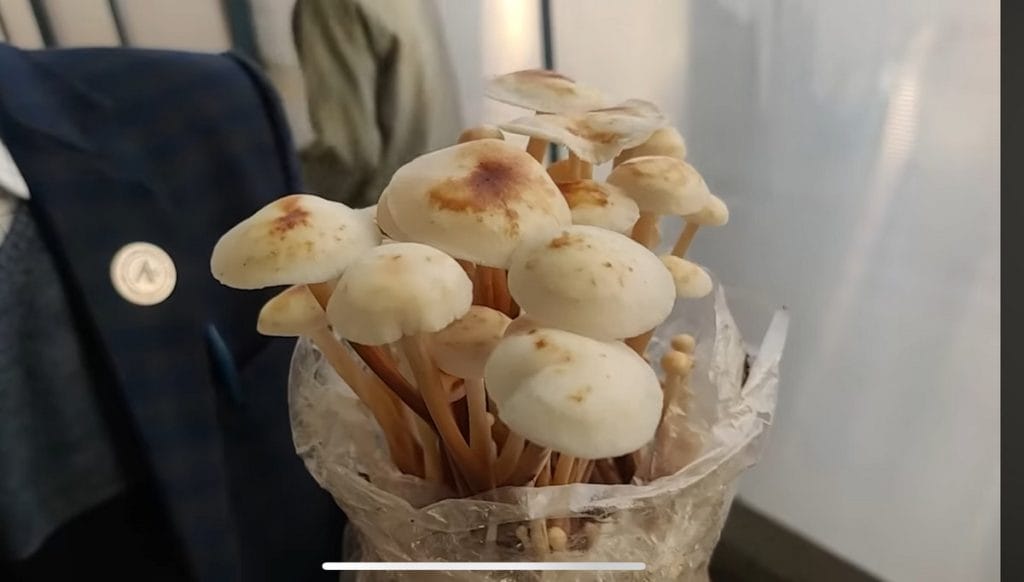
One such example is PSCH-35 (Pleurotus sajor-caju, or oyster mushroom), developed by crossing two oyster strains, DMRP-255 and DMRP-112. This hybrid delivers high yields of 56-60 kg of fresh mushrooms per every 100 kg of dry substrate—the organic material that mushrooms grow on. It also produces softer ‘fruiting bodies’, or the edible parts of the mushroom.
Beyond germplasm conservation, the institute’s team of 32 scientists and researchers focuses on enhancing mushroom quality, studying health benefits, exploring disease-fighting properties, and protecting crops from bacterial, viral, and fungal infections.
“Mushrooms are living systems, just like humans,” said Kamal, who has been with the Directorate of Mushroom Research since 1994. “Our integrated disease and pest management work helps minimise losses for farmers.”
The institute also provides advisory services and consultancy to farmers and brands entering mushroom cultivation.
“We provide a complete roadmap, an our training programmes are especially popular. We believe knowledge should be shared, not held back,” he added.
A stack of applications for training sessions lies in one corner of Kamal’s desk. He flips through the papers, noting they all need to be cleared before he leaves for his vacation.
Good to grow, good to eat
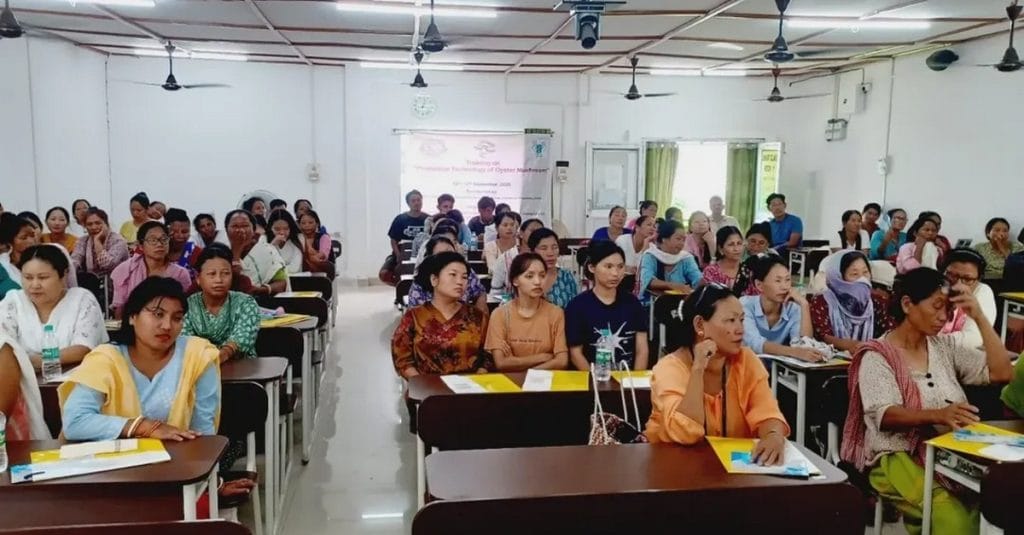
Every year, the institute conducts 12 training programmes. While each batch is officially capped at 40-45 participants, demand is so high that requests and recommendations often push the number to 60.
The sessions combine theory with hands-on practice, covering the basics of mushroom cultivation, managing controlled climatic conditions, and understanding the different stages of growth.
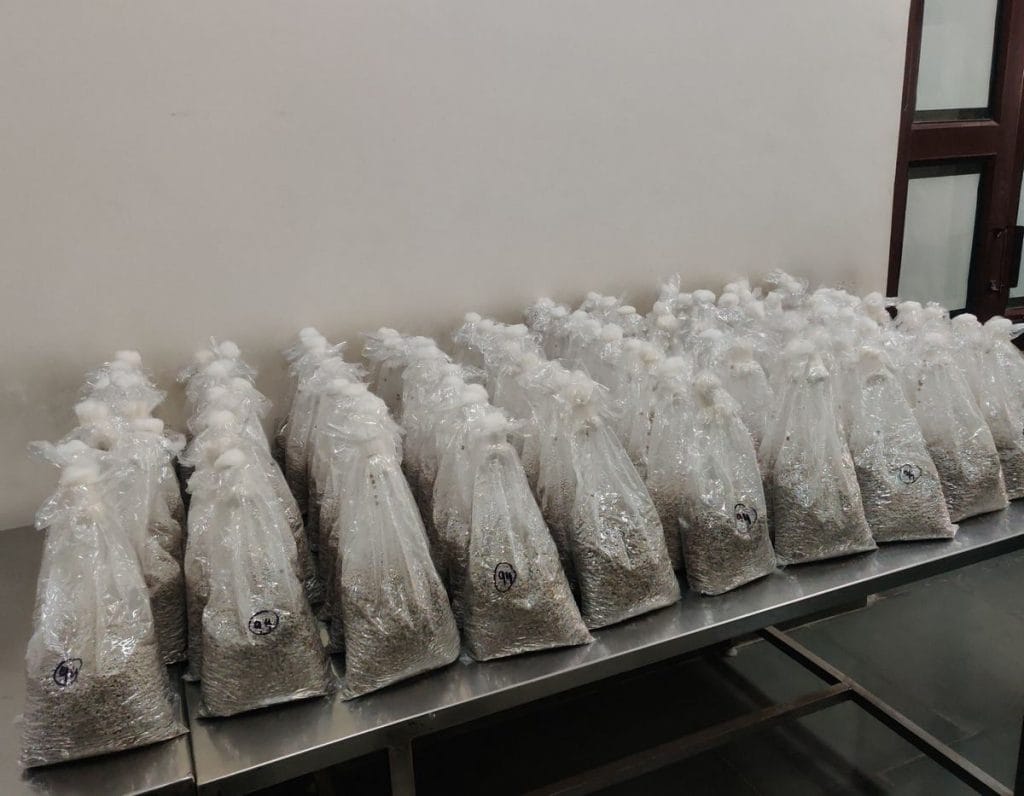
Central to both training and cultivation is the institute’s commercial spawn production unit. This is the essential ‘seed’ material for mushroom farming.
“Spawn is the living mycelium of mushrooms grown on a nutrient carrier such as sterilised grains, like wheat or sorghum,” said Dr Attri, lifting the lid of a huge boiler vessel where tonnes of wheat grains were boiling away.
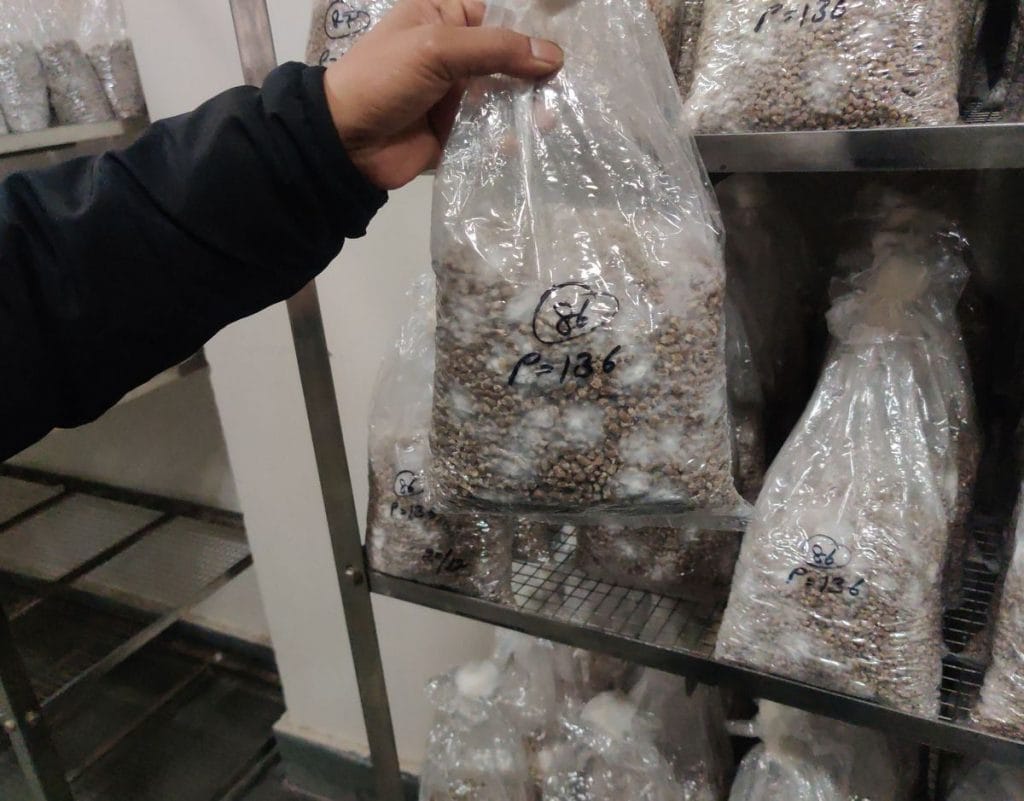
At ICAR-DMR’s spawn unit, pure cultures are selected from superior strains preserved in the National Mushroom Gene Bank.
“These cultures are first multiplied under sterile laboratory conditions to create mother spawn, which is then used to inoculate sterilised grain substrates,” the director said.
Once the mycelium-infused grains mature in plastic bags, they become the commercial spawn that farmers and entrepreneurs use to start their own crops. The institute produces nearly 60,000 tons of this spawn annually, supplying growers on advance booking.
After spawn, the next thing trainees learn to work with is substrate, a nutrient-rich growing medium made from agricultural by-products such as straw and compost.
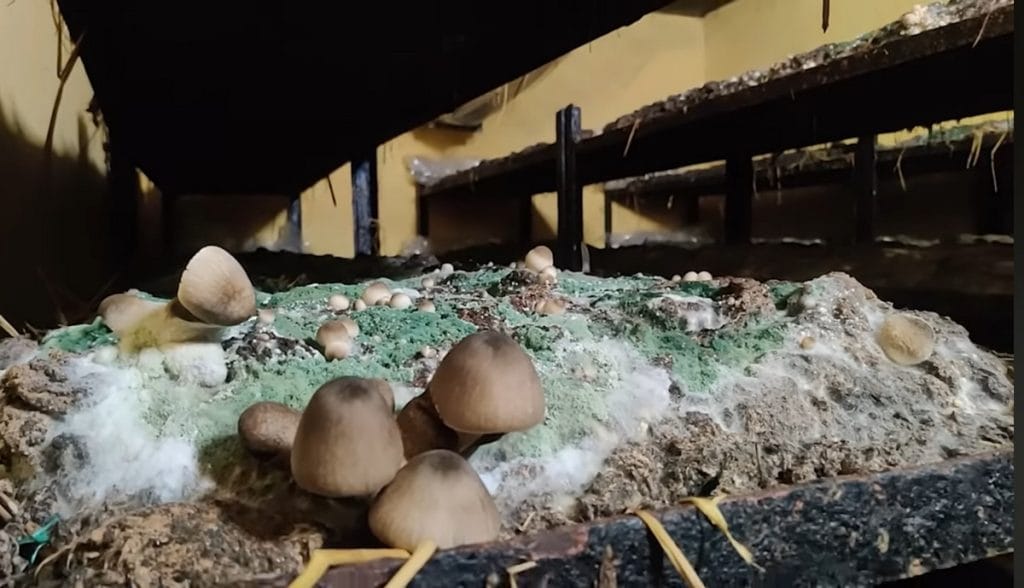
Then, inside temperature- and humidity- controlled growing rooms, the mycelium spreads through the substrate in a phase known as the spawn run.
“Once colonisation is complete, conditions are adjusted to initiate fruiting, where the mushroom bodies develop and grow until harvest,” Attri said, walking into a growing room filled with shiitake mushrooms sprouting on spawn bags.
Button, oyster, paddy straw, shiitake, and milky mushrooms are the five most popular varieties among farmers. The centre also trains participants in specialty and medicinal mushrooms such as cordyceps and auricularia. In total, around 12-15 varieties are covered in the training programmes.
“Earlier the training was free, but the government has now moved toward revenue generation,” said Kamal. Participants now include not just farmers but also doctors, engineers, chartered accountants, and retired officials, with some taking up mushroom cultivation for personal consumption rather than commercial sale.
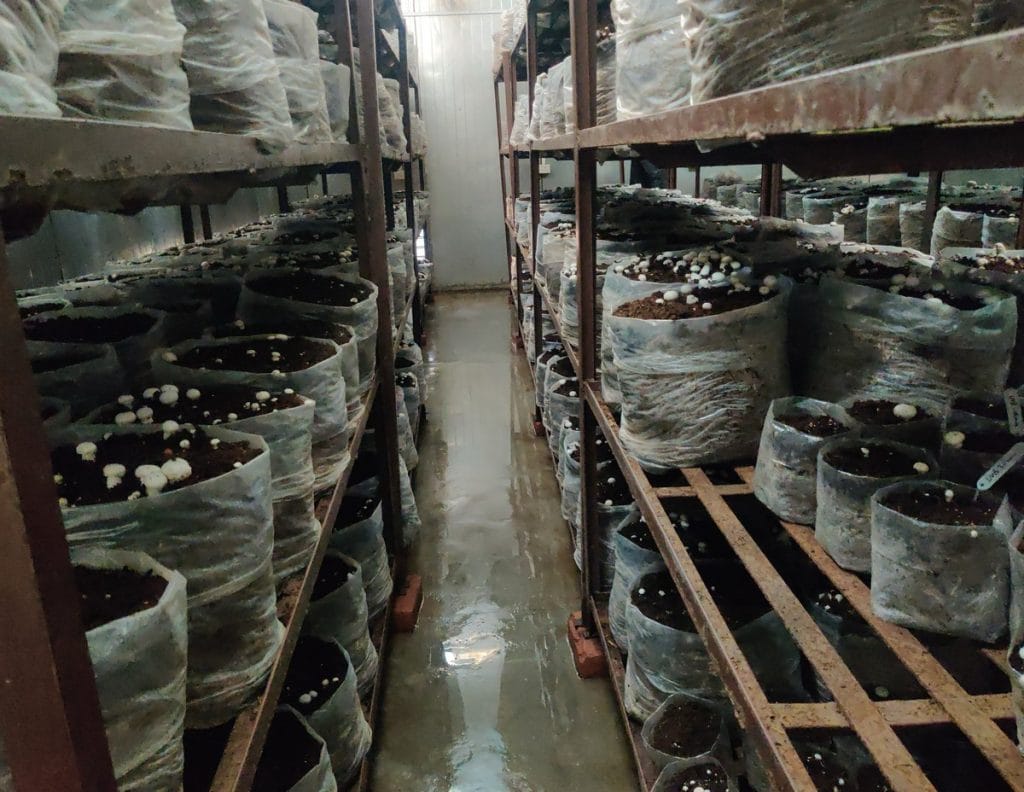
One of the factors that makes it so popular is that mushroom farming isn’t tied to the external climate, and nor does it need large tracts of land.
“Whether the temperature outside is 4 or 45 degrees, mushrooms can be grown easily. Temperature, aeration, oxygen, and light are regulated. Less land is required since cultivation can be done vertically and there is high profitability,” Kamal said.
On one hectare of land, a farmer can produce up to 500 tonnes of mushrooms annually. If sold at a minimum price of Rs 100 per kg, this translates to a turnover of Rs 5 crore. With average profit margins of 30-35 per cent, annual profits are around Rs 1.5 crore.
The domestic mushroom market, valued at $1.61 billion (approx. Rs 14,812 crore) in 2025, is projected to reach $3.02 billion (approx. Rs 27,800 crore) by 2035, according to a report by market research firm AstuteAnalytica. White button mushrooms still dominate with a 73 per cent share.
The report links the growth to changing eating habits, driven by exposure to international cuisines—what it calls the “chilli mushroom phenomenon” and the relatively recent popularity of dishes like mushroom alfredo pasta. Domestic consumption now accounts for nearly 40 per cent of the market.
Dhruba Patra, 52, signed up for mushroom training during a vacation to Himachal. He wanted a new hobby after leaving his teaching job. The mathematics teacher from Ganjam, Odisha, now grows small batches of button mushrooms at home, harvesting four to five crops a year.
It’s made gifting a lot easier.
“Whenever we visit relatives, I take my homegrown mushrooms,” he said.
Also Read: Jewar farmers are crorepatis now. They’re investing in stocks & mutual funds, not just land
Production down in Himachal, Solan still shines
Himachal Pradesh was once the undisputed pioneer of Indian mushroom cultivation, home to the country’s first mechanised and automated farm dedicated to the crop. But the production landscape has since shifted.
Today, Bihar and Odisha lead mushroom production in India, followed by Haryana, Punjab, and Maharashtra. Himachal Pradesh has slipped to sixth place, largely due to operational challenges.
“Raw materials are not locally available. We have to source them from Punjab, Haryana, and even Rajasthan. This increases transport and production costs by around 30 per cent, making Himachal mushrooms less competitive than those produced in plains states,” said Kamal.
In addition, land development in Himachal is expensive.
“Himachal’s hilly terrain and small, scattered land holdings make it difficult to set up controlled mushroom units. Land must first be levelled before mushroom farming can begin, which significantly raises costs,” he added.
People no longer need to travel all the way to Solan. They can now connect with the centres in their state for all the training and tactics
-BL Attri
Over the past decade, as Himachal lost ground, Odisha steadily climbed the ranks. The state recorded a fourfold increase in mushroom production between 2013 and 2022, growing at a compound annual growth rate of 16 per cent during this period.
But even if Himachal is no longer a mushroom powerhouse, Solan is still the spring from which proliferation in other states flows. Much of this can be credited to ICAR-DMR’s expansion, with nearly 32 centres now established across the country, almost one in every state.
“People no longer need to travel all the way to Solan. They can now connect with the centres in their state for all the training and tactics,” said Dr Attri.
Even so, demand for training at the parent institute has not declined. Applications continue to flood Attri’s inbox, along with a steady stream of mushroom farming business proposals.
(Edited by Asavari Singh)