








Pune: On an ordinary Pune afternoon, at his favourite Thai restaurant, Pritam Onsker and Praveen Zade discussed ways to modernise traditional tailoring, a business Zade had inherited, and one Onsker had grown quietly fascinated with after years of watching consumer behaviour in the fast-changing Indian market.
That’s when a sharply dressed man stopped at their table and praised Zade.
“The fitting of that suit is exceptional.”
It wasn’t small talk, and it wasn’t a small man. He was the son of one of Pune’s royal families, a name that still carries weight in the city’s old-money circles. His offhand compliment landed on the table like data that couldn’t be ignored.
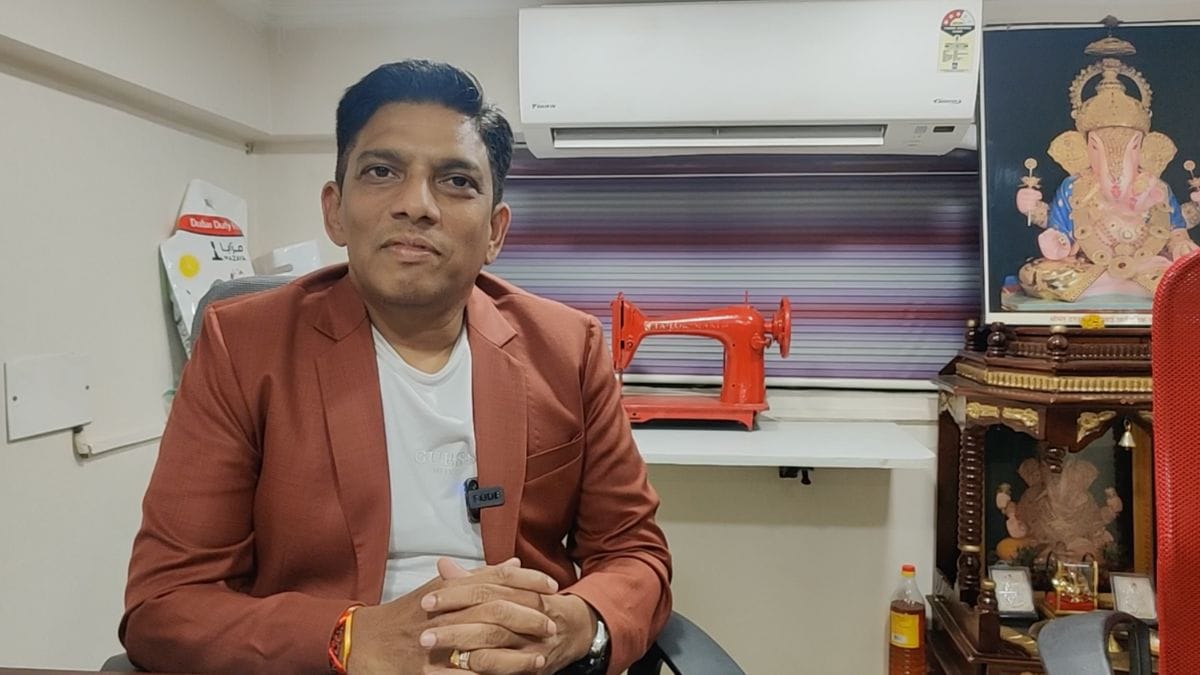
Onsker and Zade are the co-founders of a fast-expanding service that’s altering the relationship Indians have with their tailors. It’s TailorSmart.
“Such comments motivate us to work harder. The tailoring industry is very unorganised, and till now nobody tried organising it because it is very messy. India’s massive tailoring industry still operates like a scattered informal network, and coming from a traditional family, I thought this art should get its due,” Zade told ThePrint.
After spending 23 years negotiating mergers, building brands across boardrooms from Mumbai to Singapore and at companies such as Airtel and Tata communications, Pritam Onsker decided to build something of his own. That decision today is changing the graph of tailors in Pune and many other cities. TailorSmart began in 2017 with the idea of providing people the best fit. Eight years later, it has expanded to more than 800 tailors across 25 cities.
“In the world of fast fashion we are a slow fashion brand that provides made-to-measure service at your home. It’s been four years since I have joined the company fully, and our business has been growing since then. Last year, we did Rs 1.4 crore in revenue, and this year we have already crossed Rs 3 crore,” said Onsker.
Onsker spotted the gap in the Indian tailoring service and made it his mission to get the industry its due by connecting it to a digital platform. It took Onsker and Zade four years of collecting tailors’ data and cracking fabric deals. Which is now a 25-city platform with 800+ specialised tailors, a Dubai presence, a partnership with Reliance Retail’s Avantra, and a growing customer base that treats tailoring as a premium on-demand service rather than a neighbourhood gamble.
India’s custom tailoring industry
Tailor Smart is disrupting the old tradition where families relied on one trusted tailor for decades and visited their shop for every stitching need. It is also carving out its own space in a market dominated by ready-made garments, which has grown rapidly in the last few decades. There’s no immediate threat to the tailor industry, but the app is preparing for a world that is rapidly transforming into a gig economy. It is formalising the loose self-employed tailor workforce ahead of the inevitable change.
“It is a myth that the tailor market is declining. 62 per cent of the Indian people are still wearing stitched clothes. People have this misconception that it is expensive and time-consuming, but we are breaking both misconceptions. It is affordable, and you are getting service at your doorstep,” said Onsker. He wants the humble neighbourhood tailor to be smart, equipped for the new economy.
India’s custom-tailoring industry is still very big. According to the Periodic Labour Force Survey 2023-24, the National Statistics Office, India had almost 12 million tailors last year, that is nearly one-sixth of all manufacturing workers. But most of them work on their own as 80 per cent are self-employed, their average income is 6,000 every month.
There is a rise in tailors, but it is a reflection of the demand as the demand for readymade fast-fashion grows. The custom apparel market in India is expected to grow from $48.8 million in 2024 to $107.5 million by 2032, and made-to-measure clothing is also part of that.
Rahul Sate, 45, was desperate to get a suit stitched for a relative’s wedding. He was running against time. Numerous visits to stores and local tailors didn’t ensure the promise of timely delivery. It was TailorSmart that came to rescue him. It’s been four years since, and Sate is now a regular at the tailoring service, getting stitched over a dozen clothes.
Sate told them he needed the clothes within four days, and they were delivered without him having to call for updates. He got regular updates.
“It is about convenience and quality, and one of the greatest things about this platform is its quickness and flexibility, which is top-notch. No matter how many changes you ask for, they do it and make you happy,” said Sate, who lives in Pune.
Thirty-nine-year-old Romit Singh’s chase for a reliable tailor felt endless — until a friend recommended TailorSmart.
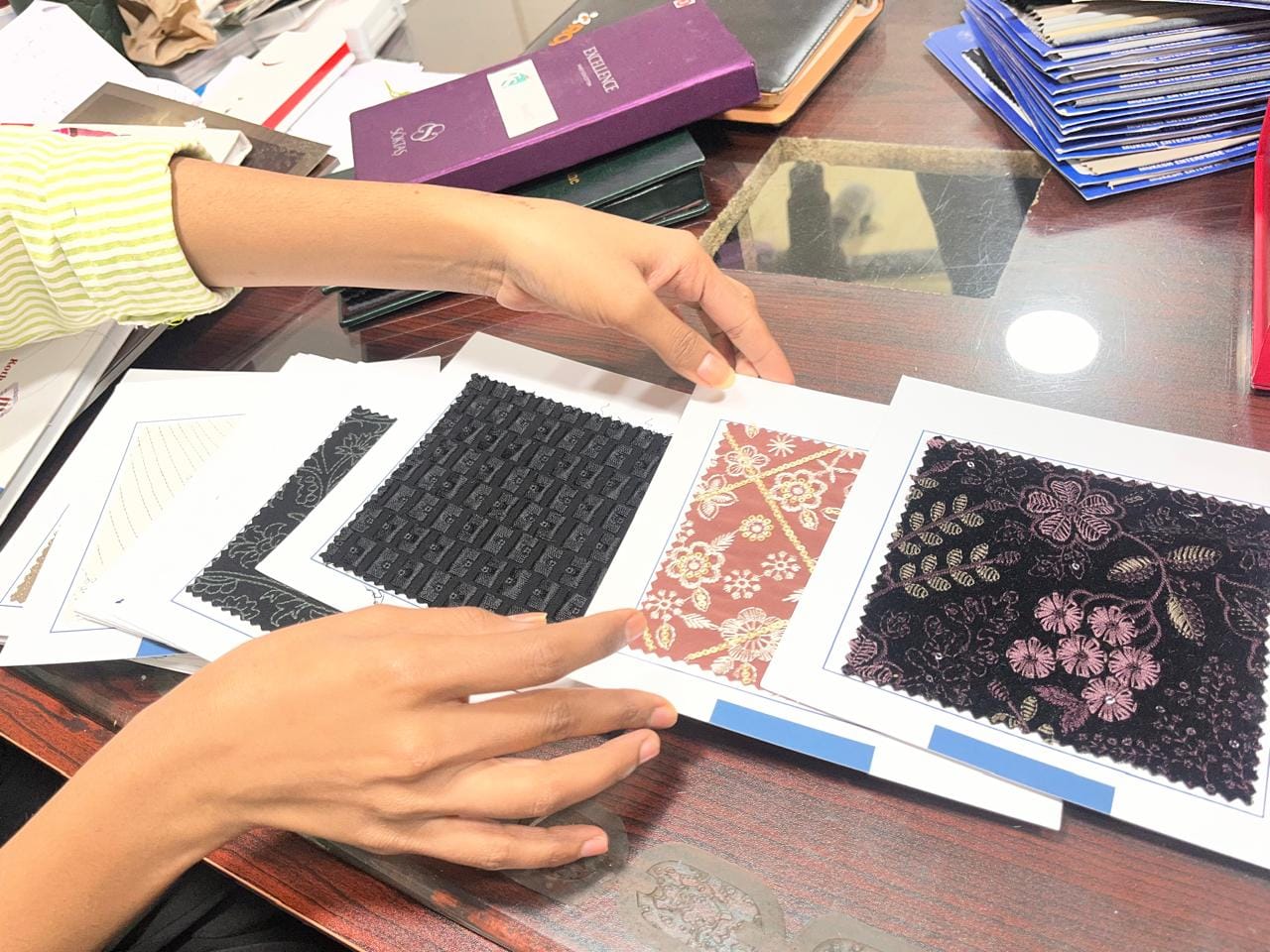
“I get all the fabric options at my home. I save the time of visiting two-three shops and get everything done from home.”
Also read: Modi govt’s The Kunj is making handicrafts luxe, aspirational. It’s no Cottage Emporium
Reinventing an old business
Pritam Onsker and Praveen Zade are ambassadors of their own startup. Both wear stitched clothes and the founders carry on the experiments between them. Zade stitches Onsker clothes, plays with the designs. His latest is the orange blazer that he stitched for Onsker. It is without lining, perfect for Onsker to wear in meetings in hot weather.
Before TailorSmart, Pritam Onsker had already experienced what many would consider a successful professional journey. Over 23 years, he had traversed regions and sectors. Working at Crompton Greaves and Hughes Telecom, with extended periods at Reliance Communications, Airtel and ultimately eleven impactful years at Tata Communications. The decision of leaving the job did not come suddenly. He started working with tailor Smart in 2017 but left his job only in 2021 to fully join the company.
“TailorSmart started growing and then I thought it needs me full time for further growth so I resigned from my job and dedicated my full time,” said Onsker.
If Onsker had the brains to detect gaps in the business, Zade held the wealth of practical knowledge. Zade was raised in a family of tailors. A place where fabric scattered across the floor like dust, where the sound of scissors snapping formed the ambiance and where every festive period brought sleepless nights as clients demanded their orders.
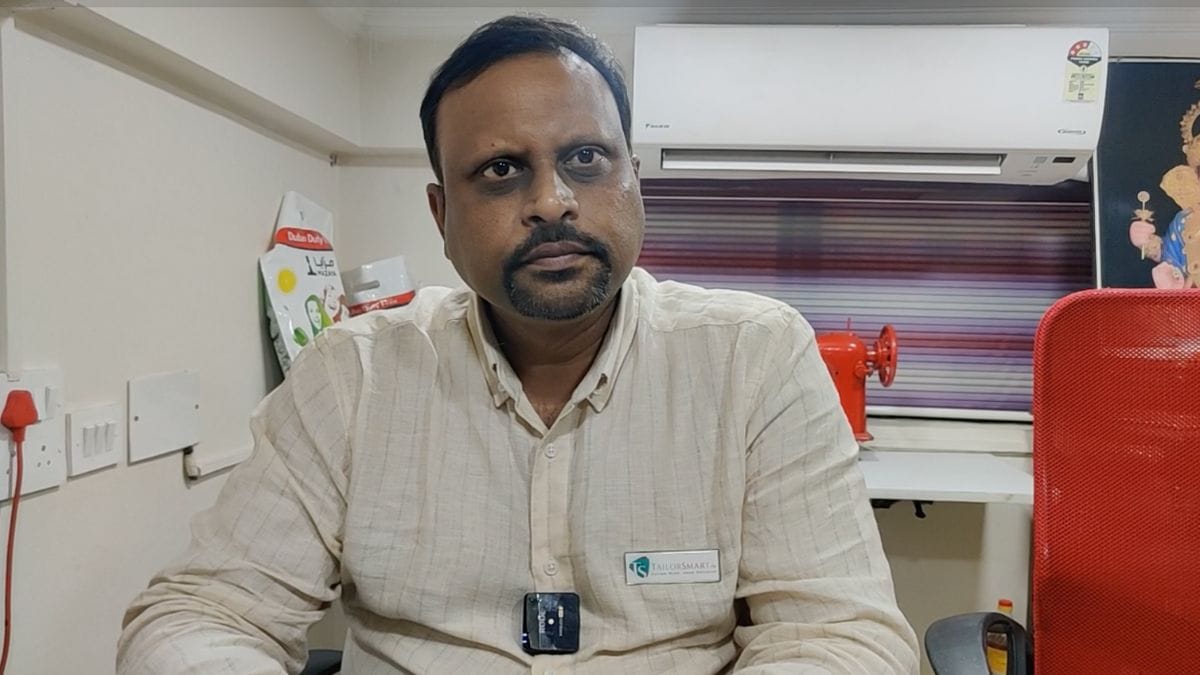
Zade understood the trade as a master passed down through generations could: how a half-inch error could spoil a shape, how different textile materials react variably depending on their origin, how men and women express their preferences for fit in distinct ways and how the schedule of payments might determine a small tailor’s success or failure, for the year.
Despite this heritage Zade could spot new opportunities in the tailoring ecosystem. Younger clients preferred home delivery, women desired expert tailors over “ladies corner” boutiques and the tailors themselves faced hardships —unappreciated, undercompensated and dispersed throughout the city lacking a consistent stream of work.
Zade was skilled in the trade; what eluded him was creating a framework that could expand the craft without compromising its quality.
When Onsker and Zade crossed paths, their goal seemed destined: one provided structure and the other contributed expertise. One grasped technology, the other grasped trust. One interpreted data, the other interpreted measurements.
Apart from TailorSmart, Onsker is invested in other startups too. BrunchBites, a food-tech startup in Goa serves thousands of clients each day and is backed by seed funding from the state government.
As for Zade, he has an old tailoring shop in a local market in Pune where 4 other people work with him. Here, a photo of his late grandfather who stitched suits for British officers, hangs on the wall. He is still known in the neighbourhood.
Zade helped the company to find the tailors, fabric companies and Onsker added the talent to expand scale, establish frameworks and integrate technology into routine inefficiencies. Their expertise differed greatly but their perspective was strikingly similar. Both believe that India’s traditional crafts are not fading away. They were just poised for reinvention.
Masterji to tailor smart
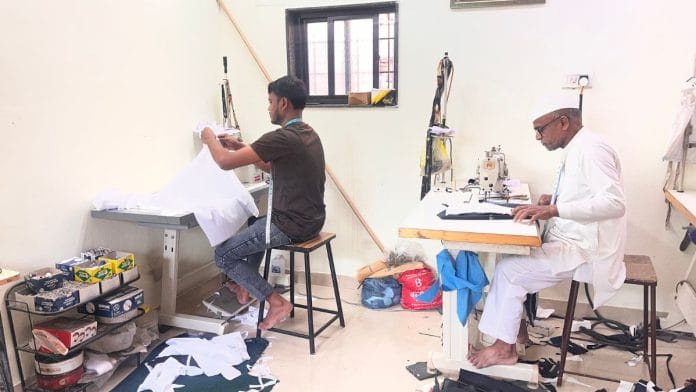
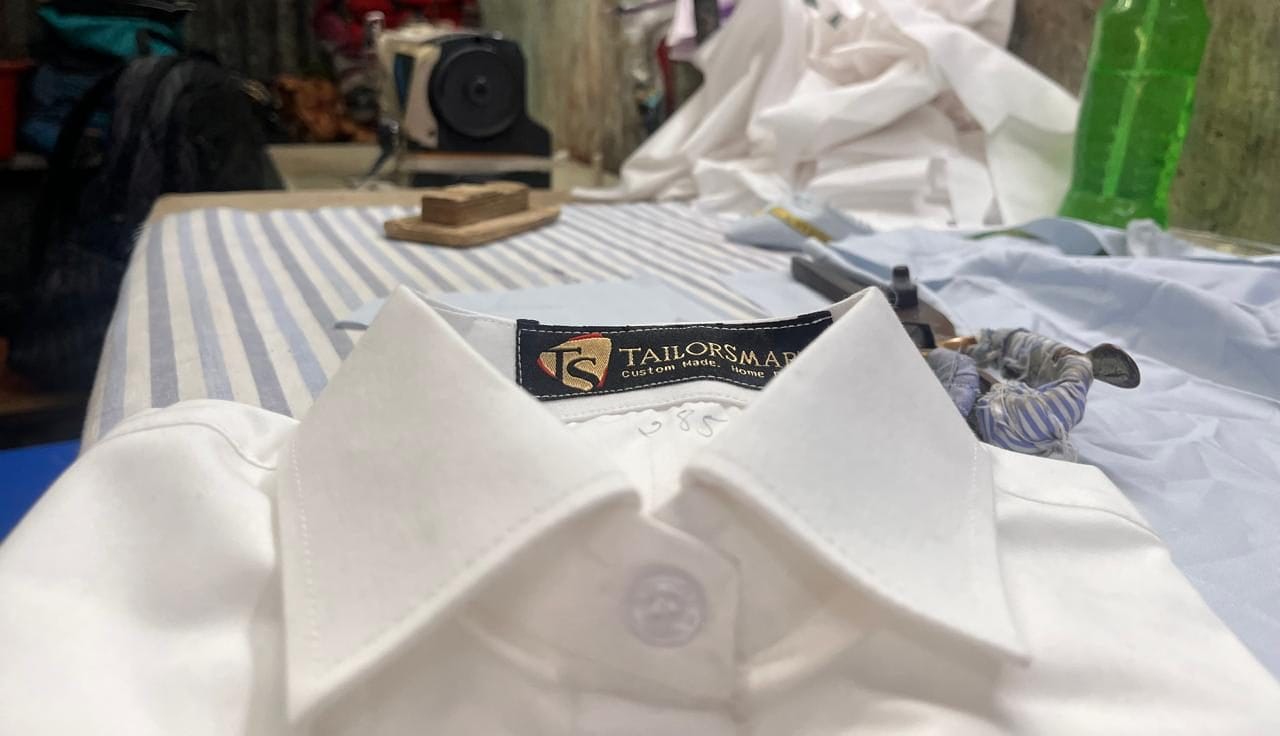
In the narrow lanes of Pune, crowded streets lead to small workshops where tailors operate out of tiny rooms. Three to four people work out of the same space. Large bundles of cloth lie on the floor; one worker stitches a shirt while another cuts fabric in a different corner. A TailorSmart tag hangs from a sewing machine, quietly watching over the room. Nearly 50 per cent of the work in these units now comes through TailorSmart.
“Earlier we used to get work only for six to seven months a year, but now because of TailorSmart, we have work throughout the year. Our earnings have improved and we only do the work we specialise in. For example, if I’m good at stitching pants, they give me pants; shirts go to someone who specialises in shirts,” said Danish Ali, stitching a white shirt for a TailorSmart order.
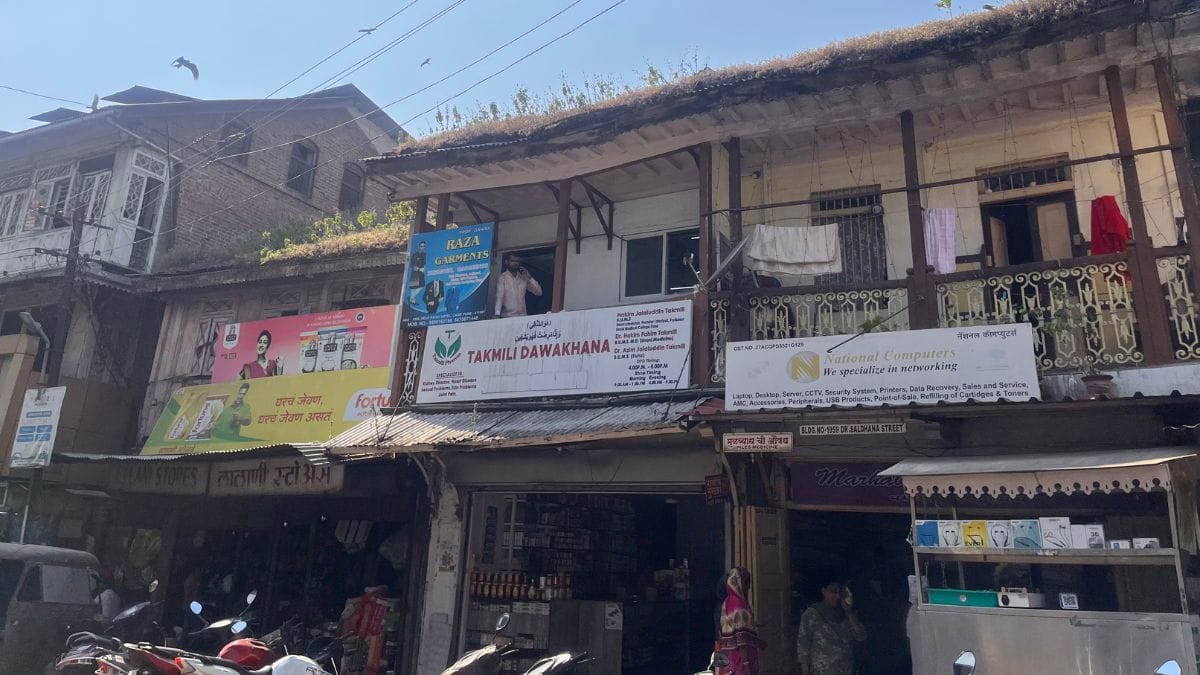
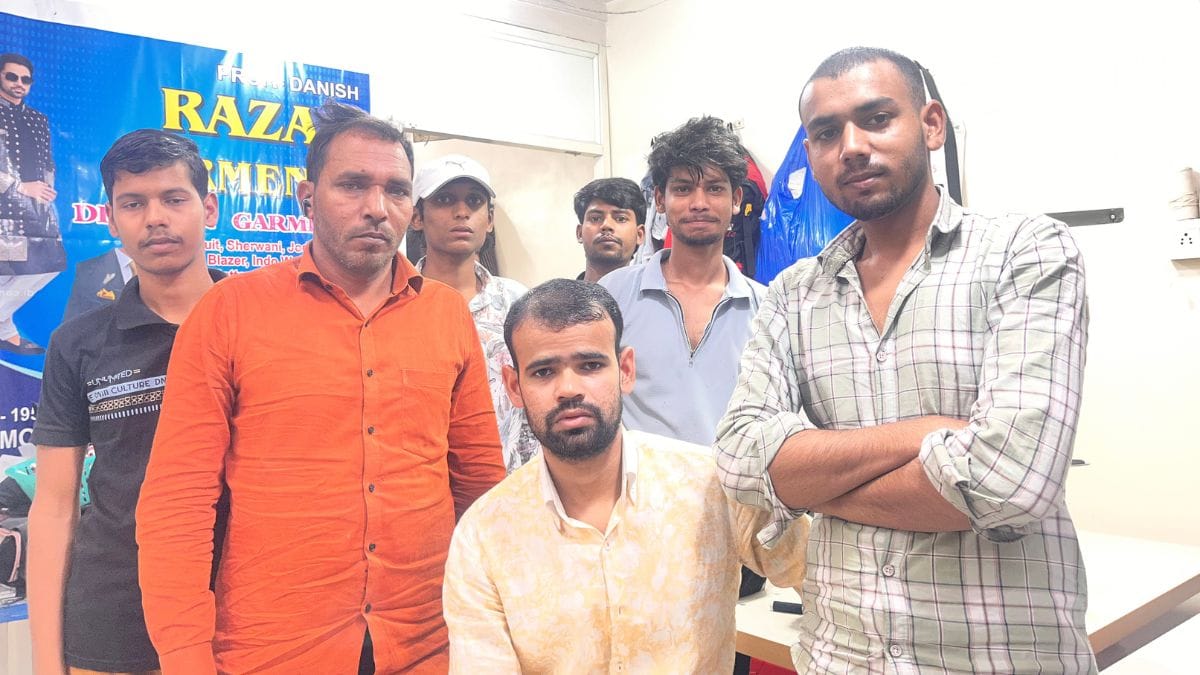
Danish, 28, came to Pune at the age of 14 and has been working ever since. In the initial years, he learnt tailoring, and eight years ago he started his own shop. Today he stitches everything in men’s clothing—pants, kurtas, sherwanis, blazers, formal suits. He began with three workers; now he has more than ten. After partnering with TailorSmart, he has hired more hands as work order has increased.
“My income increased by almost 50 per cent after tying up with TailorSmart. We get professional work, and payments are always on time. I liked it so much that I called two more people from my village in Moradabad, Uttar Pradesh, and they are also working here with me,” Ali said.
At TailorSmart, a trained “masterji” goes to customers’ houses for measurements and passes them to the tailor. The tailor receives the fabric and measurements and starts working on the garment.
“We have multiple people on payroll—the designer, the masterji, and a runner who goes back and forth between tailors, shops, and customers’ doorsteps. Tailors are paid per garment they stitch. So the tailor doesn’t have to step out of the shop, and the customer doesn’t have to chase the tailor,” said Onsker.
The platform has its largest customer base in Pune, where it all began, and has now expanded to Dubai as well. “I used to work in the corporate sector, and a friend introduced me to Praveen Zade, whose family was in the custom-tailoring business. That’s how we created TailorSmart, but it took a lot of work and research,” said Onsker.
Also read: Amritsar to Moscow in search of death certificates, bodies of Indians lost in Russian war
The journey
The TailorSmart founding team spent five years studying other models and identifying tailors. They began their work in 2017 in Pune, but to expand nationwide, they travelled across cities, found tailors through local networks, and built a detailed database, which has become the platform’s biggest strength.
“The most difficult task was to bring tailors on board. We had to go city by city, meet the tailors, assess their work, and create a database of their skills. We rated them—five stars, four stars, even two stars—and gave them work based on their skill level and the kind of orders they needed,” said Zade, who led the selection process.
Onsker said many companies approached them for the database of tailors, but TailorSmart never shared it. That’s the core of the platform.
Earlier platforms offered online tailoring services by employing tailors on fixed salaries, and a single tailor stitched all kinds of garments. Fabric sourcing was another hurdle—most businesses sell fabrics only in bulk. It took TailorSmart several years to convince fabric companies to partner with them and supply fabric in smaller quantities per order.
“There are two things that made our business profitable. One, we didn’t hire tailors on salaries—they get paid per order. Two, we managed to bring fabric companies on board, even though they were adamant about not selling fabric in loose quantities. Some of them eventually trusted us, and that helped us build our model,” said Onsker.
TailorSmart gets business from two major sources. One is its own platform, where customers place stitching orders. The other is Reliance Avantika—its saree brand active in Belgaum and other cities. All Avantika stores have TailorSmart tailors posted inside, stitching blouses for customers who buy sarees there.
“You can say we work as a third party at those stores. Mostly women tailors work at these locations across various cities. We get business from Avantika, and their stores also help with our branding because our name is on the stall,” Onsker said.
The startup has avoided large advertising spends. Instead, they conducted corporate visits where they organised old-clothes donation camps with different NGOs. Employees who donated clothes received a 10 per cent TailorSmart discount voucher.
The platform gets most of its orders through WhatsApp groups—different groups for each city and even for corporate companies. Their next goal is to strengthen their app. While functional, it currently brings in only a small share of business.
“We get 50 per cent of our business from Avantika stores and most of the rest from WhatsApp groups. Our next big step is to activate the app fully and get more orders through it,” said Onsker.
(Edited by Anurag Chaubey)
Not good writing.
I came to read about the idea and execution but could not find that even after ready 4-5 paras.