





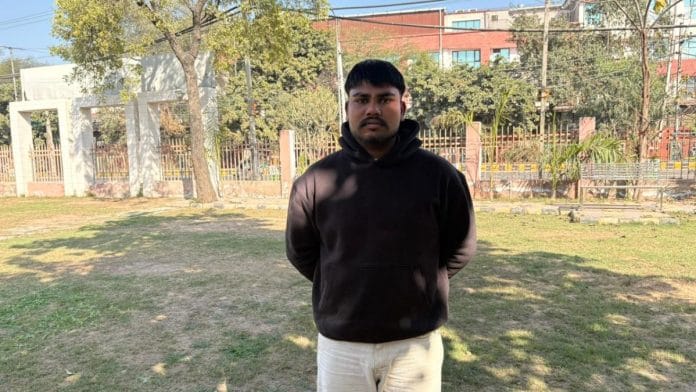



Kurukshetra: Nearly 20 years before Noida techie Yuvraj Mehta died after falling into a ditch as people watched, there was another ‘fall’ that captured the horrors and hopes of Indians in a similar way. It was that of Prince Kashyap from Haldaheri village in Haryana.
Prince’s story gave birth to India’s 24×7 television news spectacle. Channels went “breaking” every time the four-year-old killed a cockroach, ate a biscuit, or drank some milk — 60 feet under a borewell. From “Nation holds breath” to “Prince wins Kurukshetra battle”, the coverage in July 2006 travelled the length and breadth of his 50-hour ordeal.
Today, the same TV channels are writing tickers with the same intensity. From “Murder not mishap” to “Killer of Yuvraj is the system”, their headlines on the 27-year-old software engineer’s death last week reflect the same outrage — only this time, without a rescue to follow.
Prince knows he survived not because a preventive system was in place, but because the whole country was watching. That possibility did not save Yuvraj, who stood on the roof of his sinking car in Noida’s Sector 150 for over an hour, flashing his torchlight. The ‘system’ being called out by news channels existed in Yuvraj’s case, but only on paper. Two decades of development could not fill the pits, nor bridge the divide between a rural borewell and an urban construction ditch, both born of apathy and negligence. Army officers eventually pulled Prince out alive. Yuvraj died pleading for help as rescue teams from the Noida police, fire brigade, SDRF and NDRF stood by, watching.
When Prince learned about Yuvraj’s death, he stayed silent for a whole minute.
Then he spoke, slowly: “Not much has changed in two decades. We are still unprepared. If someone had acted quickly to save him, Yuvraj could have survived,” said the ‘borewell boy’, now 23. “I am alive because so many people tried relentlessly to rescue me. I wish the same urgency had been shown for him.”
The memory of his own ordeal has begun to fade now. All he remembers today are endless hours inside a dark, suffocating space — terrified, repeatedly calling out for help. Life has moved on, and so has he. He now works as a plumber in Ambala, and doesn’t like talking about the accident anymore.
“When someone asks me what happened 20 years ago, I start speaking very fast. I feel anxious,” Prince said, the words barely leaving his mouth.
While public outrage demanded punishment against “culprits” or contractors for negligence even then, no FIR was registered and no action was initiated in Haryana. Prince’s rescue seemingly covered it all up. In Yuvraj’s case, following preliminary investigations, real estate developers were arrested, the Noida CEO suspended, and a special probe ordered by the Uttar Pradesh government. The pit that was unmarked and unlit, despite being visible in satellite images for years, has now been barricaded.
“Very often, the roads around our village are broken, and there are many accidents. Politicians come during election time asking for votes. They make big promises about fixing the roads, but nothing ever happens. All they care about are votes,” Prince said. “What happened to me was negligence. But in many other cases, it’s also recklessness and complete failure,” he added after much thought.
Also read: Noida Sector 150 residents up in arms after techie death. ‘We live Ram ke bharose like beggars’
Expectations that fell apart
In Haldaheri, everyone knows where Prince Kashyap’s house is—and everyone remembers what happened there nearly 20 years ago.
For the village, the borewell rescue was a historic moment. For three days, national television channels camped outside their homes. Army officers tried different methods to rescue the child trapped underground. Politicians and officials arrived in quick succession.
“Then-Haryana Chief Minister Bhupinder Singh Hooda came to our village and stayed at Prince’s house while the rescue was going on. MPs and MLAs kept coming and going,” said village sarpanch Yadvinder Singh, 35.
The attention brought an initial burst of development to the village — water facilities, cemented bylanes, paved drains, and promises of more electricity. Prince’s family too received Rs 6 lakh in cash and several assurances. The most significant one was this: when Prince turned 18, he would be given an opportunity to join the Indian Army. An official certificate recorded this assurance, advising the family to ensure he received a good education, so he could be considered for recruitment when he became eligible.
Prince grew up believing in that possibility. At 17, he began preparing seriously—waking up early, travelling to a stadium in a nearby village every day, exercising, and playing kabaddi. Training became his routine, his purpose.
“Then Covid came, and the recruitment was delayed,” Prince said. “When the process finally started in 2022, I was told I couldn’t join because my height was too short.”
He cried for days, grieving the only dream he had organised his life around.
When Prince eventually pulled himself together, his cousin took him under his wing and brought him along to work. Prince learned plumbing on the job. Later, when he needed a steady qualification, he enrolled in an ITI course. After a year of study, he is now doing an internship at Kalpana Chawla Government Polytechnic for Women in Ambala.
“Any plumbing work that comes up at the college, we do it. It helps me gain experience, and next year I’ll be able to apply for a permanent job,” he said.
Villagers say the media attention is gone now, and so any hope for change. Prince’s father Ram Chandra Kashyap now works in a factory manufacturing AC parts. His younger brother is a barber. His elder sister is married.
The family’s situation pushed Prince to start earning early. He currently earns Rs 7,000 a month and hopes to earn Rs 25,000 once he secures a permanent job.
“I was never really interested in studies. I loved sports,” he said, sitting in a park near his workplace during his lunch break. “But I had to give up all my hobbies just to earn and help my family.”
A story Prince doesn’t tell
Prince sat with his friend, flipping through old photos from the time he was preparing for the Army.
“Look at this one—see how thin I was?” he said, as his friend nodded silently.
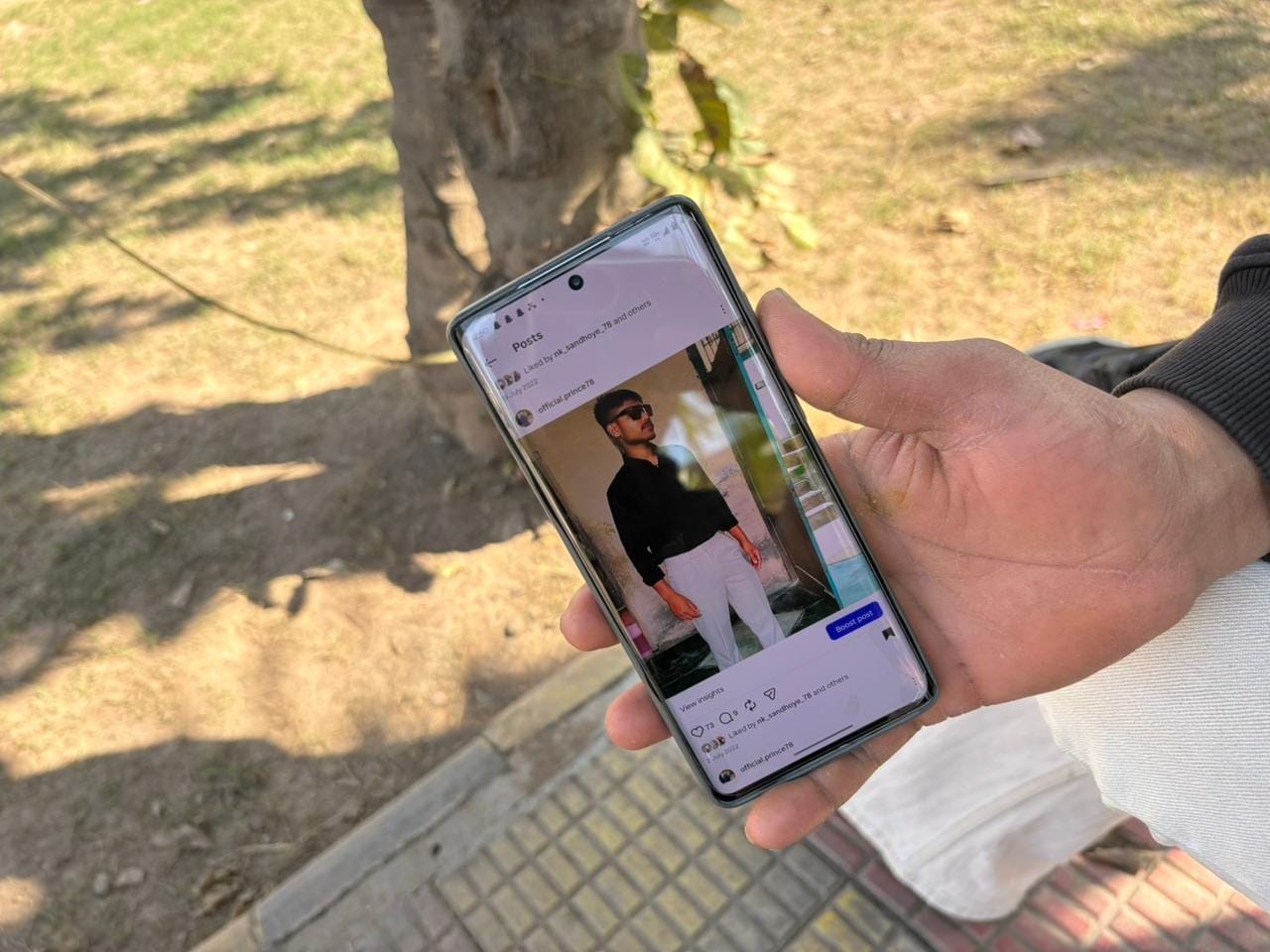
Gurjeet, his friend, said he had never known about Prince’s past, or why anyone would want to interview him. By nature, Prince is quiet and speaks only when necessary.
“I don’t tell many people,” Prince said. “I like to keep things to myself.”
Two years ago, during a trip to Khatushyam, one of his friends jokingly played old news videos of him crying during the borewell rescue.
“They were just teasing me, not trying to upset me,” he said with a small shrug.
Prince rarely searches for his story online. He doesn’t want to relive those days.
What he remembers instead are fragments: being handed chocolates and Parle-G biscuits while trapped underground, and the moment rescuers tried pulling him out with a rope that had a light bulb tied to its end.
“I grabbed the rope, and the bulb was so hot that I burned one of my fingers,” he said, showing a finger that still bears the scar.
A 50-year-old neighbour recalled how people from nearby villages would keep coming, just to catch a glimpse of the child who had fallen into a borewell and survived.
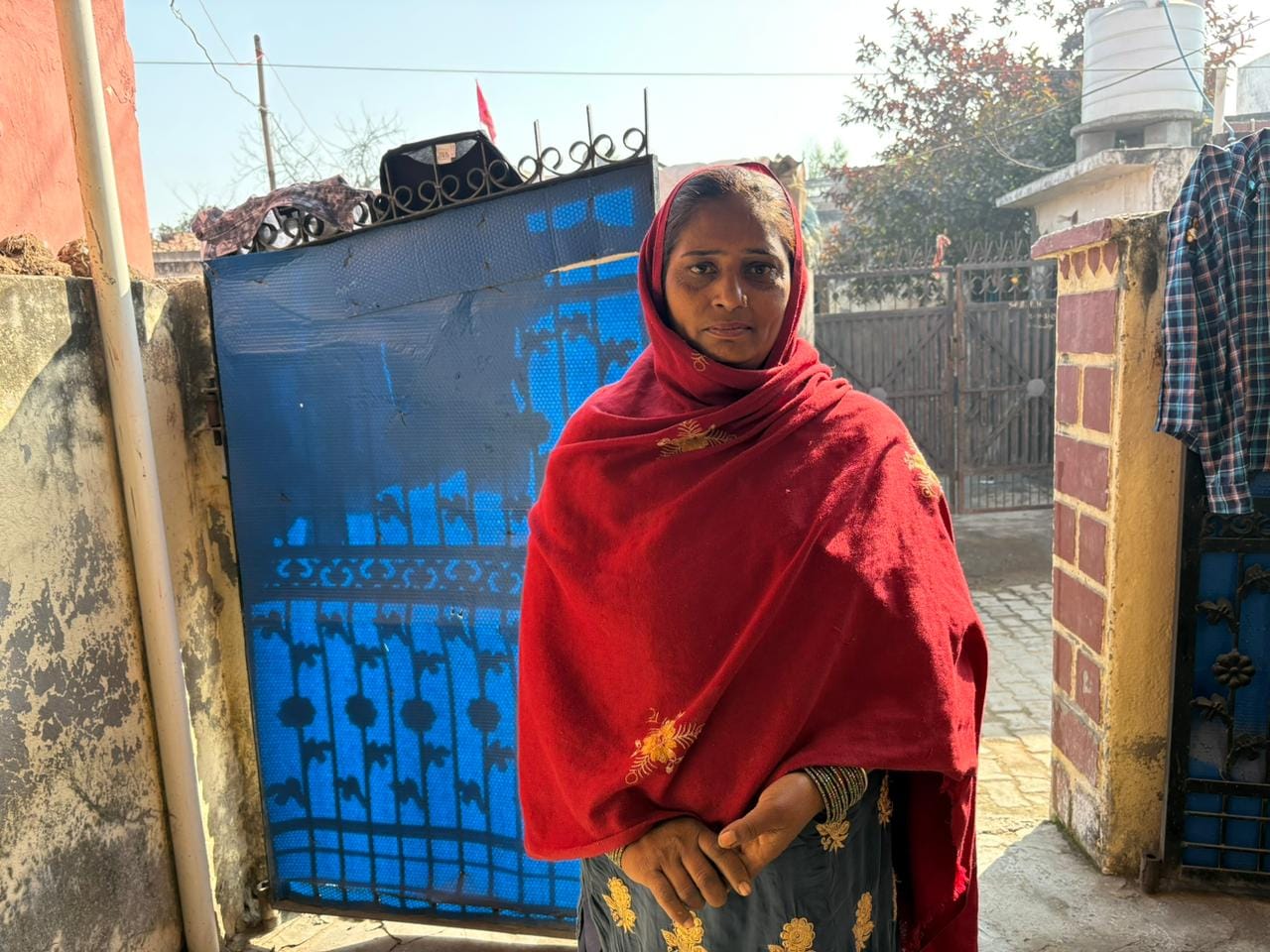
“Now all we ask is—if possible—make sure he gets a proper job,” the neighbour said. “There’s so much worry.”
Meeting stars, fleeting fame
But now, people are starting to forget what happened. The extraordinary moment that gripped the nation has slowly faded from memory.
In the days after Prince was rescued, the borewell was sealed. No other child has fallen into it since.
For a brief moment, the entire country had been watching — and praying — united in hope and anxiety. Prince became a national sensation. There were cash awards, visits from politicians, a kid’s bike from Salim Khan, and television crews that followed every movement. But fame proved fleeting.
Prince returned to a modest life shaped by his parents’ separation, his father’s remarriage, and an average performance in school. The extraordinary focus of those days became just a memory in a quiet, ordinary life.
Prince understands why his rescue became such a huge story.
“Back then, the whole country had rallied because pressure had to be put on the government, on the system,” he said.
Two years ago, his village saw a series of accidents on a road that had fallen into severe disrepair. When the local MLA came asking for votes, residents questioned why they should vote when their roads were in such a state. And then, like clockwork, action followed.
“Just two days later, work to repair the road began,” Prince said. “I wish that same urgency existed without the lure of votes. It would have been much better.”
He remembers how, after the rescue, strangers would arrive, take photographs with him, and leave. For a short while, he was taken far from the quiet of his village.
“After I came out, they even took me to Mumbai,” Prince said with a faint smile. “Some actors—like Katrina Kaif, Sunny Deol—we took photos together, and then I came back.”
(Edited by Prashant Dixit)