





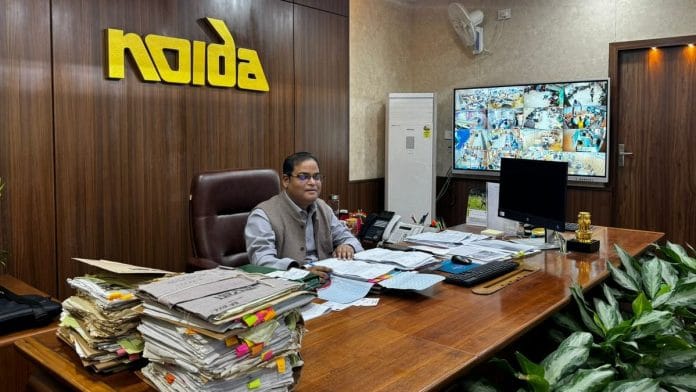



Noida: When IAS officer Krishna Karunesh took charge as Noida Authority CEO in January, his priorities were crystal clear. Not repeat the mistake of his predecessors of not engaging with Noida RWAs.
He decided he would meet Noida residents more regularly.
But on his very first day, he went into a fire-fighting mode. A 27-year-old techie had died after falling into an open pit on 16 January. The nation was stirred into outrage by his hapless death. Karunesh had to address the anger and the civic disrepair that has befallen the NCR suburb. He ordered crash barriers to be installed at the spot.
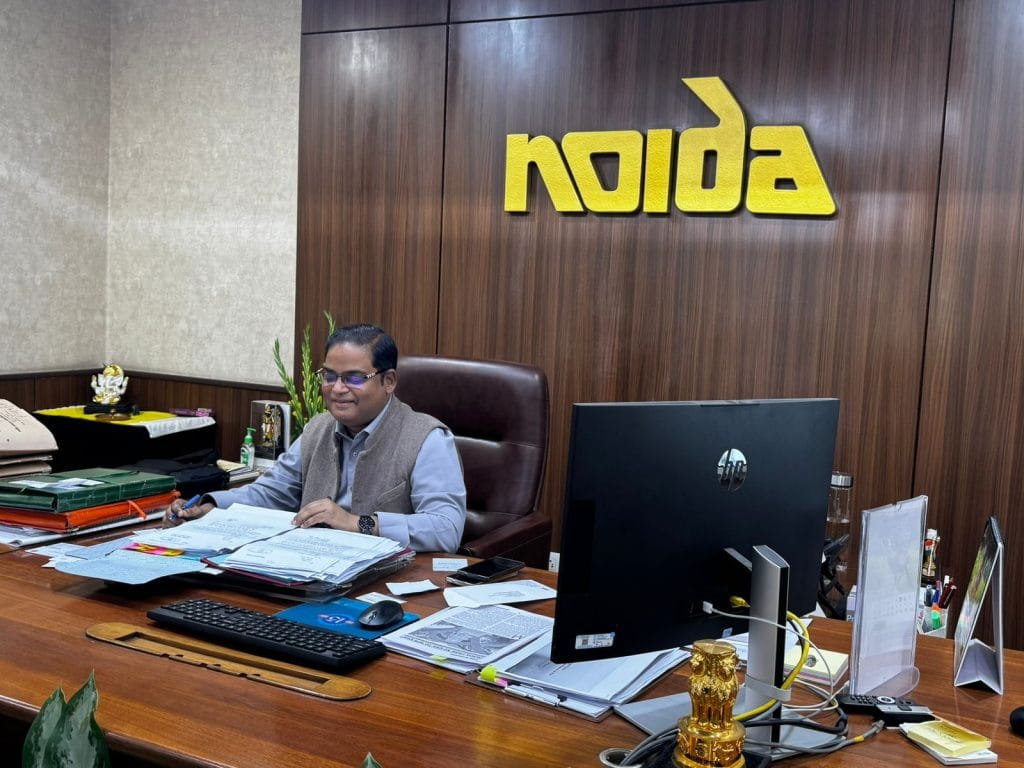
“The death had garnered national attention. The first thing to be done was to make sure that the spot is safe,” Karunesh said, sitting in his black leather chair at the Noida Authority office in Sector 6. His earlier job as Gorakhpur District Magistrate was full of political, administrative, social challenges, but somehow Noida beats all that.
Here, the challenge is not just administrative. It is structural — to retrofit governance into a city that grew faster than it was prepared for. Yuvraj Mehta’s death in the water-filled construction pit exposed the fragility of urban infrastructure in India.
Karunesh’s ascent to the top job was a whirlwind. After a three-year stint as Gorakhpur’s DM, he had barely spent five months as Noida’s Additional CEO when the summons came from Chief Minister Yogi Adityanath. He rushed to the meeting. Shortly thereafter, the incumbent Noida CEO Lokesh M was removed unceremoniously.
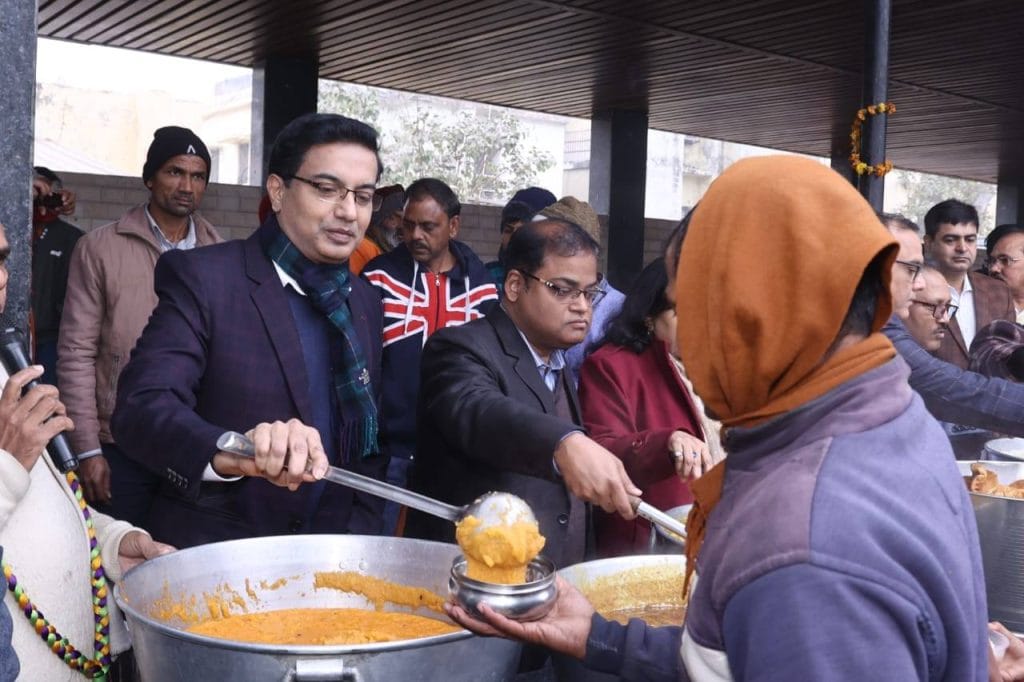
Adityanath, whose home constituency is Gorakhpur, entrusted Karunesh with what many consider one of the most challenging postings in the Delhi-NCR region. The CM’s mandate, delivered in a brisk five-minute meeting, was simple, Karunesh recalled: “Listen to what people are saying.”
A senior Noida Authority official, speaking on condition of anonymity, hinted that Karunesh was likely being groomed for the job from the moment he arrived in the city—a trial run of sorts.
“Karunesh was appointed Additional CEO at a time when residents were increasingly complaining about Lokesh M. Everyone understood why he had been sent. But no one anticipated that the situation would change so quickly,” said the official.
Also Read: Noida has an RWA problem. Office-holders grab power, residents pay the price
Noida vs ‘dream city’ Gorakhpur
Governing Noida comes with its own burdens. Karunesh calls them legacy issues—a polite catch-all for stalled projects, poor drainage, encroachments, traffic bottlenecks and uneven development.
But he isn’t playing it safe. Karunesh is ambitious, claiming with total confidence that Noida will be pothole-free by the end of March. He wants to be the officer who finally resolves the city’s long-pending civic mess and turns Noida into a cosmopolitan hub that neighboring cities would envy.
One complaint and [Yogi Adityanath] won’t spare even those close to him. The CM is very strict about work and accountability
-Krishna Karunesh, Noida Authority CEO
The key to fixing all this begins with the highly vocal but neglected RWAs of Noida.
Karunesh knows that he needs them to be on his side, and he already has a plan for it. His strategy is boots-on-the-ground: every month, officials visit a different society to sit with RWA members and understand their grievances.
“We create a file of the grievances and make sure that we can resolve them at the earliest,” Karunesh said.
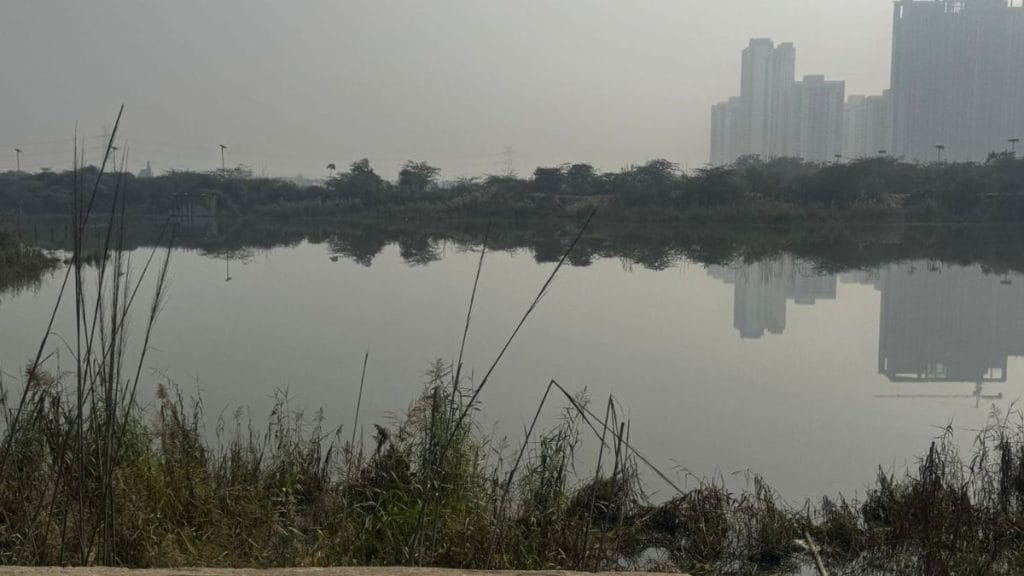
It’s a necessary olive branch. RWAs are the first point of contact between the Noida Authority and residents, yet the relationship has historically been adversarial. With the Noida Authority being a single, all-powerful body overseeing civic affairs, RWAs have often complained that their concerns disappear into a bureaucratic void. They routinely stage protests over traffic bottlenecks, illegal constructions, sewage overflows, erratic water supply, and poor upkeep of public spaces. The dynamic is one of constant negotiation — and confrontation — with the Authority.
This, though, is just one manifestation of even heavier baggage.
Noida was planned as an industrial township half a century ago. Over the years, it morphed into a residential suburban sprawl. Infrastructure has struggled to keep pace. Residents grapple daily with traffic choke points, shrinking green cover, and mounting waste management concerns.
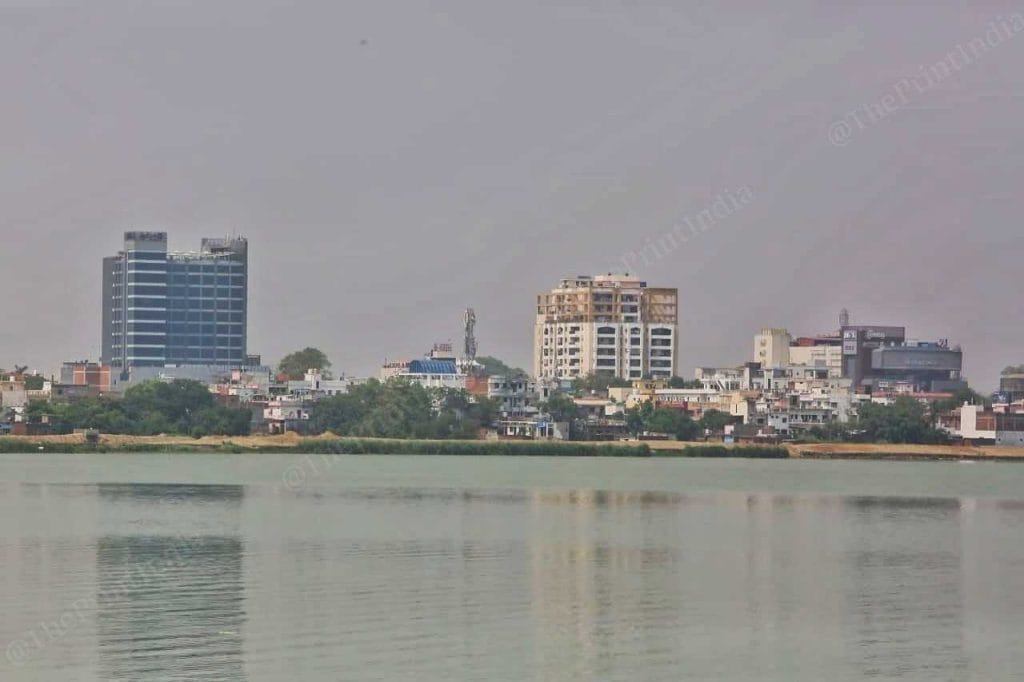
When Karunesh compares his current tenure with Gorakhpur, he points at a stark old city-new city contrast. Gorakhpur, he says, was a town in the middle of becoming. It was developing slowly and steadily. Noida, in contrast, is already built. The sectors are mapped, the concrete is dry. Yet, there are creaking fractures everywhere.
“Noida is already a developed city — it was developed long before I took over,” said Karunesh, as he signed yet another file from the large stacks on his desk. “The challenge now is managing the day-to-day affairs and addressing city-centric issues that flare up without warning.”
Expectations are high because Krishna Karunesh is the man credited with revamping Gorakhpur into what many call Adityanath’s “dream city.” He famously helped transform Ramgarh Tal Lake —once known as “Khooni Naala” for its reputation as a dumping ground for bodies by criminals—into a tourist hub where couples now stroll and families row boats. Investment proposals worth Rs 1.71 lakh crore were announced at the UP Global Investors Summit 2023. Hotel chains such as Radisson Blu and Marriott have made their way to Gorakhpur.
“Floating restaurant, Marriott, and cruise came during my time. But it was a collective effort,” said Karunesh, who is originally from Bihar and has a BA in Geography, an LLB, and an MA in Public Policy.
A 2011-batch IAS officer of the UP cadre, who has also served as Vice Chairman of the Ghaziabad Development Authority, he has a nonchalant demeanour and a wide smile. He listens patiently, but his colleagues say he is a strict taskmaster when it comes to work.
Builder-buyer blues
Among the most stubborn problems that Karunesh has inherited is the builder-buyer standoff. It has plagued Noida almost since its inception, outlasting a long line of CEOs who have tried and failed to resolve it.
Every few months, homebuyers protest outside the Noida Authority office, demanding possession of flats they paid for years ago. Many are still awaiting registration of their flats because builders have not cleared their dues to the Authority. On other days, farmers gather, saying they were not paid fair compensation for land acquired to build the city.
During her tenure as Noida Authority CEO between 2019 and 2023, Ritu Maheshwari was grappling with the same sticky wicket. Buyers were stuck. Registries of several housing projects were stalled. Many projects slipped into insolvency.
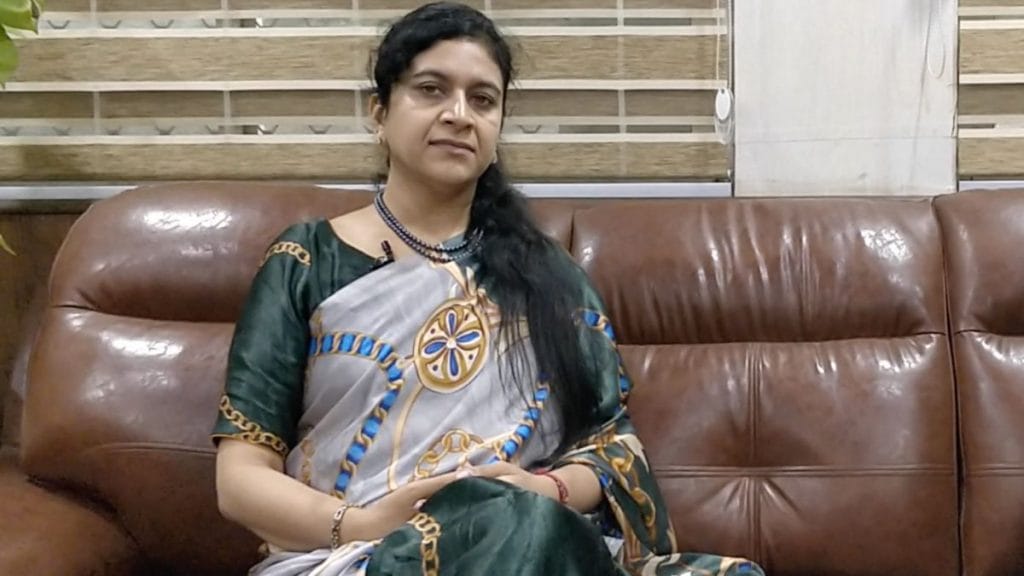
“It was more of a monetary problem than an authority problem. During my tenure, we carried out as many registries as we could. We even waived certain dues. But how long can we go on like that?” Maheshwari said.
With Karunesh seen as close to Yogi Adityanath, all eyes are now on whether he will move the needle.
“There might be times when there were faulty policies which have now become legacy issues. But ultimately, the victim is the homebuyer. The final citizen who is at the last point of this issue,” he said.
While he acknowledges he does not have a clear roadmap just yet, he has set a ticking clock on the crisis.
“Our target is to address all these issues. We have a board to look into every matter. We will take them up, examine the pros and cons, and conduct surveys where needed,” Karunesh said. “In the next six months, we will clear as many projects as possible.”
A new open-door policy
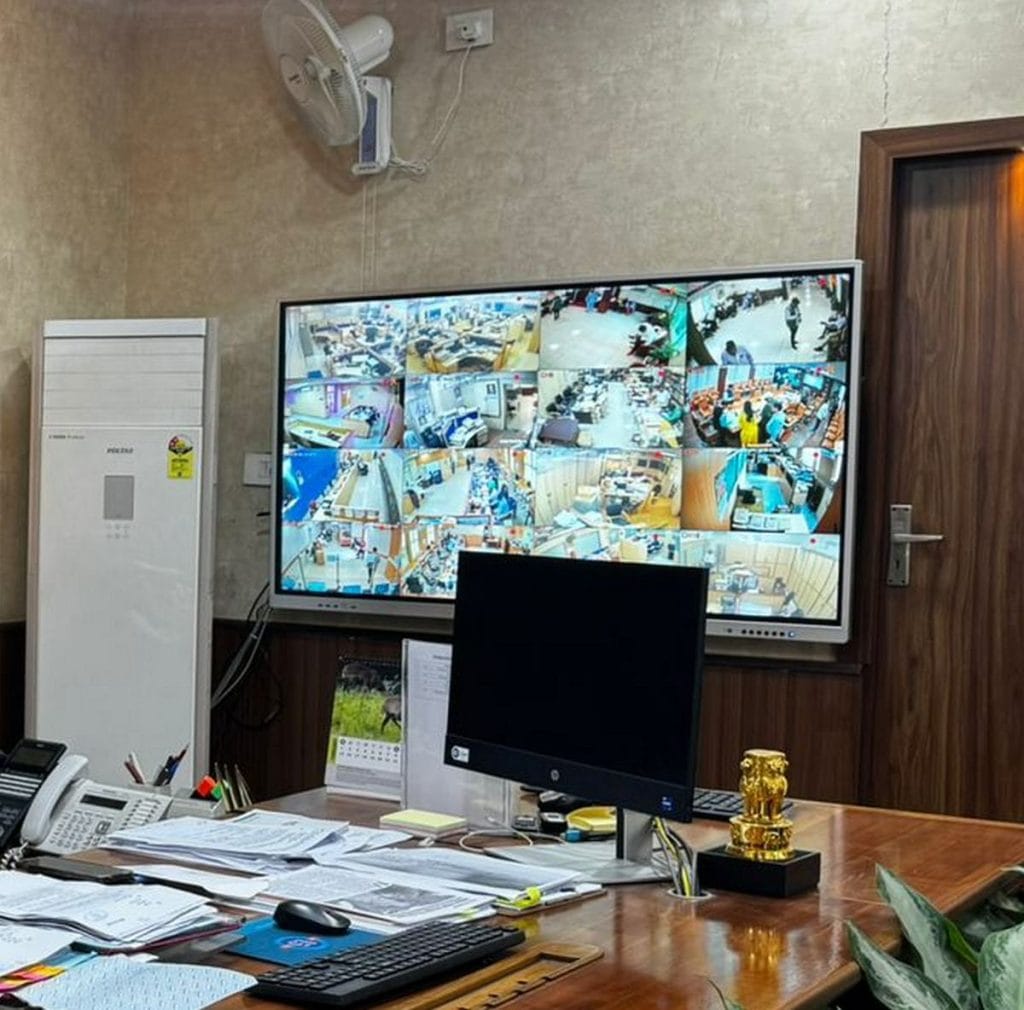
A large monitor mounted on the wall of Karunesh’s office shows the CCTV footage of people queued outside to meet him. Access to the office is easier now, residents say. The officer even holds a two-hour public hearing every morning.
On a Monday morning, 35-year-old K waited for his turn to present his civic grievances. Originally from Jaunpur, the software developer has called Noida home for 15 years and eventually bought an apartment in Sector 25. The city, he says, once symbolised aspiration and upward mobility. But the sheen began to wear off.
[Noida Authority] is more like a municipal corporation. Upkeep and maintenance are the biggest challenges. To ensure roads are maintained, streetlights function, and the city remains clean. Providing basic, good-quality infrastructure is the core responsibility
-Ritu Maheshwari, former Noida Authority CEO
The wide roads developed cracks. Traffic clogged what was meant to be a planned township. Sewage spilled. Garbage lay unattended. Repairs appeared cosmetic. It was fixed one week, broken the next.
Each time, he would take time off work to file complaints at the Noida Authority office, but was unheard, he said.
Getting through the Authority’s doors was an ordeal in itself. Outside the office building, queues would snake along the boundary wall. Visitors scribbled down their names and reasons for coming, waiting to be told whether they would be allowed inside.
Those fortunate enough to secure an appointment had to submit identification, get photographed, and collect a printed slip bearing their name, picture, and purpose of visit before they were allowed entry. Residents say the elaborate protocol created distance between the administration and its people. Unlike Gurugram or Greater Noida, where entry to administrative offices is open and easier, access here often depended on persistence—or the official’s mood.
A senior former Noida official told ThePrint that meeting former CEO Lokesh M “used to be a task” for residents and many would complain about it. During a farmers’ protest in 2024, when protesters tried to meet the CEO, he exited through the back gate, the former official claimed. Many residents link Lokesh M’s ouster to what they describe as indifference and absence from public life.
We have a board to look into every matter. We will take them up, examine the pros and cons, and conduct surveys where needed. In the next six months, we will clear as many projects as possible
-Krishna Karunesh
“The anger after the techie’s death wasn’t just about that incident,” the former official said. “People were already frustrated. They felt the CEO wouldn’t meet them. Decisions were taken inside closed rooms.”
Krishna Karunesh appears to have drawn a lesson from this. During his two-hour public hearing in the boardroom, officials from revenue, water, sanitation and other departments sit together as residents present their grievances.
“When everyone is in one place, issues that can be resolved immediately are addressed within those two hours,” Karunesh said. “Where there are legal complications, we explain the constraints and try to handle them at that level. These two hours are our prime time.”
The new CEO has agreed to reconstruct all the roads in Noida. These roads would drown during the monsoon and create recurring problems. He has already started the tender process. It just took two meetings. Earlier, files would get stuck in a pending loop
-KK Jain, general secretary of the Federation of Noida Resident Welfare Associations
Clutching a sheaf of papers as he exited the meeting, K said the experience made him hopeful of the new CEO.
“When a powerful person running the town listens to you, you feel valued. You feel like maybe now, things will finally move,” he said.
However, many residents are still in wait-and-watch mode. Lofty promises aren’t enough to convince them.
“Every time a new CEO comes, they show a lot of enthusiasm but it wears off very quickly,” said a 40-year resident of Noida who had also attended the meeting.
New Noida dreams
Noida has reached a tipping point. Conceived as an industrial township, it has transformed into a largely residential city, but that growth has now hit a wall. The land bank is nearly exhausted. The city is bursting at the seams.
It was during the tenure of former CEO Ritu Maheshwari that New Noida was notified. The idea was to avoid repeating past mistakes by building it as an industrial hub with planned residential pockets.
“The most crucial issue during my tenure was the land bank. In Noida, it was almost saturated. New projects can only come if you have land available,” Maheshwari said. “New Noida was notified during my tenure. The area was largely unutilised — it was a win-win. Industries wanted to come, but development depends on land. That was the biggest challenge. We pushed for New Noida’s master plan.”
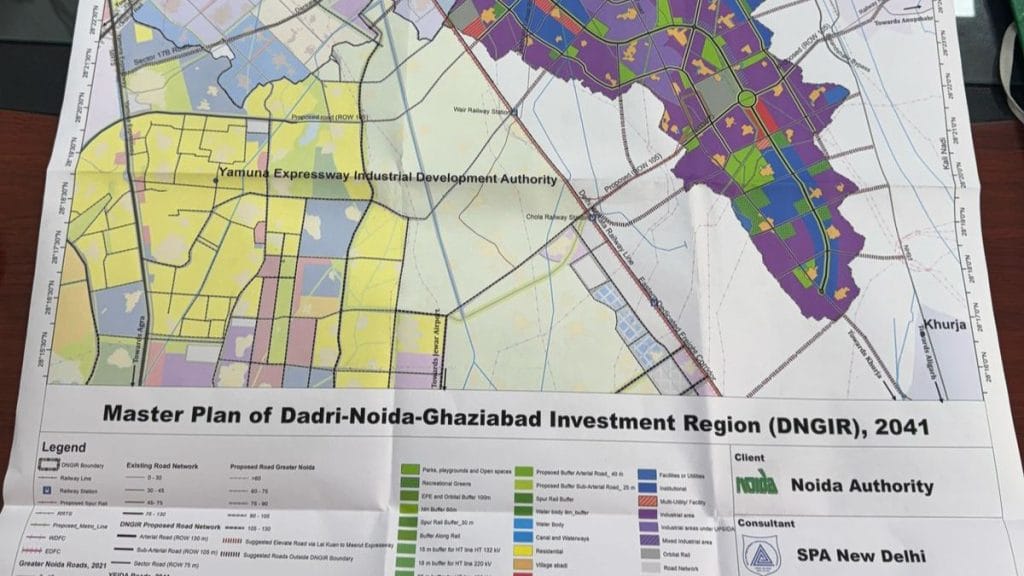
The project is now on Karunesh’s table. He has set a March-end target for planning the acquisition process. New Noida, or the Dadri-Noida-Ghaziabad Investment Region (DNGIR), spans over 209 sq km, covering over 80 villages. Located near Dadri and close to the Eastern Peripheral Expressway, it is projected as the next industrial hub for the NCR.
“New Noida equals the size of Noida. We already have the master plan for the area. We are aiming at more than 30 per cent industries in this new area,” Karunesh said, with a wide smile. “Currently, we are negotiating with the farmers so that we can come up with a rate.”
However, a master plan is only as good as its implementation and “actionable and doable solutions”, cautioned Anil Dewan, retired dean (research) at the School of Planning and Architecture.
“There are master plans on paper, but they are not executed the way they should be. Until work, housing, mobility, and public services grow together, the city will continue to strain under its own expansion,” he added.
Also Read: The idea of Noida. The bad boy of NCR, Mall of India swag, a culture vacuum
‘CM won’t spare even those close to him’
KK Jain has seen plenty of CEOs come and go. As the general secretary of the Federation of Noida Resident Welfare Associations, he has often been disappointed. But he’s come away optimistic after his first couple of meetings with Karunesh.
Each time, he said, projects were cleared promptly. From repairing roads to installing tubewells and renovating parks, the tendering process has already begun. Now, the collective body of RWAs is pushing for something more ambitious: a complete overhaul of the city’s roads. Jain claimed that the ball has already started rolling.
“The new CEO has agreed to reconstruct all the roads in Noida. These roads would drown during the monsoon and create recurring problems,” Jain said. “He has already started the tender process. It just took two meetings. Earlier, files would get stuck in a pending loop.”
The Noida Authority has sweeping powers over the city’s development and maintenance. Functioning under the UP Industrial Area Development Act, 1976, it plans, allots, and executes.
“It is more like a municipal corporation,” former CEO Ritu Maheshwari said. “Upkeep and maintenance are the biggest challenges. To ensure roads are maintained, streetlights function, and the city remains clean. Providing basic, good-quality infrastructure in a city like Noida is the core responsibility.”
For a long time, there has been a debate over whether to create a separate municipal corporation in Noida. Karunesh was non-committal about this, saying it was up to the government, but the former senior official quoted earlier said a separate municipal corporation would not necessarily benefit residents.
“For the Authority, it would mean one less burden. They would be relieved,” the official said. “But for residents, the situation could be very different. A municipal corporation does not command the kind of budget the Authority does. Progress could slow down, and projects may get caught in red tape.”
With Karunesh said to have “Baba” (Yogi Adityanath) on his side and having worked closely with him before, RWAs, industry bodies, and fellow IAS officers are watching to see if he can do what other CEOs could not. But Karunesh hints that access to the CM can only go so far.
“One complaint and he won’t spare even those close to him. The CM is very strict about work and accountability,” Karunesh said, with a weak smile. He pressed the bell on his desk. When a staffer entered, the CEO instructed him to call the next person in line.
“There is no lunch break today,” he said matter-of-factly.
(Edited by Asavari Singh)