





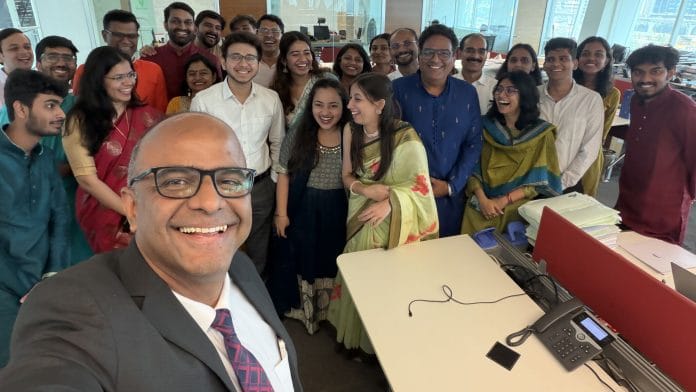



Delhi: It was December 2019. The conference room on one end of the corridor at New Udaan Bhawan, the GMR Group’s corporate office in New Delhi, was hosting the top leadership of Blackstone. A few rooms down, a team from Groupe ADP, the French Government owned airport company, was gathered. And there, moving back and forth between the two rooms with spreadsheets and term sheets in hand, clad in black pants and a crisp white shirt, was Saurabh Chawla, Executive Director of Finance & Strategy at GMR Infrastructure. His face gave nothing away, no hint of excitement, no sign of stress.
A deal will ease the burden of debt the airports operator was reeling under in early 2019. Groupe ADP would purchase 49 per cent stake in GMR Airports for Rs. 10,780 crore, thereby deleveraging the listed GMR Infrastructure Ltd.
“It was a very large transaction and it was done innovatively,” recalls Chawla, currently the Group Executive Director and GMR Airports GCFO.
What made the deal stand indeed was innovation. Instead of choosing between raising fresh capital for the business or allowing promoters to sell their stake to reduce debt, it did both simultaneously. A portion of the investment went into strengthening the company, while a larger share enabled the promoters to deleverage, addressing two balance sheet pressures in a single transaction, something most deals handle separately.
For GMR, the stakes went beyond raising Rs 4,450 crore; it was about restoring credibility with lenders, attracting long-term global capital, and writing a new template on how infrastructure companies in India financed growth. And a big part of this strategy came from the CFO’s book.
Across India Inc., the role of the CFO is being rewritten, moving beyond stewardship of balance sheets to the frontlines of strategy, dealmaking and the keeper of institutional credibility. The CFO has emerged as a central figure for executing & designing transactions. But designing them in a manner that turns financial strain into opportunities and resets the terms of capital raising. The best CFOs in India Inc today are architects first, scorekeepers second, the ones who have actually moved the needle, deal by deal.
At Reliance Industries, Alok Agarwal led strategic stake sales to make the company go nearly debt free. At TCS, Samir Seksaria has sustained healthy operating margins by tightly controlling utilisation and costs even through global slowdowns. At Larsen & Toubro, R. Shankar Raman has led a multi-year deleveraging effort, reducing net debt and unlocking over Rs 20,000 crore through asset monetisation. And in the startup ecosystem, Rahul Bothra at Swiggy has worked to bring discipline, reducing cash burn across segments like food delivery and Instamart. This shift is being driven by necessity. As capital becomes expensive and markets more unforgiving, growth is no longer about expansion alone. It is about allocation.
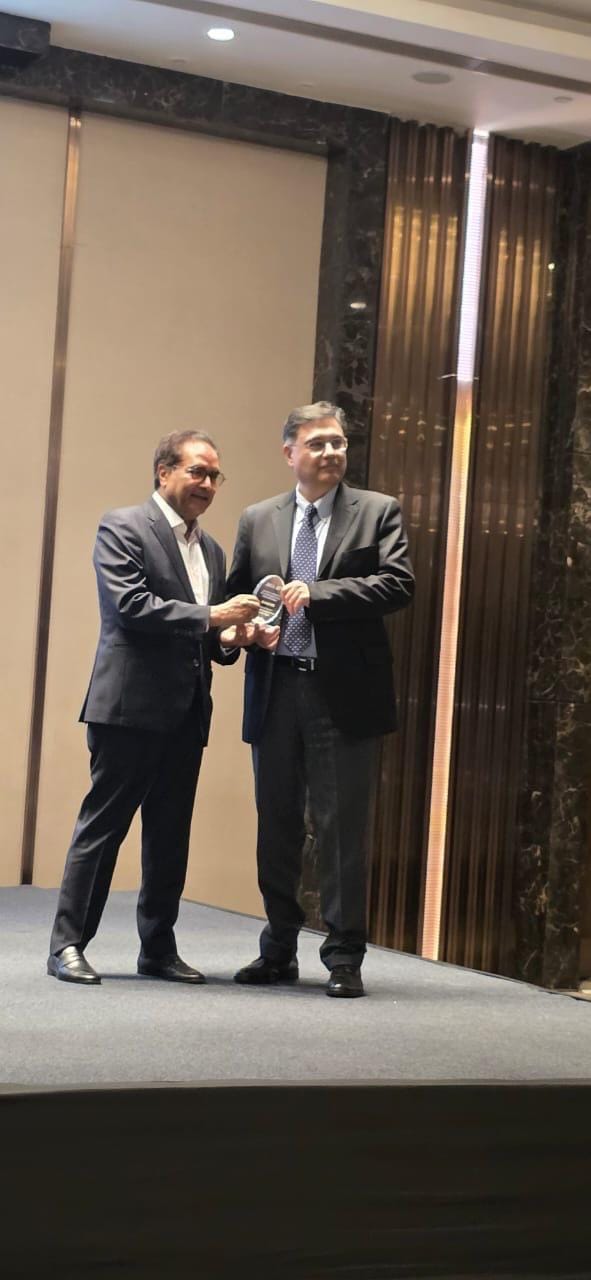
Rahul Kakkar, Partner and India Head of CFO Practice at Korn Ferry, explains, “CFOs of today are enterprise-wide leaders, not just heads of finance. They have a unique vantage point on the business that cuts across functions – interfacing across finance, sales, manufacturing, supply chain, operations, IT, data and strategy.” He adds, “Increasingly, high-potential CFOs are seen as worthy successors to the CEO role. High-performing CFOs have the ability to navigate constantly evolving business complexities and position the organization to unlock new avenues of growth while managing risks,” says Kakkar.
Hiring trends reflect this expanded mandate. Companies now look for CFOs who have successfully delivered growth and transformation, scaling businesses and transforming performance to drive value creation. “A strong network and credibility with bankers, institutional investors, and capital markets is important for modern CFOs – especially in businesses that are looking to raise funds and those seeking capital-intensive growth investments,” Kakkar notes.
Also read: How Tamil Nadu built India’s largest STEM women army. ‘Original DEI gangster’
Beyond the brink
Before Chawla became the Chief Financial Officer of GMR Airports, he had already built a reputation as a go-to person for complex, high-stakes balance sheet turnarounds or growth and dealmaking. That operating muscle was forged in his early days at Moser Baer Private Limited.
In 2004, he was part of one of the largest strategic deals in Indian corporate history at the time – a deal valued at ~US$ 500 million over three years between Moser Baer and Imation Corp. Under this agreement, Imation would source optical media exclusively from Moser Baer over a four-year period. Often noted as generating over $100 million per annum in incremental revenue for Moser Baer, the transaction helped position the company among the top three global manufacturers in its category, strengthening its market share in the US.
Now, he has earned a similar distinction in India’s infrastructure sector, helping guide GMR Group through complex, value-accretive transactions, with GMR Airports Limited being recognised among Motilal Oswal Financial Services’s Top 100 Fastest and All-Round Wealth Creators under his stewardship.
“Fifteen years ago, a typical CFO was expected to ensure financial discipline and close the books,” says CFO of a leading player in the travel QSR on condition of anonymity. “Today, CFOs are everywhere, driving digital transformation, supply chain resilience, and strategy.”
In other words, CFOs are no longer just protecting value, they are also enabling it.
This is reflected in how companies are being evaluated. Investors are paying closer attention to leverage ratios, cash flows, and capital allocation decisions. The quality of financial strategy is becoming central to valuation.
It is also changing expectations within companies.
“Are they aligned with the growth trajectory? Can they multiply revenue 2x or 3x. Can they spot growth opportunities; can they do attractive deals and leverage the balance sheet?” says the CFO quoted above. “For that, what do you have to do today? Finance today is deeply integrated with the business and you need a 360-degree view, how manufacturing works, how sales works, how R&D works. Only then can you truly contribute.”
The CFO explains that people in his shoes are now expected to actively shape strategic direction. Why isn’t a particular M&A isn’t being pursued? What advantage it could unlock, and how it might enhance valuation? They must ask these questions in today’s corporate landscape. In this sense, the ability to bridge long-term thinking with present-day execution is what distinguishes those who can operate effectively in the role. In a world where capital is no longer cheap, and survival is no longer guaranteed, that may be the most valuable metric of all.
Also read: Delhi’s industries are gasping. Pollution crackdowns & fight for nala-sadak-pani
From Debt to Discipline
Chawla joined GMR Infrastructure during one of the most challenging periods in the GMR Infrastructure Ltd’s company’s recent history. The infrastructure airports business which included the airports business was grappling with mounting debt, reported at around Rs 27,500 crore in early 2019. Analysts at the time highlighted risks of delays in monetisation of key infrastructure and real estate projects, flagging execution challenges as a material concern for the company. Internally, executives were navigating a complex web of operational bottlenecks, legacy contracts, debt refinancings and strained cash flows.
At the same time, global investors were wary, capital markets were tightening, and the broader infrastructure and aviation sectors were facing uncertainty, as seen in the financial distress and bankruptcy of Jet Airways and broader caution among aviation stakeholders. Both lenders and minority investors were increasingly skeptical of GMR’s ability to manage its financial obligations while pursuing ambitious growth plans. Even as the company pushed ahead with debt reduction and asset monetisation, market watchers remained cautious, and lenders had to negotiate long-term resolution plans on stressed assets to maintain exposure.
He went on to play a central role in reshaping its capital strategy, steering the shift from debt-heavy expansion to structured, institutional equity partnerships, beginning with the Groupe ADP’s deal.
What followed under Chawla’s leadership was a rapid, multi-pronged restructuring of the group’s finances. His first job at GMR after joining from DLF was working on this landmark deal. Chawla had signed a binding term sheet with Tata Sons, GIC Singapore, and SSG to sell up to a 44 per cent stake in the airport platform, marking the beginning of a broader effort to bring in institutional capital.
The instinct, in such moments, is to wait. Most Indian promoters do—the cycle will turn and growth will outpace the debt. But when that doesn’t happen, the room to manoeuvre quickly shrinks. The group could sell core assets at the risk of losing control over its most valuable business or continue refinancing expensive debt, only pushing the problem further down the road
Year one is trying for most new CFOs, but Chawla couldn’t have anticipated the chaos. Months into the job, he went on to negotiate a separate deal to sell a 49 per cent stake for ~Rs 10,500 crore to Groupe ADP. The speed of this transaction was critical: the earlier deal with Tatas and GIC had run into regulatory hurdles and competitive friction, forcing a swift pivot to an alternative structure and partner. Without it, the group risked entering a far more constrained position, with limited access to capital, weaker negotiating leverage, and eroding credibility in the market.
Collectively, these transactions formed one of the most consequential capital-raising efforts in the Indian infrastructure sector, testing whether a highly leveraged developer could deleverage and attract institutional capital without ceding control of its crown jewels.
Further, the group also raised over $ 2 billion across businesses, funding fresh capex at airport operating companies while refinancing debt at the corporate level. Structurally, the business was also reorganised: GMR Infrastructure Ltd. was demerged to create GMR Airports Limited as a pure-play, listed airport platform, alongside a separate entity for non-airport businesses.
The impact of these moves showed up clearly in market performance. Since 2019, the stock price of GMR Airports Ltd. has risen from around Rs 16 to a peak of ~Rs 110 (currently ~Rs 90), while the other demerged “energy” entity GMR Power & Urban Infrastructure Ltd has grown from roughly Rs 40 to ~Rs 158 per share under his reign.
The CFO lens: different from the founder’s
Every turnaround has a trigger. At GMR, it came in the form of mounting pressure, high-cost debt, a tangled capital structure, and regulatory overhangs converging into a precarious financial position. Their airport’s business—that contributed to about half the profit the group was making when the deal came through—remained fundamentally strong, but it was capital-intensive and weighed down by leverage.
The instinct, in such moments, is to wait. Most Indian promoters do—the cycle will turn and growth will outpace the debt. But when that doesn’t happen, the room to manoeuvre quickly shrinks. The group could sell core assets at the risk of losing control over its most valuable business or continue refinancing expensive debt, only pushing the problem further down the road.
Chawla saw this differently. “The first thing is to acknowledge that there’s a problem,” he says. “What I’ve seen in India is that promoters refuse to acknowledge it.”
His approach was clinical. Strip the problem to its core. Identify the pressure points. Then build scenarios. “Don’t be prescriptive. Build scenarios with consequences and let them decide.”
In his late 50s, Chawla had already proven this playbook once before. At DLF, he stepped in at a time of heavy debt and a sluggish real estate cycle, and helped engineer a turnaround driving asset sales, imposing capital discipline, and restoring credibility to the balance sheet
But these are not just financial decisions; they are also deeply personal. “After all, it’s their baby,” Chawla says, referring to promoters and their conventional decisions. “You’re asking that half of that baby is going to be owned by somebody else and it’s not an easy task.”
Chawla’s gift is his ability to make the case with enough clarity and conviction that promoters are willing to act, despite the emotional cost. It is a powerful skill set and an increasingly critical one for CFOs tasked with pulling companies out of distress.
In his late 50s, Chawla had already proven this playbook once before. At DLF, he stepped in at a time of heavy debt and a sluggish real estate cycle, and helped engineer a turnaround driving asset sales, imposing capital discipline, and restoring credibility to the balance sheet.
Also read: Inside small-town India’s Reel economy. Lights, camera, unemployment
Deleveraging without slowing down
The clarity of weighing what is given up against what is gained is beginning to shape a wider generation of finance leaders. At JSW, Swayam Saurabh frames the trade-off just as starkly.
“If the value created is disproportionate to what you are giving away, and it enables faster growth, why would the board disagree?” he says.
JSW Steel acquired the debt-laden Bhushan Power and Steel in 2021 for Rs 19,700 crore through insolvency and, over the next few years, turned it into a profitable, efficient asset.
The next step was unlocking its value, which can propel growth, without stretching the balance sheet further.
To do that, JSW is carving out BPSL’s steel business into a 50:50 joint venture with Japan’s JFE Steel, a partner that already holds a stake in the company, through a clean, slump-sale structure. The transaction brings in Rs 15,750 crore of fresh capital and shifts part of BPSL’s debt into the new entity, resulting in a deleveraging of over Rs 37,000 crore. Valued at roughly Rs 53,000 crore, the deal crystallises gains from the turnaround while giving JSW significantly more headroom to fund its next phase of expansion.

For Swayam Saurabh, this is less about balance sheet repair and more about creating room to manoeuvre. In a cyclical industry, where leverage can quickly become a constraint, discipline is what preserves optionality.
“I don’t believe being disciplined and having aggressive ambition are opposites, they are sequential and my role is not to say no to growth, but to ensure that we grow with clarity, understand consequences, and remain disciplined,” he says.
That discipline, he argues, compounds into credibility. “Being disciplined creates credibility. And that credibility allows you to place bigger bets.” At JSW, that credibility has been anchored to a single metric. “We’ve been telling the external world that while our absolute focus is growth across cycles as the country needs self sufficiency, the net debt to EBITDA is a holy grail for us and holding that line in a cyclical industry requires enormous discipline.”
“This transaction has reduced our debt by 45 per cent in one shot,” he says. “That kind of capital non-debt capital creates significant liquidity in the system.”
“Our net debt to EBITDA was around 2.9. Post this transaction, it will come down to 1.7. That resets everything: our ability to grow, our risk appetite, our balance sheet strength.”
The company now has greater headroom to pursue its long-term capital expenditure plans, including its ambition to scale capacity beyond 50 million tonnes per annum by FY31.
Swayam Saurabh was inspired by his maternal uncle, learning early on to navigate life with wit and resourcefulness. Watching them handle challenges with practical intelligence helped him develop the street smarts and sharp instincts that would guide him later.
Also read: Faridabad is the neglected, poor cousin in Delhi-NCR no one talks about
The Playbook
If the brink is about recognising the problem, the recovery is about execution. And here, the wartime CFO operates with a distinct set of tools. In moments of stress, their role expands: from gatekeepers of capital to interpreters of risk, negotiators of control, and, often, the ones who push organisations to confront uncomfortable truths.
The playbook of the travel QSR CFO quoted earlier was simple but disciplined: fix the bottom line, drive PAT (profit after tax), improve margins, scale sales and tighten costs, laying the foundation for his company’s transition into a public company.
The CFO frames that shift as moving beyond veto to clarity.
“Saying no is the easiest thing a CFO can do,” he said. “But if you explain the rationale, what the company stands to lose, the conversation changes completely.” The real task is not to block decisions; it is to show what will work, what will not, and why.
Any business, according to this CFO, should have the sense and sensibility to understand when a model is no longer relevant and it is about time that you pivot the model completely.
For example, earlier, lounge access in India was provided largely by airlines, especially full-service carriers like Jet Airways and Kingfisher. But the model pivoted when credit card companies and banks began offering lounge access to customers. The same service moved to a different ownership layer of the ecosystem, changing how value was created and captured.
Also read: Dr TK Lahiri is Varanasi’s ‘Dr God’. He almost died lonely, now his folklore grows bigger
Masking the stress
While some stress on when to hold and when to pivot, for some, it is all about building leverage at the negotiation table.
“I used to be a bad cop in a negotiation,” Chawla says. “If you’re going to be soft, if they believe you have no other option, they will never relent. You don’t want to demonstrate your stress to the counterparty… those are very hard moments.”
“It’s a crazy balancing act, you know your cash flows, your obligations, and still have to stay composed.”
That external steadiness is mirrored by an internal philosophy that prioritises clarity over reaction. Away from the negotiating table, Chawla’s preparation is almost philosophical, inspired by Buddhism. He has absorbed the concept of impermanence, the idea that a deal stalling today is not a deal dead forever. “Today it’s not happening, it doesn’t matter if it will happen.” Without that belief, the pressure of a long negotiation becomes corrosive. “If you are yourself jumbled up in your mind, you will not do the right thing.”
Even then, the process resists neat planning.
The GMR Airports transaction illustrates how external variables can redraw even well-structured deals. A long-drawn negotiation with GIC ultimately did not culminate in closure, as regulatory approvals became a bottleneck that neither side could fully resolve within the expected timeframe. What had been carefully negotiated on commercial terms remained contingent on clearances beyond the control of the negotiating teams. A French strategic investor eventually stepped in, reshaping the contours of the transaction and allowing it to move forward through a different partnership structure.
“You can’t really plan and forecast every aspect of it,” he says. Deals evolve, stall, and restart. “You have a plan when you get into the football field but you have to keep evolving depending upon what the counterparty’s strategy is.”
And through it all, the work remains collective. “I’m not a repository of all knowledge,” Chawla says. “Knowledge is in the team.” The CFO’s role is to shape that into action. “We brainstorm, one scenario, second scenario, third scenario. Then as a team, you make a pitch to your promoter or the board.”
Also read: Trans Amendment Bill brings a cloud of confusion to Garima Grehs. ‘Our trust is shaken’
Playing the long game
A similar operating philosophy can be seen in the approach of Ashutosh Dhawan at Mankind Pharma, where the emphasis is less on individual decision-making and more on building systems which can handle complexity without losing speed.
An example that reflects this balance is Mankind Pharma’s acquisition of Bharat Serums and Vaccines Ltd. In July 2024, Mankind announced the 100 per cent stake acquisition of BSV for an enterprise value of approximately Rs 13,630 crore ($1.6 billion) and the transaction got consummated in October 2024 which reflects the handling complexity without losing speed. The transaction marked a significant strategic expansion, positioning Mankind more firmly in the women’s health and fertility segment while strengthening its specialty portfolio.
When Dhawan was leading the BSV acquisition at Mankind Pharma in 2024, the stakes were immediate and high. “Moving from a multinational (STMicroelectronics Private Limited) to a promoter-driven company (Mankind) in 2016 was a mix of excitement and nervousness,” he recalls.
The excitement came from the growth trajectory of Mankind and the nervousness was in but the challenge which lay rests in navigating a highly regulated pharma environment while ensuring that speed didn’t come at the cost of control.
“In a highly regulated environment, it is very easy to build processes but those processes can slow down the organization. The real challenge is: how do you maintain strong internal controls without slowing down the pace of the company?”
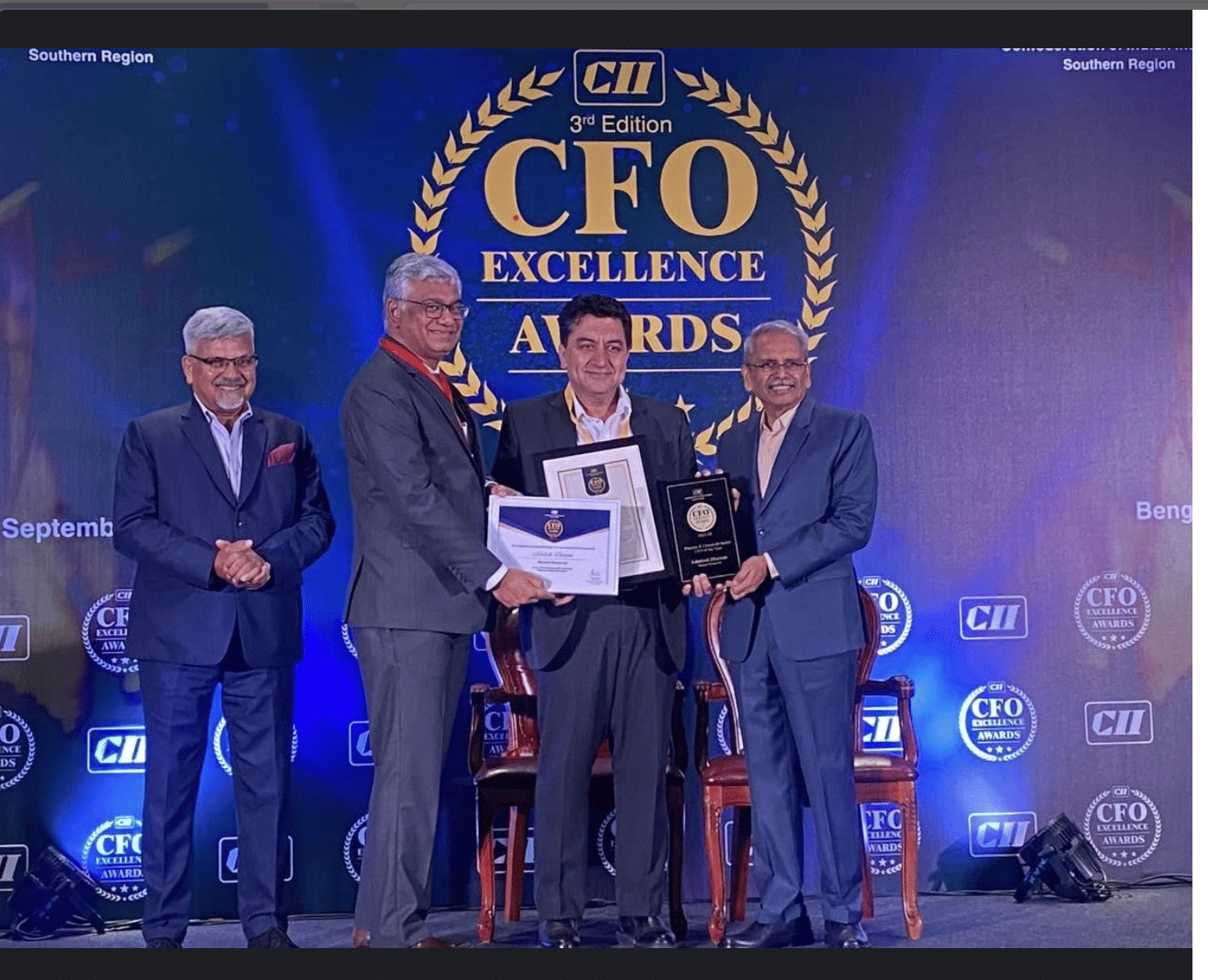
Dhawan remembers nights spent on back-to-back calls, reconciling business queries with financial and operational realities while keeping the deal moving.
With logic, data, and relentless coordination, he guided the team through balancing promoter expectations and investor scrutiny. “Ultimately, you are facilitating decision-making; the promoter may still take the final call,” he reflects.
The transaction closed on time, crystallizing value, deleveraging the balance sheet, and positioning Mankind for a new chapter of growth, a testament to Dhawan’s ability to execute under pressure while keeping the organization steady.
His focus was always on building a strong core: consolidating the core businesses and moving out non-core activities. “It was about institutionalizing the company, building knowledge-sharing systems, and reducing organizational fragilities,” he says.
His early career was forged in high-pressure assignments where role boundaries were wide.
At RPG Enterprises, he worked on bids across the emerging telecom sector, gaining a deep exposure not just to finance but to the entrepreneurial spirit behind big deals.
“The runs won’t come by swinging the bat harder,” he says. “If you want to play your innings, you have to be on the crease, stay on the crease with patience, perseverance, and commitment.”
Dhawan also highlights the delicate balance between confidentiality and transparency. “There is a thin line between confidentiality and transparency. To stay competitive, you need confidentiality but as a listed company, you also need to be transparent. The extent of this debate increases significantly post-listing.”
Finally, he emphasizes the importance of liquidity, especially in volatile environments. “You need higher liquidity not just for safety but to capture opportunities,” he observes, reflecting the disciplined approach that has helped Mankind navigate complexity while sustaining growth.
When the leadership is grappling with crisis and boardroom calculations lead to hot heads, some CFOs remain calm.
“Even when ratios were hitting 3.57 and our ceiling was 3.75, we stayed calm,” says JSW’s Sayam. “We knew this was a downcycle denominator effect, not a structural problem.”
Part of the role, then, is to steady the organisation. “You have to help the organisation understand there is no need to panic.” Because panic distorts judgement. “Every problem can be solved,” he says. “Some things you solve right away. Some take time. What matters is acting, always.”

Taken together, the playbook is a set of instincts: diagnose early, stay close to the ground, communicate consequences, hold your nerve, and protect liquidity.
When the urge to meddle becomes too strong, Chawla heads to the golf course. He’s captivated by the precision of the swing, the subtlety of each putt, the patience the game demands.
“Golf is the only sport where you’re really competing against yourself,” he says. The repetition, focus, and constant self-correction mirror the discipline he brings to high-stakes negotiations, regulatory bottlenecks, and long gestation transactions.
(Edited by Anurag Chaubey)