





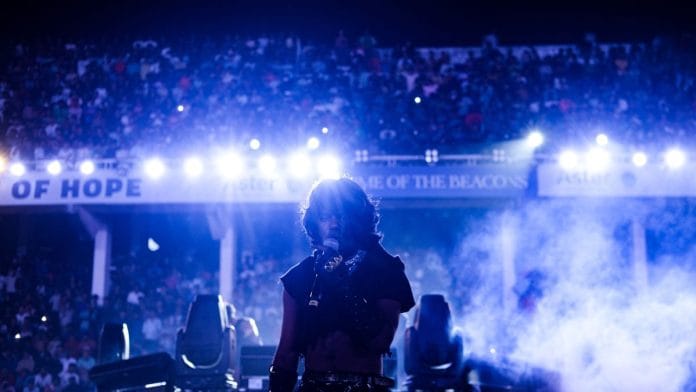



Kochi: The lights inside Kozhikode’s EMS Stadium dropped to black, and a lone spotlight found a small, motionless body lying face-down on the turf—an homage to drowned Syrian boy Alan Kurdi and the refugee crises that shaped this century. Moments later, as red smoke and lasers tore across the darkness, the crowd of 35,000 erupted. Onto the pitch walked Vedan, the rapper who calls himself the “voice of the voiceless,” headlining a half-time show at the inaugural Super League Kerala football match in October.
Less than a decade ago, Malayalam hip-hop was underground and restricted to the far corners of the internet. Now streaming numbers have exploded, labels have come calling, and a regional subculture has matured into a self-sustaining music industry.
Dabzee, Fejo, Baby Jean and Parimal Shais are leading this ‘Southside’ movement that produced India’s biggest rap export—Hanumankind. Using Malayalam as a rhythmic weapon, they rap about social justice, the inner struggle, and everyday life in the gruff tones of Kochi and the Mappilapattu-influenced rhythms of Malabar. Malayalam, in 2024, was the fastest-growing music genre across local languages on Spotify since its inception, seeing a 5,300 per cent increase. And with events like November’s Karupp Cypher in Kochi, which had more than 500 underground rap artists come display their talent, record labels like Def Jam, Mass Appeal, Universal and Sony Music have taken notice.
Also read: Indian states are competing to be the concert capital. Post Malone in Assam a turning point
Why Kerala, why now
Managers, producers and artists working across the state say Kerala has quietly become one of India’s most prolific hip-hop hubs.

Vinayak Mohan, co-founder of the talent management firm Alt+, puts it bluntly: “If you consider Spotify numbers, social-media following, the number of shows performed and being immediately featured on national playlists, then Indian hip-hop’s biggest breakout artist for last year was ‘Gabri’, a Malayalee.”
That wave isn’t limited to those raised in the state. Three years ago, UAE-based marketing professional Shiboo Shamz, 43—now performing as SHAAMZ—abandoned a comfortable expatriate life and moved to Kochi from Dubai to be part of a scene that he sensed was about to explode. “Things are going nuts here,” he said. “Rap songs from Kerala are going pan-India and international. They are topping charts in Bengaluru, Delhi, Mumbai. I now see Malayalee artists in the UAE, UK and Canada coming through. That is why I am here.”
Kerala’s rap renaissance didn’t arrive overnight. Its foundations were laid in makeshift home studios, new-wave film-making, pandemic-era collaborations and a surge in digital discovery.
Back in 2019, producer Parimal Shais—then relatively unknown outside niche circles—had just wrapped an album with a certain Sooraj Cherukat aka Hanumankind and MC Couper built on a distinctly Dravidian, South Indian sonic palette. With limited opportunities in Kochi’s then-nascent scene, he moved to Bengaluru in 2020, only to be caught in the COVID-19 lockdown with roommate and filmmaker Lendrick Kumar (a play on American rapper Kendrick Lamar), and a stranded Hanumankind.
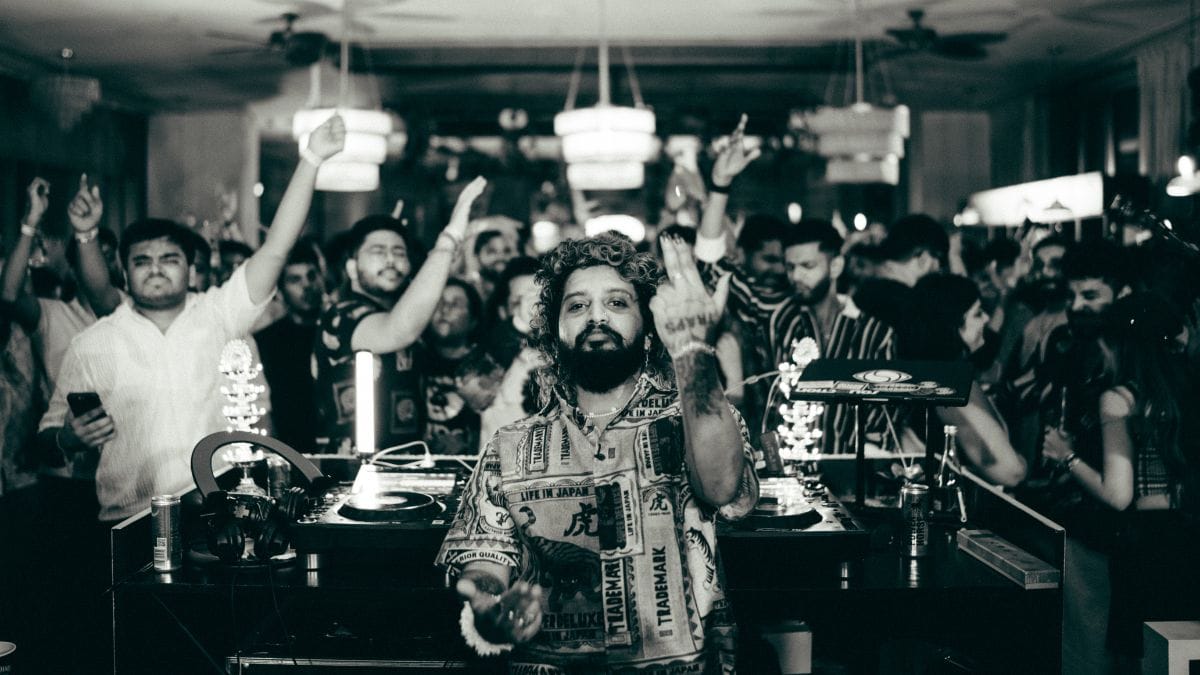
Confined indoors, the trio began releasing music and videos online. Cheap data and endless hours at home created an audience ripe for something different. Once the lockdown eased, all-India tours began, and record labels signed them up.
Around the same time, the Kochi Music Foundation, bolstered by filmmaker Aashiq Abu, organised Para, a digital hip-hop festival. It was the first public stage that many rappers had ever received. Abu’s involvement gave the movement credibility; Instagram and Spotify did the rest, helping artists build fanbases that mainstream Malayalam cinema could no longer ignore.
“Mainstream Malayalee moviemakers, who had balked at the idea of featuring rap music just two years back, were now eager to feature it,” said Parimal, now an established label-signed music producer. This drove rap deep into the mainstream imagination.
College festivals were where most of these artists would have cut their teeth. But today, the biggest crowds are at religious and cultural festivals. Festival committees eager to outdo one another have embraced hip-hop to pull in young audiences. According to Alt+, a Vedan headlined show at the temple festival in Vadakara had a swarming mass in excess of 60,000 people. Rapper Fejo has already performed at four temple fests and even at a mosque event. “I’m just waiting for a church invite now,” he joked.
Kochi also hosted the third edition of the Ocha Music Festival last week, a hip-hop showcase now big enough to feature international names like Raja Kumari.
Also read: Hip hop is rising in Delhi’s Nizamuddin. Sufi spirit gets a new swag
The regional talent
Malsaram Ennodu Thanne tracks the internal battles of Febin Joseph—now known as Fejo—one of Malayalam rap’s earliest mainstream stars. He commands nearly two million monthly listeners on Spotify and has amassed over 6,66,000 YouTube subscribers.
Raised in a middle-class household in Kochi, Fejo’s earliest musical exposure came from his father’s old Malayalam cassette collection. English rap arrived late. Akon’s Smack That (2006) got him interested in English music, and then Eminem fast-flying words got him hooked on rap. Unfamiliar with the language, he began by making Malayalam parodies of international tracks on YouTube. Scroll far enough down his page, and you’ll find a grainy 2013 parody music video featuring a lovelorn, elephant-riding mahout called ‘Komba Na Na’, a parody of Akon’s song Right Now (2008).
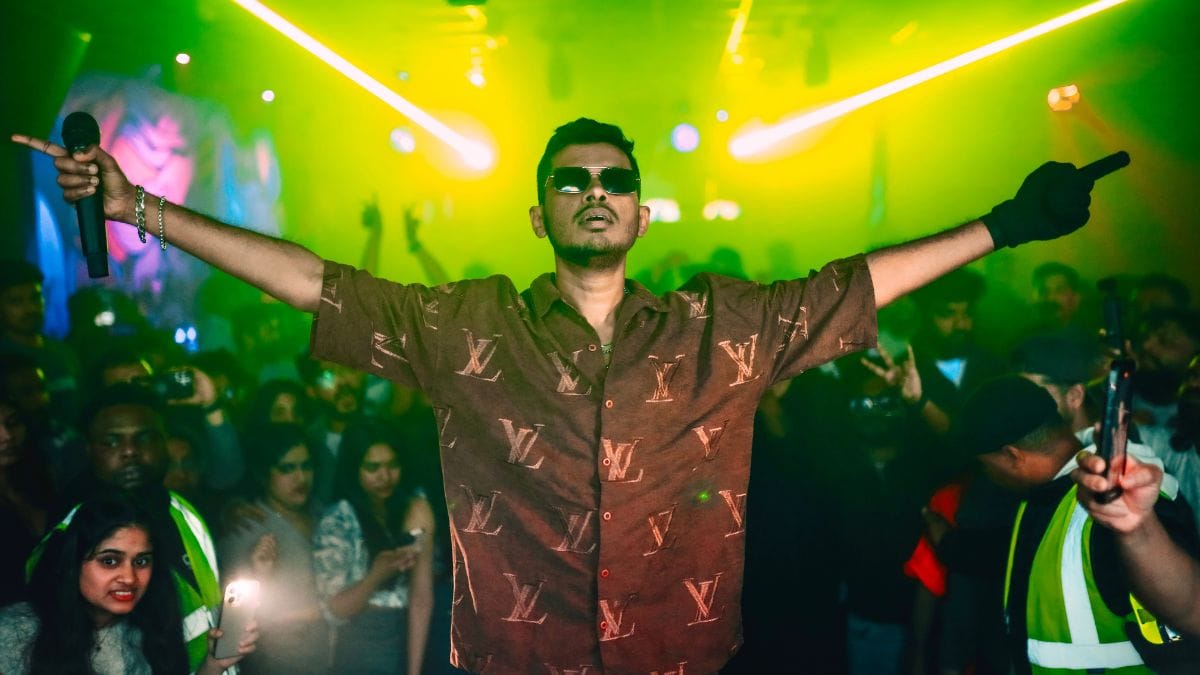
His life changed in 2018 when composer Sushin Shyam offered him a rap segment in the film Maradona (2018). The track led to more film opportunities, including the engine-revving fan favourite Ayudhameduda from Ranam (2018). He now performs alongside the stars he once admired from afar.
Shambhu Ajith, better known as MC Couper, was a law student in Kochi in 2012 when he began writing verses in English—thousands of them—which he never shared. Something clicked only in 2019, when he switched to Malayalam. The language he had absorbed through childhood TV staples like Chithrageetham unlocked something instinctive.
His partnership with Parimal Shais soon followed, and he found himself on the same album as a soon-to-be-famous Hanumankind.
Couper’s ascent continued with the hit ‘AYYAYYO’ (2023), now sitting at over 11 million YouTube views. His big break in cinema arrived via Sushin Shyam, this time with the wildly popular track Thalatherichavar in Romancham (2023).
At the Karupp Cypher event, an 18-year-old rapper ran up, hugged him and burst into tears—he had already recorded an entire album, a song on which was a tribute to Couper. “Gen Alpha is writing poetry in Malayalam now,” Couper said.
He often compares today’s Malayalam rap to the disruptive, deeply honest writing of author Vaikom Basheer. “This state needs more cultural pillars like rap that help young people feel connected to their roots,” he said.
Collab culture
The Malayalam language is a big part of Couper’s identity as a rapper. He feels rap has revived the language and brought it back into focus. It demands that the listener pay attention to the literature. It has given youngsters a native expression for their angst in a form that is cool.
The hip-hop community (which includes DJs, dancers, graffiti artists, and rappers) is a tight-knit family. Rap as an artform lends itself to collaboration and co-creation, and the scene in Kerala is no different. That’s how Malabari Banger, created by Dabzee, MHR, SA and Joker, soared to nearly 30 million views.
Parimal, a Malabari himself, grew up listening to Mappilapattu, the melodic and soulful Malayalam-Arabic fusion music of the region. He saw it give way to modern music before it was reborn through rap. The 2022 hit Mannavalan Thug from Thallumalla set the foundation stone of this revival. Malabari Banger cemented rap as representative of the region’s cultural nostalgia and pride.

Even the viral track AYYAYYO, made by Parimal with Hanumankind, MC Couper and Thirumali, draws from the classical Nadaswaram, inserting the south Indian folk instrument into bass-heavy trap.
From the fringe to the future
Once viewed as something that ‘freaks’ and junkies indulged in, to being discovered online by experimental music producers, to becoming a regular feature in Malayalam movies—rap artists have had quite the journey. They now dominate movie soundtracks, festival stages and algorithmic playlists.
Parimal noted that one of the most-streamed albums in India last year was the hip-hop-driven soundtrack of Aavesham (2024). Dabzee’s title track, Illuminati, has crossed 380 million YouTube views and has been remixed by prominent DJs in Mumbai and Hyderabad.
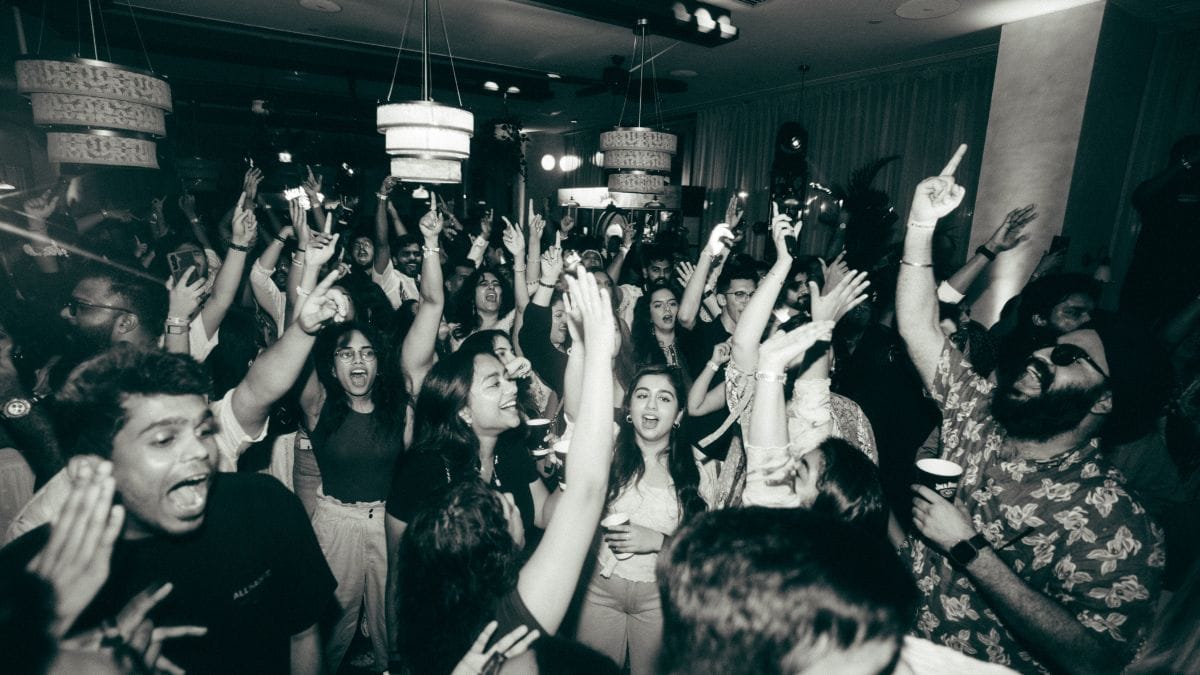
Rap music reviewers across the country are paying attention, regularly covering Malayalam hip-hop artists. Malayalam rap is now a fixture on national playlists. International record labels have started signing artists from the scene, giving them access to cross-country collaborations.
“Rap is hardly underground anymore,” Parimal said. “The old joke was that if you threw a stone in Kerala, you’d hit an engineer. Now you’re more likely to hit a rapper or a producer.”
(Edited by Stella Dey)