








Lucknow: The tooth of an Indian cheetah — extinct since the 1940s — sits safely in a laboratory in Lucknow’s Birbal Sahni Institute of Paleosciences, waiting to be studied. With this, scientists are hoping to bring back the history of the big cat species that once roamed across India but vanished half a century ago.
For the first time in the world, the Birbal Sahni Institute of Paleosciences (BSIP), along with the Zoological Survey of India (ZSI), is attempting to sequence the whole nuclear genome of this extinct Indian big cat by extracting and analysing the DNA from preserved samples.
“We know Indian cheetahs went extinct more than half a century ago, but do we know why? Was it genetic causes or anthropogenic? What is the evolutionary history of Indian cheetahs?” said Dr Niraj Rai, who leads the ancient DNA lab at BSIP. “This genome sequencing project can reveal all these answers.”
As the third set of African cheetahs arrived from Botswana to Kuno National Park in Madhya Pradesh on 28 February, Dr Rai’s team and the ZSI are in the last phase of sequencing the Indian cheetah’s nuclear DNA from 150-to-200-year-old specimens. While the cheetahs that inhabited India are known as Asiatic cheetahs, there are still some genetic differences between them and the other Asiatic cheetahs found in Iran and Saudi Arabia currently.
The science of this difference can contribute to India’s grand Cheetah Reintroduction Project, inaugurated by Prime Minister Narendra Modi in 2022, by informing the country and the world’s understanding of Indian cheetahs.
While whole genome sequencing is a common scientific practice to uncover the genetic history of a species, doing it for an extinct animal is a whole other process. From finding accurate DNA samples to extracting degraded and possibly unviable DNA from them without disturbing the samples, the task is laborious. This is where the joint capabilities of the ZSI and the BSIP came into play.
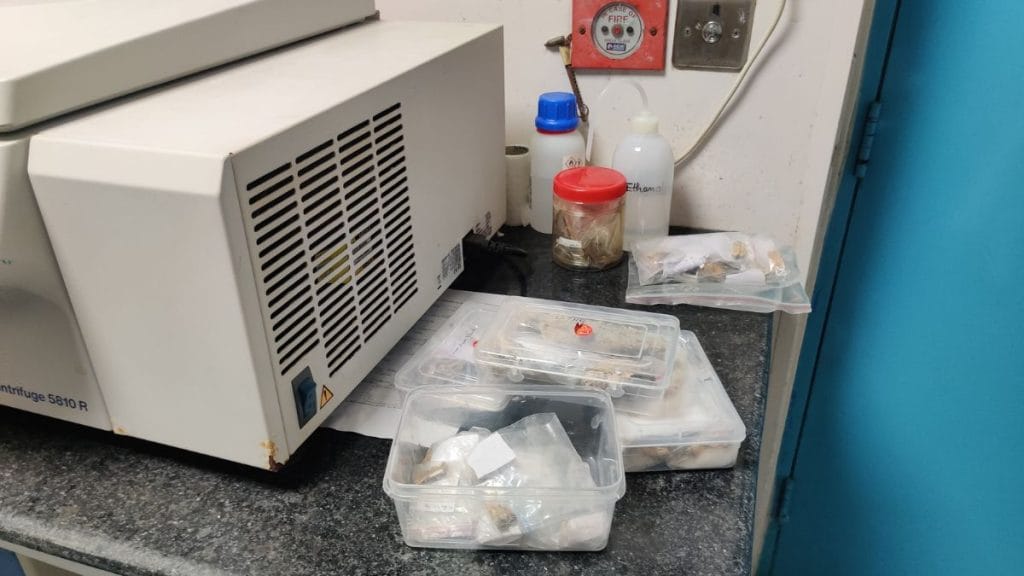
“ZSI has the country’s largest collection of animal specimens, including extinct animals. Museum samples and even old hunting trophies often contain ancient DNA, and we preserve them both for taxonomy and research,” said Mukesh Thakur, senior scientist in charge of the Mammal & Osteology Section at ZSI, and Rai’s collaborator. “We collected 10 to 12 of these historical Indian cheetah specimens for analysis at BSIP.”
Meanwhile, the BSIP is the first facility in South Asia to have a specific ancient DNA sequencing laboratory. Dr Dhriti Banerjee, director at the ZSI, described the collaboration with the BSIP as a significant step toward integrating India’s rich zoological collections with advanced genomic science.
“ZSI preserves invaluable historical specimens, and through this partnership with BSIP’s ancient DNA laboratory, we are unlocking critical genomic insights from them,” she said. “Such collaborative efforts not only deepen our understanding of extinct species like the Indian cheetah but also provide a strong scientific foundation for future conservation planning in the country.”
Process of sequencing
It isn’t just the Indian cheetah. BSIP and ZSI conducted genome sequencing for other extinct and endangered species, like the Malabar civet, the Javan Rhinoceros, the Namdapha flying squirrel, and the Sumatran Rhinoceros. While some of the genome sequencing studies are ongoing, like those of the Indian cheetah, others are in the process of peer review, set to be published in international genomic studies journals.
“Indian cheetahs were the pride of our country for the longest time, from the Mughals to the British era. We deserve to know what happened to them, and how, if at all, we can bring them back,” said Niraj Rai.
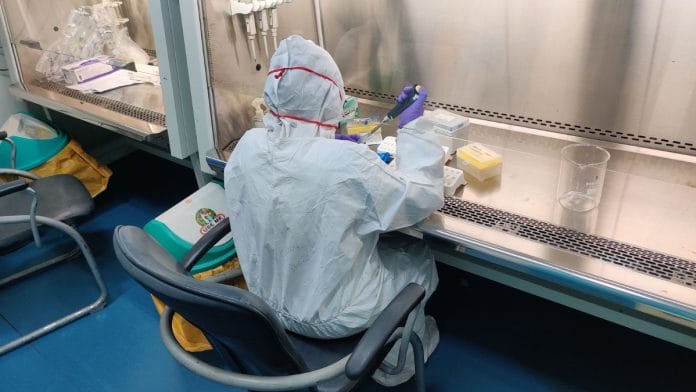
Dressed in a white PVC suit, doctoral researcher Aparna Dwivedi sits in the clean room of the ancient DNA laboratory, carefully sifting through tiny glass vials. They contain the powdered remains of cheetah teeth, where the DNA resides. She is all set to add chemical reagents like EDTA and Proteinase K to release the DNA that is currently trapped in the bone powder.
“In living beings, we get DNA everywhere from their saliva to hair to blood. The magnitude differs heavily, though. In a fresh sample, we may extract 10,000 nanograms of intact DNA from just one microgram of tissue,” explained Dwivedi. “But in ancient samples, it takes a lot of hard work to get even 100 nanograms from one gram of bone samples,” she added.
Dwivedi’s work at the ancient DNA lab in BSIP, in a building containing some of the oldest plant, animal and rock samples in the country, draws on ancient DNA work that only began in the last three decades. Researchers first discovered in 1986 that tooth pulp can preserve DNA. However, it wasn’t until 1998 that a team of French scientists successfully extracted and analysed ancient DNA from 16th-century skeletal remains in France.
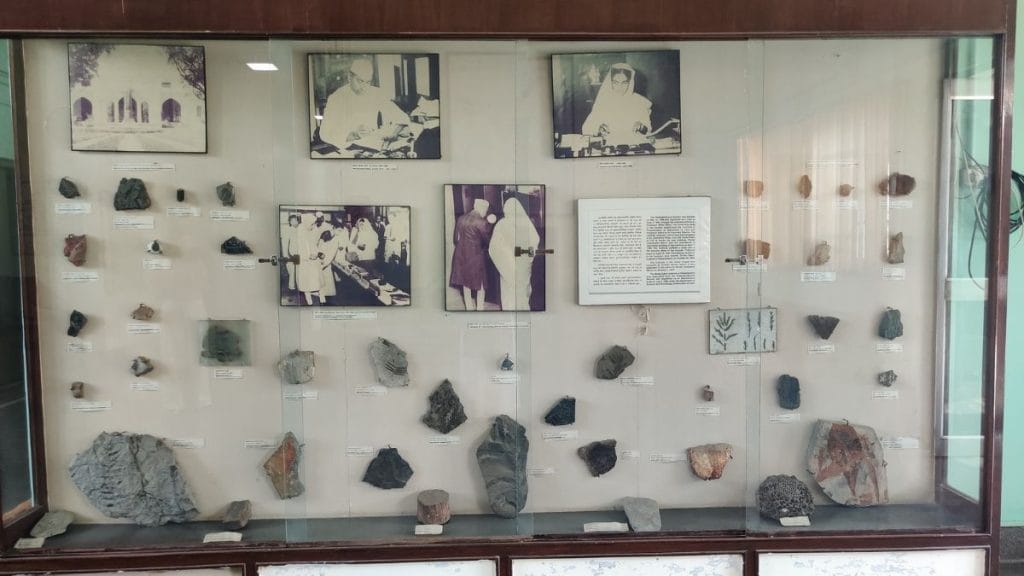
Since it is ancient DNA, the possibility of degradation and contamination is very high. If preserved in cool, dry conditions, DNA could last for even millions of years. But India’s humid, tropical climate is not viable for long-term survival of DNA in natural environments—the ones that have been recovered are carefully preserved by the ZSI.
“Ancient DNA analysis changed the way we look at DNA, and also history. Most archaeologists conduct morphological analysis of their findings. It means they study the bones, their size and shape, and they use carbon dating methods to find the time of burial,” said Rai. “But with DNA analysis, there is a whole world of research and insight into the past that has opened up.”
Rai’s Ancient DNA lab, which opened in 2018 in BSIP, has used this method for other excavations, too. In 2023, ancient DNA analysis on a yak specimen from Ladakh revealed signs of domestication of the animal as far back as 12,000 years.
“Genome sequencing can reveal the exact genetic mutations and traits in a species’ history. So when we notice certain traits recurring in an animal species in a particular region, we can tell that this is purposeful,” said Rai. “It shows that humans were interacting with yaks, domesticating them and breeding them with intention.”
Also read: Bengaluru’s badminton boom. Powered by techies, app, thousands of courts
Why cheetahs?
Despite the increased focus on Indian cheetahs in the last few years because of the Cheetah Reintroduction Project, little is still known about the species from a genetic perspective. Historical records reveal their habitat extended from Punjab to southern Tamil Nadu in India, and they even find a mention in the ancient Sanskrit texts of the Rig Veda and the Atharvaveda.
“But we need scientific data about the exact genetic differences between the Asiatic cheetah and the Indian subspecies,” said Thakur. “We need to know when exactly the Indian cheetah population began dwindling, what the genetic bottlenecks were that prevented their population growth, and finally, what led to their extinction.”
Whole nuclear genome sequencing is often said to provide a ‘map’ of an organism’s genetic makeup. For example, in 2008, when US scientists sequenced the nuclear DNA of woolly mammoths, they found that despite millions of years of separation, there was only 0.6 per cent genetic variation between them and modern-day elephants.
“We know that hunting led to a huge reduction in cheetah populations by the 1900s. Logically, this must have reduced their numbers and led to more inbreeding,” said Rai. “Whether this inbreeding was the cause for poor genetic material and therefore the eventual extinction of cheetahs, is something we aim to find out.”
In 2020, Rai, Thakur, and other scientists from the Centre for Cellular and Molecular Biology (CCMB) had sequenced mitochondrial DNA of extinct Indian cheetahs and African cheetahs to determine their genetic relationship. Their paper, published in Scientific Reports had found that Asiatic and African cheetahs had diverged more than 50,000 years ago genetically.
“But mitochondrial DNA has its limitations. It only tells you about maternal lineage. With our current nuclear sequencing, we can get a more accurate timeline of when these populations split from each other,” said Rai. “It will also be able to tell us more specific differences between Indian, Iranian, and even African subspecies, and their genetic closeness.”
Globally, whole genome sequencing of extinct animals has led to breakthroughs like the ‘recreation’ of dire wolves by Colossal Biosciences in 2025. The scientists sequenced dire wolf genomes, identified the genetic mutations, and then edited grey wolf genes to mimic those of dire wolves. In a way, it “brought back” dire wolves in the world.
Thakur, however, refuted earlier news reports to say that there are no plans to conduct similar projects using the Indian cheetah’s sequenced genome.
“We don’t want to be over ambitious. Right now, we’re trying as fast as we can to analyse the billions of base pairs of DNA that we have from Indian cheetahs, and figure out what we don’t know first,” he said.
(Edited by Saptak Datta)