





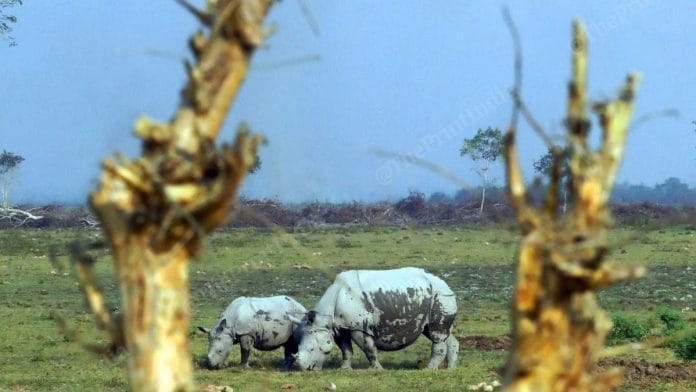



Kaziranga: Assam’s Manas National Park lost every one of its rhinos to poachers during the Bodo insurgency of the 1990s. Then Kaziranga National Park began sending some of its own animals to help Manas start over. It was an act of faith. Kaziranga was itself battling poachers, and the years that followed would see some translocated rhinos killed in Manas too. But more than 15 years after the first translocation, the gamble has paid off.
Manas today has more than 50 rhinos, most of them born there. Kaziranga recorded zero rhino poaching deaths last year. With the success of the first phase of a rhino translocation programme between 2008 and 2021, Kaziranga is preparing once again to send more animals to other sanctuaries.
Sharing rhinos is part of its plan to save them—a trajectory not many other wildlife parks in India have followed. This time it is not out of crisis, but abundance. After decades spent fighting poachers and clawing rhino numbers back from the edge, Kaziranga Park is now grappling with the problem of plenty. The park has over 2,600 one-horned rhinos, more than two-thirds of the global population.
“We did not want to keep all our eggs in one basket. If something happens — a natural calamity or disease — we could lose all the precious individuals,” said Dr KK Sarma, veterinary professor at Assam Agricultural University, Padma Shri awardee, and a leading figure in the effort to restore rhinos to Manas National Park.
Assam is one of the pioneer states when it comes to rhino translocation, and we do this quite comfortably now
-Sonali Ghosh, director of Kaziranga National Park
Wildlife relocation is rare in India and often riddled with state pride issues and treated as the last resort. In Karnataka, rogue bulls were moved to distant forests from the mid-1980s to reduce conflict, but the 2012 Karnataka Elephant Task Force report called it a “failure”—the animals usually returned. Conservationists have described it as a “half-hearted” measure when there’s no other solution to conflict. Asiatic lions sent from Gujarat’s Gir to Chandraprabha Wildlife Sanctuary in Uttar Pradesh in 1957 leave no surviving population. Now, the state of Gir lions is an example of glut and inbreeding battling Gujarat politics of pride; a Supreme Court order to move some to Kuno Wildlife Sanctuary in Madhya Pradesh has stalled for over a decade. Tigers from Ranthambore were only sent to Sariska after the park reported a complete wipeout.
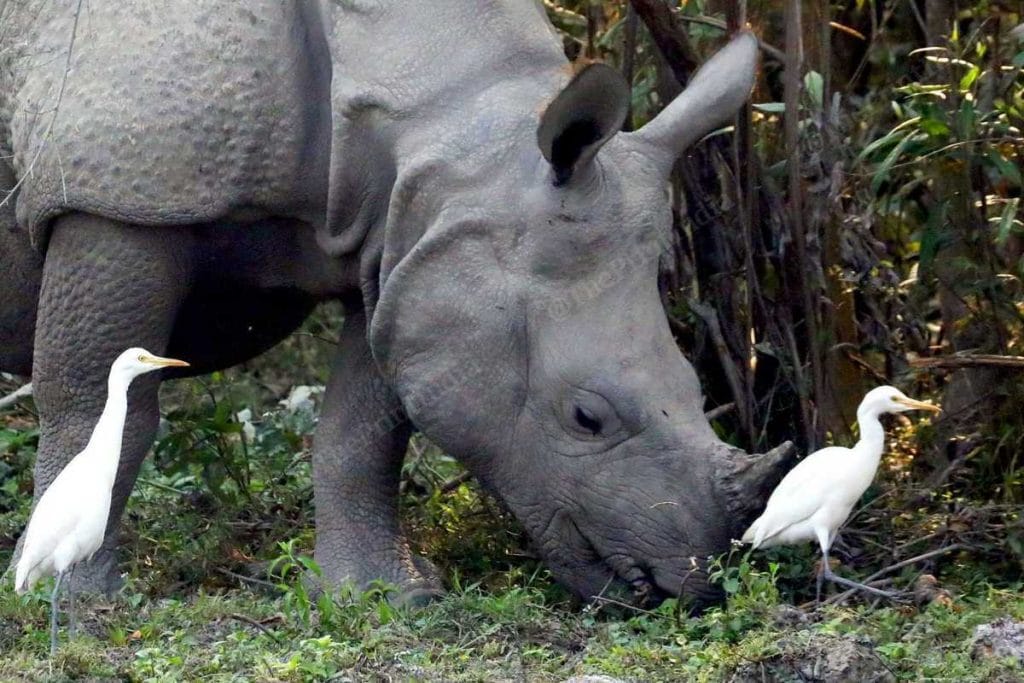
Assam itself was once reluctant. In the 1980s, the state resisted sending rhinos to Dudhwa National Park in Uttar Pradesh, reportedly worried it would lose its tag of exclusivity. It eventually relented in 1984 and sent five animals. Sarma recounted that one of the migrants was called Banke Bihari, a dominant male who went on to father generations of calves in his new home. Today, Dudhwa has 51 rhinos.
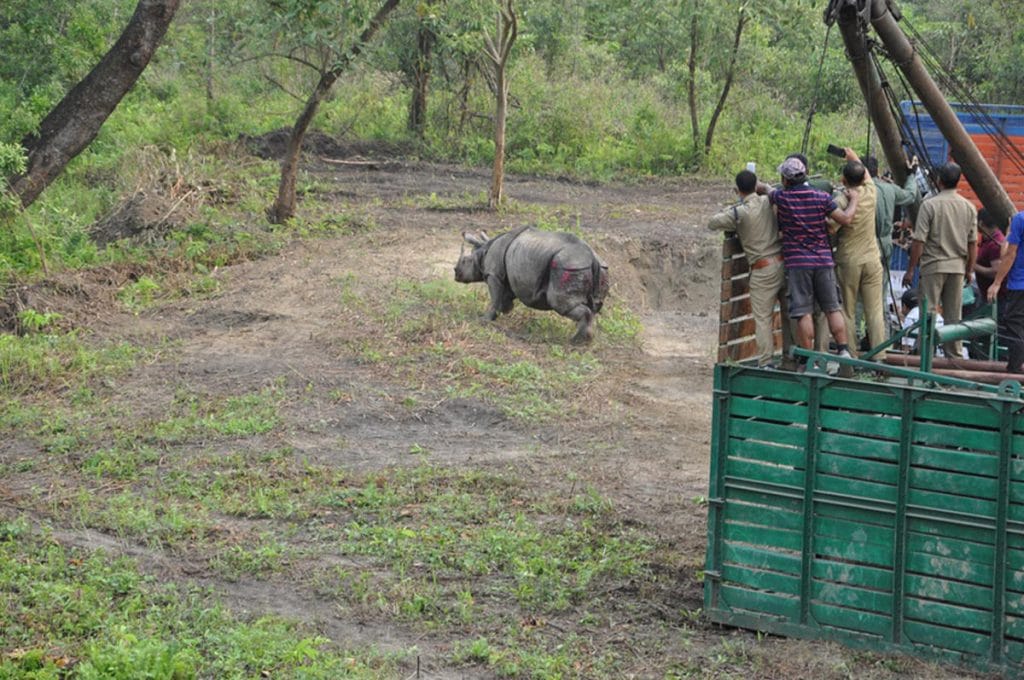
Decades later, when Assam and conservation partners such as WWF-India and the International Rhino Foundation launched the Indian Rhino Vision (IRV) 2020 programme in 2005 to push the state’s rhino population to 3,000, translocation became the backbone of the strategy. The idea was to establish breeding populations across seven protected areas by 2020 and reduce the concentration risk in Kaziranga. Under this phase, 22 rhinos were moved from Kaziranga and Pobitora to Manas between 2008 and 2021, while smaller attempts were made to restore populations in Laokhowa-Burachapori.
Now, Indian Rhino Vision 2.0 lays out the next moves, with a target of 4,500 to 5,000 rhinos in India by 2030. Ten rhinos from Kaziranga and Pobitora are to be sent to Manas to strengthen its recovering population and improve genetic diversity. Another 20 are planned for Laokhowa and Burhachapori over the next two to three years.
“Assam is one of the pioneer states when it comes to rhino translocation, and we do this quite comfortably now. For example, Manas once had a good population of rhinos which was completely poached out. After that, rhinos were moved there from Kaziranga and Pobitora. Similarly, rhinos have been moved to other landscapes as well,” said Sonali Ghosh, director of Kaziranga National Park.
Rhinos are also migrating naturally. In December 2023, two animals entered Laokhowa-Burachapori, where the species had been absent for nearly four decades. The return came after clearing of encroachments and the addition of nearly 200 sq km to Orang National Park, which created a corridor for rhinos.
“As more and more areas are becoming encroachment-free and connectivity is ensured, rhinos are coming back to some areas. We now have records of rhinos in Laokhowa-Burachapori, which did not have rhinos for nearly 40 years. It is because of good protection and habitat restoration that we are seeing rhinos return,” Ghosh added.
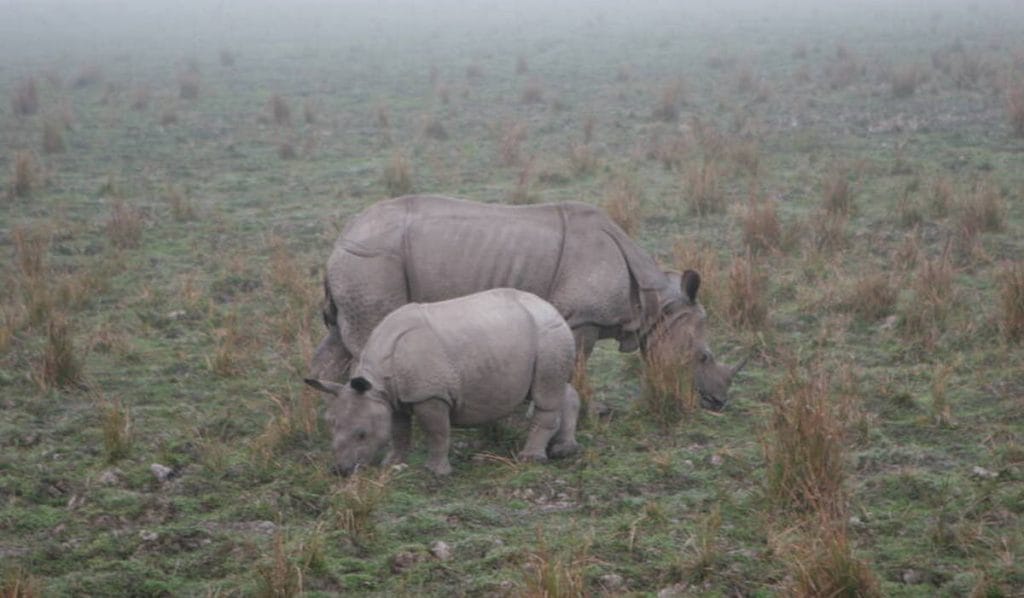
Also Read: Assam went to war on Kaziranga poachers. Rhinos are winning
Too much of a good thing?
A century ago, there were barely a dozen rhinos left in Kaziranga and today there are thousands. The recovery is remarkable, but it also raises a scientific question: how strong is a population that rose from so few founders?
What is happening in Gujarat offers a cautionary tale. Almost the entire wild population of the Asiatic lion —891 animals as of May 2025, up 32 per cent from five years prior — is concentrated in the Gir forest and surrounding districts. Because the population has been concentrated in a single landscape, there is low genetic diversity among the lions due to inbreeding. As reported earlier by ThePrint, a 2020 study found that this has resulted in cranial defects, low sperm count, and smaller manes.
Even as numbers have risen, conservationists have voiced concerns about the growing risk of human-animal conflict and what this may mean for the species’ long-term prospects in the region.
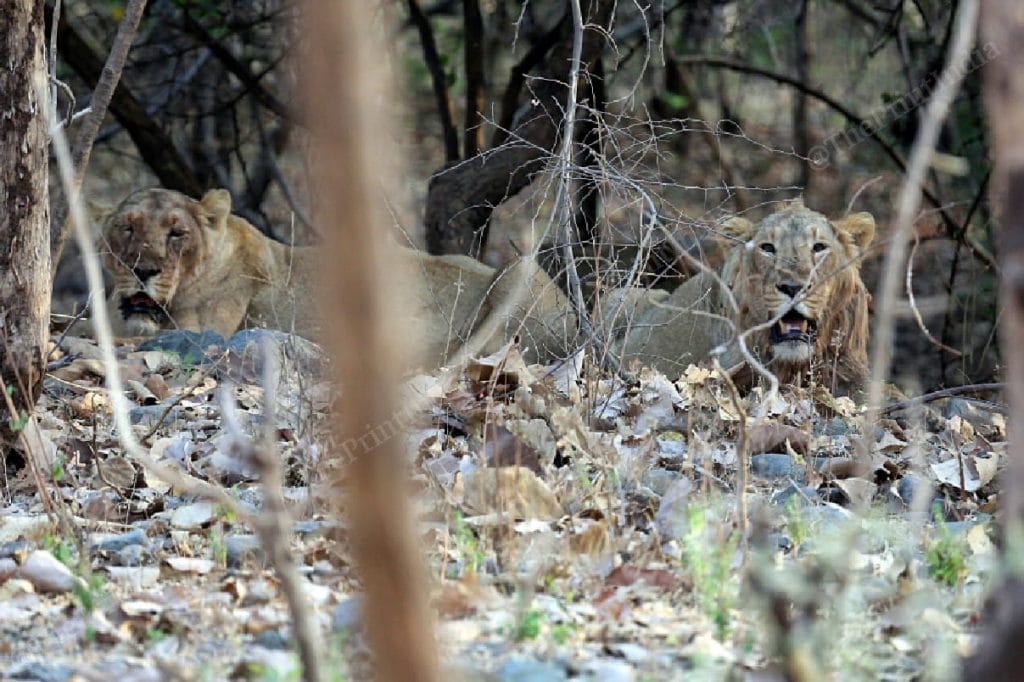
A long-standing bone of contention is Gujarat’s refusal to move lions to Kuno National Park, despite a 2013 Supreme Court order. Conservationists argue that satellite populations within Gujarat, such as Barda, do not offer the same level of security for the species as establishing a second population outside the state. In 2018, more than 20 lions died in Gir from canine distemper virus and tick-borne infections, raising alarm about how a disease outbreak could spread through such a tightly clustered population.
For Kaziranga’s rhinos, poaching and seasonal floods have been the greatest existential threats so far, and no major outbreak has been reported. Genetically, too, the park’s population is “robust”, according to KK Sarma.
Physical security from poachers, security from diseases, security for food. If these things are available, then why not [translocate]? Because it is such a precious species
KK Sarma, senior veterinarian and conservationist
“The weak genes have been eliminated by nature over hundreds of years,” he said. He attributed it to generations of natural selection as the population rebuilt from a handful of animals in 1908 to over 2,613 in the park’s 2022 census, gradually eliminating weaker genetic variants.
That ‘robust’ genetic strength is particularly important when rhinos are moved to seed populations elsewhere.
“Our results showed that Kaziranga and Manas NPs (Assam) have the best rhino genetic health, whereas Jaldapara and Gorumara NPs (West Bengal) undergoing strong genetic erosions,” noted a 2024 genomic study conducted with support from the Ministry of Environment, Forest and Climate Change, the Assam government, and WWF-India. It added that Kaziranga “can enrich the genetic diversity of almost all the other parks”.
Security issues
Translocation is about a lot more than logistics. Kaziranga has near airtight security now, from shoot-on-sight orders for poachers to drone surveillance and an army of guards patrolling it night and day. The destination park must offer similar protections.
According to park officials, any new rhino translocation can only happen once the receiving park is fully prepared. That means anti-poaching camps, armed patrol teams and monitoring systems must be in place. The park must also have suitable grasslands, water sources and enough space for the animals to establish territories.
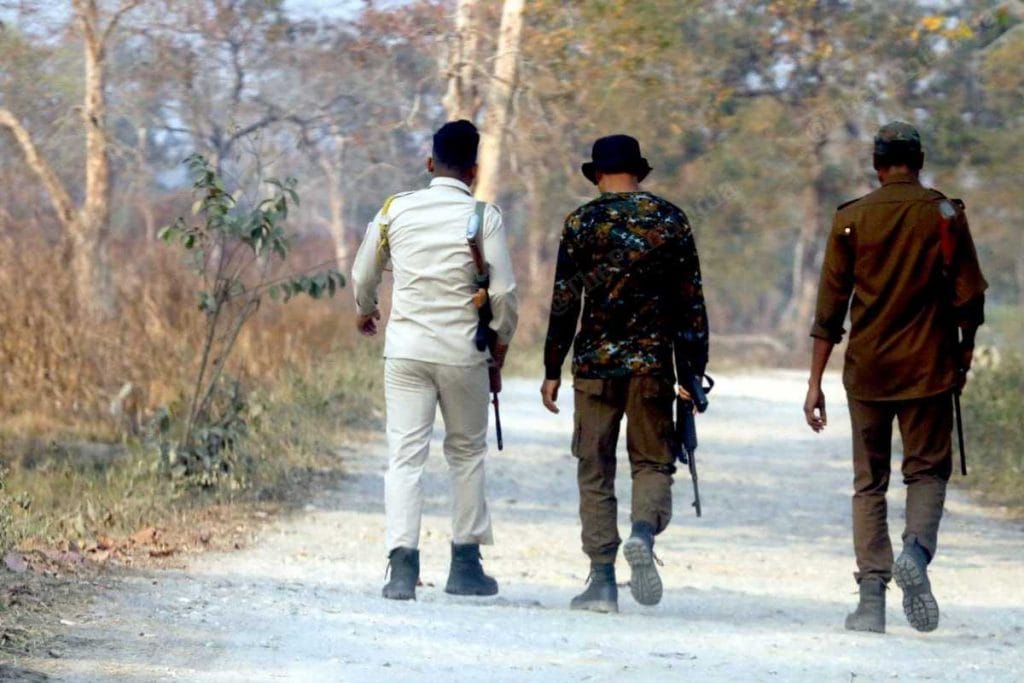
“Security, particularly when it is a rhino, has to be very, very satisfactory. When you look at a natural calamity, we may not have control over that. But we have control over security,” said Sarma.
It’s a hard-won lesson. Between 2012 and 2013, poachers killed several of the newly translocated rhinos in Manas, forcing authorities to temporarily halt transfers and focus on securing the park before sending any more. In 2016, two rhinos moved to Laokhowa Wildlife Sanctuary died within months, although reportedly due to natural causes.
And despite the success of the programme within Assam, the state has never repeated its 1984 experiment of sending rhinos beyond its own borders. Sarma is open to the idea — but cautious.
“Physical security from poachers, security from diseases, security for food. If these things are available, then why not? Because it is such a precious species,” he said.
(Edited by Asavari Singh)
A great blog, it has a lot of useful information to me.
Village Talkies, a top-quality professional corporate video production company in Dubai and also the best explainer video company in Dubai, 2D animation video makers in Dubai, 3D animation studio in Dubai, Abu Dhabi, UAE, India, and Houston, Dallas, Texas, provides 2D, 3D animation videos, corporate films, event, marketing, safety animation videos, and training videos. As the best 3D animation agency in Dubai and 2d animation company in Dubai, product video makers in Abu Dhabi, we also offer 2D, 3D cartoon & character animations, healthcare and medical videos, CGI, VFX, kids nursery animations, whiteboard explainer videos, and more for all start-ups, industries, and corporate companies. From scripting to corporate, explainer & 3D, 2D animation video production, our solutions are customized to your budget, timeline, and company goals and objectives.