





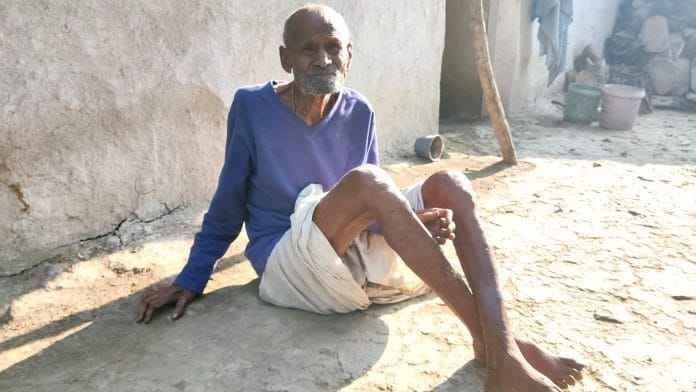



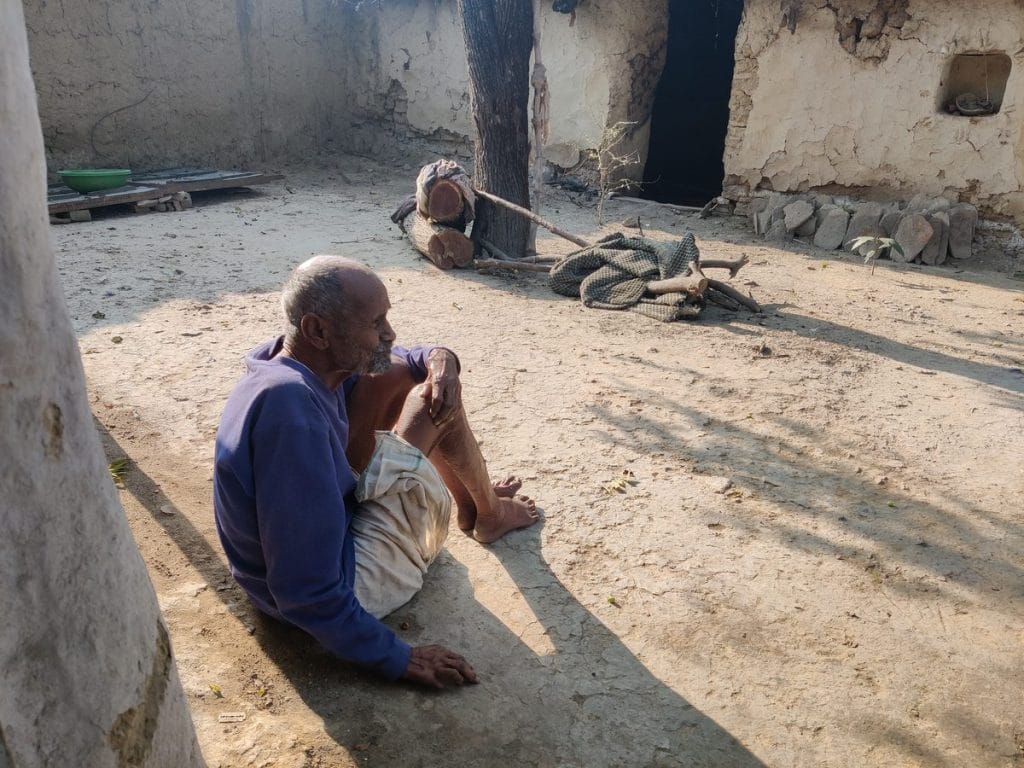
Hamirpur (Uttar Pradesh): Dhani Ram, 88, sits outside his one-room mud house, muttering words no one can hear. His thin, trembling frame is bent against the wall. The Allahabad High Court just acquitted him of a murder charge from 40 years ago.
But Dhani Ram is oblivious to the passage of time and the justice delayed. He is finally a free man. But he only murmurs, “What… what… what?” Memory fails him, hearing fails him, understanding fails him. His freedom exists on paper alone, while he remains a silent witness to the years lost, sitting under the sun.
“He doesn’t understand it, but he is truly free now,” said his son Lallu Ram, 42, watching his father from a doorway in Bhuwsi village of UP’s Hamirpur district. “Although it came late, we are happy that my father has been freed from a case in which he was framed, and in which he remained entangled for such a long time.”
The verdict barely registers for Dhani Ram. Court summons arrived over the years, lawyers handled the hearings, and life moved on around him. The acquittal has come at a moment when time and age have taken all meaning from it.
I was too small to remember anything, as I was born around that time. My father was always out on bail, working in the fields while we were growing up. We never had any conversations about the case. He never visited any police station or court
-Lallu Ram, pradhan of Bhuwsi and Dhani Ram’s son
In the village, the case had long vanished from everyday conversation. Many residents knew of it only as something from another time.
“We knew there was some old case he was associated with, but we never talked about it. It’s been decades, and the people from that time don’t even exist in the village anymore,” said 35-year-old Parmesh, a resident of the village.
The case began in 1982, when a land dispute ended in murder. Dhani Ram was accused along with two others—Maiku, who fled after the incident, and Satti Din, who died during the trial. Dhani Ram alone faced the relentless machinery of the courts. Though he secured bail in 1984, the appeal against his conviction dragged on for decades.
With the co-accused and victim’s family gone from the village, what remained was a long legal cloud over his head.
Then on 21 January 2026, the division bench, led by Justices Chandra Dhari Singh and Sanjiv Kumar, overturned the life sentence handed down by the Hamirpur Sessions Court in 1984. It pointed out major gaps in the evidence, as well as the suffering caused to Dhani Ram due to the extraordinary delay.
“Where guilt itself is not established beyond a reasonable doubt, the only outcome consistent with justice, fairness, and human dignity is complete exoneration,” noted the bench.
Also Read: Mathura mass killing mystery—tantric baba ‘brainwashing’ or mental distress?
How a land dispute became a four-decade case
In 1982, a dispute over agricultural land in Bhuwsi village turned deadly. Dhani Ram, then in his early forties, was accused in the murder of a villager named Gunuwa, along with his brother, Satti Din, and nephew, Maiku.
The exact spot where the incident took place has long vanished from memories and papers.
“Nobody exactly even remembers the place,” said Bijesh Lal, 50, a resident of Bhuwsi. “It’s buried under new houses, shops, and fields.”
With many older residents having died or moved away, the details of the case survive mostly in court records.
An FIR filed by Gunuwa’s brother Raja Bhaiya at Maudaha police station on 9 August 1982 describes a brutal killing. It says he and Gunuwa were returning after fetching water from a pond when they were ambushed by three men: Maiku armed with a pistol, Satti Din carrying a spear, and Dhani Ram holding an axe. The FIR adds that the two older men egged Maiku on to shoot Gunuwa in order to settle an old enmity over land. Maiku then allegedly fired a shot at the victim, hitting him in the back, while Satti Din stabbed him with a spear. Gunuwa died on the spot.
Court records state that the police, led by sub-inspector Karuna Shankar Shukla, arrived at the village the next morning. The team collected blood-stained soil, pellets, empty cartridges, the dhoti worn by the deceased, and a clay pot as evidence. Statements were taken from villagers Rama, Kareylal, Mukando, and Parma, who had witnessed the attack. The post-mortem was conducted on 11 August 1982. All the accused initially evaded arrest but Dhani Ram surrendered on 18 August.
People go through four murder cases and roam free, so why would anyone remember a forty-year-old case? If the verdict had been delayed a little longer, Dhani would have died without ever knowing about it
-Kallu Ram, 60, Bhuwsi resident
The victim’s family disappeared from the village soon after.
“We don’t know where Gunuwa’s people went,” said a neighbour. Even as the case went to court, the murder faded from chaupal discussions.
In 1984, the Hamirpur Sessions Court convicted Dhani Ram and Satti Din under Sections 302 and 34 of the Indian Penal Code and sentenced them to life imprisonment. Both appealed. Dhani Ram was released on bail in 1984 and Satti Din died while his appeal was still pending before the high court. But Dhani Ram’s appeal to overturn the conviction went nowhere for the next four decades.
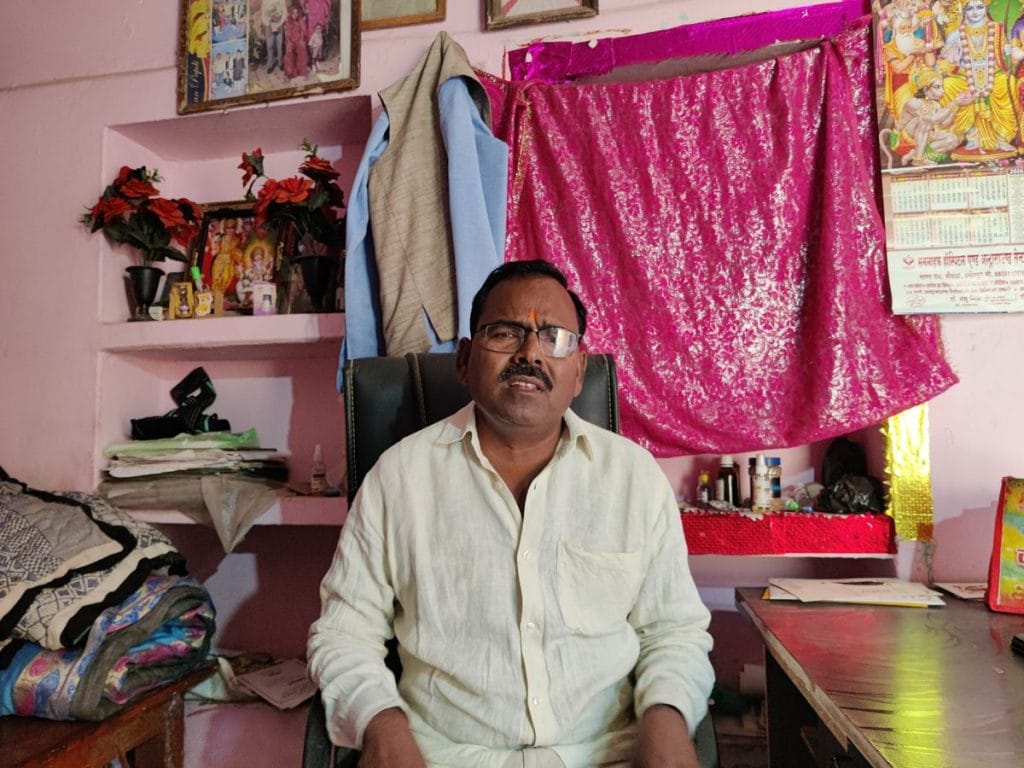
“I was too small to remember anything, as I was born around that time. My father was always out on bail, working in the fields while we were growing up. We never had any conversations about the case. He never visited any police station or court,” said Lallu Ram, who speaks about the case in a measured, careful manner.
When Dhani Ram’s mental faculties began to fail, it was Lallu who stayed in touch with the lawyer. Updates were infrequent, and years passed without any clear resolution. Then came the call that ended the decades-long uncertainty.
“It was only in January when the lawyer called and informed us about the verdict,” said Lallu.
Whispers around the village
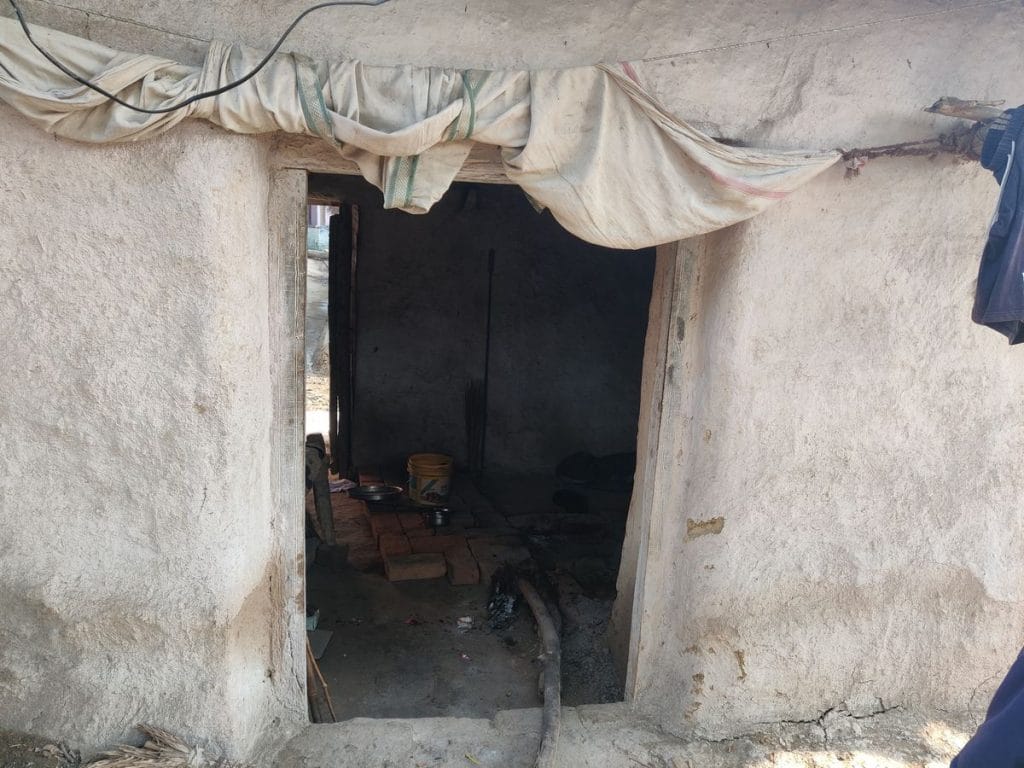
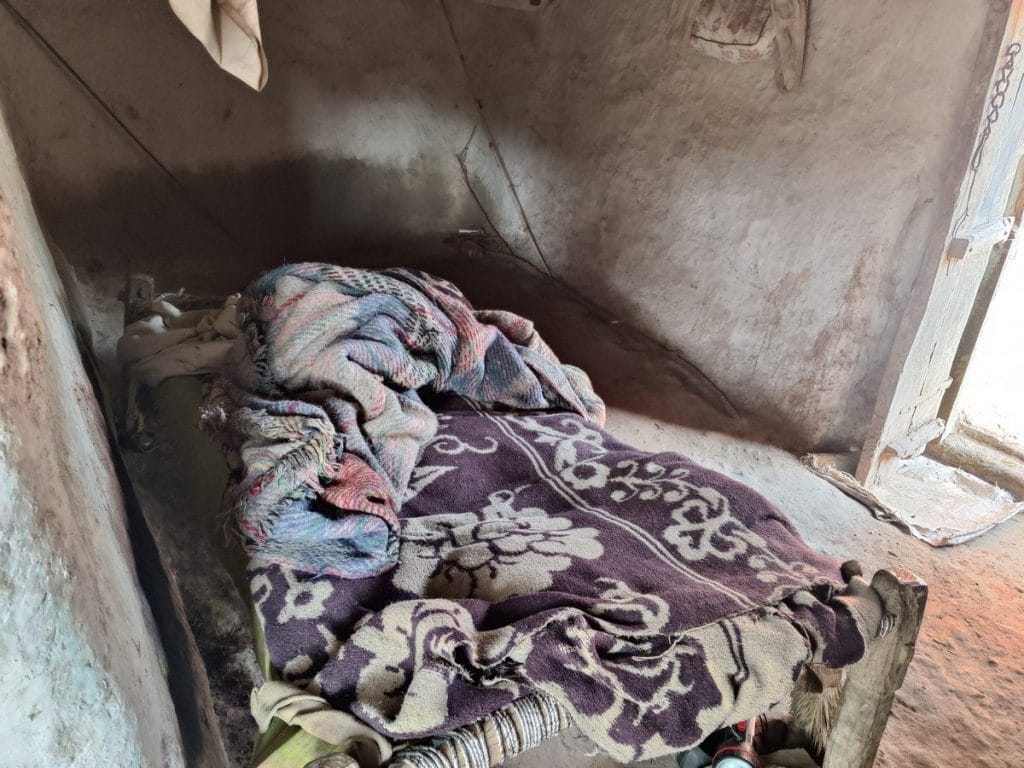
Lallu Ram wields considerable authority in Bhuwsi, having been elected its pradhan four years ago. While the son leads the village, his father lives alone in a one-room mud house, except for occasional visits from Lallu Ram, his wife, and their two children.
It’s only now that Lallu Ram has found himself fending off questions from curious villagers and mediapersons trying to excavate memories of a more than 40-year-old crime.
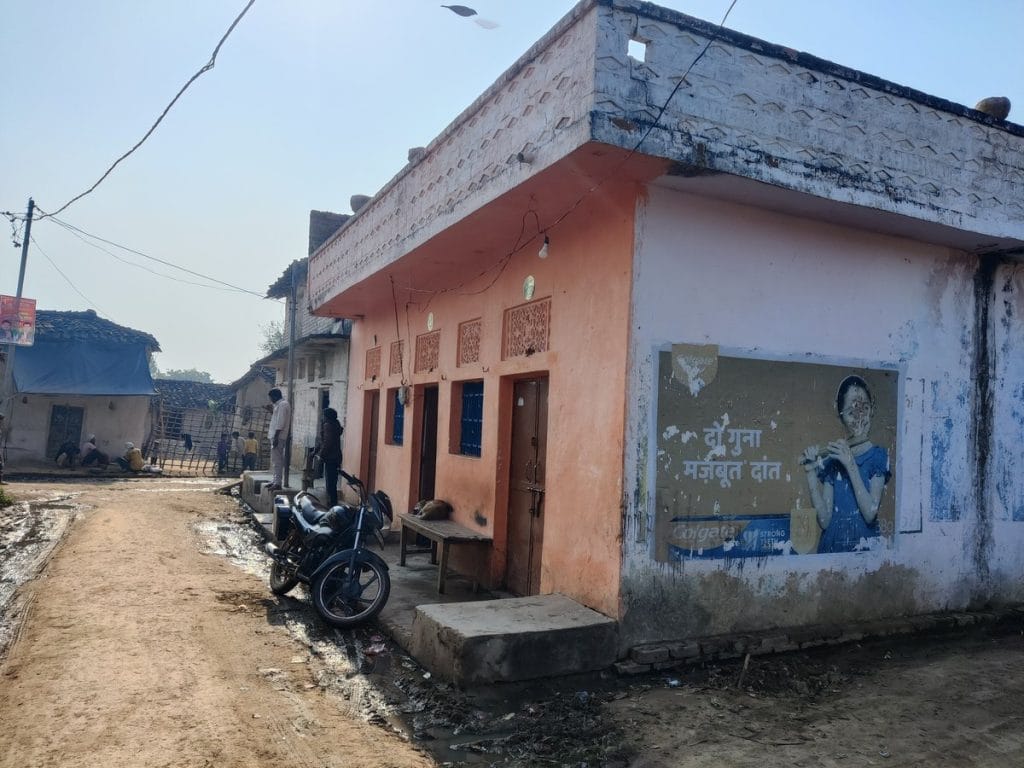
The stigma of a murder charge never crossed over to the next generation. Lallu Ram married 18 years ago, yet his wife, Lajjawati, has little knowledge of the shadow hanging over the family.
“I only knew that my father-in-law was accused in some kind of land dispute case, but I didn’t know any details. Even when I tried to ask my husband, he didn’t remember anything,” said Lajjawati, as she prepared breakfast to send to Dhani Ram’s house.
Near a small general store at the edge of the village, a group of men, young and old, stood chatting. When they saw unfamiliar visitors gathering near the pradhan’s house, their voices dropped and their laughter faltered. Some passersby slowed their steps and craned their necks.
Most village elders, though, refuse to dwell on the case.
“It was like any other land dispute that happens everywhere,” said Bijesh, an elder standing nearby. “Who remembers these things?”
Sitting at the edge of a mustard field, 60-year-old Kallu Ram was equally dismissive.
“People go through four murder cases and roam free, so why would anyone remember a forty-year-old case?” he said. “If the verdict had been delayed a little longer, Dhani would have died without ever knowing about it.”
Also Read: Meet Aishwarya Sengar, Unnao rape convict’s daughter & defender. ‘I’m a feminist’
Decades of delay
On a winter morning at the Hamirpur District Court, lawyers in black coats milled about and bundles of files moved from one wooden table to another. This is where Dhani Ram’s case file gathered dust for years before it was moved a few months ago to the Allahabad High Court.
There is an indifferent collective shrug and ennui at the Hamirpur district court. Lawyers live with long delays and the tareekh-pe-tareekh phenomenon of the Indian judicial system. Dhani Ram isn’t exceptional. He is closer to the norm and feeds the already prevalent mythology about courts’ burden.
“There are hundreds of cases like this buried under files. But why is everyone talking about it? Because the media has tagged it as a ‘100-year-old man’,” said an advocate, speaking on condition of anonymity as he stood with colleagues at a tea stall.
Lallu Ram came to me with the case in 2018. I met him in Allahabad two or three times, but I never met Dhani Ram. He never visited the courtroom or called because of his age
– Ramesh Prajapati, lawyer
Now, Dhani Ram’s file is being digitised as part of the High Court’s process of converting old records into electronic form. The handwritten FIR and trial proceedings will soon be available on computer screens.
The turning point came in 2018, when Lallu Ram approached advocate Ramesh Prajapati after realising the previous lawyer was no longer appearing in court.
“Lallu Ram came to me with the case in 2018. I met him in Allahabad two or three times, but I never met Dhani Ram. He never visited the courtroom or called because of his age,” said 46-year-old Prajapati over the phone from Allahabad.
After taking over, Prajapati began pressing for early hearing dates, pointing out Dhani Ram’s advanced age and the extraordinary delay in deciding the appeal. The court took notice.
Over the years, the case underwent several hearings, with the government lawyer presenting the prosecution’s side. No witnesses appeared before the High Court to testify against Dhani Ram.
“Most of the case updates were given to Lallu Ram over the phone,” said Prajapati, adding that this was not the only decades-old case he was handling. Such cases take time, he noted, as each hearing often ends with another date.
When the High Court examined Dhani Ram’s case, it found serious weaknesses in the prosecution’s version. The bench noted contradictions between witness testimony, the FIR, and medical evidence, and said the informant, Raja Bhaiya, could not be treated as wholly reliable. Dhani Ram had not fired the fatal shot, and the allegation that he exhorted the shooter was based on weak testimony. The court also noted an alternative possibility. During cross-examination, the informant admitted that Gunuwa may have been killed by another group of men, who had earlier been convicted in the murder of another brother.
“When the genesis and the manner of the incident is doubtful, the appellants cannot be convicted,” the court said, citing a 2016 Supreme Court judgment.
It also cited a 2025 Supreme Court precedent, State of Madhya Pradesh vs. Shyamlal, where the murder conviction of the elderly accused, whose appeal had been pending for over three decades, was converted to culpable homicide not amounting to murder.
“When the system itself has been unable to deliver finality within a reasonable time, courts are justified in adopting a tempered, human approach while fashioning relief,” the court said, acquitting Dhani Ram.
Prajapati called it a necessary verdict after such a long wait.
“The judicial system has been under pressure due to long-pending cases; that’s why these kinds of cases get delayed when witnesses and evidence are lacking,” he said. “He’s even lucky to have received a verdict after 42 years. Many people get justice only after they have died,” the advocate added.
Back in Bhuwsi, Dhani Ram’s life never truly paused during the wait for his appeal to be heard. But in the background of his ordinary life, the possibility of being called to court or a police station constantly lurked even if he rarely spoke of it.
“The burden of the case was always there,” said Lallu Ram. Now, finally vindicated, Dhani Ram has nothing triumphant to say. Unable to hear the volley of questions directed at him, he gestured to a small crowd of microphone-wielding visitors.
“Come, sit here,” he said.
(Edited by Asavari Singh)