





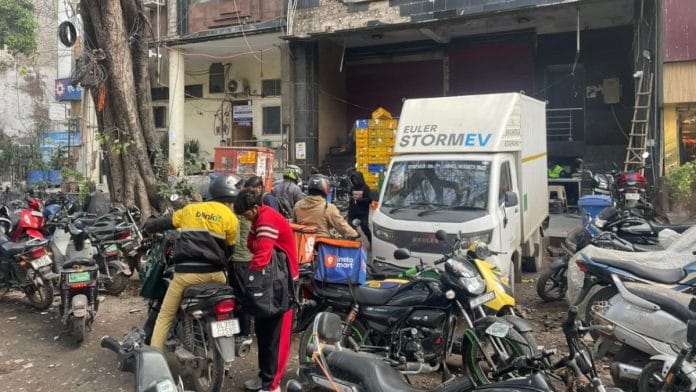



New Delhi: The basement of an old three-storey building in Sant Nagar has been a source of friction for nearby businesses since it began operations last year. The store has no walk-in customers, but its presence is impossible to miss: A stream of motorcycles and scooters flood the entrance, spilling over into adjacent parking lots.
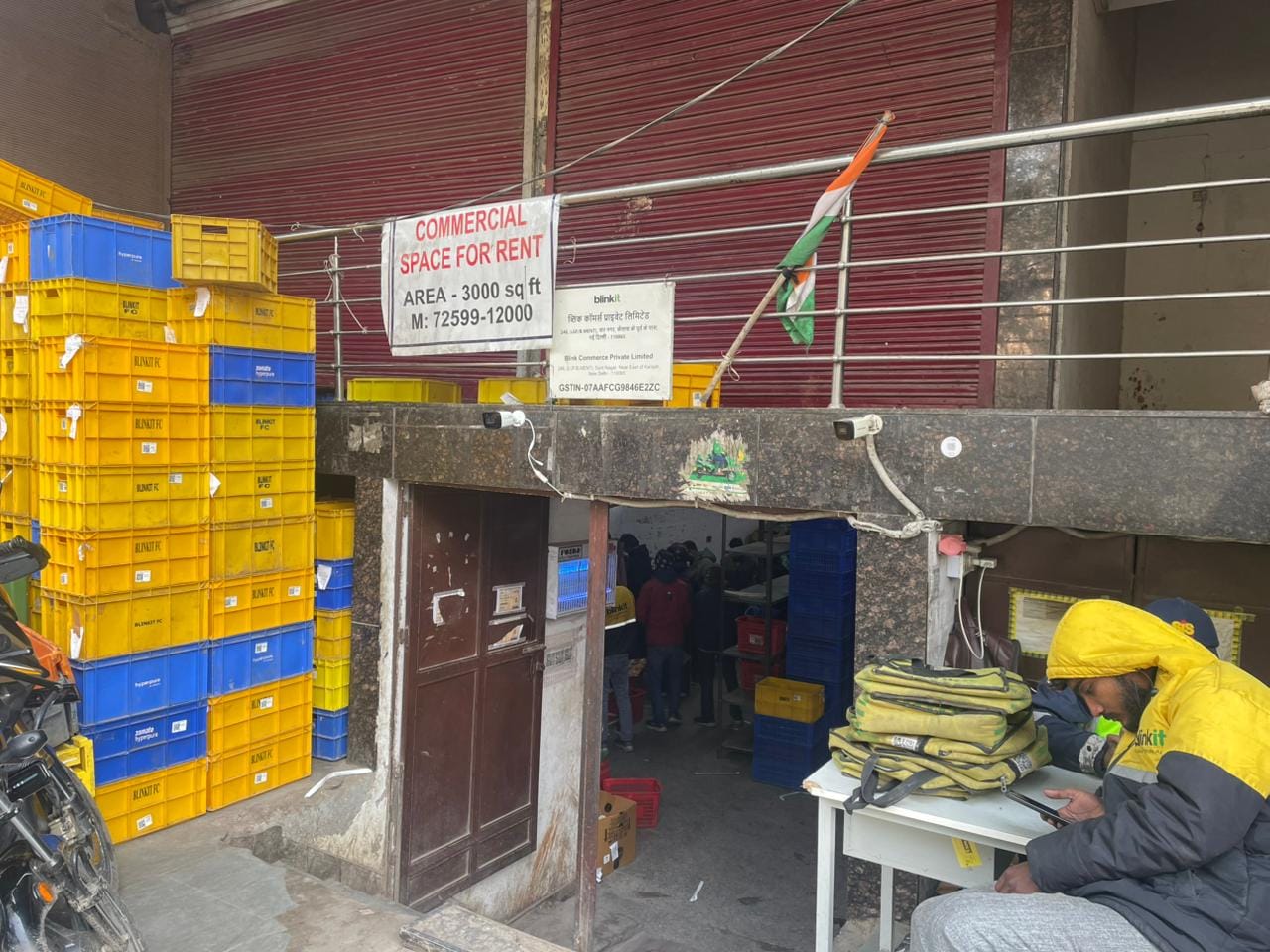
This Blinkit dark store has even hollowed out the ground floor above it. ICICI Bank vacated six months ago, and a stark ‘commercial space for rent’ sign now hangs over the shuttered premises—unanswered for half a year.
“The customers of ICICI bank had to go through parked bikes and tons of delivery drivers. Even the bank’s female employees didn’t feel safe leaving in the evening,” said Rajan, who runs Amit Properties, a real estate firm down the road. “The first floor owner was earlier asking for Rs 3 lakh, but he’s not even able to close it at Rs 1.5 lakh.”
Dark stores—mini warehouses that are used to fulfil online orders—are changing the fabric of urban neighbourhoods. Blinkit, Swiggy and Zepto are opening stores at a breakneck speed—with about a third located in tier-2 cities and towns—to serve customers across pin codes. By 2030, the number of dark stores is projected to touch 7,500—a three fold increase from the estimated 2,525 operational in 2025.
By matching or paying even higher than the asking rental rate, quick commerce companies are driving up commercial real estate prices. And for both residents and retailers that share these spaces, clashes over parking, safety and access are now ubiquitous.
In January 2026, an Instamart delivery driver was run over multiple times by a black Scorpio over a parking dispute in Gurugram’s Hayatpur. On 3 February, a businessman succumbed to injuries following a scuffle with three delivery drivers near Connaught Place, New Delhi.
“They [quick commerce companies] look for places where there is more residential density, and from which their drivers can easily reach customers,” said Rajan. “Traditional warehouses are on the outskirts of cities, but here we are seeing a new model in action.”
Also read: 10-minute delivery not worth the risk. India’s quick-commerce sector must look at global models
Driving up prices
The stretch of main road in Delhi’s Sant Nagar is dotted with dark stores. There are no clear signs shouting out which quick commerce companies they belong to, and their entrances are usually hidden behind PVC strip curtains. But the telltale sign is the army of bikes parked right outside, empty bags of Swiggy or Blinkit riding pillion.
“I have complained to the police multiple times, but after a few days the bikes are back in our parking lot,” said Vikas, the owner of Bharat Studio, a menswear brand that shares a wall with the Blinkit dark store. “The delivery drivers are always smoking, and it’s not a nice experience for our customers.”
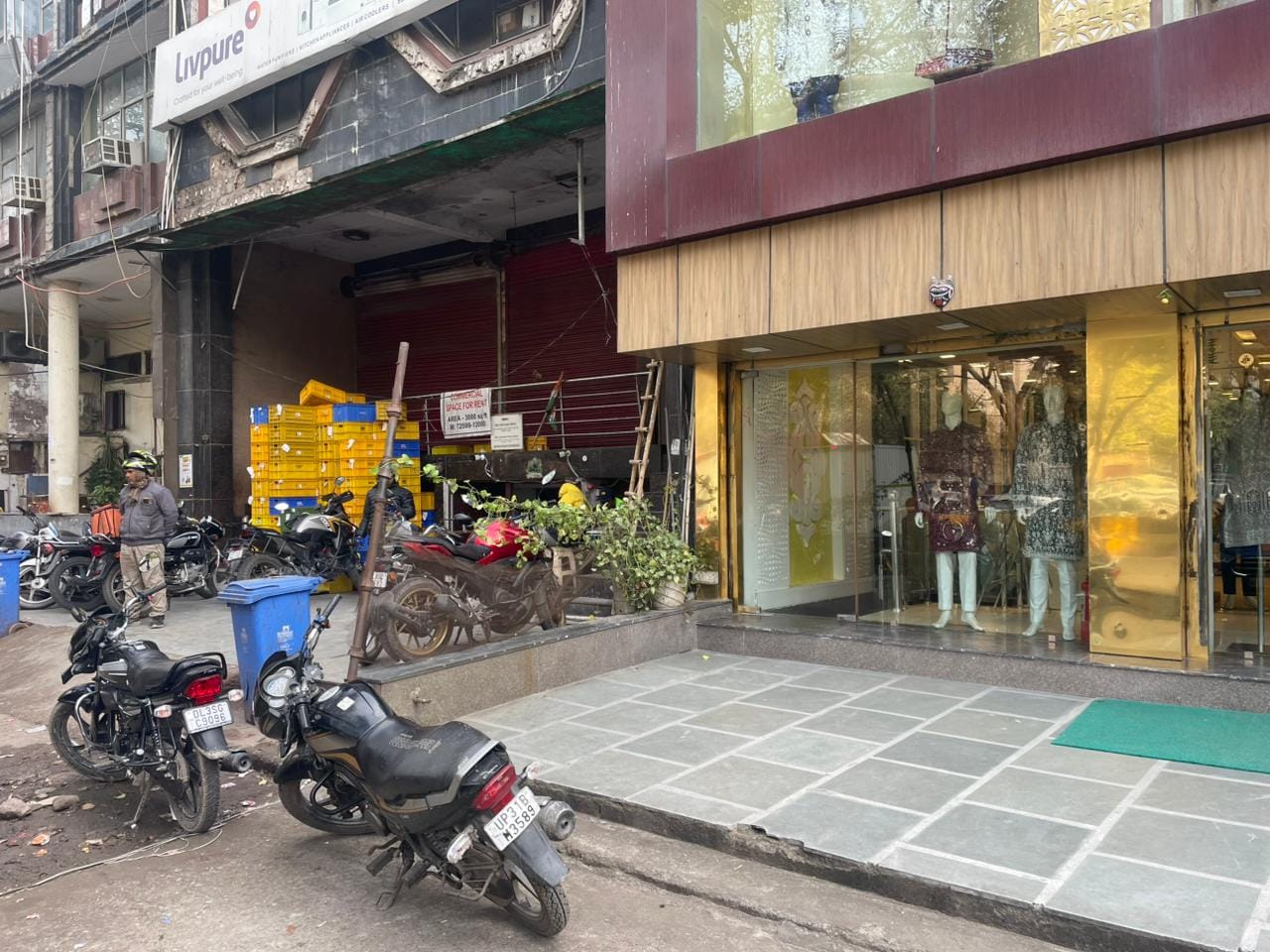
He proceeded to point out the bikes spilling over into his side of the parking lot, some parked askew, while others with drivers slouched down scrolling on their phones. “The owner of the store didn’t have parking space for 300 bikes, but that is something he should have anticipated himself,” said Vikas.
Bharat Studio occupies the entire building next to the Blinkit dark store, and the parking space in front belongs exclusively to them. The demarcation is clear, even though it isn’t followed by the delivery drivers.
But the building that houses the dark store has different owners for each floor. Real estate developers in the area say that this is why no other tenant has taken up the space after ICICI bank.
“If it was the same owner who was renting out both the basement and ground floor, he wouldn’t have taken a loss on an entire floor just because of Blinkit,” said Rajan, adding that the basement floor owner is happy with the rental income and has no reason to fix the parking issue. “It’s the ground floor owner that is suffering.”
Commercial property owners are more than happy to rent out their spaces to quick commerce companies. Flush with cash, these companies often open stores in proximity to each other, racing to serve the same localities.
There are a handful of Blinkit dark stores in Sant Nagar, some storing exclusively electronic goods, while others have a healthy mix of groceries and personal care items. Around the corner is a Swiggy Instamart dark store, its small entrance choked with drivers collecting orders.
“Large commercial properties have seen their rent go up, while the smaller ones on the sides are experiencing a small dip,” said the owner of Rajji Properties, a property dealer in the area. “It’s the smaller shops that have to deal with the chaos and parking issues, so getting tenants is harder for them.”
According to Financial Express, commercial spaces in prime residential areas in cities like Bengaluru, New Delhi and Mumbai are seeing an up to 35 per cent increase in rental costs because of dark stores. In areas like Bengaluru’s Domlur, rents have increased from Rs 50 to Rs 75 per square foot, with some deals struck 40 per cent above market rates.
The owner of Rajji Properties walked outside his shop and pointed at the newest dark store in the neighborhood, a Blinkit branch that has opened in the basement of a building that houses clothing retailer Zudio, a Tata Trent owned brand.
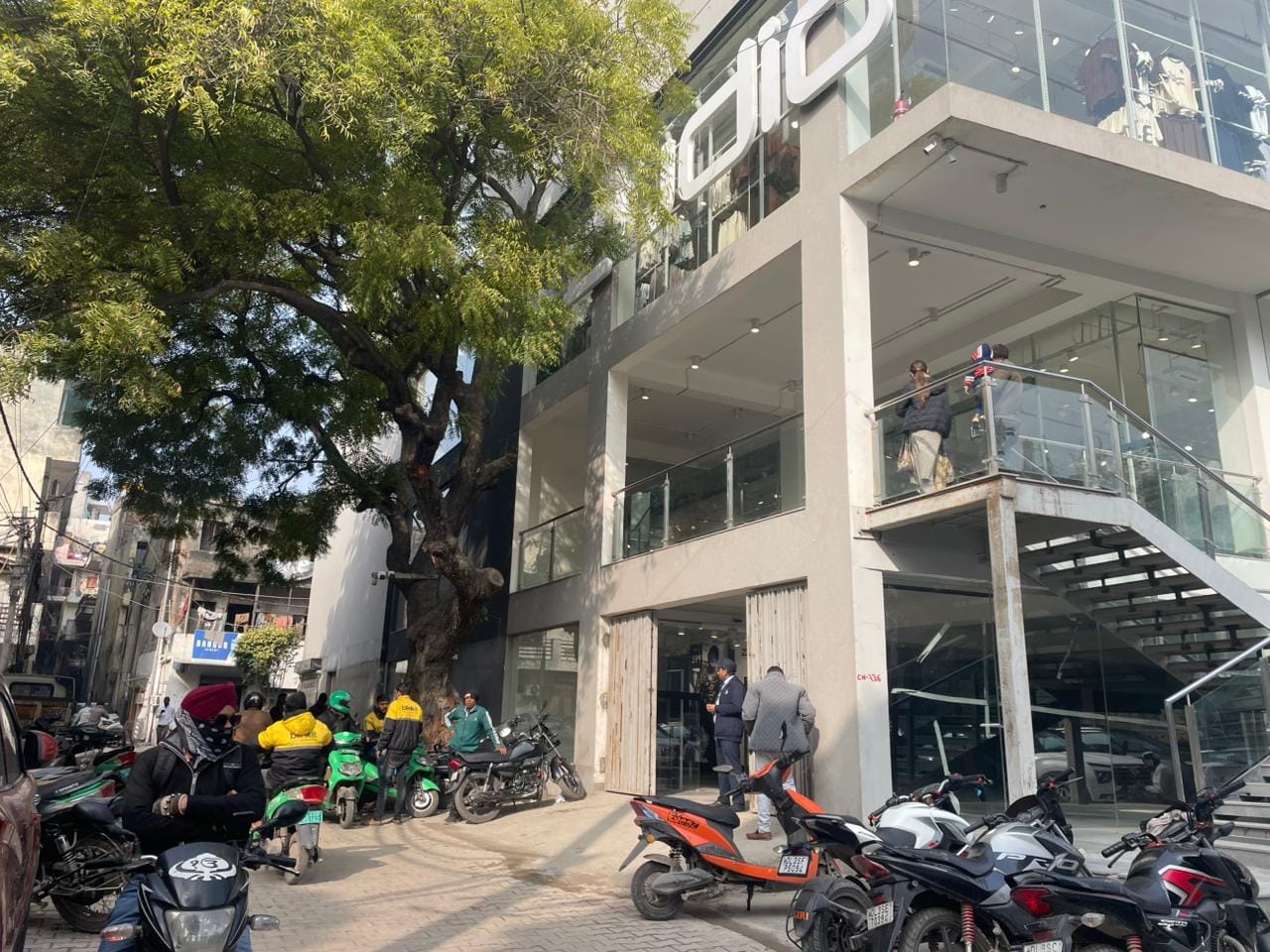
“There isn’t one fixed rate. Property owners hear about what adjacent properties rent out for, and adjust their own accordingly,” he said. Amit Properties’ Rajan gave a ballpark figure of around Rs 2 to 3 lakh for a 300 gaj (2,700 square feet) ground floor. Both agreed that the arrival of dark stores doesn’t bode well for customer-facing businesses.
In Sant Nagar, what were earlier clinics, tuition centers and kirana stores are now makeshift warehouses, storing everything from toothbrushes and gardening equipment to jewelry and board games.
Also read: An auto driver, trucker & delivery man. And India’s tryst with working-class influencers
Well-oiled machine
Outside the dark store below Zudio, Harish Kumar (name changed) lounges on his bike, a slow burning beedi hanging loosely from his mouth. Kumar is passing time before his phone lights up with an order—his Blinkit ID is attached to just this store.
“We can’t pick up deliveries from just any store. Each rider has a store ID, and this store only houses electronic items—chargers, wires, earphones,” said Kumar, a look of boredom on his face. “But once the order comes in, we need to rush for the delivery.”
Kumar previously worked as airport security in Lucknow but left his job because of the constant aggression from passengers who argued with him about parking charges. With friends in the quick commerce ecosystem, he moved to Delhi and joined Blinkit six months ago.
“We need to operate fast. Yes, the delivery time has been increased (to 30 minutes), but that doesn’t mean we can take our own time when an order is placed,” said Kumar, adding that he delivers within a nine-kilometre radius from the store.
Taking his phone out of his pocket, he opened the driver app (developed by Blinkit for their delivery fleet) and sheepishly highlighted his successful deliveries. Kumar patiently explained the math—Rs 15 to 20 for every one kilometer covered, plus a Rs 10 incentive on every successful order delivered.
For 13 to 14 hours of work a day—typical for a driver—earnings can reach up to Rs 1200 to 1300, approximately Rs 100 per hour of work. But the expenses pile up.
“Around Rs 250-300 are our fuel expenses every day, plus on top of that we need to eat our meals,” said Kumar, his colleague on the next bike nodding along in agreement. “At the end of the day, we are left with around Rs. 500 to Rs. 600.”
Kumar, 26, doesn’t see his Blinkit delivery driver’s role as long-term. Coming from a small village near Lucknow, he wanted to get a foothold in Delhi and earn some income before finding a more stable (and less stressful) job. “My uncle runs a small electronics repair shop in Patel Nagar, but even he couldn’t afford to pay me what I’m getting here,” he said.
His phone lights up as an order comes in. He quickly puts out his beedi, and heads down to the dark store in the basement. The warehouse isn’t accessible to delivery staff, who wait at a reception desk to collect their package.
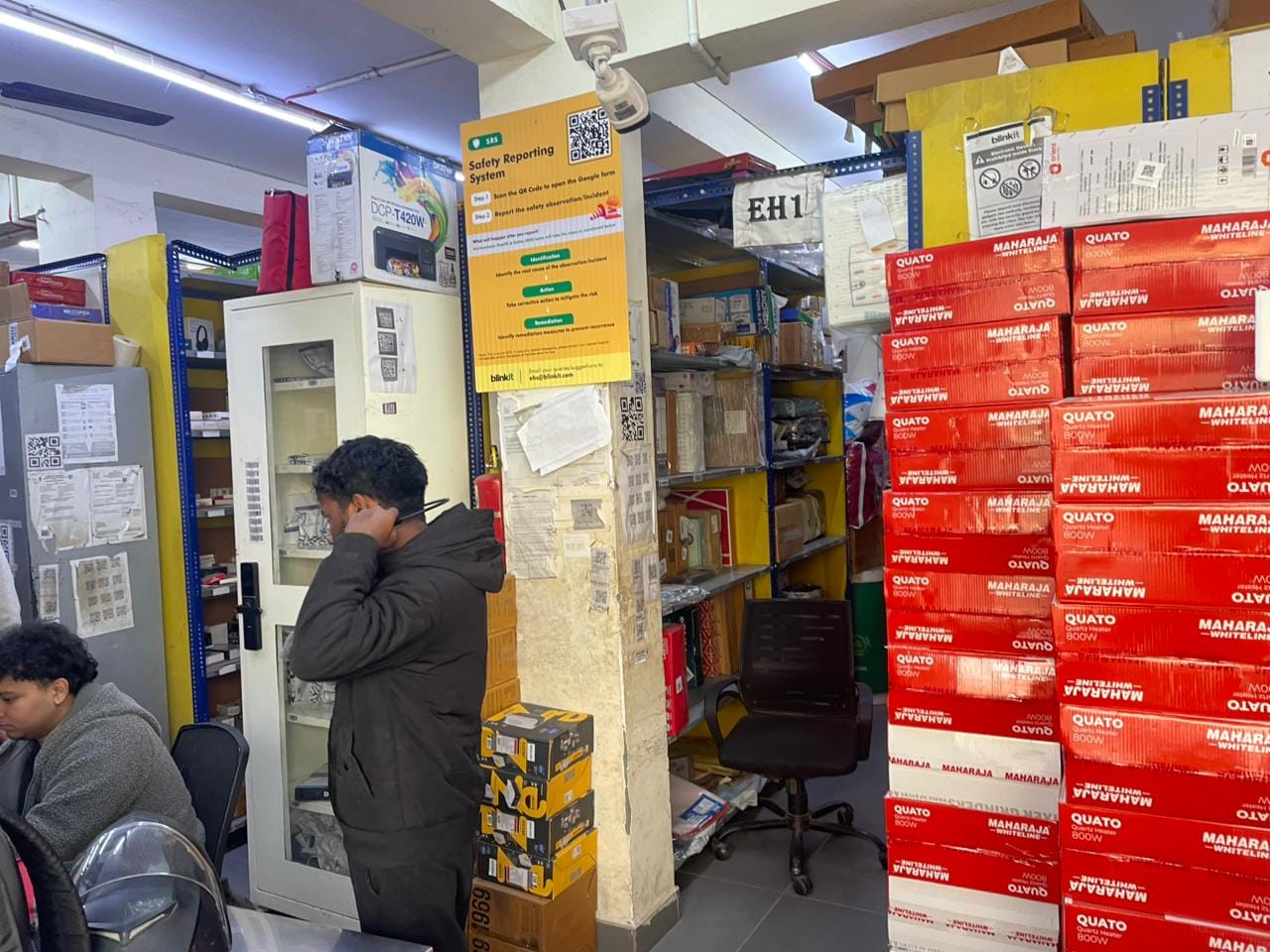
Inside the store, signs plastered on walls warn staff that electronic devices are to be deposited with security. Another bright yellow sign informs them of a safety reporting system, while a third expounds on the dangers of counterfeit goods.
Behind the security and reception desk, floor-to-ceiling racks are filled with electronic goods—heaters, printers, headphones, electric shavers—each aisle clearly labeled.
Kumar’s package doesn’t magically arrive in his hands. A handful of staff run between aisles, man the reception desk and coordinate over the phone as they prepare orders for the drivers to pick up.
“Early mornings and dinner time are the busiest, I don’t even get a chance to check my phone for messages,” said a manager at a Blinkit store, before being called to the backroom for a customer complaint.
Years of operational practice have converted these dark stores into well-oiled machines, churning out package after package throughout the day. Kumar collects his after sharing a code with the front desk.
Although this store is hidden in a bylane, its presence has drawn in more chaos than usual. A constant stream of drivers arrives and takes-off in equal urgency, dodging pedestrians on the way. Kumar doesn’t see any other way.
“The problem is there isn’t enough available parking for us—so I park my bike wherever I can find a spot,” he said, before quickly clarifying that he wasn’t a rash driver. “But yes, we try to deliver orders quickly. More orders, more incentives for us.”
Also read: Bengaluru police says 10-min delivery is causing accidents. It’s becoming a headache
Deliveries are the new model
A handful of purple uniform-clad drivers loiter outside a dark store in Lajpat Nagar, as traffic and pedestrians pass them by. When Zepto opened a location here, nearby grocery stores were the first to feel the effect.
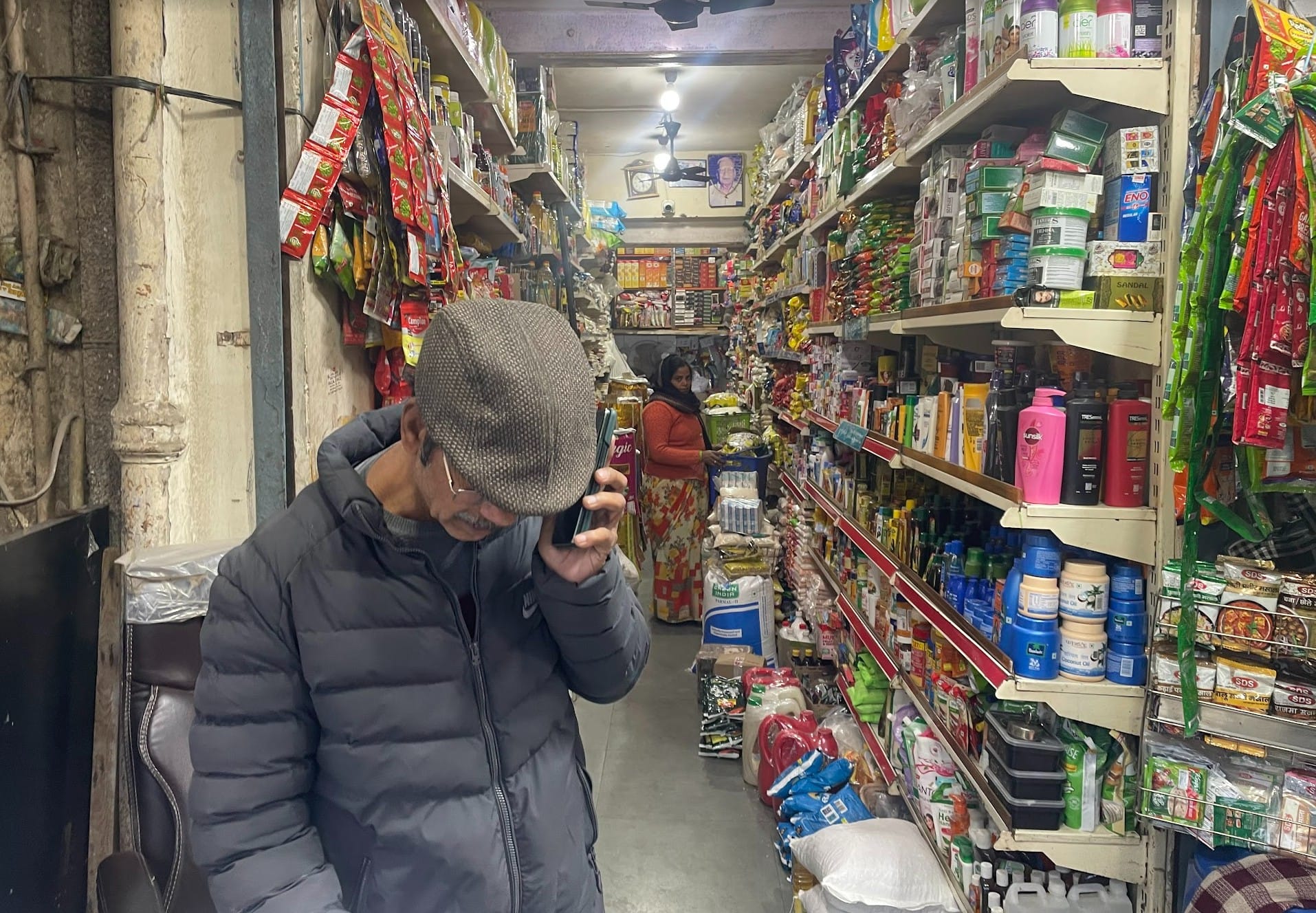
“They [quick commerce companies] don’t sell genuine products,” said Manohar, who sat behind the cash counter at Bhagat Ram Om Prakash Department Store, around the corner from the Zepto dark store. “So many of our customers have told us they got fake butter and coffee.”
A large yellow banner hangs outside the grocery store, with pictures of a slew of items and in big bold letters: All Products Available. This store has been operating since 1957, but its longevity hasn’t protected it from the onslaught of quick commerce.
“We have had to let staff go – earlier there were close to 18 people working here, now only 10,” said Manohar, irritation spreading across his face and seeping into his voice. “But our loyal customers have stayed with us. They want to feel the tomatoes, run their hands through the rice.”
But that’s not enough anymore. It’s all about loudly pushing home delivery just to keep the customers they already have.
The Bhagat Ram store offers delivery in the neighbourhood and promises their customers that goods will arrive within 30 minutes. Right opposite, Bobby Sabjiwala has a banner that screams ‘free home delivery’ along with their WhatsApp numbers.
(Edited by Theres Sudeep)