





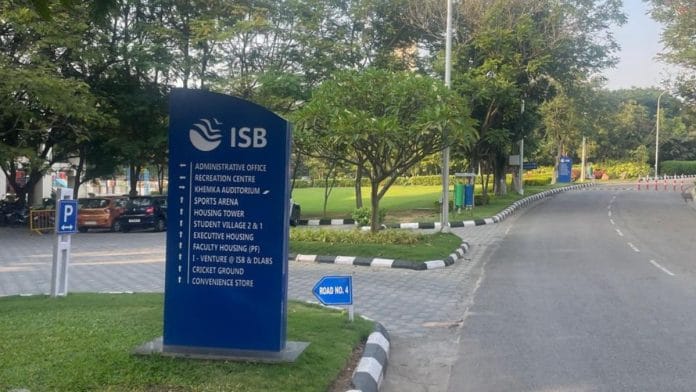



Hyderabad: Pramath Sinha threw out the academic playbook when he became the founding dean of the Indian School of Business. The ex-McKinsey consultant rolled up his sleeves, dialled up his corporate contacts and personally coached students to help them get jobs.
“Academics called me out for sitting with students and helping them write their resumes,” said Sinha, reminiscing about the institute’s early days. Building a reputation from scratch isn’t easy.
Those days seem to be far behind. In just over two decades, the Indian School of Business has gone from an audacious experiment on the outskirts of Hyderabad (and now Mohali) to one of the world’s fastest-rising management schools – ranked the country’s best by the Financial Times and fifth globally by LinkedIn.
In contrast to the IIMs (Indian Institute of Management), ISB’s founders bet on a radically different model: world-class visiting faculty from top global institutions, a one-year programme for experienced professionals and a diverse student body. And till today, the institute runs almost as a startup, constantly innovating – it conducted a curriculum overhaul just this year.
“We didn’t want to go head-to-head with the IIMs, but create our own niche,” said Sinha, admitting that there were many bright students who didn’t get into an IIM and wanted a good option. “And with going abroad, there is both a cost and a ceiling in terms of how many foreign students these institutes can take.”
Today, the ISB formula is paying off. The school’s alumni occupy boardrooms and startup hubs, its faculty shape policy debates in Delhi, and its partnerships with industry and government have deepened its influence.
“When ISB first started, to be honest, many of us were sceptical about what it would be able to do – but all of that has been clearly belied,” said Rishikesha Krishnan, a professor of strategy and former director at IIM Bengaluru. He went on to credit the school’s emphasis on research, international accreditation and the 1-year MBA programme.
But the two institutes do seem to be learning from each other. The IIMs have upped their focus on research and international rankings, while ISB has recently introduced a two-year MBA programme.
And as the institute enters what Madan Pillutla, the current dean, calls a “decade of impact,” ISB is no longer trying to prove it belongs in the global league tables – it is working to redefine what an Indian business school can be.
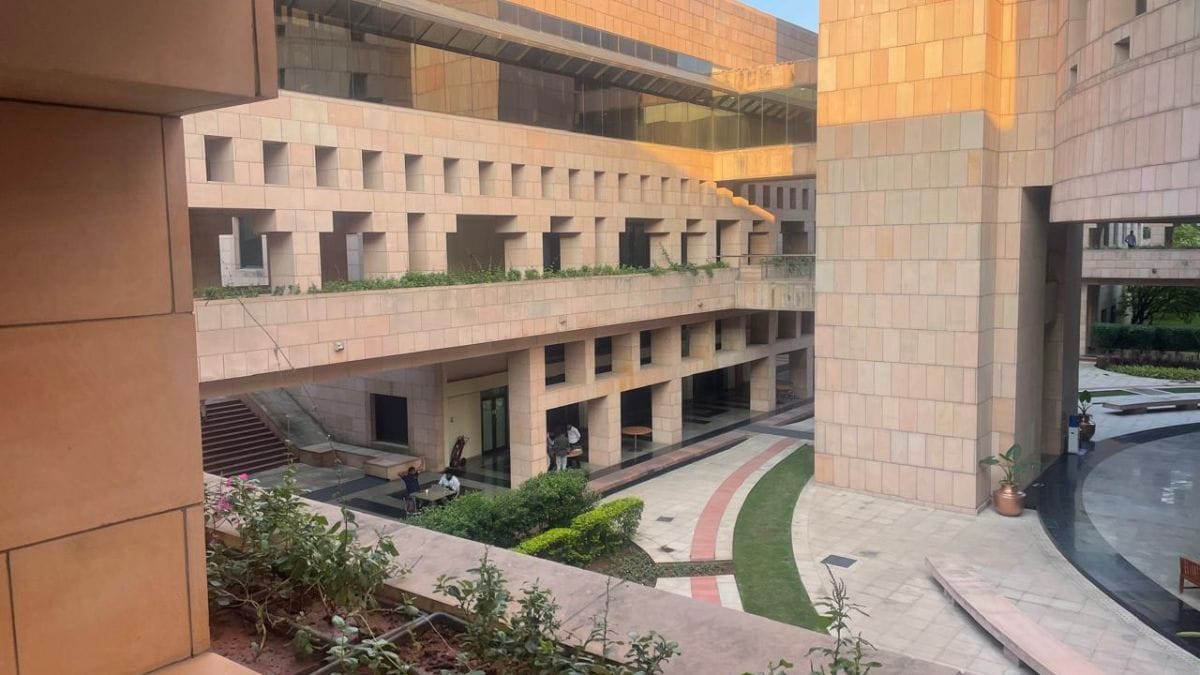
Experimental learning
“If we need to be relevant, we have to construct an experience in our classrooms that cannot be replicated in other environments,” said Deepa Mani, Deputy Dean of Academic Programmes
The Indian School of Business isn’t resting on its laurels – it can’t afford to. With AI reshaping the academic landscape and flattening long-held advantages, Deputy Dean of Academic Programmes, Deepa Mani, began asking what would truly set the school apart.
The answer lay in a familiar but newly urgent idea: experiential learning.
“We took the view that a lot of learning that has been happening for decades is becoming commoditised,” said Mani, adding that with digital learning, a lot of information was already available online. “If we need to be relevant, we have to construct an experience in our classrooms that cannot be replicated in other environments.”
The real-world scenarios had to enter the classroom—a student role-playing a CEO navigating an environmental disaster, using virtual reality (VR) to study Amazon’s last-mile delivery chain in India, or global immersion programmes at Bocconi University in Italy or ESADE Business School in Spain.
“All 800 of our students needed to get deep insights into the context of business as much as the content of it,” Mani added. She was sitting in one of ISB’s many state-of-the-art conference rooms, sipping tea as she reflected on the ‘huge operational, pedagogical challenge’.
Almost overnight, the team had to plan leadership challenges, study treks (a trip to Saudi Arabia to study sovereign wealth funds), and projects with companies.
ISB has 163 projects that run in parallel across approximately 105 companies, including Google and Apollo Hospitals. These companies provide students with actual business problems – an FMCG company working on a branding issue or a family business trying to professionalise. Google has students working on Digital Public Infrastructure.
“Apart from the operational logistics of sourcing projects, we also need to manage them for a span of six months,” said Mani, explaining that first students are ‘matched’ with an organisation based on their preferences. Then the entire project, including a student’s progress, needs to be monitored. “And if we don’t have enough supervision, we won’t know if the learning is happening. So, we had to create a pedagogical framework.”
The concept of ‘experiential learning’ isn’t novel, but with the rise of online learning, many global business schools use it as the trump card that sets them apart. It comes as no surprise that Mani turned to one of the leaders of the academic world for help.
“I spoke to Harvard Business School, who do field immersions for all 800 of its students. I wanted to understand how it happens at scale,” she said. Mani then learned to standardise some elements upfront. All students go through team dynamics, design thinking, and data analysis before they break away into separate projects.
The college created a whole new team to spearhead these programmes: the LAB (Learning Through Action in Business), which functions as the Office of Experiential Learning at ISB. The curriculum review also resulted in the creation of another office, one focused on empowering faculty and studying learning outcomes.
Vishal Karungulam, a professor of information systems, holds the dual responsibility of heading both the LAB and the Centre for Learning and Teaching Excellence (CLTE). In the school’s main atrium, where students scuttle between classes and the cafeteria, the ex-Google and Microsoft engineer sits at a table wearing an ISB-branded polo t-shirt and dark-rimmed glasses.
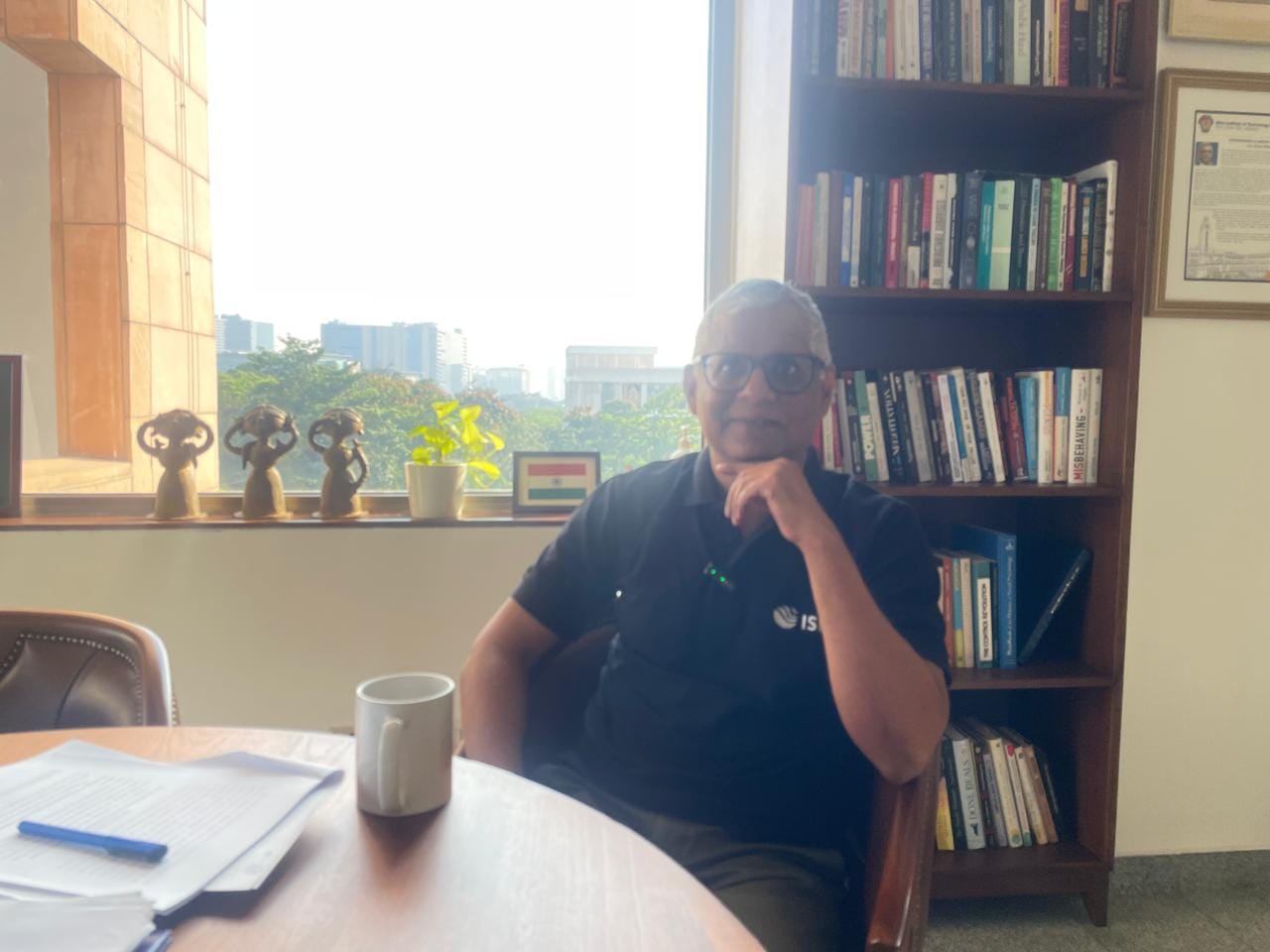
“The way people learn, the way they consume content is changing,” said Karungulam, adding that CLTE’s role includes both research on how learning is evolving and working with faculty to get them ready for these changes. “Right now, we are running seven different AI use case pilots with our faculty.”
AI is beginning to fundamentally reshape how ISB approaches teaching, not by replacing the classroom but by deepening what happens inside it. Students now interact with ‘AI case companions’ that understand a case (a 20-page business problem) deeply, mimic the protagonist, and allow them to probe the scenario before they enter the classroom.
Soon, a case on IDBI Bank’s turnaround or alcohol prohibition in Bihar will include pre-reading materials in the form of a podcast, along with an AI bot that helps students understand balance sheets, business plans and the social and economic context of Bihar before even setting foot in class.
“Right now, we have about nine or ten faculty who are trying this. Next term, we are expanding it to all faculty,” said Karungulam, with a glint in his eye while discussing the innovations.
And ISB’s curriculum efforts are shaping student preferences over the IIMs. Janavi Cheruku, 24, found the latter’s pedagogy to be more traditional, while ISB was giving more importance to courses in generative AI and social media marketing.
“I liked how its curriculum has a reflection of the West,” said Cheruku, who worked in human resources at Accenture before joining ISB. “Some of these new age concepts that were seeping into the curriculum were important for me.”
History, early strategy
“I don’t think there was a better set of faculty anywhere in the world,” said Madan Pillutla, Dean
It’s difficult to imagine Hyderabad’s landscape without ISB. When the foundation stone was laid in 1999, the Gachibowli area was mostly empty land and village terrain. Today, the institute is surrounded by the offices of Microsoft, Infosys and Wipro – all located on ISB Road. The once-quiet outskirt of the city has been transformed into a powerful business corridor.
But the original plan for the institute was never Hyderabad.
“Originally the idea was to build a management school at IIT Delhi,” said Pramath Sinha, who detailed the origins of the institute in his book An Idea Whose Time Has Come. “From there, it evolved to be a private, independent management school.”
When the founders started looking for land, the obvious choice was the country’s commercial capital, Mumbai. Most of the school’s board members were also from the city, and the team had picked an area in Navi Mumbai.
“Suddenly, when we were closing on the land, the Maharashtra government demanded 50 per cent reservation for faculty, 100 per cent reservation for staff, and some reservation for students,” said Sinha, adding that this put a spanner in the works.
Mumbai’s loss was Hyderabad’s gain – then Chief Minister of Andhra Pradesh Chandrababu Naidu managed to woo the founding team with his support and land. “He meant business. We took the bet and went to Hyderabad, which proved to be a very positive step,” said Sinha, reflecting on the journey.
Co-founded by Rajat Gupta and Anil Kumar, former senior executives at McKinsey & Company, ISB received support from the country’s business elite. Godrej Group chairman Adi Godrej, HCL founder Shiv Nadar, former Bajaj Group chairman Rahul Bajaj, former HDFC chairman Deepak Parekh and Infosys founder NR Narayana Murthy all put their weight behind the institute.
But building a world-class business school is vastly different from just acquiring the land. The brick-and-mortar structure – no matter how impressive – wouldn’t be enough to attract students.
“You have to be top-notch from the start. You can’t say I’ll first build a Maruti and then one day I’ll build a Mercedes,” said Sinha, explaining that quality doesn’t scale. “But how do you set in place excellent quality from day one, when by definition you don’t have any credibility?”
Apart from setting up a top-notch executive board and dipping into his personal network to tap donors and funders, Sinha leaned on a visiting faculty model. ISB wanted to attract high-quality professors. But why would they leave well-established, cushy jobs at global universities?
To solve for this, the founding team decided to kickstart the institute with short-term semesters so that top talent could come down to teach while they were employed at another institution. “This was the big innovation in the first year. But even today, a large proportion of faculty are visiting faculty,” he said.
It set off a self-reinforcing loop: strong faculty drew in sharp, ambitious students, who then landed roles at top firms. Their success, in turn, pulled in an even stronger pool of applicants as the school’s reputation kept climbing.
“And then the visiting faculty realised we mean business and decided to move here permanently – and that’s when we started building our permanent faculty,” said Sinha, crediting the model as the crux of ISB’s success.
Life has come full circle for Dean Madan Pillutla, who first encountered ISB as a visiting faculty member while still at London Business School, where he taught for 22 years. Pillutla was handpicked for his expertise in organisational behaviour.
“There was no risk at all because we were just spending six weeks here as visitors; that was the genius of the model,” said Pillutla, adding that the first two years of the business school had ‘rockstar academics’ teaching courses.
In the early years, former RBI governor Raghuram Rajan taught finance, Stanford’s V. ‘Seenu’ Srinivasan taught marketing, American economist and Wharton professor Harbir Singh taught strategy and renowned accounting professor Bala V. Balachandran helped students decipher cash flows and balance sheets. “I don’t think there was a better set of faculty anywhere in the world,” said Pillutla.
In September 2025, nearly 25 years after the campus was inaugurated, the institute opened the doors to a shiny new building. Pillutla’s office overlooks the newly inaugurated executive education building, made possible by a Rs 100 crore philanthropic contribution from the Motilal Oswal Foundation.
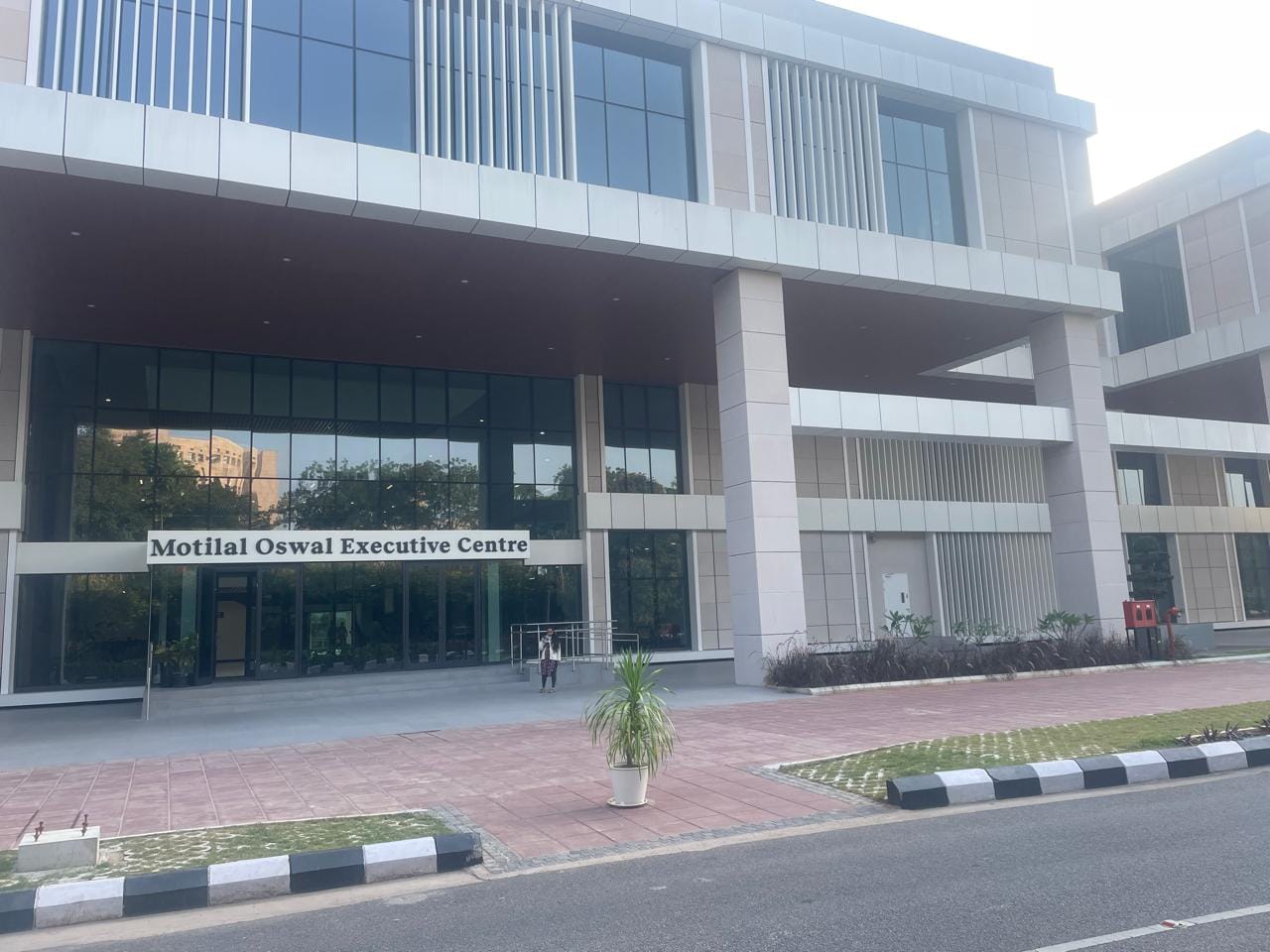
“Earlier, we would have to put some people in neighbouring hotels and bus them in and out,” said Pillutla, overlooking the new feather in ISB’s cap. “They don’t get the full campus experience. Now, they can just go back to their rooms after working late.”
The institute isn’t holding back as it tries to claim a bigger slice of the business-education market. With companies once again investing in upskilling after the post-pandemic lull, ISB leaned into a brand that has only grown stronger over the past two decades.
Rankings and research
The first page of ISB’s 2024 placement report proudly displays its Financial Times Global MBA ranking – number one in India, fifth in Asia and thirty-first globally. In 2025, the institute climbed up the FT rankings even further, reaching the twenty-seventh spot. Recently, ISB was ranked fifth globally on LinkedIn’s list of top MBA programmes. Rankings matter – as much as the institute’s faculty shy away from discussing it.
Pramath Sinha has no such reservations.
“We didn’t want to play the Indian ranking system. Right from day one, we wanted to be globally top-ranked,” he said, adding that they specifically looked at the Financial Times ranking. “We worked backwards from the FT ranking criteria. We didn’t game it but focused on specific areas as priorities.”
One of those areas was MBA salaries. The rankings track salary jumps before and after an MBA, including three years out. But merely identifying a criterion doesn’t cut it. In the early days, Sinha opened his Rolodex of corporate contacts from his time as a McKinsey consultant.
Citibank, Goldman Sachs, and top consulting firms all recruited students from the first ISB batch. “We worked hard on those industry partnerships to place people. And that naturally made it possible for students to get high-paying jobs,” he added.
The team also built its alumni network—another ranking criterion—roping graduates in as mentors and interviewers for prospective applicants.
But at its core, the institute wants to be known for its research. “To create and disseminate research-based knowledge in management that influences scholarship, practice, and policy,” reads part of the institute’s mission statement.
“It’s important that we are the producers of knowledge – that’s in the DNA of the school,” said Pillutla, adding that research does figure into rankings. “But this was our focus from the very beginning. It wasn’t driven by rankings, but a conviction that you needed to have this in the school.”
The idea was that, as a growing economy and with a government that also needed help in terms of evidence-based policy, India was lagging behind the kind of research that was done in top universities in the West.
Over the last few years, the dean said, faculty have increasingly produced India-relevant work because they are embedded in the country’s fast-changing business environment –studying everything from the rise of GCCs (global capability centres) in Hyderabad to policymaking needs in government ministries.
In August 2025, the institute launched ISB Discover, where faculty research is being published in digestible formats – articles, videos and podcasts. Academic research tends to be dry, technical and locked behind paywalled journals, making them inaccessible to the public in more ways than one.
“What is the point of us doing it but then hiding our light in a bush?” said Pillutla, explaining their decision to launch the new platform.
Also read: Gujarat rules North India’s coconut market. It’s edging out Kerala, Karnataka
Alumni networks and shared learning
By his own accord, 26-year-old Anurag Roy is terrible at accounting. This is where he leans on his classmates, who have degrees in law, history, engineering, economics and liberal arts.
“If I were to make friends with other engineers, all of us would fail accounting,” said Roy, a former cybersecurity professional at KPMG whose father graduated from ISB’s programme for senior executives.
Around him, the other students burst into laughter at the school’s atrium, where they had converged in between classes to discuss what drew them to ISB. Each comes from a different corner of India, with backgrounds just as diverse – a civil servant, a philosophy major, a cybersecurity professional and a government consultant.
“It’s hurtful to the ego of a faculty member like me, but students learn a lot from one another,” said Pillutla, chuckling as he expounded on the virtues of diverse classroom discussions. “We build classes where people are learning from one another.”
If an operations management class had a group of undergraduate engineers, their way of thinking about a problem would be limited. But add a law student and historian to the mix, and suddenly, more layers are pulled back.
“From the very start, we aimed for what we call ‘balanced excellence,’” Pillutla said. He explained that ISB doesn’t just look for applicants with sky-high GMAT scores – it also seeks out people who may not top the test but bring something far more meaningful, like being the first woman engineer on the shop floor at Tata Motors.
This diversity is also what sets the institute apart from IIM, which can’t operate with as much flexibility. “We are completely driven by the CAT score, the admission process and subject to the RIT Act. We have to demonstrate that everybody admitted is strictly by the merit list and other factors,” said Rishikesha Krishnan.
Sitting beside Roy, 32-year-old Vikrant Dhillon chose ISB for a different reason. A civil servant on a sabbatical, Dhillon was working in the Ministry of Power. He already had the policy-making side of work under his belt, so he set out to learn about business.
“It was important that the programme couldn’t be more than one year, I already knew a lot of the basics,” said Dhillon, who received a scholarship from the school. “But I would have liked more international students to be admitted here.”
Dhillon also doubles up as a math teacher for fellow students, a testament to the institute’s encouragement of peer-to-peer learning. “At 2 am, we will have Maggi together and he [Dhillon] will be teaching 30 people,” said Roy, adding that ISB also allows students to block time in lecture halls for group learning sessions.
Jigisa Singh, 26, nodded her head in agreement, but she chose the institute because of the alumni, many of whom mentor ongoing batches of post-graduate programme students. Over the years, ISB has produced a cadre of alumni who’ve risen to prominence across business, media and entrepreneurship.
Neeraj Arora, who graduated from ISB’s class of 2006, went on to become Chief Business Officer at WhatsApp and played a key role in its blockbuster acquisition by Facebook. Umang Kumar co-founded CarDekho, a leading online auto marketplace in India. Mayank Kumar helped build upGrad, a major edtech platform in India. Entrepreneur and content creator Ankur Warikoo also graduated from the institute.
“I remember when I was working in Startup India, industry leaders spoke highly of ISB. And a lot of the alums we see today are working at CXO roles in some of the biggest companies,” said Singh, who is now heading the Alumni Affairs Council at the institute.
When it comes to business school rankings, most of the students sport sheepish grins. They admit that rankings matter, but they’re hardly the only measure. What ultimately clinches the decision is what ISB represents – a fast-rising Indian business school confident enough to hold its own against global heavyweights.
Just ask Singh, who turned down second-ranked INSEAD for twenty-seventh-ranked ISB.
(Edited by Ratan Priya)