





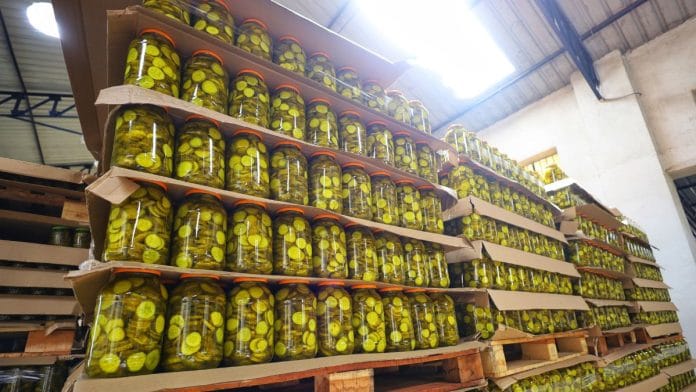



Hassan, Karnataka: What’s common in American hot dogs, Spanish banderillas and German cold-cut salads? Gherkins. And, a Made-in-India enterprise. Many of these small, knobbly vegetables used in pickles begin their journey in the coconut groves of south India and are packaged with American and Israeli stamps. But the decades-old export chain behind this $200 million global trade ran into turbulence last year.
Gherkins didn’t reach the top of global exports overnight. Farmers have been quietly growing this green-jewel in smaller districts across Karnataka, Tamil Nadu and Andhra Pradesh — India’s gherkin belt — second only to the US in production. When sweeping US tariffs rattled several Indian export industries last year, shipments of gherkins — a crop grown almost entirely for foreign markets — slowed. Orders from the United States, which buys roughly a quarter of India’s exports, dipped as new duties kicked in, forcing exporters to cut acreage and brace for losses.
Gherkin farmers escaped the tariff hammer – at first. Pickled cucumbers, sealed in jars, could sit in warehouses for months. That cushion bought India’s gherkin exporters time, but not certainty.
But the shock forced India’s gherkin belt to rethink a business that supplied the world’s pickles for burgers and salads for over thirty years.
Now, with exporters exploring new markets and a fresh trade deal with the European Union promising wider access, the labour-intensive tiny cucumber grown in southern India finds itself at the centre of a shifting global trade.
Industry experts say trade has hit a slump as US tariffs nearly doubled from 9.8 per cent to 18 per cent this year.
“Until around 2020 the industry was balanced,” said Balladichanda Devaiah, chairman of Green Agro Pack Pvt. Ltd., one of the pioneers of India’s gherkin industry. “During the Covid-19 pandemic, bottling plants in parts of Europe and the US shut down, and Indian processors filled that gap. But the market dynamics changed after that.”
Move over coconuts, tomatoes
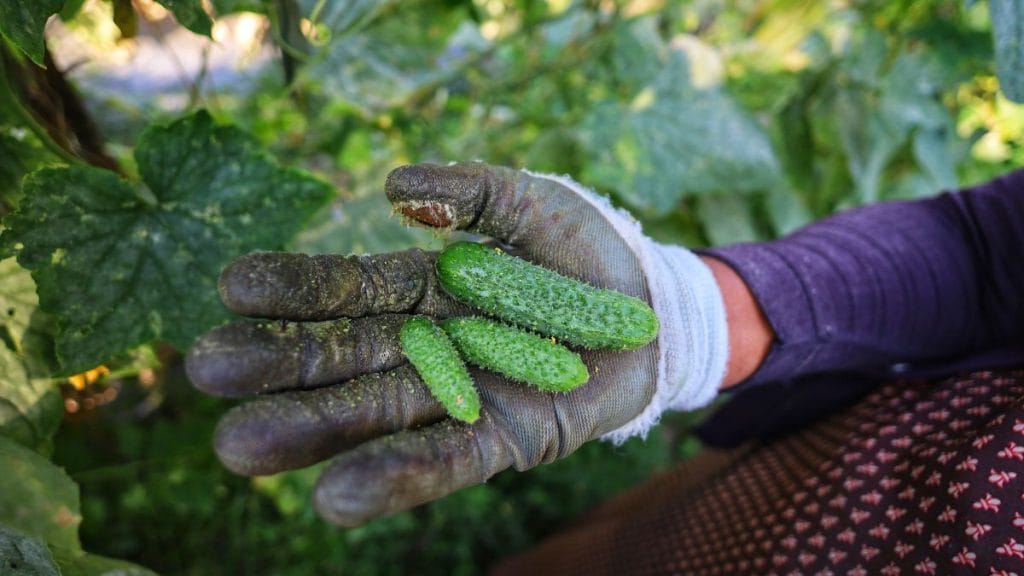
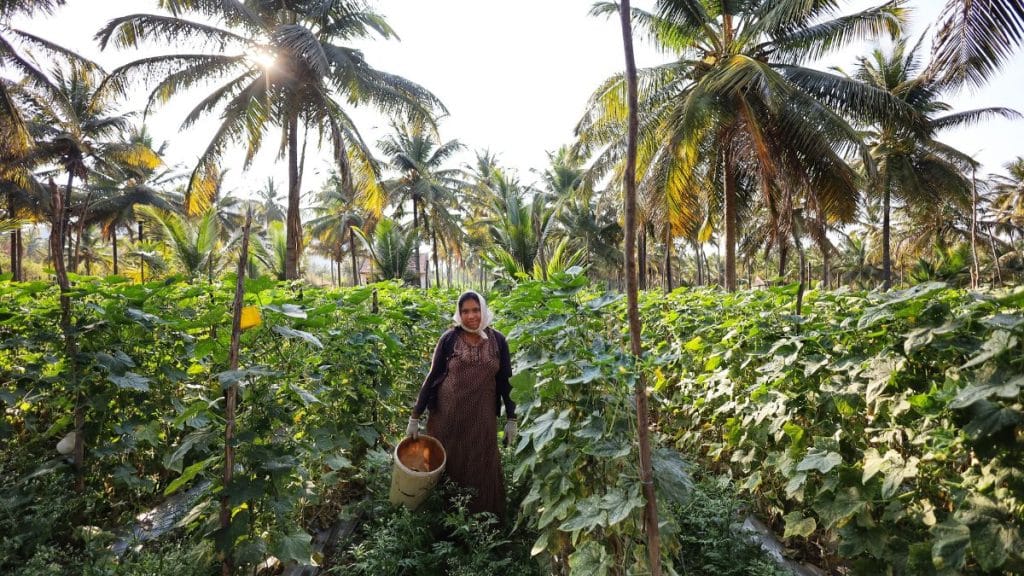
As the sun sets behind coconut groves in Muddanahalli village in Karnataka’s Hassan district, 42-year-old Leelavathi steps into her field carrying a plastic bucket. Dressed in a nightgown, with a scarf wrapped around her head and gloves on her hands, she moves between rows of thin vines climbing bamboo trellises beneath the coconut trees. Hidden among the leaves are dozens of thumb-sized cucumbers.
She bends and plucks them one by one — a routine she repeats twice a day, morning and evening.
Leelavathi began growing gherkins five years ago on half an acre of land alongside her coconut trees. The crop matures quickly and produces several harvest cycles each year. Her plot yields nearly eight tonnes in a single cycle, and with three harvests annually, the earnings can reach around Rs 2 lakh a year — roughly Rs 50,000 more than what she makes from coconuts.
The crop demands more work. Each cucumber must be picked at just the right size, often no bigger than a finger. But the returns have made the effort worthwhile.
Across the village, farmer Ravi Kumar is making a similar calculation.
Walking through his field, he points to two patches of land. One grows tomatoes — a crop he has cultivated for decades. The other is lined with trellised gherkin vines.
The difference in earnings, he says, is clear.
“Last year tomatoes gave me only about Rs 90,000,” Ravi said. “For years there was no profit on tomatoes. We had to survive on gherkin profits.”
For many farmers in Hassan district, the crop has become a financial safety net. Gherkins mature quickly, allow multiple harvests each year and come with assured buyers through contract farming. The promise of steadier returns is also a bonus.
India, the gherkin king
India’s entry into the global gherkin trade was less an accident and more a strategic takeover.
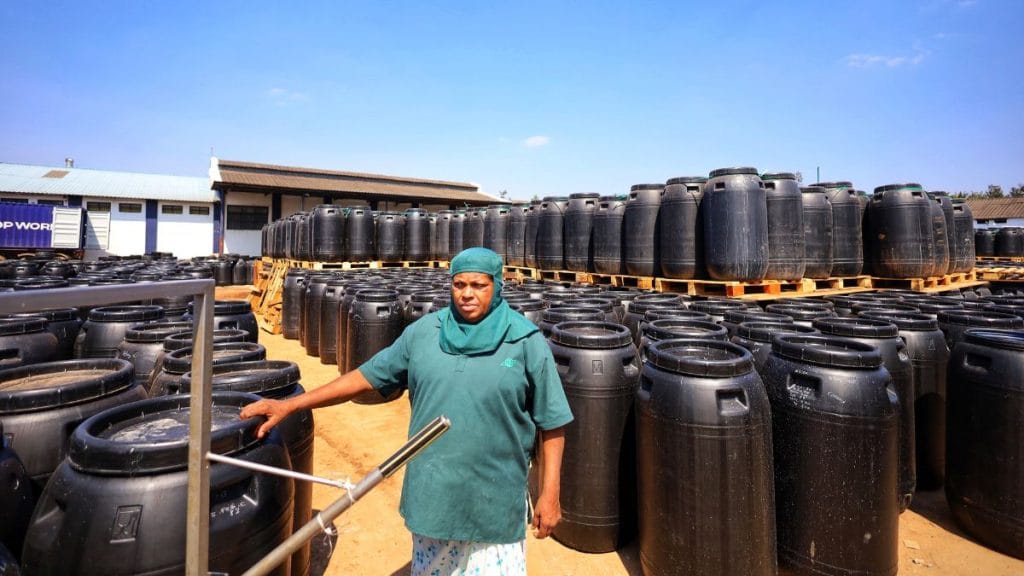
Today the country exports more than 2.5 lakh tonnes of processed gherkins every year, supplying supermarkets, fast-food chains and food processors in over 90 countries.
India now accounts for nearly 15 per cent of the global gherkin trade, making it the largest exporter of processed gherkins in the world. In 2024-25 alone, the country exported over 18,000 metric tonnes to markets such as Spain and Russia, while another 16,000 metric tonnes went to the United States and Russia.
Germany and Turkey together command close to a fifth of the global market, but India has emerged as the industry’s volume powerhouse due to availability of cheap labour.
Also Read: Himachal farmers are ditching apples for persimmons. ‘Earnings on par with JEE packages’
The economics worked in India’s favour.
“The labour intensive nature of the crop worked in our favour,” Vinod said. “India was able to provide both cheap labour and large numbers of workers.”
The industry crossed a milestone in 2021, when gherkin exports crossed $200 million.
Much of the success has been built on a structured contract farming system that links farmers directly to exporters. Companies supply seeds, fertilisers and technical guidance, while farmers grow the crop under fixed procurement agreements.
For growers, the model removes the uncertainty of open markets. Prices are predetermined, buyers are guaranteed, and farmers do not have to transport their produce to APMC mandis or negotiate fluctuating rates.
The system has allowed exporters to maintain scale, consistency and cost efficiency, turning a non-native vegetable into one of India’s most reliable agricultural export stories.
Women-led, labour intensive workforce
At Bharathi Associates’ processing facility just outside Hassan, the afternoon shift has begun.
Heena Kosher, 22, joined the plant two years ago after hearing about the job from a neighbour. She had just finished Class 12 and needed to support her family.
“With this job, I can pay for my brother’s education,” she said.
More than ten women from her village travel together to the factory every morning. Nearly 80 per cent of the workforce is female, most drawn from surrounding villages.
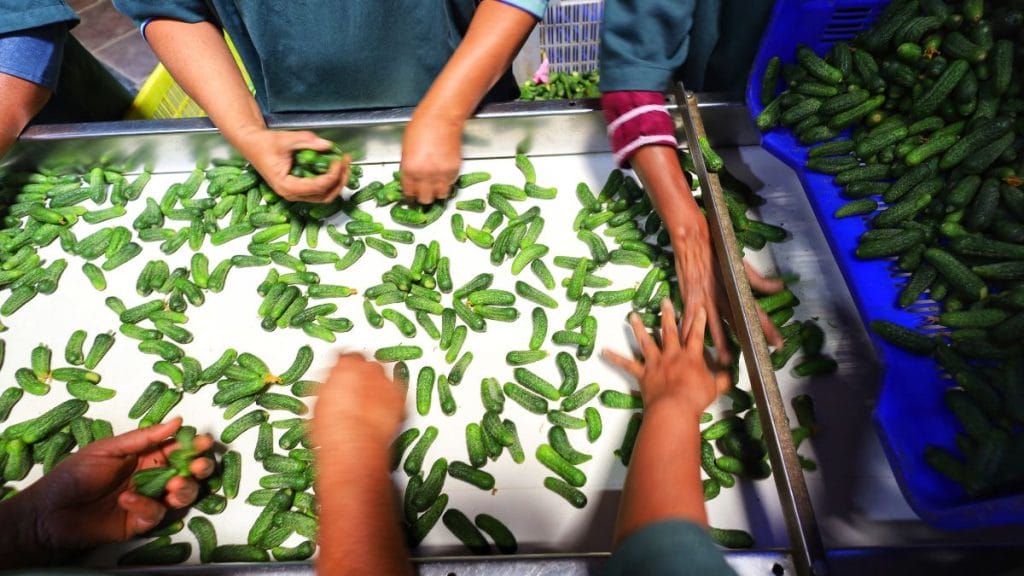
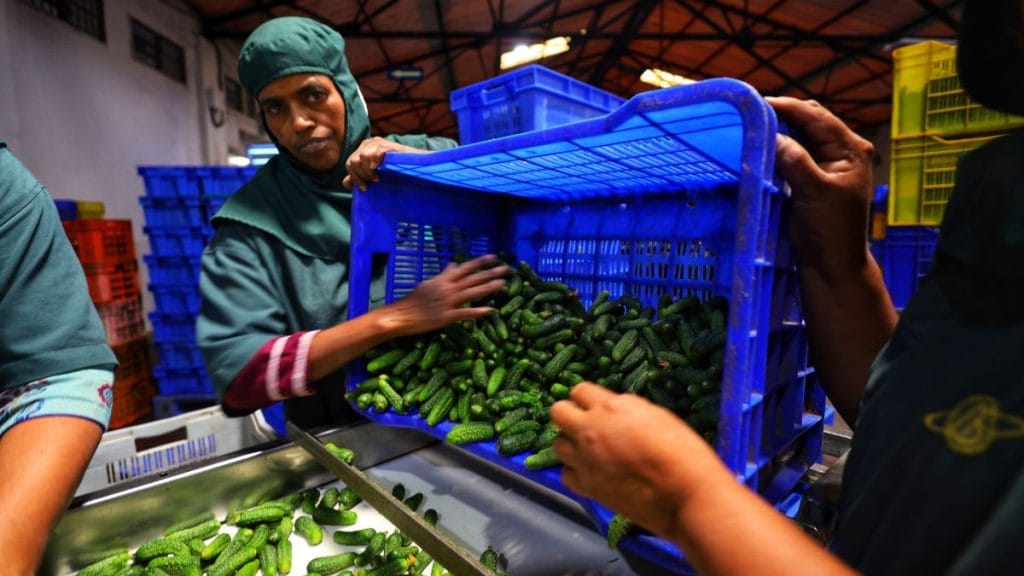
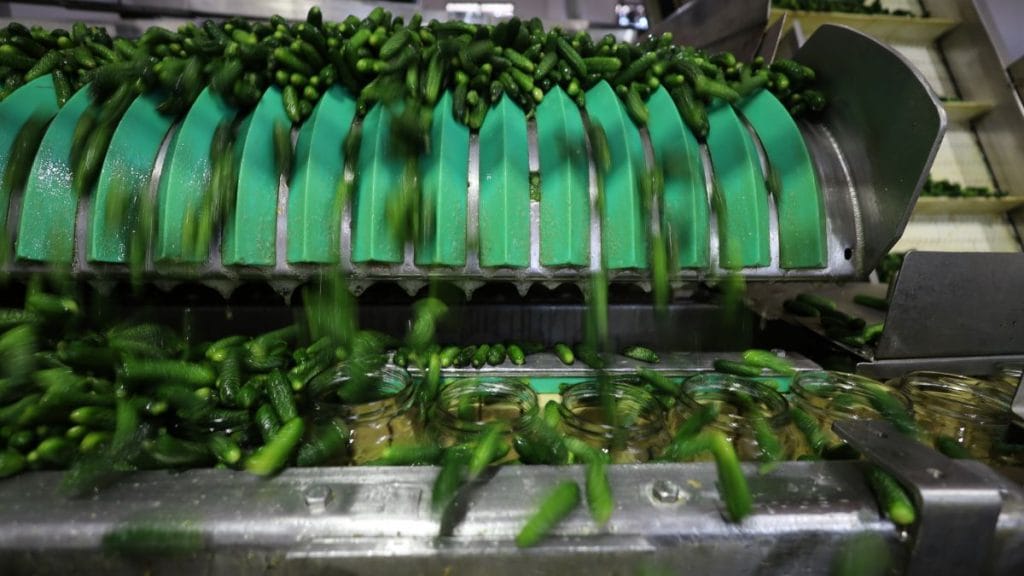
Inside the plant, workers line up at sorting tables wearing gloves, masks and blue hygiene caps. Crates of freshly harvested gherkins arrive from nearby farms and are emptied onto conveyor belts, the cucumbers rattling sharply against the metal.
Some batches pass through optical scanners — machines developed in Bengaluru that detect diseased or damaged produce. Much of the work, however, is still done by hand.
“We have to be very careful about the end product. There can be lawsuits,” said Vinod.
Rows of women sort the cucumbers by size before they move to washing and packing stations. Each sorting layer has around 35 workers, and preparing a single batch can take nearly an hour.
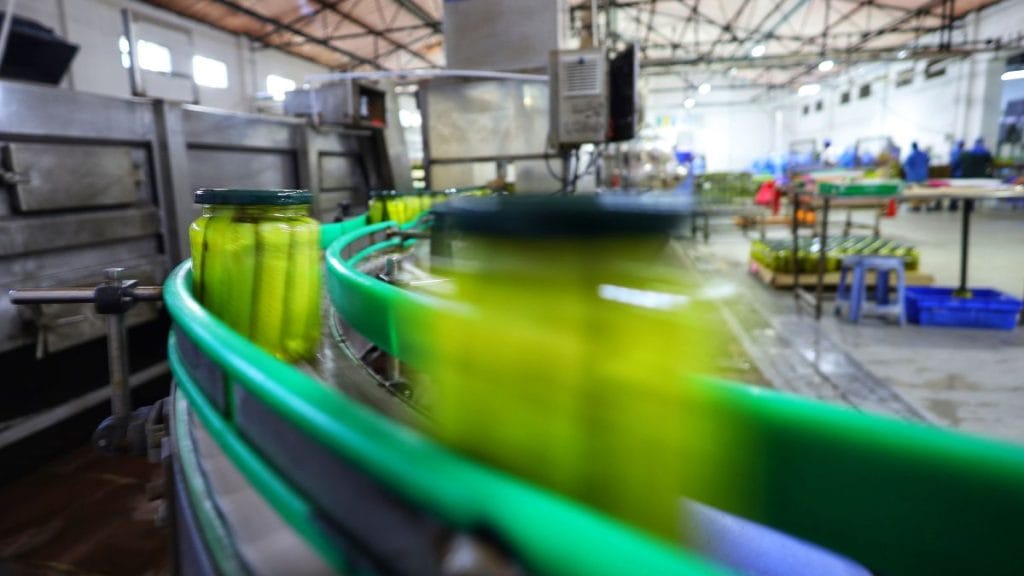
At the packing line, a worker quickly rearranges the cucumbers inside a glass jar, pressing them closer together so the lid can close properly. Too many gherkins and the jar will not seal; too few and the brine dilutes the flavour.
Once sorted, the produce moves across the facility in carts to different packing lines. Some jars are prepared for export markets such as Israel, including shipments for the importer Willi Food.
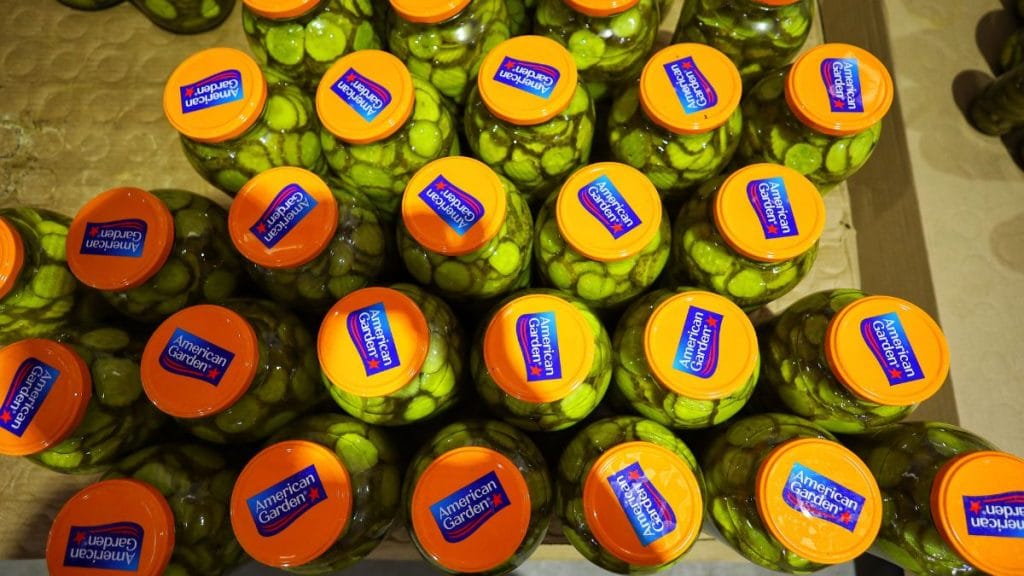
In another section, workers prepare a different cut for American sandwiches. Larger cucumbers are sliced into 35–45 mm pieces, packed into one-litre jars, filled with brine and sealed before an “American Garden” label is affixed.
At peak capacity, the plant processes up to 600 tonnes of gherkins.
Workers earn Rs 600-650 a day, along with basic employee benefits. The factory alone employs nearly 500 workers, making the gherkin industry a key source of employment in the surrounding villages.
“It is an elite crop, grown and packed by the poor,” Vinod said.
Also Read: Get ready for India’s first big fat creamy avocado crop in December. No longer ‘foreign’
Market shocks and an advantage
Most farmers in Hassan, around 190 km from Bengaluru, barely noticed the recent jolts in global trade. While textiles and fisheries bore the brunt, the gherkin industry had one advantage: time.
“For two months we had the stock ready but the buyers in the US were anticipating that the rates would go down,” said GM Vinod, owner of Bharathi Associates, one of the top gherkin processors in the region.
That pause gave exporters time to assess the impact of tariffs introduced after Donald Trump’s 2025 re-election.
Shipments to the United States, which account for roughly 25 per cent of India’s gherkin exports, dipped about 10 per cent in FY2026. But the effect was far less severe than feared. Officials say the state stepped in to soften the blow for processors.
“In case of fluctuations in US tariffs, the government provides a 25 per cent subsidy to processing units. However, there are currently no specific schemes for farmers,” said Dr K Dhanraj, Joint Director of Horticulture (Vegetables) in the Karnataka government.
Eventually tariffs eased to 18 per cent early this year, but the disruption had already pushed exporters to explore alternative markets.
Attention soon turned to Europe.
A trade agreement in January with the European Commission, which reduces tariffs on nearly 97 per cent of European exports, is expected to reshape agricultural trade flows. The deal could save businesses up to €4 billion annually in duties, and industry players say the gherkin sector stands to gain significantly.
Exporters estimate that shipments could grow by as much as 30 per cent if European demand expands.
“We are happy with the EU deal,” Vinod said. “But we don’t want to lose the US market. It remains one of our biggest. Europe will be an addition.”
At the same time, industry veterans warn that growth cannot continue indefinitely. Since 2020, production has stabilised as global demand reached a plateau.
“India currently produces according to market requirement,” Green Agro’s Devaiah said. “If production increases, the market may not be able to accommodate.”
How gherkins came to India
The gherkin may now be a global export crop, but its journey in India began in the late 1980s.
Entrepreneurs realised that the vegetable thrived in the warm climate and sandy red soils of southern India. The crop requires long daylight hours, controlled irrigation and frequent harvesting — conditions that are difficult and expensive to replicate in Europe or North America where labour costs are far higher.
The discovery created an opportunity.
Over time, exporters built an extensive supply chain across Karnataka, Tamil Nadu, Andhra Pradesh and Telangana, linking thousands of farmers with processing factories and international buyers.
In Hassan district, the crop arrived in 1996, when Bharathi Associates introduced gherkin cultivation to local farmers. At the time, growers were sceptical.
It looked like a cucumber, but nobody ate it. But the assured purchase agreements eventually convinced many to experiment with the crop. As profits became visible, more farmers joined.
Today growers in parts of Hassan estimate that gherkin cultivation has increased by nearly 30 per cent in the past five years.
Ironically, the vegetable was not entirely unfamiliar to India.
According to Green Agro’s Devaiah, traces of pickled cucumber consumption existed decades earlier. During his early research into the crop, he came across references in Rajasthan, where a version of pickled cucumber was once known as the “poor man’s pickle”.
“Nobody in India was consuming it anymore,” Devaiah said. “Over time it vanished.” Till its resurgence in the ‘80s, but not in households.
The pickle India doesn’t eat
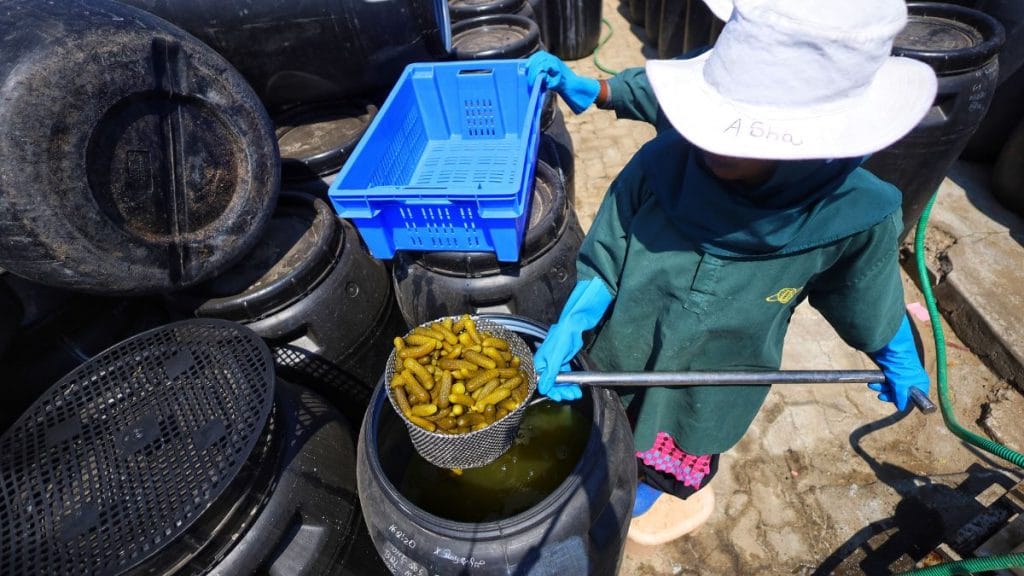
Despite producing millions of jars every year, gherkins remain largely absent from Indian kitchens. Most Indians are more familiar with mango pickle or lime achar.
Even on quick-commerce platforms, olives are far easier to find. A 360-gram jar of gherkins can sell online in India for around Rs 160, but the same produce often leaves the country for far less when exported in bulk.
The result is a strange paradox.
India has become one of the world’s most reliable suppliers of pickled cucumbers. Yet the vegetable is still almost invisible at home.
(Edited by Stela Dey)