








Kanpur: Every election season brought a familiar slogan to this textile city—Make Kanpur Great Again. Until the early 2000s, candidates used to promise to revive dilapidated textile mills and return the city to its former glory.
At one point, Kanpur was even known as the “Manchester of the East”—a city that spearheaded the country’s industrial revolution. And the textile mills were the crown jewel, employing thousands of workers and churning out everything from woollen blankets to bed sheets. Then came a potent and deadly mix of militant trade unionism, government mismanagement and failure to modernise. The city’s downfall was baked into the intoxicating slogans and heady red flags that fluttered across Kanpur in the 1970s.
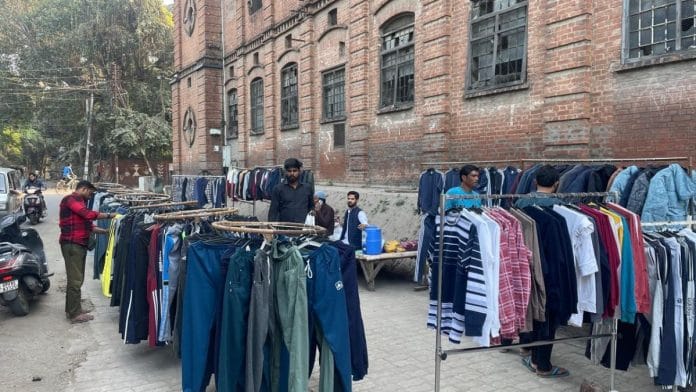
Today, those iconic mills still sit empty on prime real estate, a backdrop for Bollywood crime movies. They’re a sorry postcard for a city unable to reinvent itself.
Finally, India’s tryst with old Independence-era labour codes—which allowed trade unions in Kanpur to flourish—is finally tearing. The government has made it harder for workers to go on strike, easier for firms to layoff workers and weakened unions’ bargaining power. Business owners say it has come too late and India has paid a heavy price for its love affair with knee-jerk trade unionism and glorification of strikes.
Kanpur is still such an indelible metaphor for how workers’ strikes can ring the death knell for an industry in the Indian mind that it came up again during the recent gig workers’ strike.
“Mill owners were so haggled by the unions that they couldn’t really run the mill peacefully. There have been cases where the managers were also killed in the strike,” said RK Agarwal, the Chairman of Indian Industries Association (IIA) Kanpur, who grew up in the city. “The factory was at stake all the time because they [union workers] would burn anything that they wanted to.”
The same mills that shaped the city’s economy and politics are today silent ruins. What began as genuine worker-driven movements for fair wages and safety gradually morphed into high-stakes, sometimes violent confrontations tied to Communist party politics. Strikes, clashes and resistance to modernisation deepened losses, prompting nationalisation of the textile mills by Indira Gandhi in the 1970s—that death-choke masquerading as a magic pill.
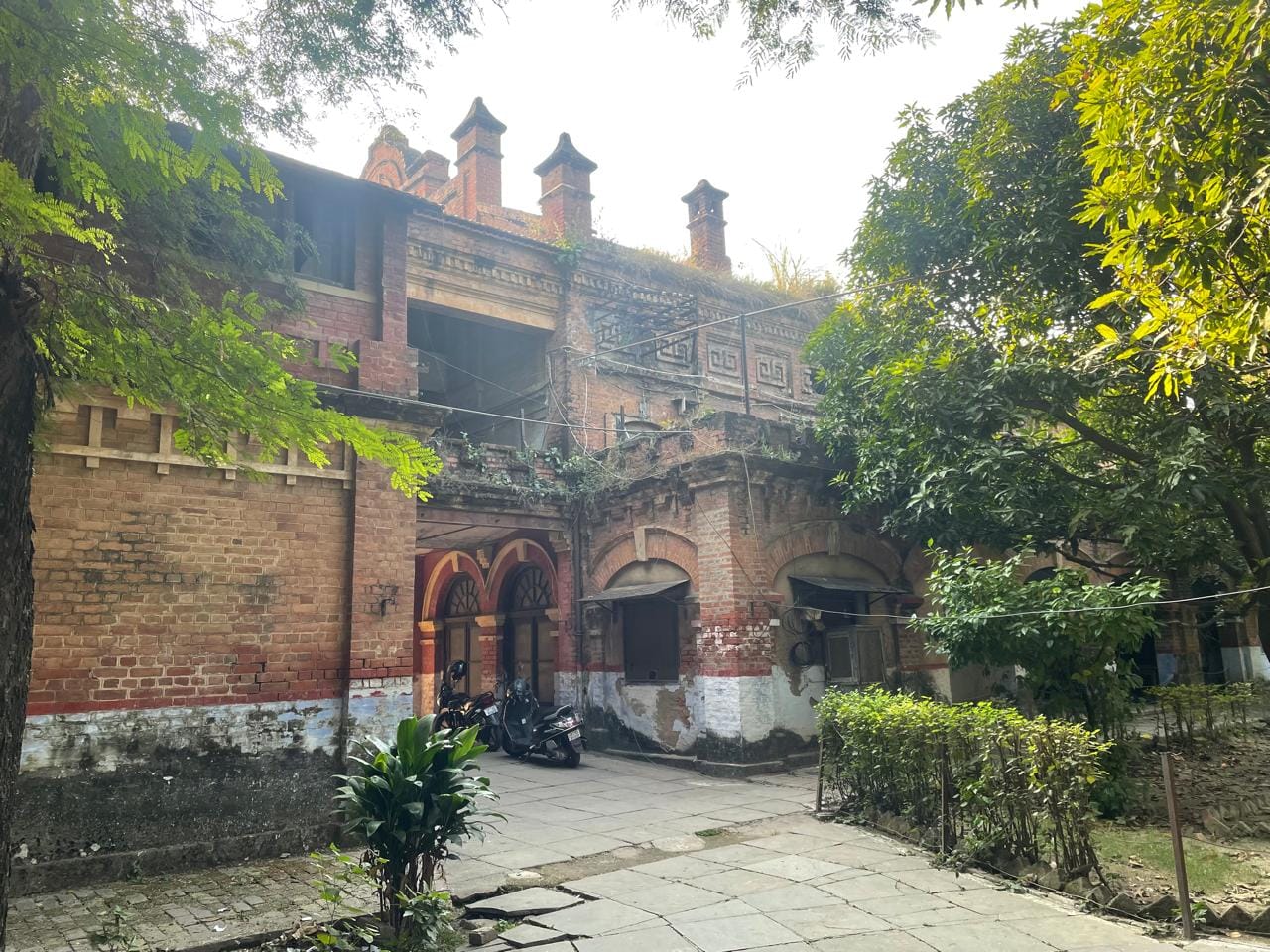
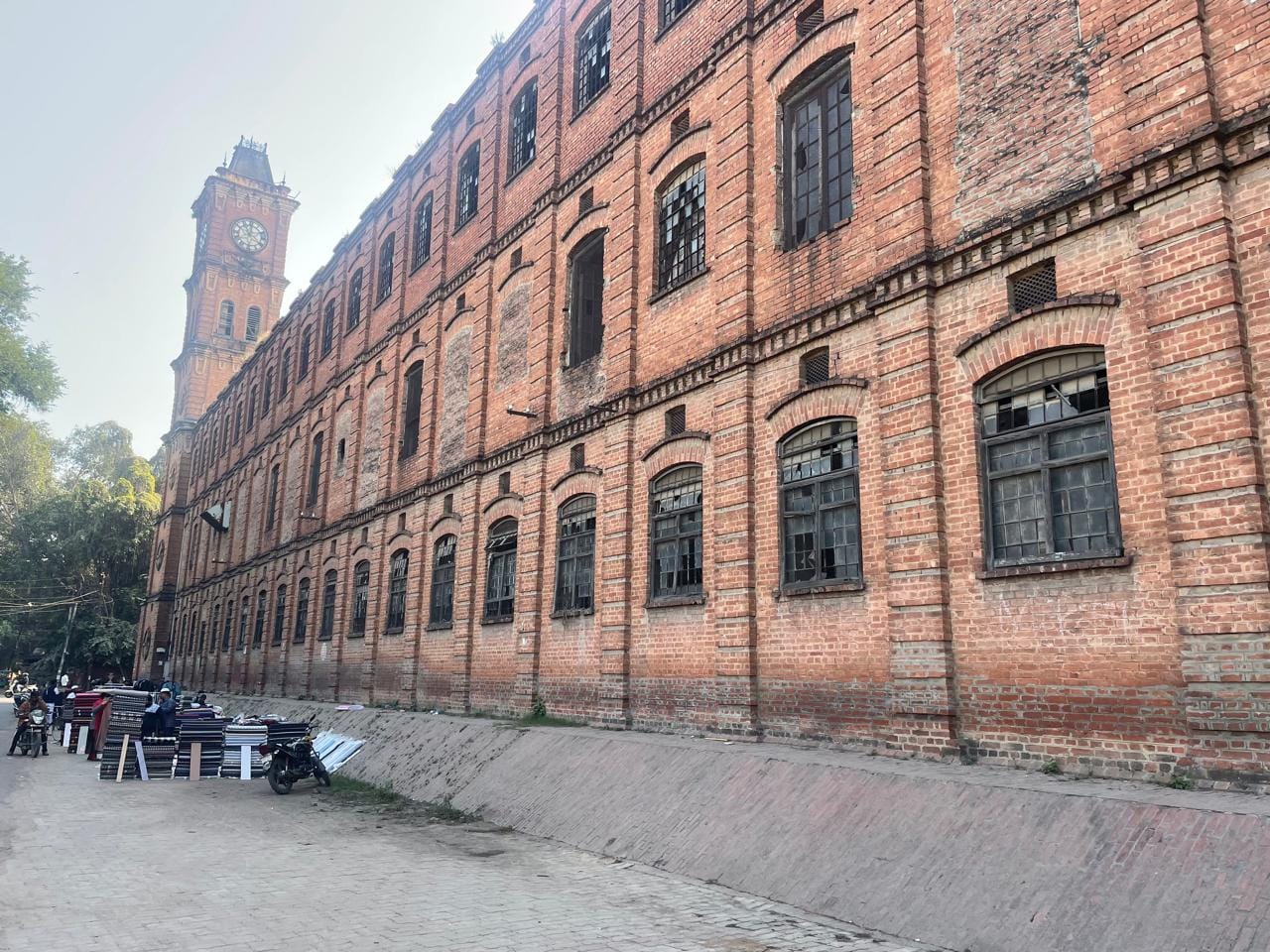
But government takeover only slowed the collapse. By the early 1990s, most mills had downed shutters, leaving behind unemployed workers, unpaid dues and crumbling complexes like Lal Imli—symbols of a city still living with the consequences of its industrial unravelling.
“The irony of it is that the modernisation of the textile industry, leading to rapid fragmentation of the fabric-making processes, actually sounded the death knell for Kanpur’s industry,” said AK Bhattacharya, Editorial Director at Business Standard. “And the mills that had turned sick were nationalised, but there wasn’t much effort at reviving them. Which made them even more sick.”
Also read: Unions are getting a boost in Bengaluru tech industry. Byju’s layoffs was a catalyst
Early unions
Kanpur had been a hotbed for trade unions since the early 1900s, when the city’s infamous mills—Elgin, Muir, Lal Imli, Swadeshi Cotton and JK Cotton—attracted tens of thousands of labourers from eastern Uttar Pradesh, Bihar and West Bengal.
“The city was famous across India and the world mainly for two reasons—industry and workers’ movements,” said Sukhdev Mishra, a former labour union leader and senior member of Bharatiya Mazdoor Sangh (BMS), the labour wing of the Rashtriya Swayamsevak Sangh. “These two were interconnected. You cannot separate one from the other.”
Long shifts, little job security, rampant wage deductions and lack of safety norms produced the earliest forms of collective action—committees inside workers’ bastis, intermediaries coordinating with supervisors.
In 1919, the city witnessed its first strike. Chitra Joshi, author of Lost Worlds: Indian Labour and Its Forgotten Histories, wrote that although prices of goods were rising since the outbreak of the First World War, increase in nominal wages did not follow.
The strike had a cascading effect. On Saturday, 22 November 1919, workers from Wollen Mills left their factory posts. Elgin Mills, Muir Mills and Victoria Mills followed soon after, joined by workers from the surrounding jute, flour and tanning factories. Over 20,000 workers went on strike.
“The strike continued for eight days. The strikers won substantial concessions: An increase in wages, bonus, and an improvement in working conditions,” wrote Joshi.
Over time, strikes and mill closures became the default backdrop in Kanpur. It was heady and nobody saw what it was doing to the industrial identity of the city.
Jawaharlal Nehru, then President of the Indian National Congress, even wrote a letter addressed to the mill workers of Kanpur.
The letter was first published in Pratap, a Hindi newspaper based in Kanpur, and its English translation in The Leader on 27 September 1937, a year that witnessed an upsurge of strikes over wage cuts, retrenchment and intensification of work.
“I am convinced that the greater the strength of the workers the better would they be able to improve their lot. But in what does this strength lie? It lies in organization,” wrote Nehru, encouraging workers to formalise their collective action. “The first thing, therefore, that the workers should do is to organize a mazdur sabha or a trade union.”
But he also warned that violent protests were not the answer, writing that people who believed that they could “terrorise and browbeat others” were living in a “fool’s paradise”. He also acknowledged the market forces in play.
“The workers should not forget that, after all, their wages are paid out of the profits made by the mills and factories. If the work in a mill is bad, production is less, then the margin of profit is also proportionately reduced,” wrote Nehru. “In such circumstances either the mill will have to close down or much of its burden will fall on the workers.”
His words turned out to be prophetic. That is precisely what happened.
Over time, unions became closely intertwined with local politics. CPI(M) rose to prominence both amongst worker movements and state politics. SM Banerjee—a trade union leader who had the party’s blessings—won the Lok Sabha seat as an independent candidate from Kanpur for four consecutive terms, from 1957 to 1971.
“The unions became so strong that outside every mill you would see a red flag,” said RK Agarwal, referring to CPI(M)’s flag featuring a crossed hammer and sickle symbol against a red backdrop. “For every small thing, workers would go on strike or stop working.”
Also read: Zomato to Zepto—gig work doesn’t need a ban, it needs a safety floor
Striking for rights turn violent
Not everyone agrees on who is to blame for Kanpur’s decline. There is, after all, a smorgasbord to pick from —nationalisation, chronic strikes, power looms. Even RSS-backed trade unions don’t rush to blame the striking workers of the 1970s and the 1980s.
Sukhdev Mishra doesn’t agree with today’s crop of Kanpur business owners, like Agarwal, who say that workers went on strike for ‘small’ issues like demanding more bonuses, holidays and superior, terra-cotton uniforms.
“Majority of the workers’ demands were economic and wage-related,” said Mishra, adding that torchlight processions, demonstrations, sit-ins and hunger strikes were common occurrences across almost every mill.
The early union leaders were big names in Kanpur. People such as Surya Prasad Awasthi—of the Kanpur Mazdoor Sabha—are remembered as being ‘clean image’ leaders by today’s retired mill workers.
“They sat with management, presented workers’ problems, negotiated genuinely. Their aim was not to shut down the entire organisation,” said Rajendra Prasad Sharma, 68, who worked as a supervisor in the spinning department of National Textile Corporation Ltd.’s Muir Mill from 1983 till his retirement in 2017.
From the first recorded strike in 1919 through the 1930s and 1940s, protests rarely turned violent. Workers staged walkouts and peaceful sit-ins, but unions were never characterised as being militant.
But from the 1950s onwards, agitations turned violent. Things got ugly. And, in many ways, it was the beginning of the end for Kanpur industry.
In 1977, twelve people were killed by the police at a protest over deferred wages at Swadeshi Cotton Mill. Thousands of workers surrounded the factory and held the management hostage. The strike eventually prompted the state government to pass the Uttar Pradesh Timely Payment of Wages Act 1978.
“The strike was repressed through brutal police action, killing several workers. Repression created a wave of sympathy for the strikers through the city, and organisations in support of the Swadeshi workers came up in neighbourhoods and factories,” wrote Chitra Joshi, in her book Lost Worlds: Indian Labour and Its Forgotten Histories.
The incident was even debated in parliament, where Hamida Habibullah—a Member of the Rajya Sabha representing Uttar Pradesh—highlighted that workers’ families “must have been starving” because of non-payment of wages.
Several other protests followed across Kanpur’s mills in the late 1970s and early 1980s. Some were less disruptive, like at Triveni Metal Tubes, where workers were thrown out onto the street through an ‘illegal lockout’. The management had decided to close down the factory without giving any notice or compensation to the workers.
“We led a protest where all employees pasted currency notes on their mouths as a symbolic demonstration,” said Mishra, adding that the largely peaceful protest received major newspaper coverage at the time
But the largest, most prominent and disruptive protest—“Rail Roko”— took place in 1989, years after the mills were nationalised and performing poorly. The KK Pandey Committee, set up to implement new textile policies, recommended changes to wages and workloads to revive the dying sector.
“The recommendation was for workers to run six looms instead of four. The logic was that if production increased, the mills would survive. Workers refused to run six looms,” said Mishra, whose own organisation—BMS—took part in the protest along with other unions.
Thousands of workers occupied railway tracks and halted the city’s traffic in protest of the new policy. The “Rail Roko” protest brought the Delhi, Lucknow and Kolkata routes to a halt—all key railway arteries. Workers demanded that the cabinet ministers come to the tracks to negotiate, refusing to go visit government offices.
“Management wanted to innovate the machines. But local politicians didn’t tell the workers what the benefits were. They only told the workers about the losses,” said Santosh Kumar, a security guard who joined one of Kanpur’s mills in 1984 and witnessed the agitation.
After close to six days of protest, the government was compelled to withdraw the implementation of the KK Pandey Committee recommendations, also known as the Pandey award. CPI(M) leader Subhashini Ali, who was at the forefront of worker-led demonstrations.
Amid a sea of reg and union flags, Ali led worker marches throughout the 1970s and 80s. Dressed in plain sarees, she would go door-to-door and speak to mill workers in their bastis—where she witnessed their poor living conditions. Her role in the “Rail Roko” protest culminated in her election to the Lok Sabha from Kanpur in 1989. Till today, pro-business advocates point fingers at her as one of the key people responsible for the industry’s downfall. But Ali sees it differently.
“The industry had been sick for years and I am proud that we kept it alive for as long as we did,” Ali told ThePrint, adding that the Pandey Award would have deprived thousands of temporary workers of their jobs. “Power loom cloth was being sold on the pavement of the JK Cotton Mills for half the price of exactly the same quality polyester fabric produced in the mills. Even the JK Cotton workers were buying from the pavement.”
The “Rail Roko” protest was the final nail in the coffin for the already sputtering textile mill industry. One by one, mills started shutting down, including JK Cotton in May 1989, leaving its few thousands of employees jobless. In 1992, the five mills under National Textile Corporation Ltd. (NTC) came to a halt, with only a handful of security guards and staff being paid idle wages.
How Kanpur’s business spirit was killed
The city didn’t always look like today’s post-industrial, textile mill graveyard. In the late 19th and early 20th centuries, when the mills were under colonial control, they were busy churning out woollen blankets, bed sheets and uniforms for the British Army.
“Working at full capacity in 1915, one mill supplied 12.5 million yards (approximately 11.45 million metres) of uniform cloth, 13.25 million pairs of socks and gloves, 240,000 lbs (approximately 1,09,000 kg) of saddle felt and nearly 1.50 million garments for field and service clothing,” wrote SP Mehra, in his book Manchester of the East: The Rise and Fall of Industry in Kanpur.
Kanpur’s mills contributed significantly to the allied war effort during the First World War, which served as a ‘catalyst to industrial progress’ in the region. By 1918, Kanpur employed 28,413 daily workers. Of these, 10,695 workers were employed in the six cotton spinning and weaving mills, wrote Mehra.
After the Second World War and India’s Independence in 1947, military contracts plummeted. The mills then shifted their focus to the Indian consumer: School uniforms, shawls, towels and sarees. They also continued supplying goods—in much smaller volumes—to the Indian Army.
“Every mill had a different siren—some at 7 am, others at 6:30 am. That was how we would get up for school,” said RK Agarwal. “The roads would be filled with cycles, as workers headed to their respective mills.”
Kanpur was abuzz at that time. JK Electronics became one of the first licensed manufacturers of television sets in the city when Doordarshan started telecasts in 1959.
Dhirubhai Ambani would personally come to the city to conduct business deals; many of the city’s older businessmen remember that his visits drew much fanfare.
The city was way ahead of other industrial hubs. Agarwal recalls an incident after he graduated from IIT Kanpur in 1973 and joined Tata Motors in Pune.
“They laughed at me. They said Kanpur is such a big industrial area, why have you come to Pune,” he said, adding that this was the kind of image the city held at that time. “And the GDP of Kanpur was probably within the top seven of the country.”
But it didn’t last.
A few years later, Agarwal returned to a declining mill culture in Kanpur. Private mill owners were becoming disillusioned—by both the pro-labour laws and the lack of support from the local government, at the time dominated by CPI(M).
He alleged that many of the party’s leaders would take kickbacks from mill owners in exchange for ensuring no strikes take place.
“Ultimately, mill owners stopped investing in new technologies, instead drawing out funds to open plants in Surat, Ahmedabad and other places because they were so haggled by the unions. They couldn’t run their mills peacefully,” he said.
Agarwal recalled how JK Cotton had imported water jet technology for their mill but couldn’t use it because “workers created a ruckus”. The mill’s workers thought it would lead to retrenchment, while the owners explained the machines had been brought in to improve productivity.
“In this kind of situation, the industrialists cannot survive for too long. So, they naturally closed everything,” said Agarwal, nodding his head in disapproval. “Those machines were never opened for 15 years. They were just lying over there.”
Subhashini Ali disagreed vehemently with the blame being placed on the shoulders of the trade unions. Ali, whose own father had been a senior manager at New Victoria Mills, said that by the 1960s, closure and threat of closure was a reality for most mills.
“The main reason [for the closure of the mills] was that government policies encouraged the power loom sector, allowing them to work long hours for lower wages and exempting them from paying excise taxes,” said Ali.
According to her, after the owners made huge profits during the Second World War, they failed to upgrade the mills, machinery and product mix. “They continued to produce coarse cloth and cheap, printed saris for the huge rural hinterland market,” she said.
Also read: Nationalisation to privatisation—what SBI, LIC and Air India tell us about public sector policy
Bringing mills under national control
A cocktail of trade unionism, competition and newer, more profitable industries (like chemicals, power loom and cement) turned owners’ heads away from their flailing units. By the late 1960s and early 1970s, mills began incurring significant losses.
Then Prime Minister Indira Gandhi, to avoid the massive humanitarian and employment crisis, decided that the government would take over the management of these ‘sick’ units.
In 1968, the National Textile Corporation Ltd. (NTC) was incorporated to manage the affairs of these mills. But just managing the units wasn’t enough—a transfer of ownership to the government (or nationalisation) was required to control the assets and secure long-term investment for modernisation.
In 1974, the Sick Textile Undertakings (Nationalisation) Act was passed. It nationalised 103 sick textile mills across India, including several prominent ones in Kanpur. Seven years later, in 1981, the British India Corporation (BIC)—which owned the iconic Lal Imli and Elgin Mills—was also nationalised.
“They were run on a ‘no profit, no loss’ basis so that workers would continue to get employment, and unemployment would not rise,” said Rajendra Prasad Sharma, the former supervisor at NTC’s Muir Mill. “Government ownership meant job security and clear direction. So, labour leaders supported nationalisation.”
But it vacuumed out whatever entrepreneurial impulse was left.
Subhashini Ali led the movement that demanded the nationalisation and re-opening of New Victoria Mills, which was closed in the late 1960s.
“All the other unions opposed this call and condemned it as being unreasonable. Despite this, we were able to mobilise hundreds of Victoria Mills workers for a continuous jail bharo programme. Many of their wives were organised to court arrest,” said Ali. “I was with them and we went to jail for 15 days.”
Ultimately, then Uttar Pradesh Chief Minister Charan Singh—who Ali noted was a bitter opponent of trade unions—intervened and recommended the nationalisation of the mills.
But nationalisation didn’t change the fortunes of the mills either—units continued chugging along, with workers happy to receive their monthly pay cheques. “If the person who is operating the mills for profit can’t run it, what will NTC do,” said RK Agarwal, as he leaned back in his chair with folded arms.
Santosh Kumar, the now-retired security guard who joined an NTC mill in 1984, walked past the same sign outside his mill every day. It said “Muir Mill, National Textile Corporation, U.P. Limited.”
“That means, neither is it state owned, nor is it central owned. Neither is the law of the state applied here, nor is the law of the center applied,” he said, explaining the bureaucratic limbo that the unit found itself in.
BMS’ Sukhdev Mishra blames the government, family disputes and financial mismanagement. But as a union leader associated with the RSS, he also blamed Leftist trade unions for misleading workers by showing them ‘false dreams’.
“They pushed them toward wrong forms of agitation and carried out activities that ultimately led to mill closures—the consequences of which workers are still suffering today,” said Mishra.
Today, some of the city’s mills are slowly going through reclamation proceedings. In 2023, it was reported that mills owned by state-owned entities like UP Cooperative Spinning Mills Federation and UP State Textile Corporation Limited were in the process of being acquired. Since the units owed liabilities of close to Rs 3,000 crore, the state intended to allot land parcels to investors to settle the debt.
In October 2025, the historic Muir Mill was returned to the state government, after NTC failed to renew the lease term. But it remains to be seen whether the industrial heritage will be preserved, or some hybrid commercial zone emerges—much like Mumbai’s Lower Parel mill compounds, where fragments of history merge with offices, malls and luxury housing.
Life after mills
There is still life after textiles for Kanpur. Of late it has become a city of pan masala billionaires.
Kanpur may not have fully climbed back to the height of its economic zenith, but the city’s industrial areas offer a faint glimmer of hope. In Udyog Kunj, automotive and engineering firms line the dusty streets. Agarwal himself exports automotive components made from plastic.
“The city exports goods worth Rs 10,000 crore every year, out of which Rs 6,000 crore is from the leather industry,” said Agarwal, adding that leather saddles from Kanpur are popular around the world.
And then, there is IIT Kanpur.
The city can still bank on its “strong academic reservoir”, according to AK Bhattacharya. “You have a very strong IIT there. Duvvuri Subbarao (former RBI governor), Sanjay Malhotra (the current RBI Governor) and NR Narayana Murthy (founder of Infosys) are both from IIT Kanpur,” he said, before adding that the city could not embrace the services sector the same way that South Indian states did.
Also read: Nationalisation did not kill Air India, politics did. Tata’s challenge lies beyond fixing it
Who works at the mills now?
The most iconic mill in Kanpur—Lal Imli—is a shell of its former self. Broken windows reveal rusting machinery inside. Creepers and weeds have taken over sections of the red brick walls. No sounds of spinning machines and workplace chatter come out of the sprawling complex, which is empty save for a handful of security guards and office clerks.
But 67-year-old Rajesh Kumar remembers the hey days of the mill in the 1960s, when his father worked in the tailoring and embroidery department. At the time, Lal Imli was owned and operated by the British India Corporation Limited (BIC)—it was nationalised in 1981 and is now under the Ministry of Textiles.
“During the Indo-China War (1962), my father would bring clothes and blankets back home and work on stitching the buttons under candlelight,” said Kumar, adding that at the time, machines weren’t ubiquitous across the city’s mills.
Growing up in Makrawat Ganj, a nearby colony reserved for the mill’s employees, Kumar recalled how annual functions would be held in the complex. “All the officers would be involved, handing out prizes to the kids. Everything was provided by the company—including footballs and hockey equipment,” he said.
Kumar, who was educated at the Makrawat Ganj Boys School at the company’s expense, also worked at Lal Imli from 1978 till his retirement in 2018. He worked on the power looms, churning out fabric for suits and coats, earning Rs 250 for every 15 days of work.
“There were around 150 power looms units on the third floor of the factory. When they were all switched on, it felt like the entire ground was shaking beneath us,” said Kumar, dipping into his memories and chuckling at the images he unearthed.
He went on to occupy a number of positions at Lal Imli. In 1994, he was promoted to a clerk where he drew a salary of Rs 3,200 per month. “I handled daily attendance at the mill, then did accounting and inventory at the mill’s shop before being transferred to the head office in 2003,” said Kumar.
His last position was in business development, where he handled inquiries for Lal Imli’s goods from other companies. After his retirement, he continued living in the same colony with his wife. His two sons—one who works at a Kanpur court and another who is involved in Goa’s hospitality sector—didn’t follow in their father’s footsteps.
“They haven’t released our gratuity, so I am not vacating company housing,” said Kumar, in a matter-of-fact tone. But at Lal Imli’s gate, Vivek John—a clerk still employed at the mill—tells a different story.
“Every month, I cut the rent from their gratuity because they are not vacating. For some people, their entire gratuity amount has been cut,” said John, adding that retired workers value their colony housing more than gratuity.
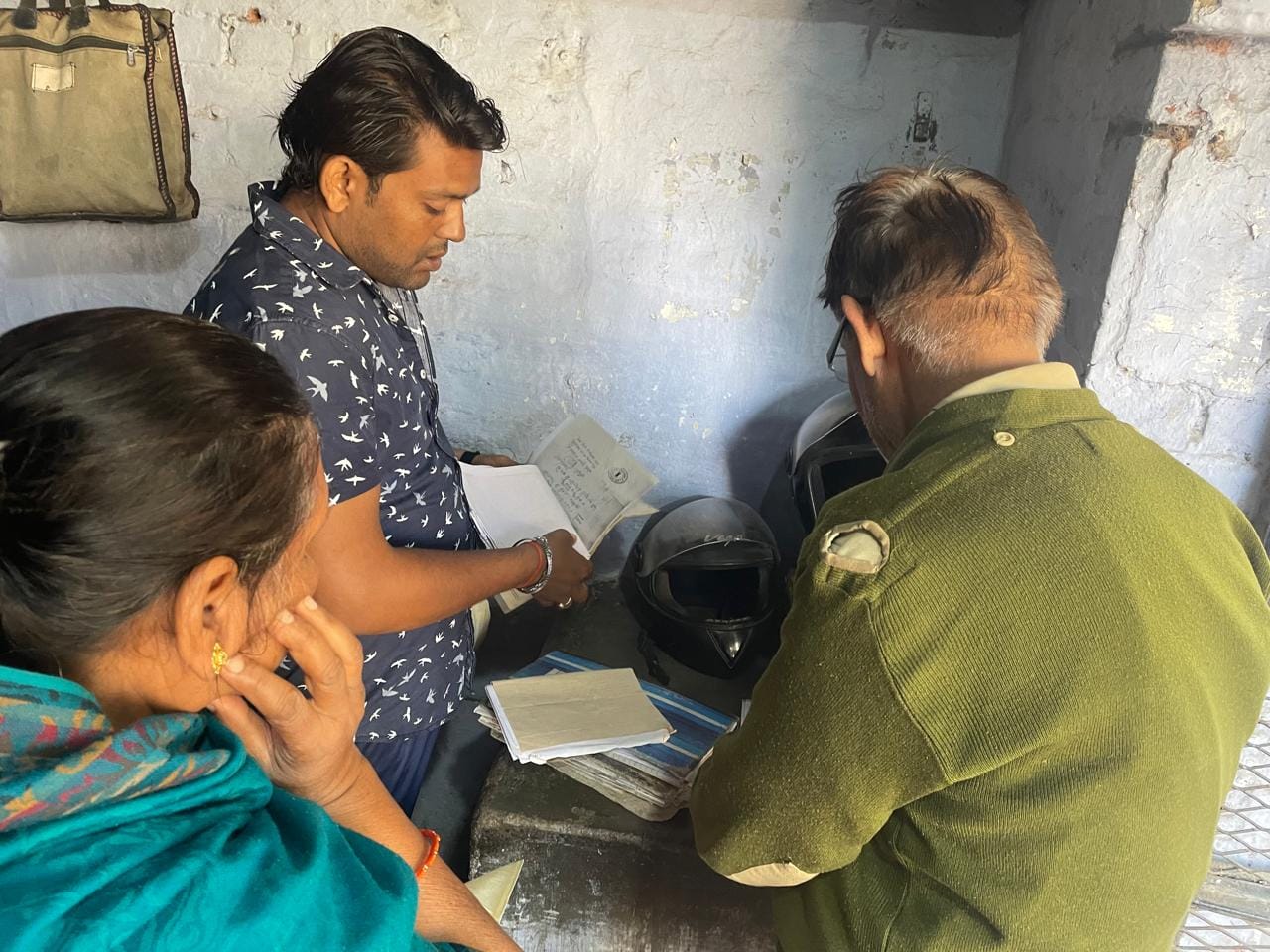
John is part of a skeleton crew at the government-owned mill, required to look after the premises, prevent break-ins and handle any ongoing clerical work. Despite facing several months of salary delays, he comes into work to oversee daily attendance, process salary payments (when funds are released) and handle matters related to retired workers.
He sits outside the mill gates with a few other clerks, sipping tea and talking about the bureaucratic standstill they feel trapped in. Salaries, he said, are released only when local politicians pressure the central government. Since Lal Imli no longer produces anything, staff payments are not treated as urgent.
As he spoke, a mother arrived with her son to the mill compound. She hands over bank statements, retirement letters and a death certificate to the security guard. Her husband had worked at the canteen in Lal Imli for years—she wanted to check if the family could receive any retirement benefits.
“She will get stuck in the whole process, they may never see their money—even if it is actually owed to them,” said John, stretching his legs as he made his way to the office inside the compound. “Just look at us. There was a time we got our salary after 26 months.”
(Edited by Theres Sudeep)