





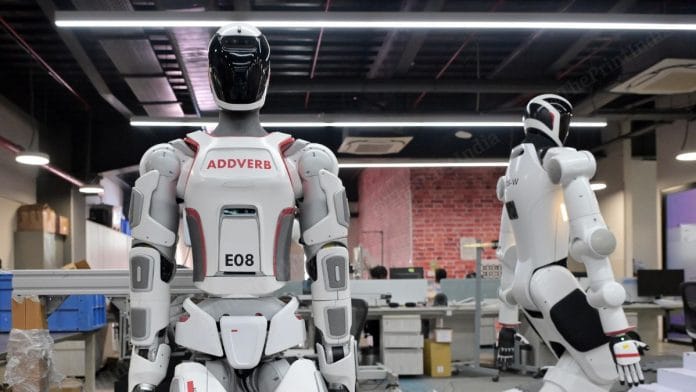



Noida/Greater Noida: After spending a week at the India AI Impact Summit 2026 — showcasing its moves, rolling back and forth, fetching items, and posing for selfies with curious visitors — Elixis-W is back home in Noida, at the headquarters of Addverb Technologies.
The highlight of the global exhibition, the Indian-made humanoid is at the centre of its maker Addverb’s ethos — make in India, make for the world. Their client list now includes Indian and international giants such as Amazon, Flipkart, ITC, Coca Cola, PepsiCo, and Procter and Gamble (P&G). Making their bots in India is not just a matter of pride for them, but it is also saving them time and money. It is considerably cheaper to manufacture robots from India, which invariably makes their products more affordable.
Founded in 2016, Addverb Technologies is the brainchild of four former Asian Paints engineers — Sangeet Kumar, Prateek Jain, Satish Kumar Shukla, and Bir Singh. After specialising in warehouse automation, the company is now creating a market for Indian collaborative robots (cobots), quadruped robots, and humanoids for the global market.
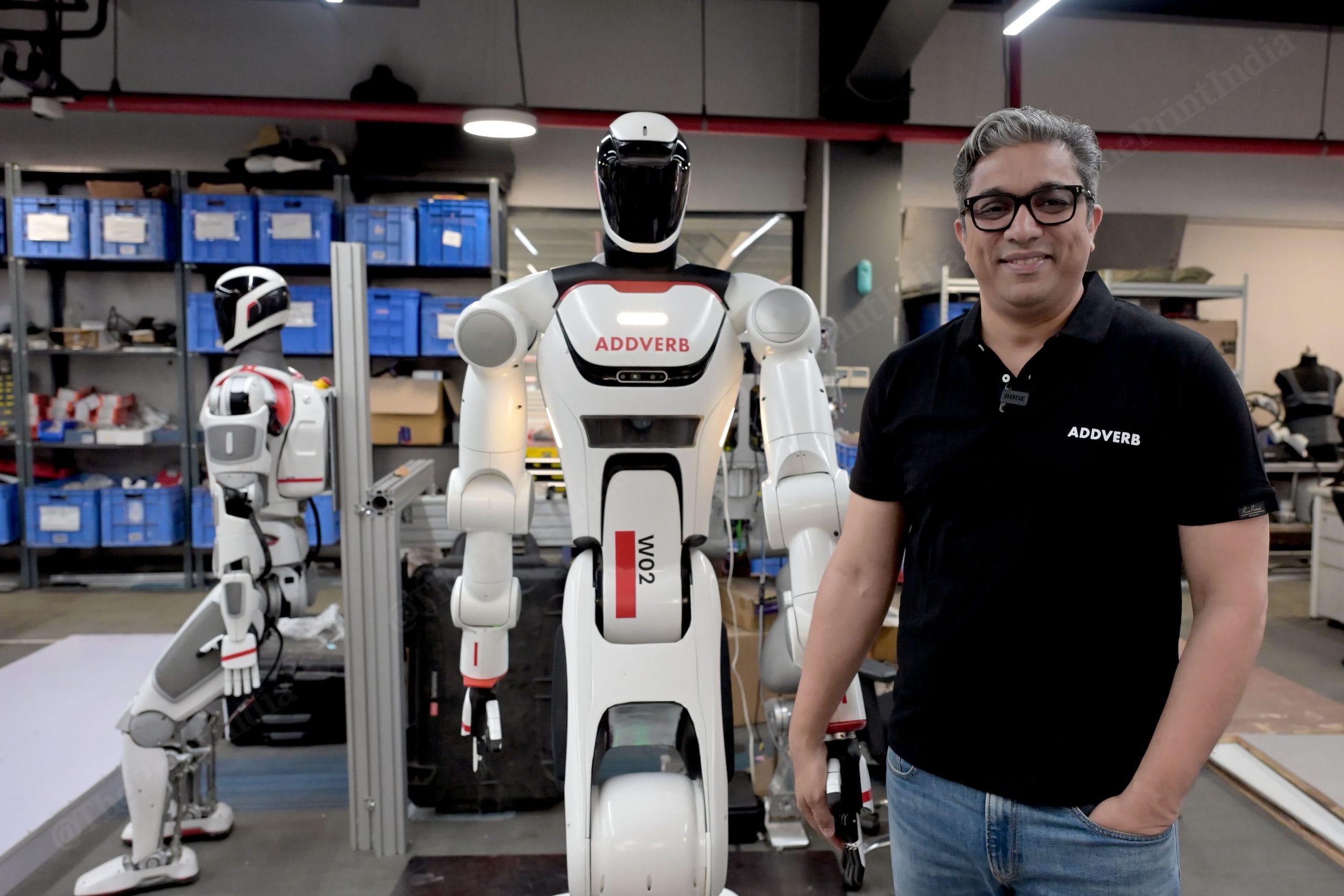
“We build all kinds of robots. In fact, we have 22 families of robots. There is no company in the world which has such a wide range of products as far as robotics is concerned,” Sangeet Kumar, CEO and co-founder at Addverb Technologies, said in a conversation with ThePrint at their headquarters in Greater Noida.
Encouraging innovation
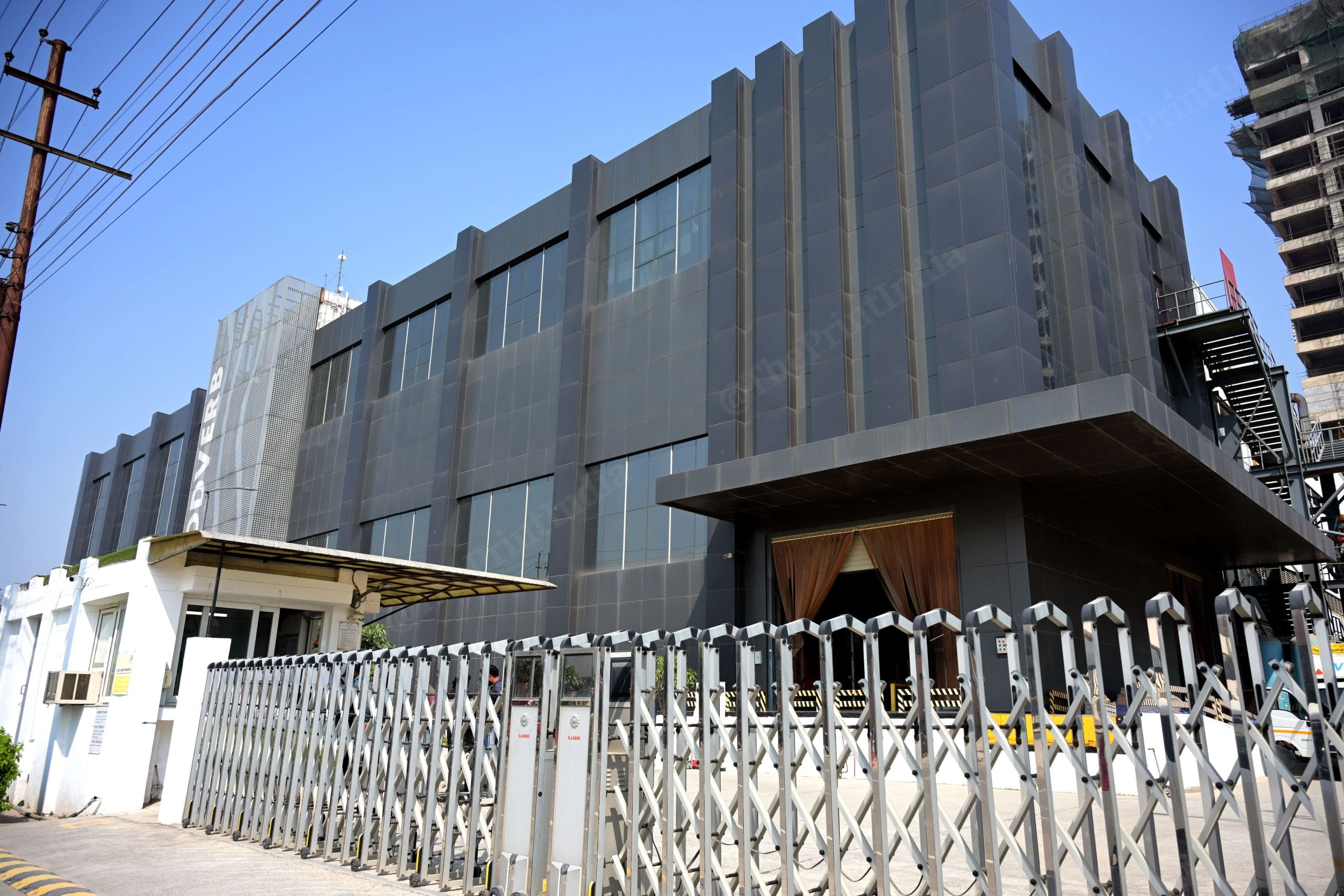
Spread across 2.5 acres in Noida Sector-156, Addverb Technologies’ ‘Bot Valley’ is a tech enthusiast’s dream come true. It looks like any other office space lined alongside its neighbours, in the middle of open lawns. But inside the drab-looking black building is where the magic happens.
The unique facility was inaugurated in 2021 for robot manufacturing, with the best-in-class electronics machine. Currently, it is equipped to manufacture up to 50,000 robots each year.
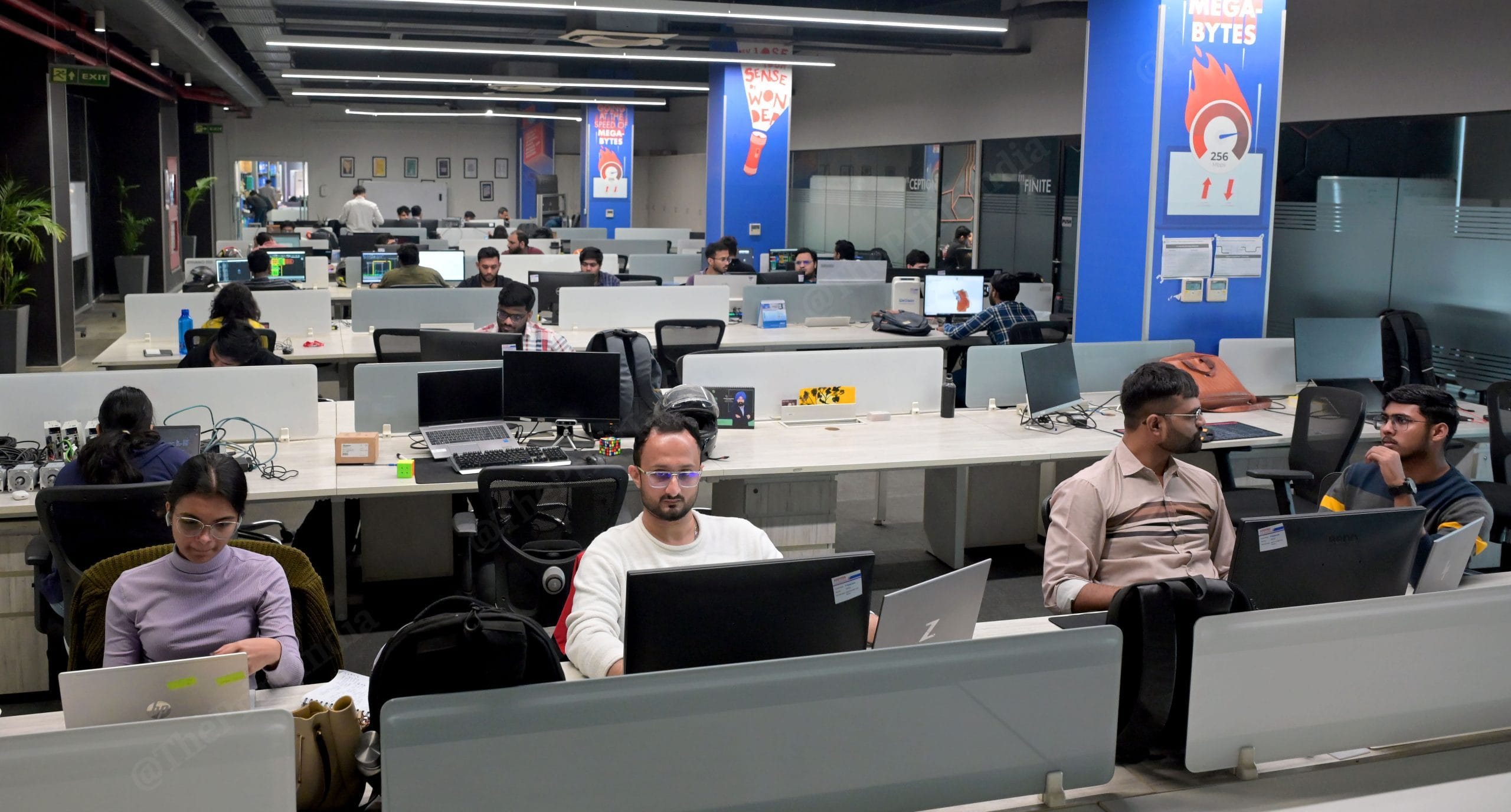
The shop floor of the facility is where all the action takes place. In the background, a large graffiti mural depicts ideas of innovation and the integration of humans and technology, as robots of all shapes and sizes move seamlessly, performing their assigned tasks.
The entire floor is abuzz with sounds of whirring, gliding, and beeping. Only a handful of engineers are supervising this largely automated space. Everything else, from carrying a heavy load to transportation and quality checks, is handled by robots.
“No one is here to take the other’s job. These robots are here to make jobs easier for humans,” said an engineer, as he remotely guided a quadruped — a robot dog.
Guiding ThePrint through their facility, Kumar said that the company is supplying robots to about 25 countries. The ultimate aim is to establish a presence in around 100 client countries in the next five years.
“The opportunity is huge in this segment. You don’t have enough people in developed markets to do the really hard, repetitive work in warehouses and factories. This means that they have no other [option] but to go for robotics,” Kumar said.
The sector is quickly gaining momentum among Indian companies. Apart from Addverb, GreyOrange, Unbox Robotics, and Gridbot Technologies are homegrown brands that use AI and robotics to provide automated services.
Colleagues-turned-business partners
The founders of Addverb Technologies call their alliance a “match made in heaven.” Kumar, Jain, Shukla, and Singh were colleagues at Asian Paints, when they first thought of developing a service for warehouse automation. Around 2016-17, when GST was being rolled out in India, it seemed like the right time to launch a service for industrial automation, adding to India’s industrial growth story.
“We used to work in the space of automation of large warehouses back at Asian Paints. That’s when we realised that there is a huge opportunity in this segment, not just in India but all over the world,” Kumar said.
Though initially doubted, the “fantastic four” quickly built something that gained the attention of friends and former colleagues. Their former boss at Asian Paints, Jalaj Dani, also became an investor and later moved on to become the chairperson of Addverb. Recently, the company also earned funding of around $130 million from Reliance Retail.
Kumar, fondly known as the ‘robot man’ of the company, is an engineer from IIT Kharagpur. His passion for all things robotics, AI, and the latest machine learning advancements from around the world guides him to push Addverb to break the glass ceiling with every new product.
He, along with Jain, who is an alumnus of IIT Bombay, have nearly two decades of experience in warehouse solutions. Singh, on the other hand, is the “heart of the company”, specialising in the field of product design, development, and solution engineering. He is a graduate from Jaipur’s Malaviya National Institute of Technology. Shukla has completed his engineering and gone on to get his Master’s in human resource management and labour resources from Tata Institute of Social Sciences (TISS). He brings years of experience from working in companies like Johnson & Johnson, and Mahindra and Mahindra.
Also read: Lucknow’s most fearless voice is 14. Dhruv Rathee, Kunal Kamra, police are hearing him
Products
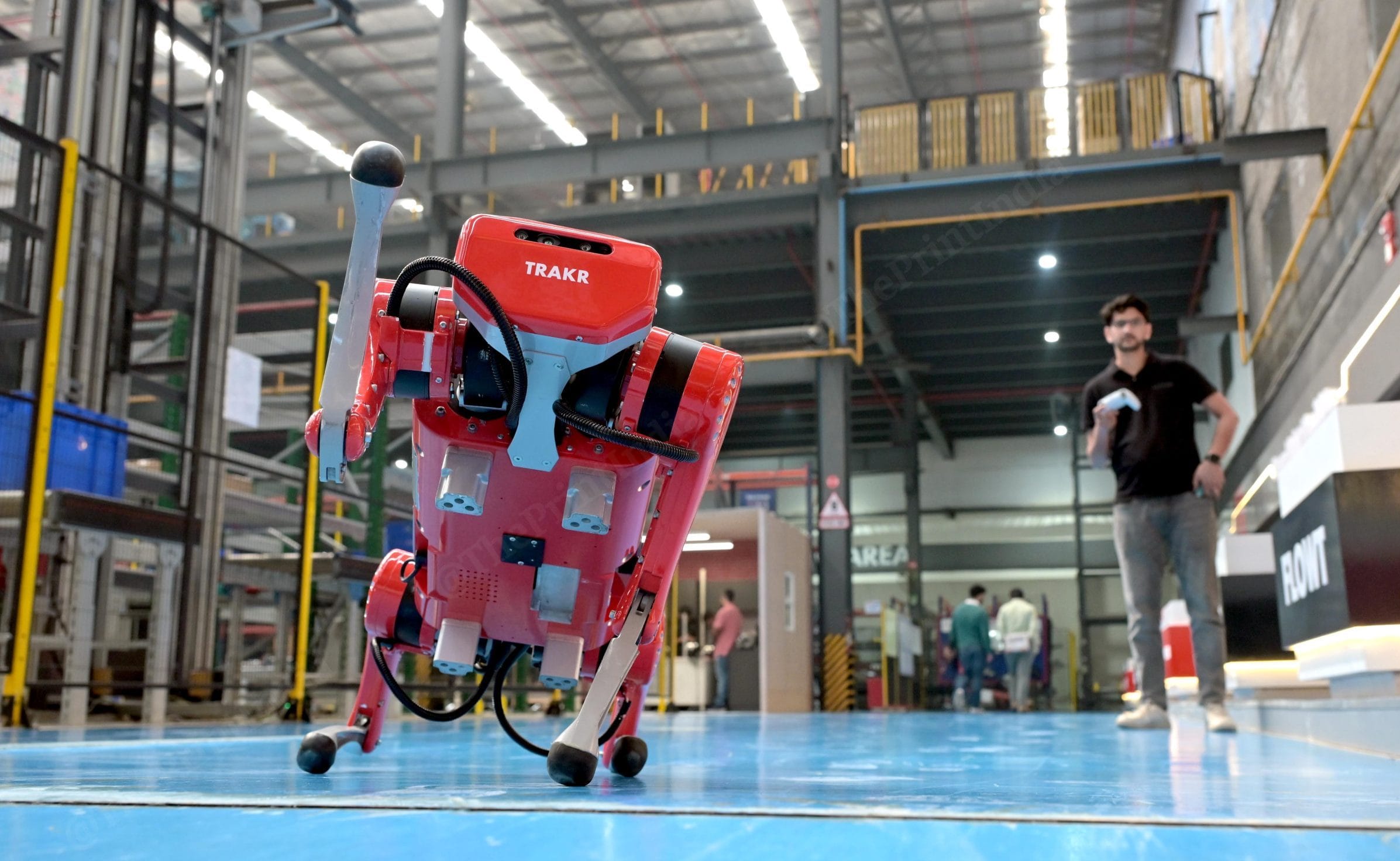
Trakr, the robot dog, runs and hops around the Addverb campus with a purpose. Occasionally, he also greets visitors on command.
Following the Galgotias University fiasco at the AI Impact Summit, where the institute wrongly claimed a Chinese-made robot dog as its own invention, quadrupeds have been in the spotlight. But Trakr is as Indian as it can get.
In fact, he even folds his metal arms in a ‘Namaste’ to greet the staff and visitors at the Addverb facility.
This quadruped by Addverb is designed for remote inspections and real-time data collection, and it is ideal for autonomous security patrols across oil and gas fields, warehouses, refineries, and other hard-to-reach sites. The company has also partnered with the Indian defence services to develop and supply versions of Trakr to improve surveillance.
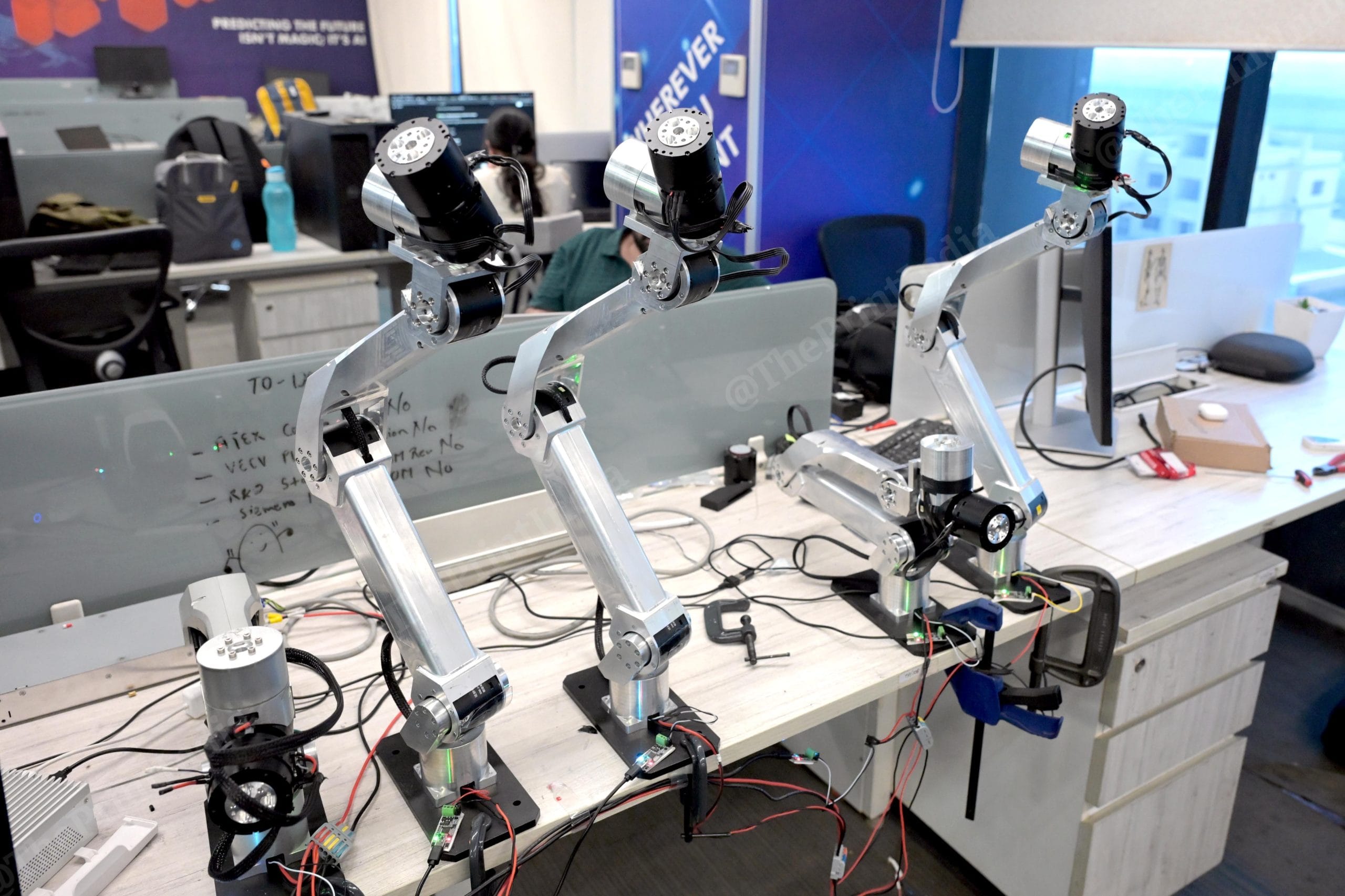
The company has also designed and supplies Syncro, a high-precision cobot built for close human-robot collaboration.
“In factories, labs and research environments, the Syncro cobot delivers smooth trajectory control, force and torque control, and developer-ready controls,” the company says on its website.
The star of the show is their Elixis humanoid range. It is designed as a general-purpose robot that can be utilised across a range of sectors, including healthcare, warehousing, and retail. These can take on repetitive and dangerous tasks, freeing the human workforce for more high-value work.
These robots are also flexible enough to suit each country’s specifications and certification needs.
Elixis is currently available in two models — wheeled and legged — both about 6 feet tall. Addverb is, however, experimenting with a 4-foot-tall version of the humanoid. They are also partnering with the Indian defence research arm, the Defence Research and Development Organisation (DRDO), to develop a version of the humanoid robot for their specific needs.
“In the coming months, we will continue our work around humanoids to improve their performance and use in various sectors. We are also working towards building a data factory, where our robots will be used for the collection and safekeeping of data,” Kumar said.
Also read: Unnao rape survivor now wants to study law, fight for those sexually assaulted
Global competition
The global market for robotics looks promising, and Indian players like Addverb are in for tough competition.
According to the Humanoid Robot Global Market Report 2024, the market for humanoid robots has expanded significantly in the last few years. The market grew from $2.44 billion in 2023 to $3.7 billion in 2024, reflecting a compound annual growth rate (CAGR) of 51.6 per cent.
Countries around the world are also pumping in resources and manpower to be ahead in this global race. China ran a dedicated ‘14th Five-Year Plan’ for the development of the robotics industry till 2025, to make the country a world leader in robotics technology and industrial development.
A budget of about $45.2 million was assigned to promote the development of key sectors, with targets including fundamental frontier technologies like the training of generative AI models.
Japan has also come up with its ‘New Robot Strategy’ to make the country the world’s number one robot innovation hub. They are investing heavily in AI and robot interventions for manufacturing, nursing and medical needs, and agriculture. Japan’s ‘Moonshot Research and Development Program’, launched in 2020, will run until 2050 with a budget of $440 million.
But India is ready to take on these countries. At present, Addverb is supplying robots to the US, Singapore, and parts of Europe.
“We compete with these countries, and we win many orders against them. We have reliable products, our software is much better, and above all these things, there is also a trust factor that is there,” Kumar said.
“Any product that comes from India is more trustworthy, and we are here to keep that trust alive.”
(Edited by Aamaan Alam Khan)