








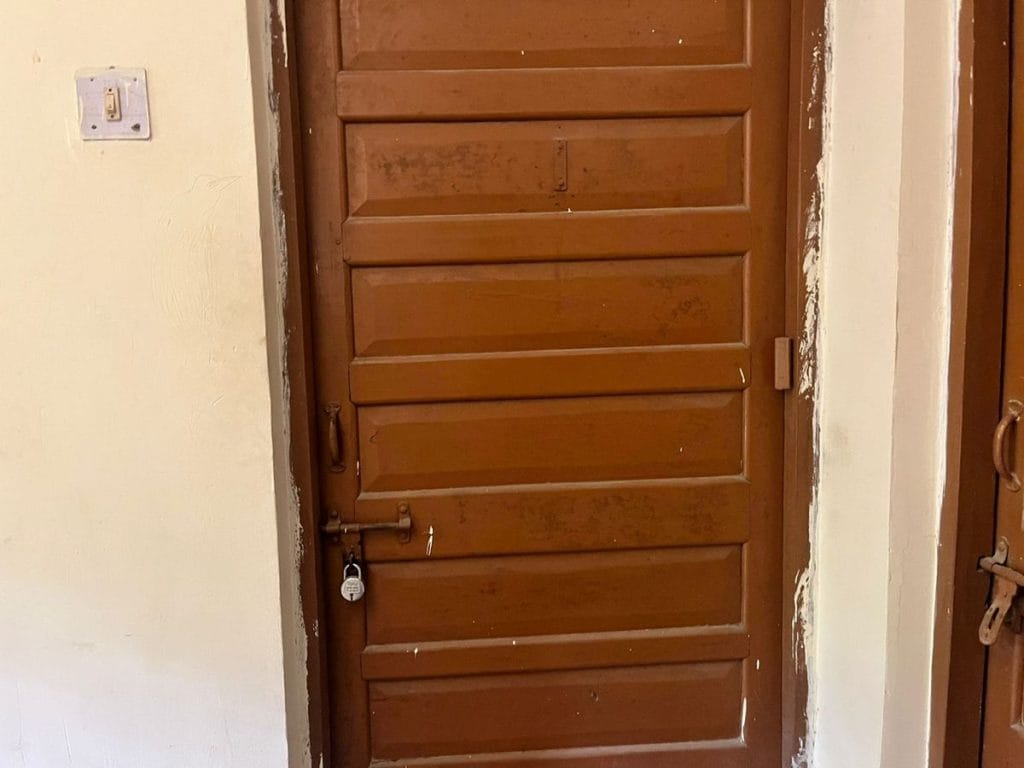
Varanasi: Four men, including professors from Banaras Hindu University, pushed desperately against a weary wooden door. Their shoulders slammed into it again and again, but the door was locked from inside, and the celebrated cardiothoracic surgeon Dr Tapan Kumar Lahiri did not respond to their calls.
The alarm was raised after the 86-year-old missed his daily milk run at the neighbourhood store for four days. Then came the final shove and the latch gave way. Inside the yellow-walled apartment, Lahiri lay on his bed, motionless. A Padma Shri awardee widely regarded as “Dr God”, the “Saint of BHU”, and the “people’s doctor”, he was barely breathing.
That day, Lahiri was stripped bare of all the accolades he had earned in his life. He could have been any other old, lonely man in the neighbourhood, losing a battle with advancing age.
“He was lying unconscious in bed. He had soiled himself and been like this for days. Uneaten food lay beside him, covered in fungus. His body was visibly frail from days without proper nourishment,” said Siddharth Chakraborty, a close relative of Lahiri.
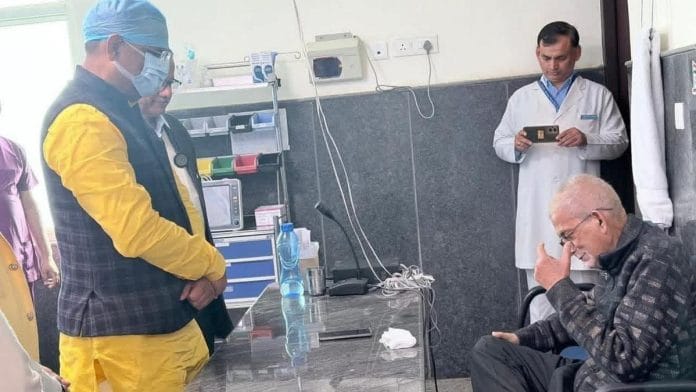
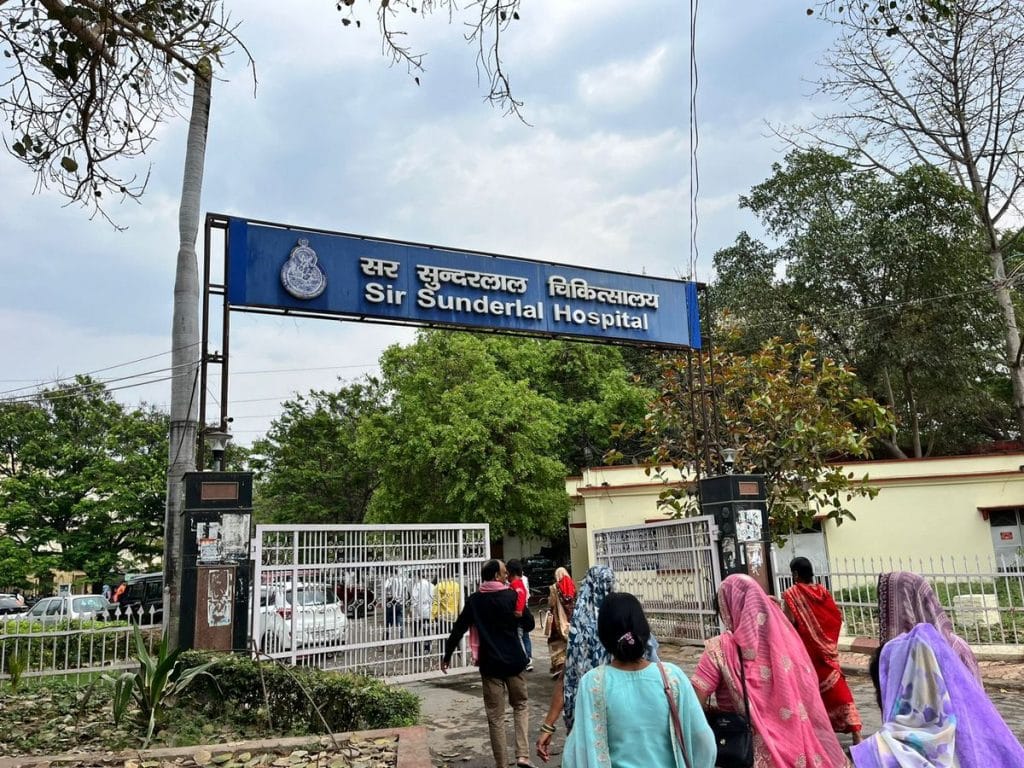
More than two months on, Lahiri is still under treatment in a room on the fifth floor of the super-speciality building at Sir Sunderlal Hospital, BHU, under constant watch. He has recently become a little more mobile but does not receive visitors. Two senior nurses and a dedicated attendant remain by his side round the clock, aware they are caring for not just a patient but a storied legacy that shaped generations of doctors.
“We are taking good care of him, he is comfortable. We are keeping a close watch on his health. His work has been an inspiration for all of us,” said Prof SN Sankhwar, director of the Institute of Medical Sciences, BHU.
Also Read: A rebellious Hoshiarpur cobbler that PhD students love to cite
The monk of medicine
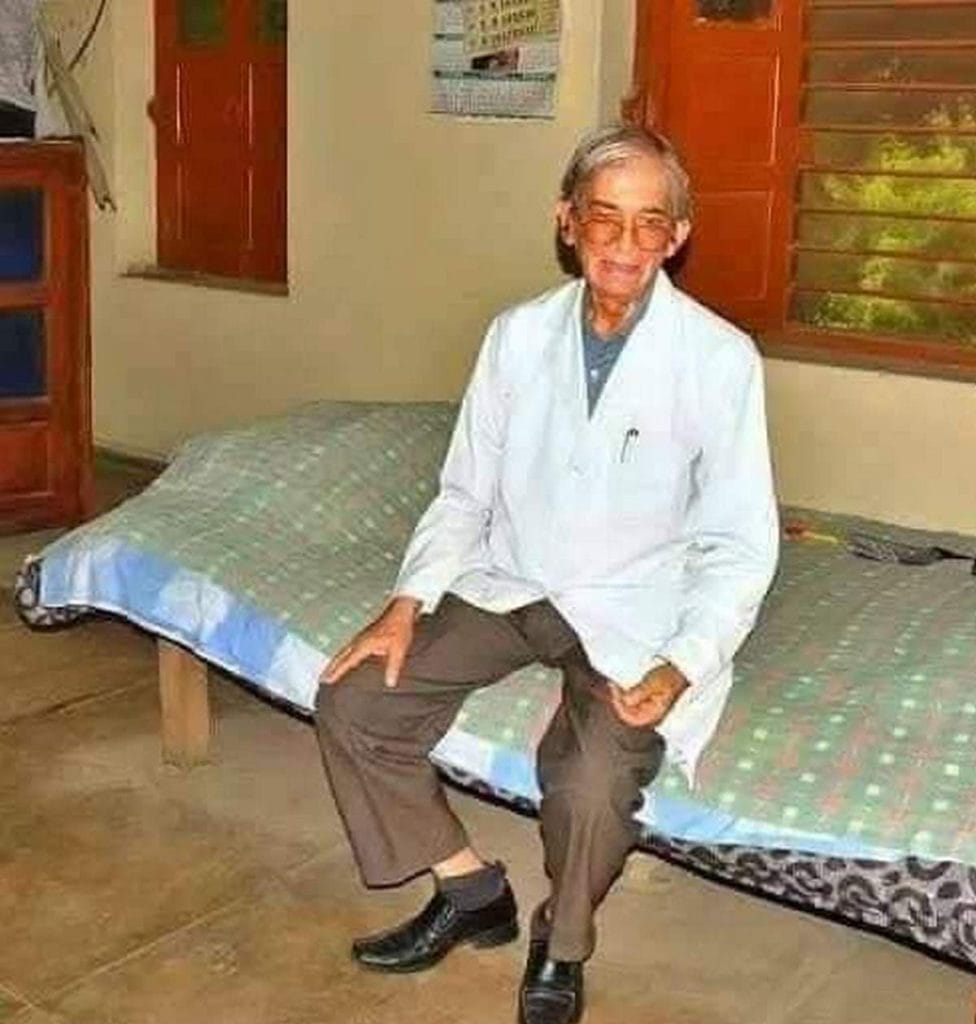
Tapan Kumar Lahiri led a spartan life. He did not own a phone or a vehicle, lived alone, and managed every household chore himself, from cooking to washing his clothes. Even into his 80s, he walked nearly 2 kilometres to the hospital every day. His decades-old clothes, ankle-length pants, and a black umbrella became his identity.
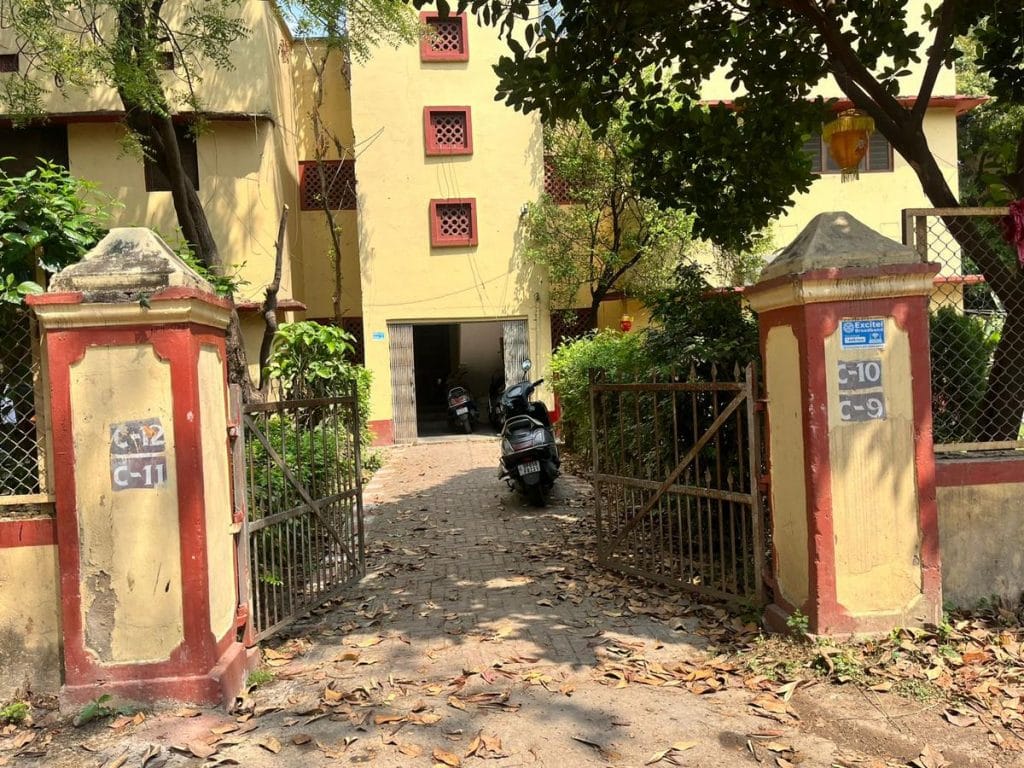
Chakraborty said Lahiri barely used the space he had in his modest 2-BHK flat in a building of four units with a shared terrace and garden.
“There were two beds, one old TV that stopped working a long time ago, and one almirah. Most of the house was empty. Earlier, when his mother was alive, he used to take care of her, but after her death he completely started living alone,” he added.
Though he formally retired in 2003, Lahiri continued to treat patients for over two decades under special permission from BHU. Born in Kolkata and trained at AIIMS-New Delhi, he was a Fellow of the Royal College of Surgeons (FRCS) and held several key positions after joining the university in 1974, including Head of the Department of Cardiothoracic Surgery. Colleagues say he also trained in the United States under the renowned cardiothoracic surgeon Denton Cooley.
To many of his colleagues and students, he was a brilliant scholar and a rigorous teacher—with at least 39 journal articles to his name, the last published as recently as 2021.
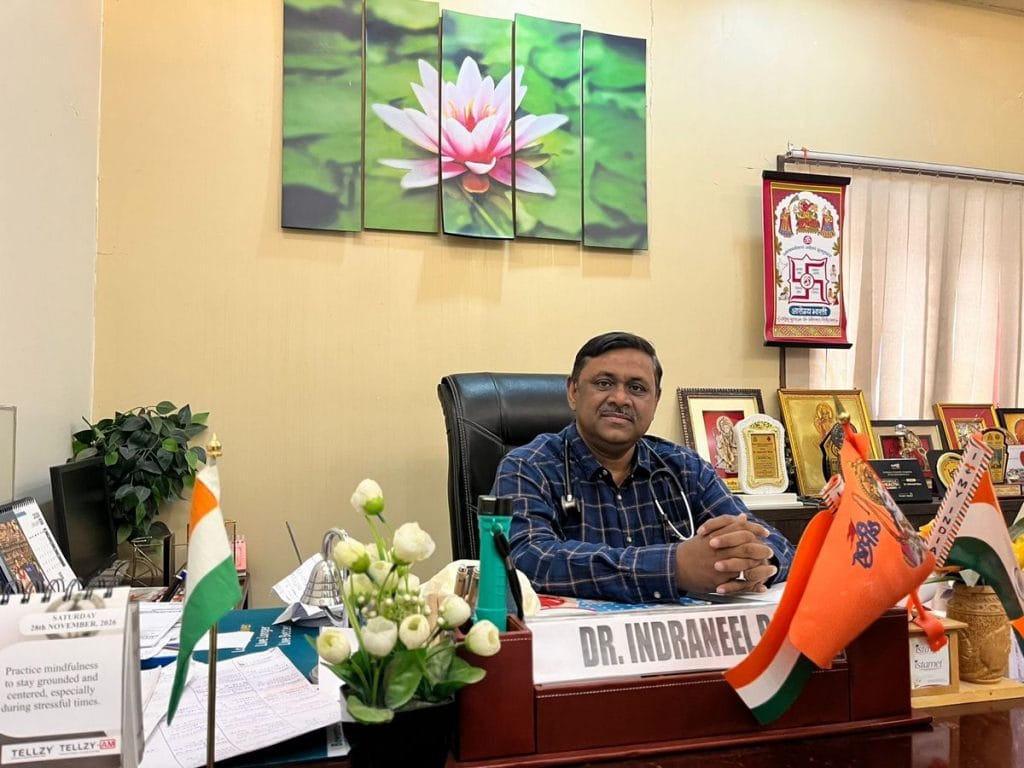
“He is not just a doctor but an institution who has motivated many. He was a great teacher and a favourite among patients,” said Dr Indraneel Basu, a former student and neighbour. “He never married because he wanted to serve people. Students and patients were his world.”
About 15-20 years ago, a district magistrate from a neighbouring district walked straight into the OPD, skipping the line. Dr Lahiri shouted at him, ‘You Banarasi buffoon, you want special treatment everywhere?’
-Dr Indraneel Basu, a former student and neighbour
But some colleagues say he could be difficult and stern as an administrator. He did not suffer fools or authority gladly, and his open distrust of political leaders and officials was legendary. He wasn’t fond of publicity and often rebuffed those who sought to lionise him.
“Hindustan Times once invited him to a conclave to honour him,” Basu recalled. “He agreed at first, but later refused to go. He used to say that you can’t trust the media.”
While nearly everyone at BHU has a ‘Dr Lahiri story’, it was the Padma Shri that catapulted him into the national spotlight. Once ‘discovered’, his disregard for material wealth took on legendary status. Today, countless versions of his life float across the internet—part folklore, part speculation. Lahiri himself never spoke to the media to confirm or deny them. In some ways, he is still a mystery.
Favourites of folklore
The mythology that surrounds Lahiri is larger than him. And it is only growing bigger. Even though he has been in hospital since January, the rumours haven’t left his side. Admirers outside BHU are circulating stories that Lahiri is still somehow attending to patients from his room.
“I have been telling people to stop spreading this misinformation. Dr Lahiri is [severely unwell] and you are saying he is looking after patients. That’s disrespectful and wrong,” said a senior doctor who used to work with Lahiri and goes to see him occasionally.
Lahiri has no social media footprint, yet since his health declined, a flurry of stories about him has been doing the rounds on every platform, from X to LinkedIn. These accounts often have a whiff of the apocryphal, though they capture the essence of his reputation.
It is false information [that he gives away his monthly pension]. He doesn’t get the pension because he opted for the CPF scheme
-Dr AN Gangopadhyay, retired senior paediatrician
One popular anecdote revolves around his 2016 Padma Shri. It recounts that Lahiri was hesitant to travel to Delhi for the Rashtrapati Bhavan ceremony as he was worried about his patients in Varanasi.
“His reasoning was simple: ‘If I go to Delhi, who will look after my patients in the OPD?’ For him, a day away from the hospital wasn’t a holiday; it was a day his patients—many of whom traveled from Bihar and rural UP—would go untreated,” says a 2 March post on X with over 4,000 retweets.
When the Government of India announced the Padma Shri for Dr. Tapan Kumar Lahiri,
the protocol required him to travel to Rashtrapati Bhavan in New Delhi to receive the honor from the President.
However, Dr. Lahiri was hesitant to go. His reasoning was simple: "If I go to… pic.twitter.com/QOleAyyhVN
— D Prasanth Nair (@DPrasanthNair) March 2, 2026
What is known for certain is that Lahiri did travel to receive the honour.
“With the grace of Lord Vishwanath and Maa Annapurna, I will keep serving patients till my last breath. For giving me the Padma Shri, I am thankful to the government,” the Hindustan Times quoted him as saying in 2016.
Those who know him say the award changed little. He returned to Varanasi and immediately resumed his routine in the OPD, as if the recognition was incidental to his life’s work.
However, it is sometimes difficult to separate the facts from the digital hagiography that has taken root. Numerous reels, articles, and posts online claim that he donated most of his pension to poor patients and kept just about enough to subsist on two meals a day.
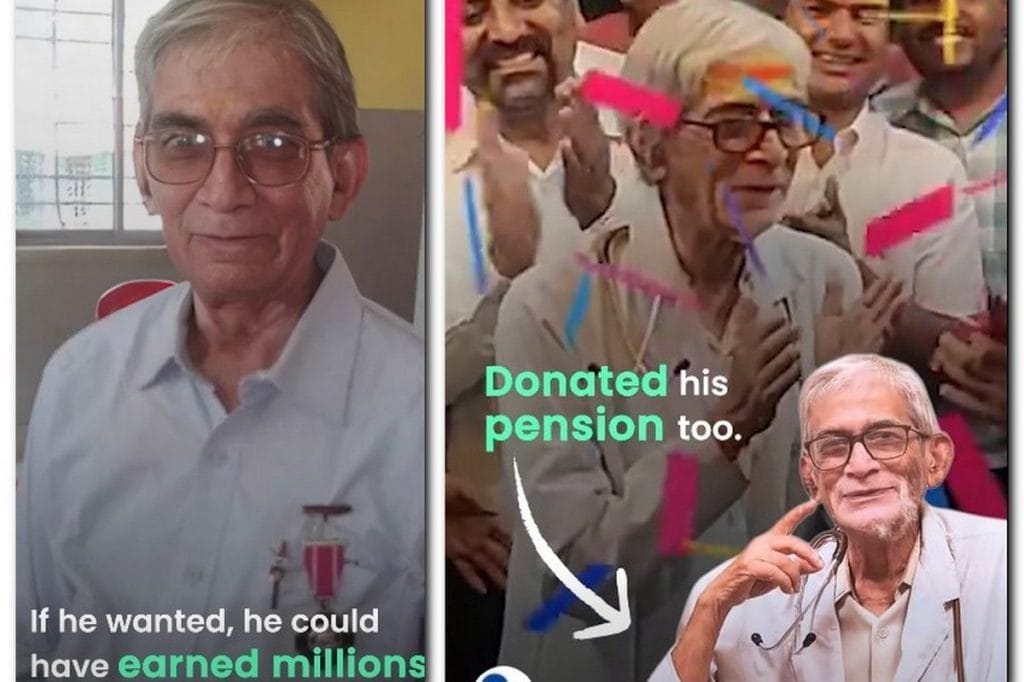
The reality is a little more nuanced. Colleagues confirm that Lahiri did donate a portion of his salary to patients and the university while he was in service, but the widely circulated claim that he gave away his pension is misplaced. Lahiri had opted for the Contributory Provident Fund (CPF) scheme, under which he received his retirement benefits as a lump sum.
In a 2014 letter to the BHU administration, which was seen by ThePrint, Lahiri stated: “I don’t get any pension.”
“It is false information [that he gives away his monthly pension]. He doesn’t get the pension because he opted for the CPF scheme,” said Dr AN Gangopadhyay, a retired senior paediatrician who used to work in BHU.
‘Banarasi buffoons’ beware
Lahiri was a people’s doctor, but he was not what one would call a people person.
He had little patience for social niceties at home or on his walk to the hospital; over time, many people stopped greeting him, scared that he might snap at them. But underneath the brusque exterior, he was genuinely caring toward his patients and staff.
“A long time back, some nurses said they needed a TV in the lobby, and Dr Lahiri bought one for them,” said Basu.
In January, a former student posted on X that if a patient was poor, Lahiri would make arrangements for care and medicines, “most of the times from his own pocket… Suffering alone was enough qualification to deserve his attention.”
When I joined Banaras Hindu University as an undergraduate student in the mid-1980s, Dr T. K. Lahiri was already a legend. His name carried weight across the campus, among students, teachers, hospital staff, and most importantly, among patients at Sir Sundarlal Hospital.
Long… https://t.co/07Vw68ay7Q
— Anand Pradhan (@apradhan1968) January 15, 2026
But when it came to government officers and politicians, he was unsparing. Lahiri refused to entertain anyone seeking special treatment and did not hesitate to call them out, regardless of rank.
“About 15-20 years ago, a district magistrate from a neighbouring district walked straight into the OPD, skipping the line,” recounted Basu. “Dr Lahiri shouted at him, ‘You Banarasi buffoon, you want special treatment everywhere?’ The officer quietly went back and stood in the queue. When his turn came, Dr Lahiri spoke to him politely.”
‘Banarasi buffoon’ was his signature jibe, levelled at everyone from high-ranking IAS officers to mentees.
“He would use it for his students as well while teaching,” laughed Basu.
There were many people who needed surgery but Dr Lahiri always forced them into medicines. He used to give the right medicines, but many heart patients could have gotten a better life with surgery
– A doctor who worked with Lahiri for many years
Lahiri was just as reluctant to accept favours as he was to dispense them. Even lifts home.
“He never accepted favours or special treatment from anyone. I somehow managed to make him sit in my car only by insisting that I lived near his house, and that it wasn’t special treatment,” Basu added.
In 2018, local news outlets reported that Lahiri refused to meet Uttar Pradesh Chief Minister Yogi Adityanath during a BJP outreach programme in Varanasi.
“If he wants to meet me, he should come to my OPD like a patient and not my house,” he reportedly said. The two did not meet.
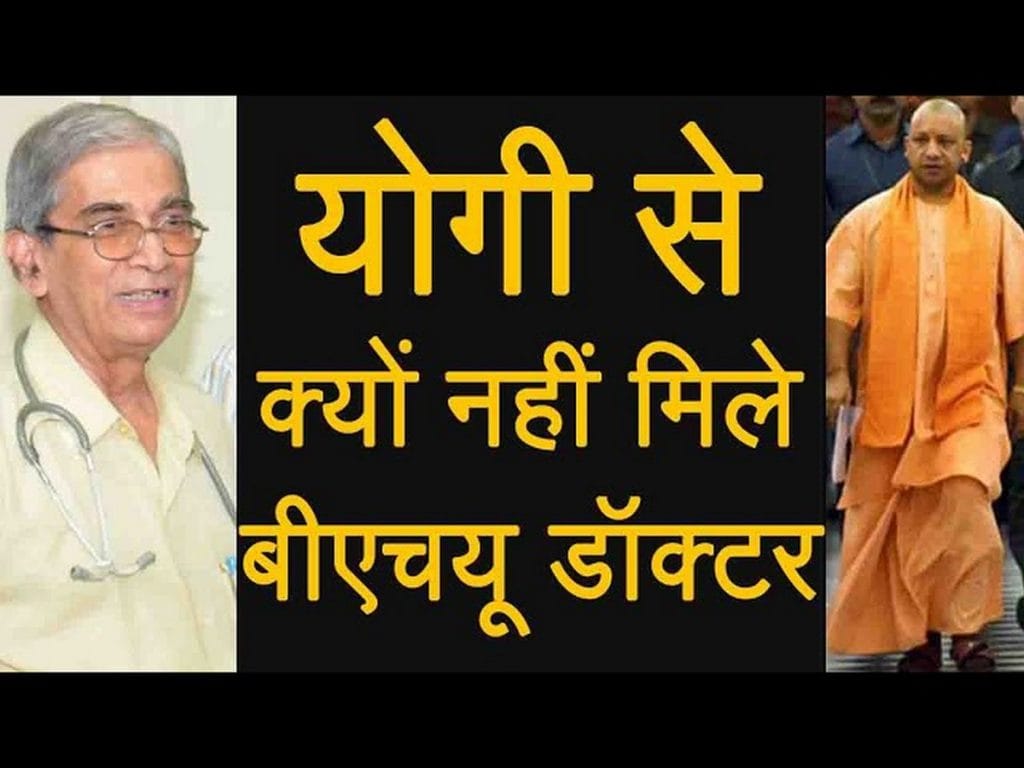
On social media, such stories only fuelled the narrative of Lahiri being like a “bhagwan”. Some comments on videos of the incident also claimed the doctor had similarly snubbed former Prime Ministers Indira Gandhi and Chandra Shekhar, although ThePrint could not confirm this.
“Inko sirf ek doctor na kaho he is the god of millions,” said one comment.
Surgeon who avoided the scalpel?
Despite being a highly trained surgeon, Dr Lahiri was often averse to the operating table and preferred to treat complex cardiac and thoracic conditions through medicines instead, said several doctors who worked with him. It caused a degree of friction.
“There were many people who needed surgery but Dr Lahiri always forced them into medicines. He used to give the right medicines, but many heart patients could have gotten a better life with surgery,” said a doctor who worked with Lahiri for many years.
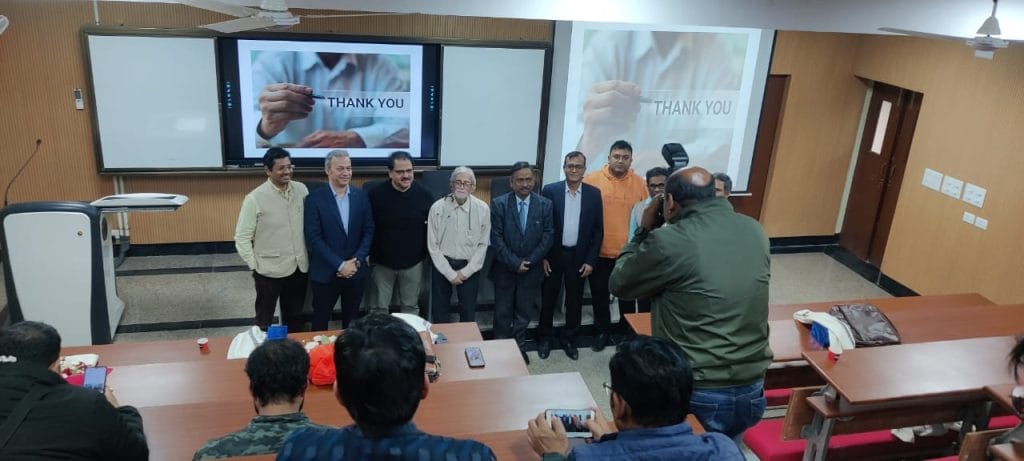
To many, he was the miracle worker who could fix a child’s congenital heart defect—a ‘hole in the heart’—using only a prescription pad. But the doctor quoted earlier suggested that Lahiri could be dogmatic about it. He recounted the case of a child whose cardiac condition was not improving sufficiently under a purely medicinal regimen.
“That kid was 10 years old. When he was offered a free surgery, he accepted and now he is fit and fine. But Dr Lahiri never suggested surgery to him. He was prescribed medicine, which was helping him, but it was the surgery that gave him new life,” the doctor said.
Dr Lahiri hardly recommended surgery and he was particular about not working at night. But he was a very good clinician and very punctual and honest.
– A colleague who worked with Dr TK Lahiri
But the portrait of Lahiri as a doctor who shunned the knife is not the full picture. Dr Arvind Kumar Pandey, his student between 1999 and 2008, said Lahiri was a proficient surgeon.
“Sir used to come to the hospital at 6:30 in the morning and leave at 8 pm at night, after completing the rounds and OT hours. He was great at lung and thoracic surgery,” said Pandey. “He used to do angioscopy till 2020, but he became a little restricted by then.”
Ironically, it was a decision by Lahiri to recommend surgery that led to a prolonged enquiry against him. In 2001, while he was Head of Department, a 74-year-old woman died shortly after undergoing an operation for a diaphragmatic hernia. Her son, one SK Ganguly, filed a complaint with the Medical Council of India (MCI) alleging incompetence.
Documents from an ethics committee meeting of the MCI in 2007 include a written statement by Lahiri defending his credentials and care.
“Please note that patient expired on 8th March, 2001 inspite of our whole hearted approach to save her because of sepsis along with renal failure and terminal pulmonary oedema,” his note read.
The response also addressed the complainant’s allegation of incompetence: “Mr. S.K. Ganguly has raised the question of efficiency. Please note I am F.R.C.S. (C) General surgery in 1969 and M.Ch. in Thoracic Surgery in 1972 from All India Institute of Medical Sciences, New Delhi. I was the Lecture(r), Reader and Professor including Head of the Department in this department.”
The Ethics Committee eventually noted “some amount of carelessness and casual approach,” specifically citing a lack of communication with the patient’s family. Lahiri was issued a warning.
“On review of the treatment given by Dr. Lahiri, it has been observed that the lack of such communication has led to such complaints as of using inappropriate drugs in inappropriate situations and in inappropriate doses,” the committee noted. “In view of the above, the Ethics Committee unanimously decided to issue a warning to Dr. T.K. Lahiri to be more careful and caring to patient in future…”
But even those who disagreed with Lahiri’s methods maintained respect for his character and medical abilities.
“Dr Lahiri hardly recommended surgery and he was particular about not working at night,” said another doctor who worked with him, speaking on the condition of anonymity. “But he was a very good clinician and very punctual and honest.”
A tiny inner circle
Now in his 50s, Dr Indraneel Basu runs an independent practice in Varanasi. His clinic is full every evening — patients with fever, diabetes, typhoid, and headaches waiting to be seen. Basu speaks to them gently and patiently, listening carefully. These, he said, are qualities he learnt from Dr Lahiri.
As both a former student at BHU and a neighbour, Basu was among the handful of people Lahiri interacted with regularly. Another was Ahmed Ali, the local general store owner. Beyond that, the circle was sparse.
One moment that drew them closer was when Basu fell sick as a student.
“I had a fever for a week and no doctor could diagnose what was wrong. I was taking medicine but it wasn’t working. I wanted to consult Dr Lahiri, but I was too scared to go to his house because he was strict about not seeing patients at home,” Basu recalled.
He called Siddharth Chakraborty, Lahiri’s relative, to broker a visit. When Basu arrived, he was welcomed and offered tea, but what struck him was how the renowned doctor lived.
“His entire house looked like an extension of a hostel room — one bed, a few utensils, not a single decorative item. He wore the same clothes for decades. Even his umbrella was over 30 years old,” Basu recalled.
There were two beds, one old TV that stopped working a long time ago, and one almirah. Most of the house was empty. Earlier, when his mother was alive, he used to take care of her, but after her death he completely started living alone
-Siddharth Chakraborty, Dr Lahiri’s relative
As for the cure for his ailment, Lahiri recommended that he should do nothing at all. That it was a viral infection and would “pass in four days”.
“Just like that, by doing nothing, I recovered,” said Basu.
But Lahiri’s tenure at BHU was not always smooth.
Also Read: Dalits are doing the work doctors reject—‘No postmortem without a safai karmachari’
Not everyone’s saint
Brought to the university by Prof KN Udupa, the founder-director of the Institute of Medical Sciences, the surgeon had run-ins with the administration from early on, according to Basu. Lahiri procured a heart-lung machine to build up the department, but a political rift meant it was never put to use.
“The machine was shifted to the store and when the flood came in the late 1970s, it got ruined. It was the most expensive machine of that time,” said Basu.
Rising up in the ranks didn’t end the bumpiness either.
Those who worked with Lahiri in the Cardiothoracic Department recalled that his time as head was difficult.
“He was a great doctor and an amazing teacher but a bad administrator,” said a doctor who worked in Lahiri’s department, speaking on condition of anonymity. “The department suffered because he was too egoistic and never used to accept other people’s opinions.”
Lahiri’s asceticism, so widely celebrated outside BHU, also became a cause of resentment. The doctor cited above hinted that Lahiri’s colleagues perceived they were judged for not being similarly self-denying.
“As a doctor, one should look presentable. What pride is there in wearing torn clothes? If I am driving a car and saving my time, it means I can spend that time on a patient. But for him, it became the reason for his popularity,” he added.
Hygiene, he claimed, was also a concern.
“There were times when doctors in the hospital forcefully made him take off his apron and wash it because it had become too dirty,” the doctor said.
Nobody knows when, or if, Lahiri will return home from the hospital. But one thing is certain, say former colleagues — this is his final goodbye to his patients.
“For the last 10 years, he had been losing his memory, but he continued working in the presence of other doctors. Now it is time for him to rest and cherish the life he lived,” said a doctor who worked with him. “There is no chance he can come back to the OPD.”
(Edited by Asavari Singh)