





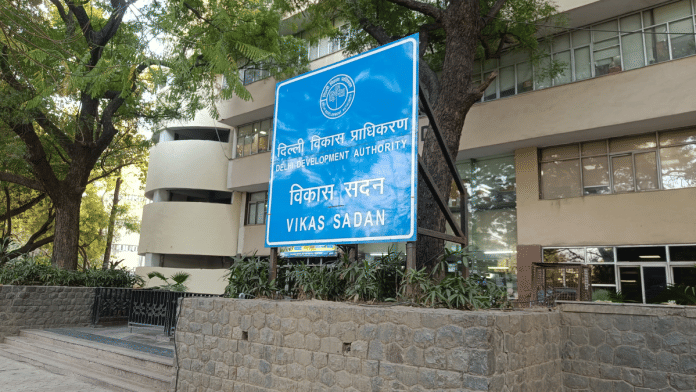



New Delhi: Balkishan Rathi has seen Delhi change a lot in the last five decades, from a city of open fields and dusty roads to a restless metropolis. Governments changed, policies changed, but the one thing that never did was the dreaded Delhi Development Authority knock about the land acquired in 1987 from his parents.
Now, the DDA wants the land back.
Every few years, the development authority returns either with a notice, a court hearing, or now, a fresh acquisition push. Rathi’s is not the only land. DDA owns nearly 123 plots of land scattered across Delhi-NCR that it has mostly neglected over time. The DDA acquired these plots for public purposes many decades ago, but never really enforced possession. It keeps trying to reassert its claim every now and then but gets caught in a web of litigations and counter-litigations over compensations and encroachment. But with the Supreme Court now on its side, the two have cleared the way for possession of plots of land across Chhattarpur, Najafgarh, Lado Sarai, Neb Sarai, Naraina, Mahipalpur, Tihar and Palam.
A small public notice published in The Indian Express on 10 February announced that the DDA will now be re-acquiring Section 24(2) cases decided by the Supreme Court, triggering the perennial land-related anxiety in Delhi all over again.
DDA acquired Rathi’s1 bigha plot on paper for building infrastructure for a growing capital in 1987. But possession was never taken and the compensation, Rathi insists, was neither fair nor final.
“Acquisition happened only in files,” said Rathi, owner of Ryan Construction Private Limited. The case was filed in his company’s name, by Dinesh Gautam in the Delhi High Court in 2013 under Section 24(2) of the Right to Fair Compensation and Transparency in Land Acquisition, Rehabilitation and Resettlement Act. Rathi sold the land to Gautam in, whom he sold the plot.
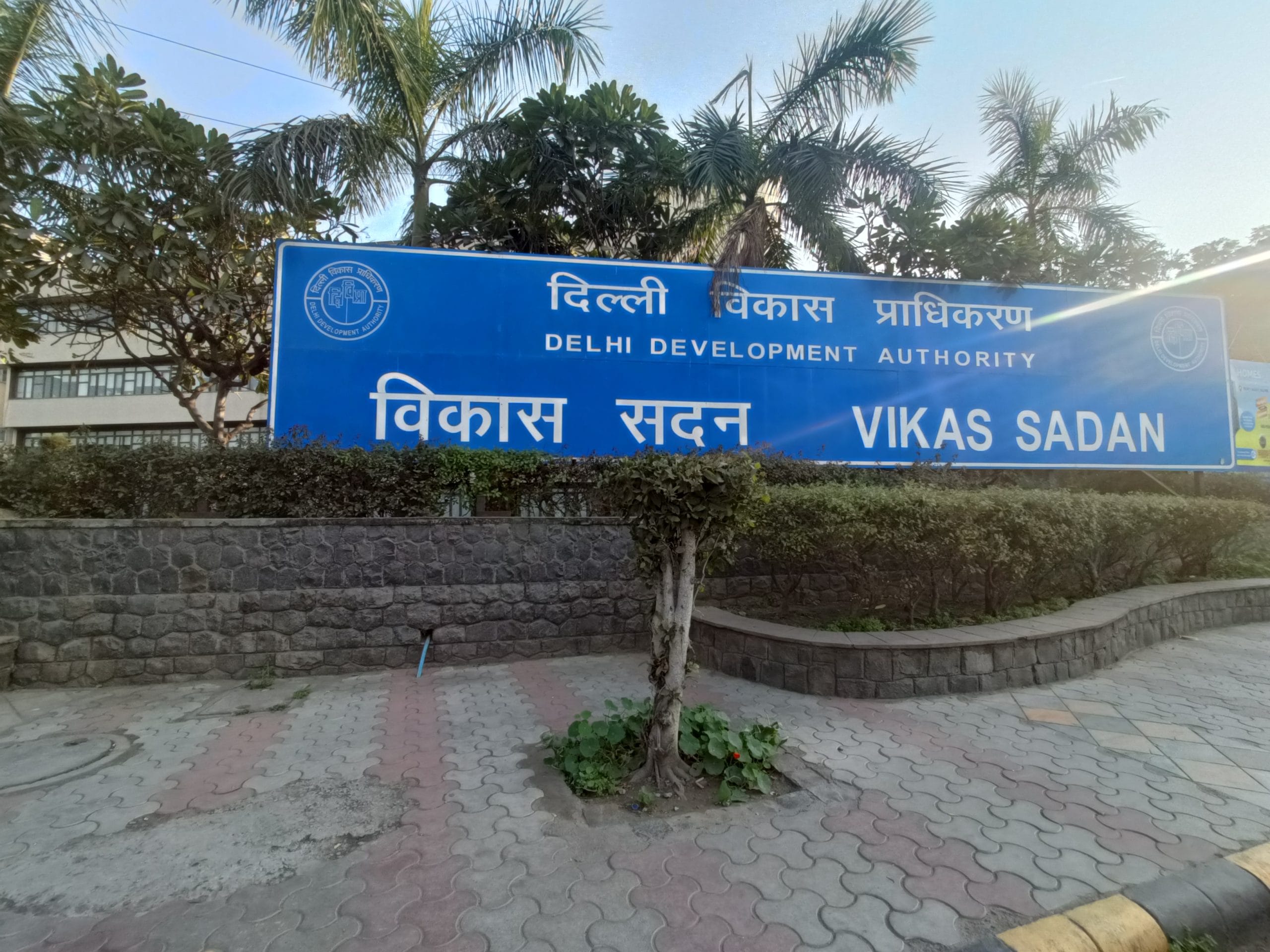
But Rathi’s is not the only story. Across Delhi-NCR, several people have encountered similar land troubles.
In the last four decades, owners changed, several constructions came up on disputed lands, families settled in and moved on. But the litigation never ended. And the DDA found itself entangled in a maze of courts. What began as an ambitious plan to shape Delhi’s future turned into a story of files, notices and stalled intent, particularly in the city’s peripheral areas, where development often lagged behind policy.
At the heart of it is DDA’s benign neglect of its own land. But the delay has run into a wall. A 2024 Supreme Court landmark judgment cleared the way for the DDA to re-acquire land parcels it had notified decades ago.
But it still isn’t easy. What was once peripheral farmland for Rathi is now prime South Delhi real estate. He is in no mood to part with it.
“The Supreme Court judgment gave way to the DDA for the reacquisition. It has been a long journey and we are hoping it will end soon. Our internal committee identified 123 land parcels to be reacquired and decided to leave 25. We have requested the Land Acquisition Collectors (LAC) to initiate the process. Once acquired, the DDA will develop these lands as per requirements,” said Ajay Kadian, director of the land management department at the DDA.
“DDA has its eye on South Delhi’s valuable land. Homes stand where acquisition files once did. Generations have grown up under legal uncertainty,” Rathi said, adding that the land is more than an asset. It is inheritance, memory and status rolled into one.
Litigations, land and the long wait
For families living on the DDA’s land, litigation is an ever-present possibility creeping in the shadows.
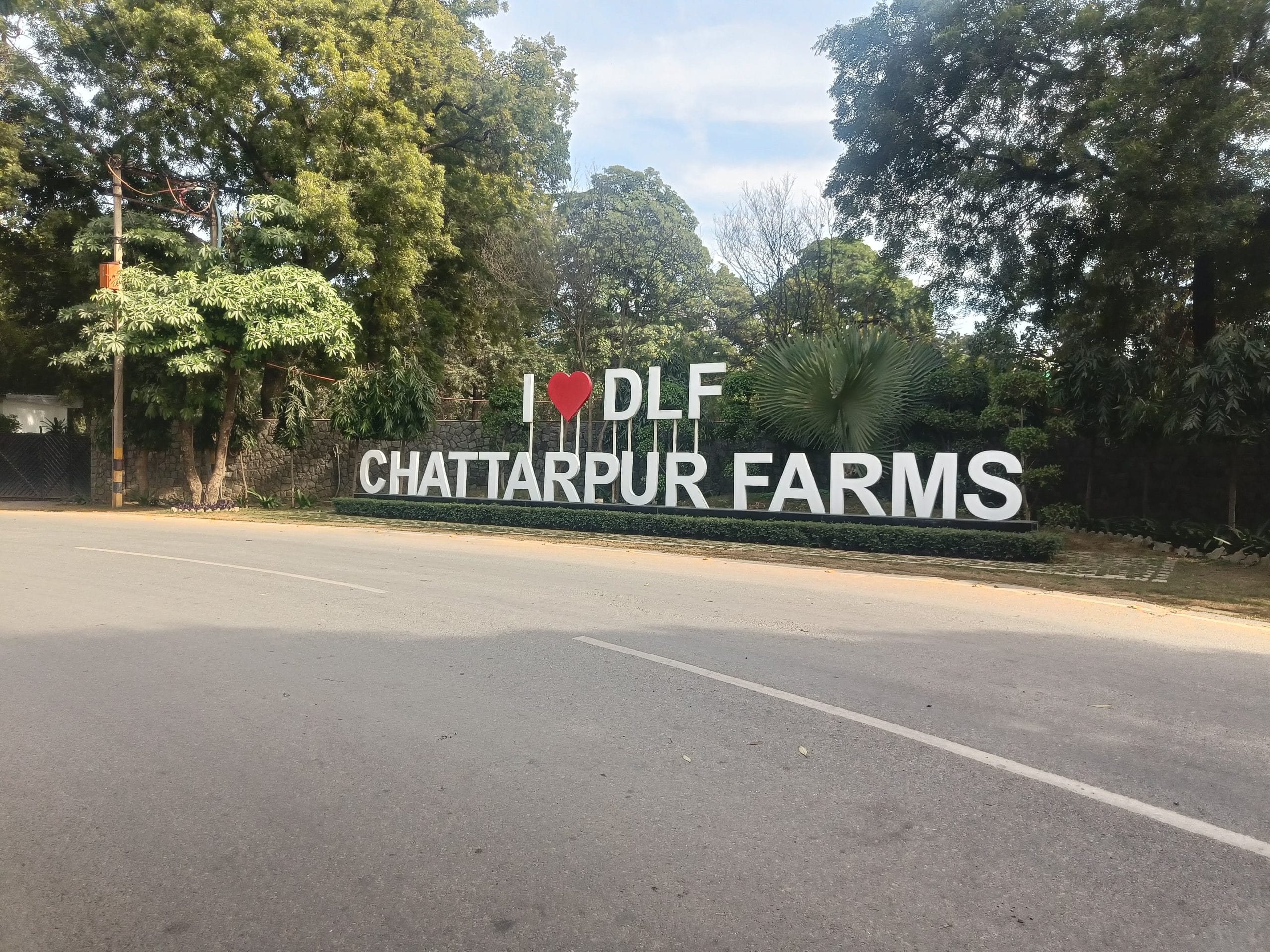
In Chhattarpur, one family clung to the hope that their plot would escape the DDA’s fresh round of re-acquisition.
But then came the newspaper announcement. It was a public notice issued by the Land Management Department of DDA in The Indian Express.
“We opened the list in a hurry. There were 123 cases. We kept scrolling, praying our name wouldn’t be there. But it was,” said one of the resident of the plots in question, adding that from that day, sleep became a stranger. Conversations at home revolved around a single question: Will we have to vacate?
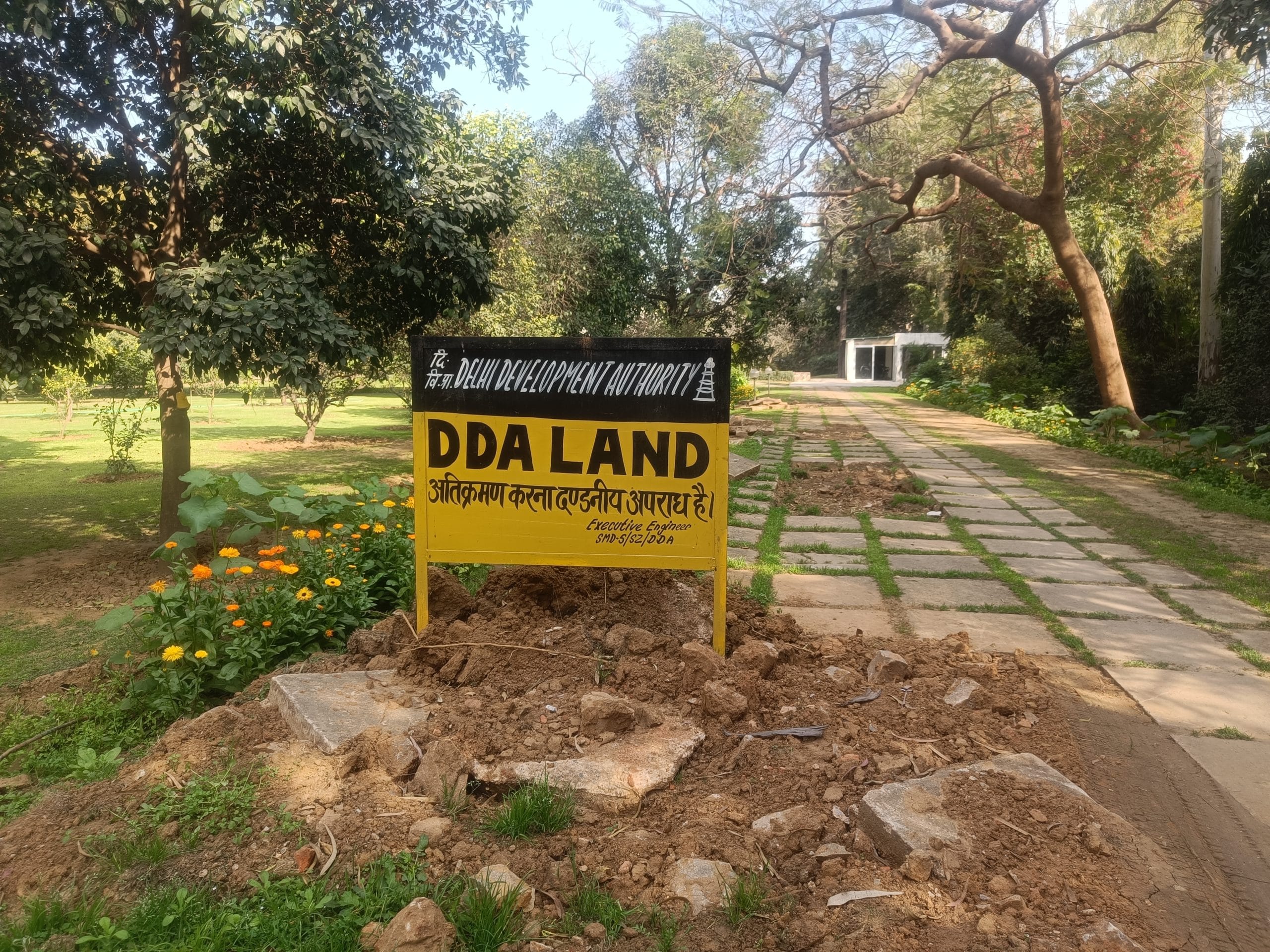
However, inside DLF Chhattarpur farm houses, a locality with lavish farm houses. At one of the farm houses, the DDA recently removed the encroachment and put their blue and yellow coloured board at the site. “DDA land atikraman karna dandniya apradh hai (Encroachment of DDA land is a punishable offence),” reads the board.
Also Read: When watchdog itself overshoots deadline—spotlight on RERA as tribunal overturns Rs 10L fine on DDA
An internal committee
The DDA’s latest announcement did not arrive out of the blue. Long before the public notice appeared in newspapers, a series of closed-door meetings had already set the process in motion.
At the DDA headquarters in INA, officials huddled over maps, court papers and ageing land records. The task before them was anything but simple: identify which parcels of land, originally acquired decades ago, should now be formally re-acquired after the Supreme Court’s intervention.
Kadian recalls that soon after the apex court judgment, an internal committee was constituted that same year. It brought together the DDA’s vice-chairperson, senior officials from the Land Management Department, and chief engineers —a mix of administrators and technical experts tasked with untangling a four-decade-old knot.
“The committee identified the lands required for development projects. Based on their recommendations, the DDA issued the advertisement,” said Kadian.
The scrutiny was not mechanical. Each parcel was examined on its present condition, legal history and future utility. In the end, the committee decided that out of the 148 only 25 cases would not be recommended for re-acquisition. These lands spread across Mahipalpur, Rithala, Neb Sarai, Mehrauli and Jasola were left out of the list, reflecting the selective nature of the exercise.
The next step
Identifying land on paper is one thing, but reclaiming it is another altogether.
The next step now rests with the Land Acquisition Collectors (LAC), who must assess the value of each plot before compensation is paid. And that is where the financial implications begin to loom large.
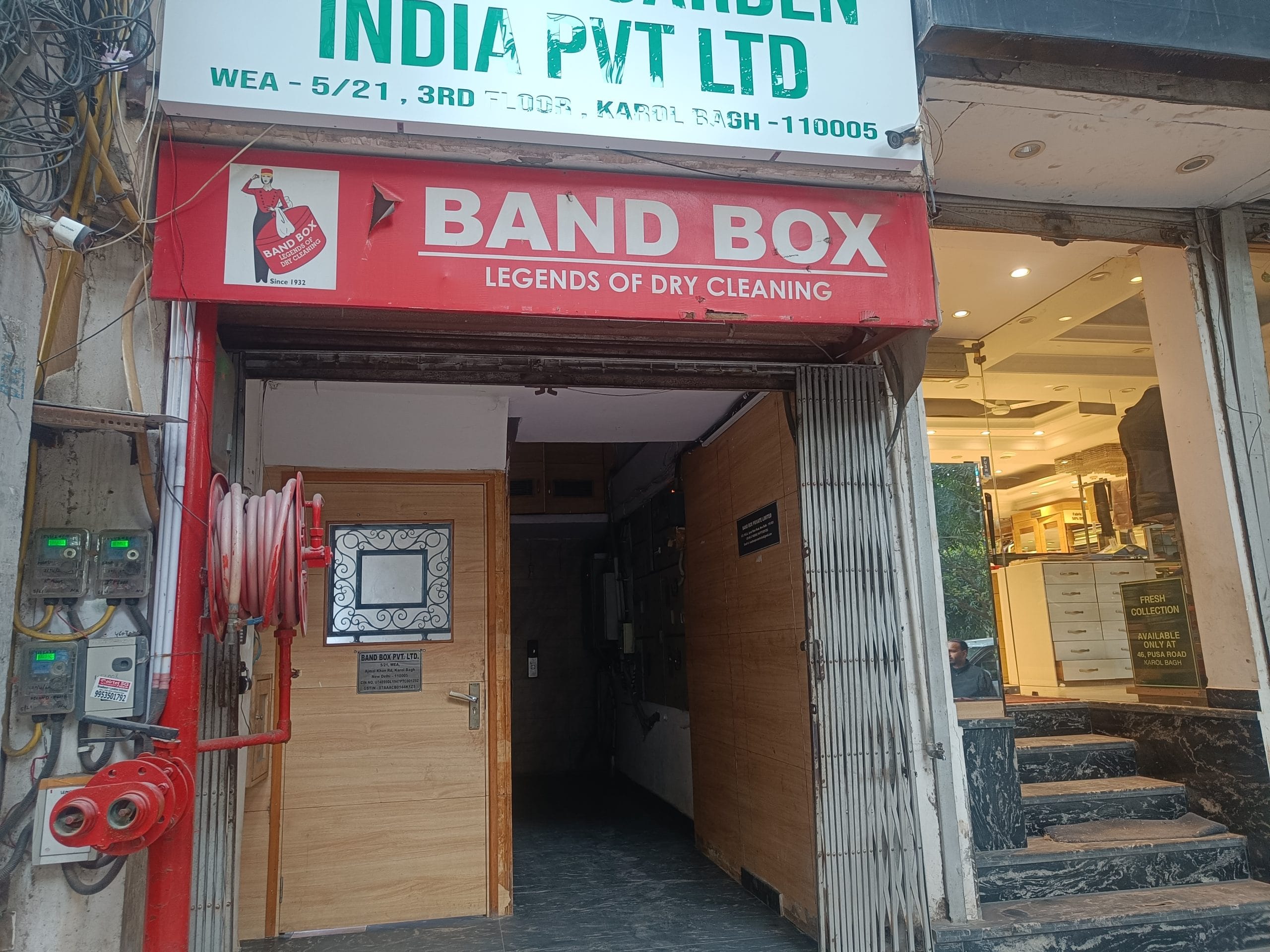
Out of the 123 cases, the oldest case is DDA V/s M/S Band Box Pvt Ltd & ORS from 1965. The DDA had acquired 6 bighas and 19 biswas of land in the Bahapur village in Delhi.
The Band Box Private Limited, established in 1947, primarily works in the laundry and dry cleaning sector, but the DDA had acquired the land just eight years after its establishment with the Parliament Act.
At its Karol Bagh office near the metro station in a narrow street, Rajendra Gautam, the company director, attends to his customers.
Gautam said that in the last six decades, ownership has changed, but the contestation over the land hasn’t.
“There is no doubt that the land is ours and DDA has failed to acquire it,” he said.
Even the Delhi High Court reaffirmed Gautam’s claim in 2016.
“The compensation has still not been paid to the petitioner despite the passage of 50 years since the date of the Award,” reads the 2016 Delhi High Court judgement.
When these lands were first acquired decades ago, Delhi’s property market was a different universe. Today, prices have multiplied several times over.
“DDA has to pay compensation at the current circle rate,” said Surat Singh, a land litigation expert. “In rural areas, that means four times the circle rate; in urban areas, twice the circle rate.”
For example, the land in question from 1965 is situated in Bahapur measuring, 6 bighas and 19 biswas; the estimated cost of the land today is almost Rs 250 crore.
For the DDA, that translates into a significantly higher payout than what would have been required in the 1980s.
“DDA has no issue with the funds; they have sufficient money to compensate,” said AK Jain, former DDA Commissioner (Planning).
On the ground, however, officials say the bigger challenge is not the payout, but the physical features of the land. For over four decades, many of these plots have seen extensive encroachments.
“In the past four decades, these land parcels have been heavily encroached upon. Removing them now is very challenging,” admitted an official on the condition of anonymity.
Jain added that the Land and Building Department takes possession of the land before handing it over to the DDA.
Also Read: DDA and Delhi University combo brought a biodiversity park revolution. Other cities envy
New law, interpretations and the landmark judgement
To understand how things reached here, one has to go back nearly four decades. Most of these lands were acquired under the colonial-era Land Acquisition Act of 1894. Even with compensation proceedings, many landowners challenged the acquisitions in court. They argued that compensation was delayed and that physical possession of the land had never been taken.
The Delhi High Court sided with the landowners in most cases since 2011. In Dinesh Gautam vs Govt. of NCT of Delhi and Ors, the court ruled in favour of the petitioner, citing delay in compensation and lack of possession.
Then came 2013. The Congress-led UPA government replaced the 1894 law with the Right to Fair Compensation and Transparency in Land Acquisition, Rehabilitation and Resettlement Act. Section 24(2) of the new law became a powerful tool for landowners. It stated that if compensation had not been paid or possession not taken for five years or more, acquisition proceedings could lapse.
“There was a mess-like situation in land issues,” said advocate Surat Singh, who has handled land litigation for decades, of the 2013 law.
Armed with Section 24(2), landowners approached the High Court; many won. But the DDA, however, escalated the matter by appealing to the apex court.
What followed was legal turbulence. In Pune Municipal Corporation vs Harakchand Misirimal Solanki, also known as the Poona Corporation judgement the Supreme Court interpreted Section 24(2) in a way that favoured landowners. Later, in the Indore Development Authority vs Shailendra, a three-judge bench of the Supreme Court took a different view, creating confusion over what constituted payment and possession.
“For years, there was uncertainty. Both judgments were contradictory in nature,” said Singh.
That uncertainty lingered until 2024, when a three-judge bench of the Supreme Court delivered its landmark verdict.
“The market value of the land shall be assessed as on 01.01.2014, and the compensation shall be awarded along with all other monetary benefits in accordance with the provisions of the 2013 Act, except the claim like rehabilitation etc.,” the judgement read.
Also Read: Delhi elderly have a lift problem. And they are fighting neighbours in RWA groups, courts
The problem with the DDA
What began as a stalled acquisition under a colonial-era law has now morphed into a high-stakes battle over compensation, possession and prime South Delhi real estate. Generations and homes, now, stand on land the state insists it still owns.
But this lingering situation is more than a litigation problem. It’s the working style of DDA and the complex process that halts the acquisition for decades. Even the Comptroller and Auditor General of India (CAG) in its 2016 report criticised the working of the DDA in matters of land management and acquisition.
The CAG report noted that in March 2006, almost 5,278 bigha and 2 biswa of land in Kirari Suleman Nagar, worth Rs 286.41 crore, was acquired for the Rohini Residential Scheme. Out of this, about 150 bigha was vacant, while the rest had buildings on it. Keeping this in mind, the DDA released only Rs 8.14 crore in September 2006.
“Audit noticed that no land had been received from the Delhi Government (up to October 2016) even after lapse of more than ten years of award, delaying the purpose of acquisition as well as blockade of funds amounting to 8.14 crore rupees,” reads the CAG report.
The DDA formed as a response to the partition of India in 1947, when half a million refugees entered the city in a single year. The DDA came up with the first master plan in 1921 for the next two decades. During this period, it was successful at meeting its acquisition goals, gaining control of 56,834 acres of land. But the main challenge the authorities faced was during the second master plan.
Jain explained the reasons behind the challenges. He said that till the 1980s, the private land developers were not active on a large scale.
“After the 1980s, these developers created problems and even land mafias halted the process,” he said, adding that this was the time when the DDA was planning to develop new regions such as Dwarka, Narela, Rohini and South Delhi.
But others blamed the government for not acquiring the land as per the proper process.
“The DDA’s land acquisition process is a total fraud. When a person’s land is acquired, it’s the duty of DDA to satisfy the person. But they failed to do so,” said Paras Tyagi, president of Centre for Youth Culture Law and Environment (CYCLE). Tyagi has dedicated his time to fighting the many cases of land acquisition against the DDA.
But some residents are still hoping for fair compensation this time.
“We have lost money and time for years fighting against the government. They are rigid, and if now they want to take our land, we can cooperate, but we need fair compensation at the current price,” said Singh, a resident of Mahipalpur.
Surat Singh, a Supreme Court lawyer, said that if the DDA pays the fair amount due to the residents, they will happily move.
“The problem arises when the money is not received and if the DDA does not pay the money, they will have to give up their claim on the land,” he said.
(Edited by Insha Jalil Waziri)