








Manipur: When Mayanglambam Rishikanta Singh crossed the Manipur buffer zone to meet his lover, he was not just crossing a Kuki-Meiti partition line in Churachandpur. He was walking across a line drawn with the blood of thousands of people in the ethnic violence that has engulfed the state since 2023.
He was a Meiti in love with a Kuki-Zo woman. But it was a partition line land-mined with hate and suspicion. Singh acquired a new identity and a name—Ginminthang, a Kuki-Zo man—which enabled him to slip into his rival community’s area and live with his partner, Chingnu Haokip.
He used forged documents and entered through Aizawl in Mizoram—a route chosen to bypass the valley and gain access to Kuki-inhabited areas.
“His only crime was that he was in love,” said Dayanand Sharma, a childhood friend from his native village, Khunou. “It appears he changed his name so that he could live with the Kuki Zo woman.”
Manipur is still one on paper, but after the 2023 ethnic violence, it has been divided between two communities— Meitei and KukiZo—and two deadly realities. And here, inter-tribe love is often the easiest casualty.
Meiteis now largely reside in Imphal and the valley, while Kuki-Zo communities live in the hill districts. Churachandpur falls within the hill areas.
For Kukis, travelling to Manipur no longer involves passing through Imphal, as was common earlier. Instead, they now enter via Mizoram and undertake a 14-hour road journey to reach the Kuki-dominated areas of the state, avoiding the valley altogether.
Reaching Churachandpur wasn’t easy for Singh. Not only was he armed with his new Kuki-Zo identity, but he also slid through underground Kuki routes, often evading several security checks.
On 21 January, a video surfaced in which Singh could be seen pleading for his life before he was shot. The footage, which took the internet by storm, was the first time his family learned that he had been living in Churachandpur. They were informed of his death through the video and a subsequent call from Haokip.
“Haokip called us and said that Kuki militants had taken them and killed my brother,” said Ashalata, Singh’s elder sister. “When we asked her why she never told us they were living together, she had no answer.”
‘Our women were paraded naked. Nobody cared’
The victim’s family has demanded an investigation into the matter and the arrest of his partner, alleging her involvement in the killing.
Soon after the killing, a Joint Action Committee (JAC) was formed by Meitei groups, which submitted memoranda to the government demanding justice. Singh’s brother, Mayanglambam Prem Singh, has met Manipur Governor Ajay Kumar Bhalla twice, seeking an investigation into the killing. Meanwhile, the authorities are trying to contain the fallout.
A police officer, on the condition of anonymity, told ThePrint that it was a case of a love gone sour between the couple.
Even the Manipur High Court on 24 January directed central authorities to ensure the prompt removal of a viral video, observing that “its circulation has the potential to disturb public order.”
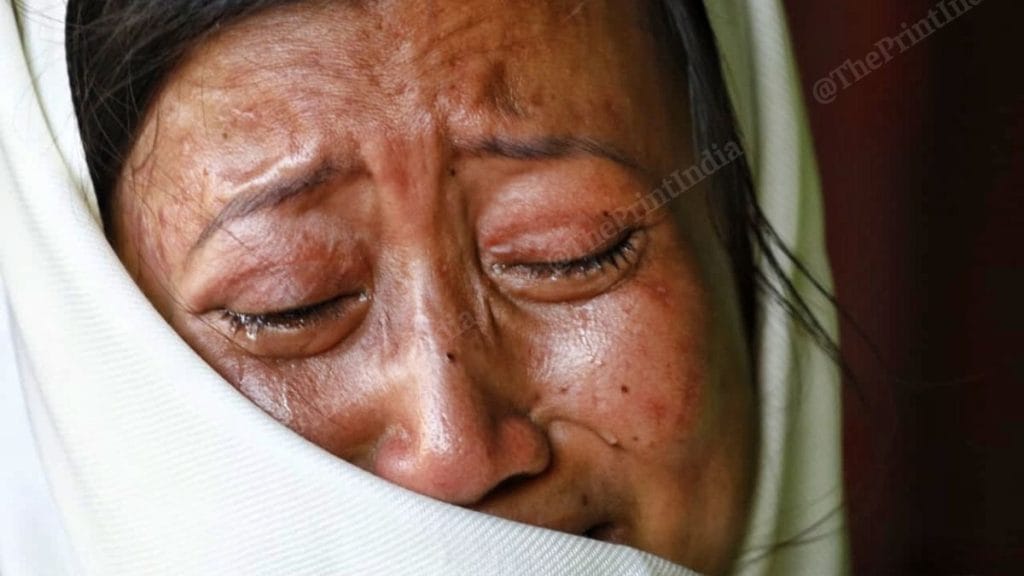
And now, deaths are being weighed against each other, silences counted. For the Kukis ThePrint spoke with, the attention Singh’s killing has received stands in stark contrast to the silence that followed the deaths of thousands from their own community. “Our women were paraded naked and killed. Nobody cared,” one person said. “And now, overnight, the entire Kuki community is being turned into the villain.”
The security forces in the state introduced the buffer zone as a temporary emergency security arrangement separating the hills and the plains during the 2023 ethnic violence. Over time, however, it has hardened into a de facto border, further deepening ethnic divisions.
The Kuki-Zo Council has been pressing for a separate Union Territory for Kuki-Zo tribes in Manipur, while Governor Bhalla has denied the existence of any buffer zones, calling such claims “false and misleading.”
Last year in February, President’s Rule was imposed in Manipur following the resignation of Chief Minister N Biren Singh amid political instability.
Now, days before the first anniversary of President’s Rule, the killing of 31-year-old Singh has emerged as a fresh flashpoint in the conflict-torn state. The case has since been transferred to the National Investigation Agency (NIA).
Also read: A Ranchi boy reading at a petrol pump went viral. What came next
Flood of rumours
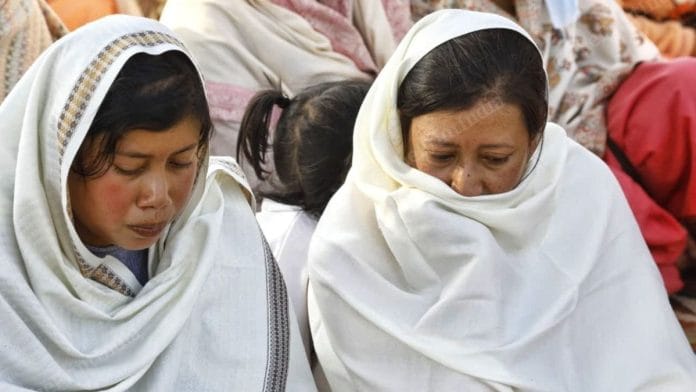
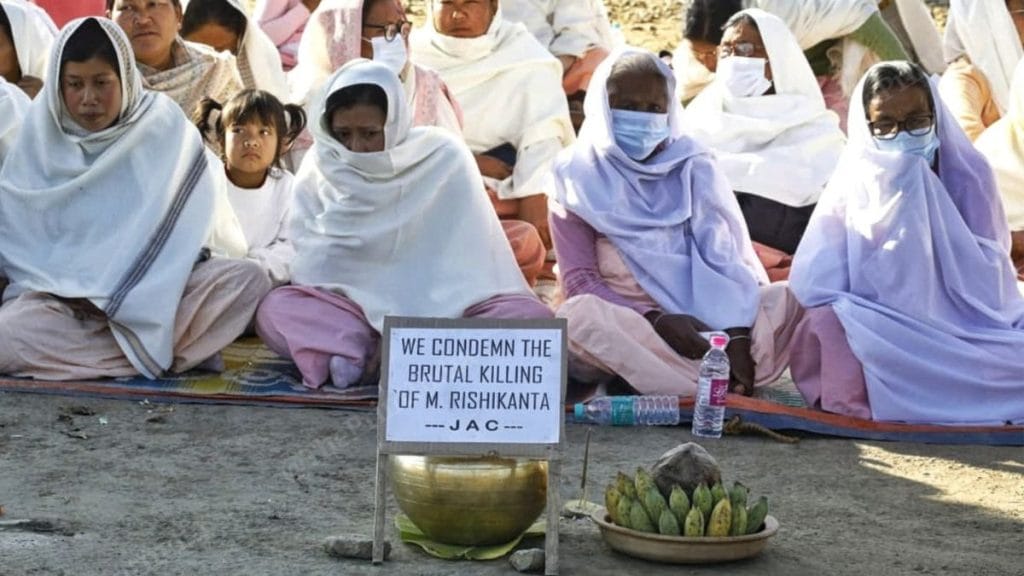
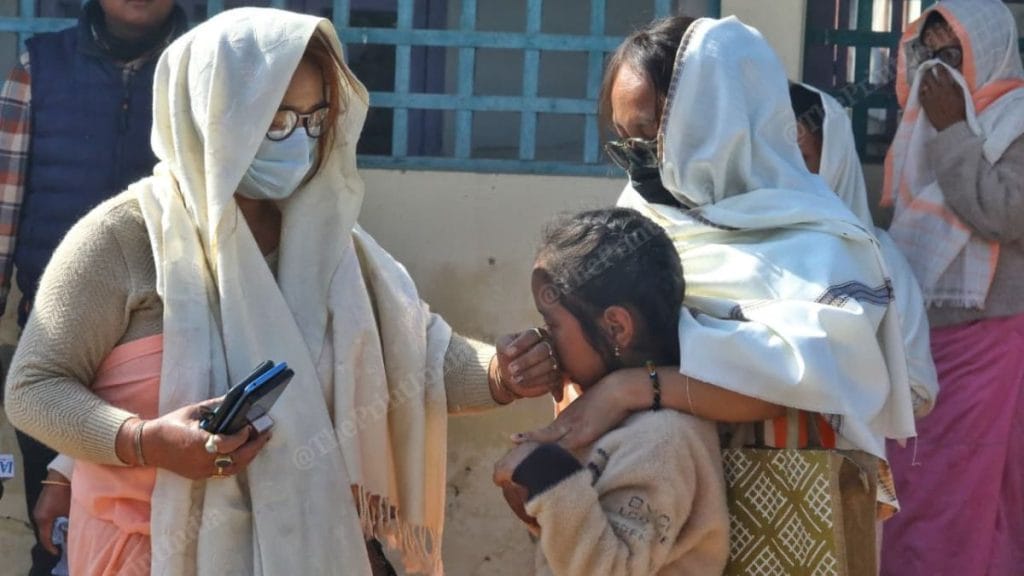
In the Kakching district, the video has been widely circulated. At the main crossroads, dozens of women sit beneath a tree, wearing white shawls and pink phaneks (wrap-around skirts). Posters pasted on the tree trunks read: “Punish the Kuki terrorists,” “We demand justice,” and “We condemn the killing of Rishikanta.”
A photograph of Rishikanta, placed with a garland and fruit offerings, lies at the site. This protest doesn’t have a man, the kind of protests Manipur witnessed during the ethnic violence, when women took the front stage.
“We want the Kuki militants to be arrested. Until then, we won’t take my brother’s body,” said Ashalata, as women surrounding her nodded their heads. The women leave their household chores to sit at the protest site from 10 am to 5 pm, while the men tend to the home.
“This protest is important. A man from our community has been killed. We need to register our dissent,” said a shopkeeper whose wife is also a part of the protest.
On Ashalata’s phone, she carries a copy of the memorandum submitted to the government, listing seven demands. Among them are a probe by the NIA, a government job for a family member, the arrest of Singh’s partner, and assurances that such a killing will not be repeated.
Singh’s murder has fueled a flood of rumours. In Khunou village, nearly everyone has a version of what happened. It has become a dinner-table conversation where new stories are born. Some claim his partner, a Kuki woman, wanted his property; others allege that Haokip’s brother was a Kuki militant. A few even speak of black magic, saying Singh went to Churachandpur under some influence, despite knowing the situation. For a few, it was simply a love story caught in the violence that has engulfed Manipur.
Each day brings new visitors to the household—civil society members, local leaders, including MLA Kangujam Ranjit Singh, and representatives of the JAC. All arrive with the same demand: ‘Justice for Rishikanta’.
Sharma visits Singh’s home every evening to console his father. Each visit brings back a new memory. “Rishikanta was an introvert. He rarely spoke,” he said. “As children, we often teased him for being so shy.”
Sharma is often carried back to the earlier days in Manipur, before the state fractured along ethnic lines, when a sense of brotherhood was taken for granted. “For decades, Meiteis and Kukis married each other. No one resented it,” he said, adding that sometimes it feels like he no longer recognises this Manipur.
Hushed whispers
Prem was working at his small food stall in Imphal when his phone rang. On the other end, a cousin’s voice delivered the news: ‘Your brother Rishikanta had been killed by Kuki militants’. He recalled, “I was in disbelief. I told him, ‘How can they kill him? He’s in Nepal.’”
The call was followed by a WhatsApp video. The ladle slipped from his hand. Without a second thought, he jumped onto his scooter and raced toward Kakching.
“I was hoping my father would tell me it was a false video. Nothing made sense to me. My brother was in Manipur—how could I not have known?” said Prem, who was two years elder to Singh.
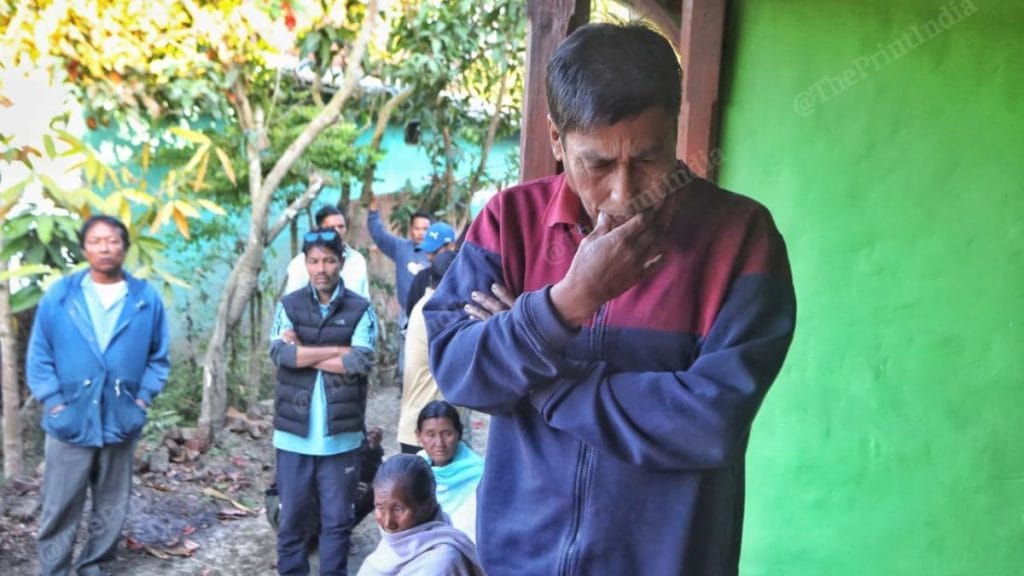
By the time he reached his home, a pall of grief had dawned upon the area, and the narrow lane was crowded with villagers. Almost everyone had seen the video, and he could hear the hushed whispers. His two sisters clutched their father by the shoulders, crying, as neighbours tried to console them. Their mother died in 2019 after suffering a stroke.
After the 2023 ethnic violence, employment opportunities dwindled in the state. Singh, who had been working in Guwahati and had been planning to return home, instead moved to Nepal for a better opportunity. With a degree in Technical Engineering, he secured a job in the neighbouring country through a relative’s reference.
From time to time, he would send Rs 5,000 to Rs 10,000 to his father, a small-time jeweller. “He would call us intermittently, asking about our health, but never mentioned anything else,” his father told ThePrint.
Two days before his death, however, Singh sent his father Rs 5,000—not from his own account, but from his partner’s. After the killing, his sister checked their father’s bank account and discovered the transaction was made from Haokip.
But Singh barely mentioned Haokip after the ethnic violence in 2023. The family thought he had forgotten her.
Also read: ‘Borewell boy’ Prince is now a 23-yr-old plumber. ‘Same urgency could have saved Noida techie’
Friendship turned to love
Singh and Haokip’s relationship had blossomed long before the 2023 conflict. They met in Guwahati, where the victim was working. Like many love stories, it began as a friendship and soon turned into love.
The families had met, and they were about to get married in a week when violence engulfed Manipur.
“We never had a problem with their marriage. They were in love, and that was enough for us,” said Singh’s father, his eyes sunken with grief.
During the conflict, many mixed-marriage couples split, and relationships ended. There could have been another among them. But Singh and Haokip refused to end their relationship, and contacted each other only over the phone.
And soon, he was in Tuibong village of Churachandpur living with his partner Haokip as husband and wife.
But he could not hide his identity for long. “We learnt that he was living with a false identity and with a woman from our community. Nobody can bear this,” said a senior Kuki leader from Aizawl. “And he betrayed us by following underground routes and using a false identity.”
In such conflicts, women—and the lives they lead—bear the weight of the community. Their honour is treated as a measure of loss or victory.
As soon as his identity was revealed, Rishikanta was kidnapped by men, along with Haokip, who was later released. He was taken to a deserted location, where he pleaded and swore for his life. Until a loud thud hit him and he collapsed instantly.
The video carried a message: “No Peace, No Popular Government. Meitei from Kakching Khunou.”
For Sharma, a friend is dead—but he does not want more deaths. “I want this to end now,” he said. “This is the government’s failure. They have not been able to stop it. Neither a Kuki nor a Meitei should die anymore.”
For a Kuki man in his 30s, however, one question has been haunting him. “If a Kuki had crossed the buffer zone and entered Imphal, wouldn’t the Meiteis have killed him?” he asked. “This is no longer about love. This is war.”
(Edited by Saptak Datta)
Buffer zone, false identify, forged documents etc etc… are all associated with the victim. It’s all his fault! What is his fault? He entered another district in a state. What names do you call those killers who video taped a cold blooded killing and distributed for fear and political agenda – a terrorist. This fact is nowhere mentioned in your reporting which says a lot about your reporting! Call names as it should be called.