





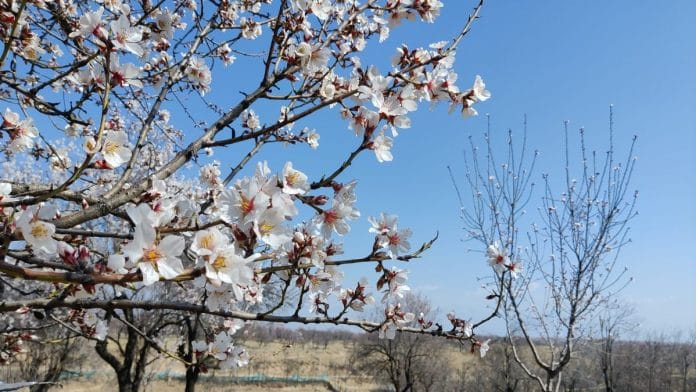



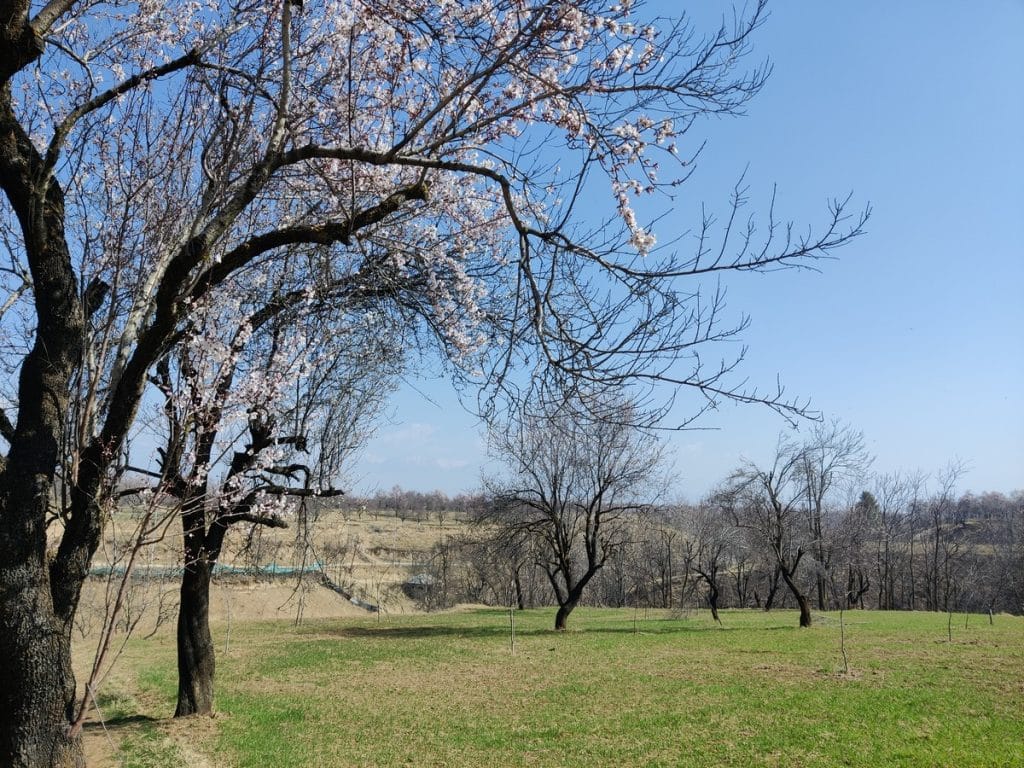
Srinagar: Almond blossoms are painting the Kashmir Valley in pink and white, but the spectacular sight has cast an ominous shadow over local farmers. The blooms signal an early, harsh summer that could throw this year’s almond crop into disarray.
“People come from all over the country to see almond orchards, they say it looks like Japan,” said Asif Khan, an almond farmer from Pulwama. “But I fear that in a few years, even these few orchards will disappear from Kashmir.” Similar worries are assailing the Valley’s walnut farmers, who blame ageing trees and outdated cultivation methods for poor production.
Almonds and walnuts have long been Kashmir’s pride. Yet even though the Valley produces more than 90 per cent of India’s almonds and walnuts, the country’s orchards barely scratch the surface of demand.
Government data shows that India grows less than 10 per cent of the almonds it consumes. While walnut production is much higher, covering 80-85 per cent of the demand, India still imports hundreds of crores worth of walnuts for premium quality. With demand only set to grow, India is relying more and more on foreign production from Chile, Afghanistan, and the US.
In taste, we know our almonds and walnuts are unbeatable. But look at the beautiful, shiny, and large dry fruits that come from California and Chile — to an average customer, that is much more attractive than our uneven products
-Mudassir, an almond farmer from Chadoora
Kashmir’s dry fruits producers and policy makers have been unable to make the region a major player because of a ham-handed, slow approach to reform. The sector continues to remain an unorganised cottage industry of sorts, devoid of centralised seed banks, modern harvest technologies, standardised quality control, and high-grade packaging units. This puts Indian tree nut growers at a disadvantage, unable to match the sheer scale and sleek packaging of international competitors.
Meanwhile, for close to a decade, Kashmir’s almond farmers have been steadily uprooting their legacy, replacing their expansive orchards with tight-knit apple trees or converting the land away from horticulture altogether. As for walnuts, a major problem is old trees with low yield.
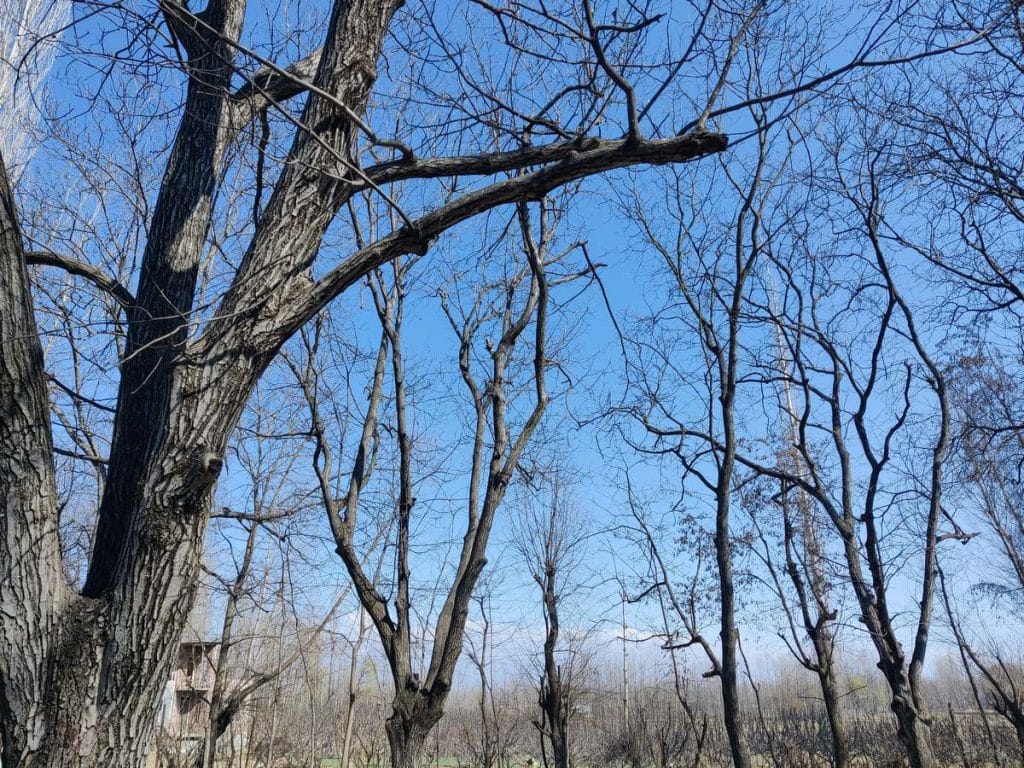
Amid erratic weather, inadequate institutional support, and import reliance, Kashmiri dry fruits are losing their market status. Now, Indian middle-class demand has exploded so much that Kashmir is no longer the heartbeat of this industry.
The new India-US trade deal, which seeks to slash import duties on American almonds and walnuts, has only amplified the underlying crisis. Kashmiri farmers are at a crossroads — continue business-as-usual as marginal growers who are unable to compete globally, or just adapt to trade changes.
But the Horticulture Department of the Jammu and Kashmir government isn’t giving up just yet. It’s still rallying cultivators, proposing strategies like high-density seeds, improved processing facilities, and a centralised dry fruits mandi over the last two years. While many of these measures have been stuck in a typical fits-and-starts Indian bureaucratic gridlock, the government is confident of its plan to revolutionise dry fruits cultivation in the next decade, the US-India trade deal notwithstanding.
“Almonds and walnuts are historic species of Kashmir Valley and have been grown for centuries, but that is also where the problem lies — in traditional varieties,” said Vikas Anand, director of J&K’s horticulture department. “It is time for an upheaval of that pattern, and with the support of the CM and even the PM, we will make Kashmir a top destination for dry fruits.”
Also Read: Grown in Karnataka, sold as American — Inside India’s gherkin empire
Kashmiri farmers and traders have a laundry list of grievances, but they all agree on one thing: their products are losing the visual war on the supermarket shelf due to antiquated growing and packaging practices.
“In taste, we know our almonds and walnuts are unbeatable. But look at the beautiful, shiny, and large dry fruits that come from California and Chile — to an average customer, that is much more attractive than our uneven products,” said Mudassir, an almond farmer from Chadoora in Budgam district.
Californian almonds and walnuts have become household names in India over the last decade as exports from the American state have increased. Farmers there use varieties that are pest-resistant and high-yielding, while the entire farming process —from irrigation to harvesting — is mechanised. The post-harvest processing produces uniform, attractive, and well-packaged nuts that easily win consumer trust.
We want to replace the old, senile orchards with high-density and high-yielding varieties, so farmers can be assured of a good crop year-on-year
-Vikas Anand, director of J&K’s horticulture department
Vikas Anand and his team are now racing to disrupt Kashmir’s dry fruit stagnation through a series of measures planned over the next five years. At a seminar organised on 6 March by the Union Ministry of Agriculture on ‘Future Strategies for Almonds, Walnuts and Pine Nuts in India’, Anand presented a roadmap to overhaul J&K’s production in a sustained manner.
“We want to replace the old, senile orchards with high-density and high-yielding varieties, so farmers can be assured of a good crop year-on-year. Moreover, we will provide them with support to plant these seedlings, irrigate them, protect them from climatic conditions like hail and rain, and fertilise them using vermicompost,” said Anand, laying out the financial incentives planned for the programme.
New trees, same weather
In his office in Srinagar’s Rajbagh, Anand fields calls from everyone — small-time walnut growers with a couple of trees in their backyard to heads of farmer-producer organisations in Uri and Kupwara. He is getting them on board for the new ‘high-density plantation’ scheme the Union territory’s government has announced for 12 crops, including apples, pears, cherries, almonds and walnuts. The government plans to provide a 50 per cent subsidy to farmers who sign up.
“This is a mandate from the central government – in the 2026 Budget, too, they focused on almonds and walnuts as high-value crops,” said Anand. “We’re merely enacting the government’s wishes.”
Even a child can tend to apple trees, that is how easy it is. For almond and walnut trees, the effort is sometimes not worth it
-Asif Khan, farmer from Pulwama
The government has already imported 10,000 Chandler walnut saplings, known for their thin shells and early fruit-bearing capacity, to Jammu and Kashmir. Kept in quarantine for a year, they will soon be released to farmers to plant in their orchards — a step officials hope will kickstart a new era of walnut cultivation in J&K.
But even as the promised panacea sits at the Plant Quarantine Centre in Shuhama village of Ganderbal district, walnut growers like 35-year-old Zahoor Ahmed in Budgam have a more pressing problem — this year’s walnut harvest and the harsh summer forecast hovering over their livelihood.
Apple invasion
Brothers Asif and Danish Khan own close to 40 kanals (5 acres) of land in north-west Kashmir’s Pulwama district. For more than 40 years, this plot was dedicated to almond farming, like most other orchards in the district.
“The trees had been planted by our father and grandfather, and we continued tending to them. Pulwama is also the country’s largest almond farming district, so we had seen everyone around us do the same,” recounted Danish.
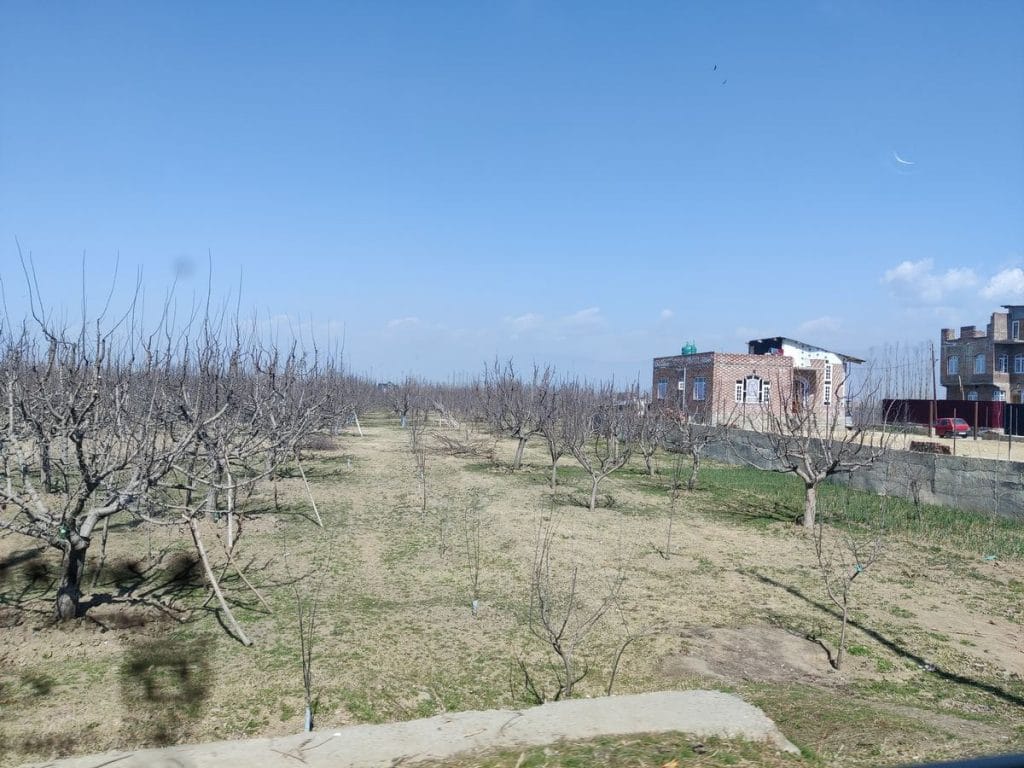
But things have changed. The karewas, or fertile plateaus, of Pulwama are no longer streaked with endless rows of pink and white. Every few acres, bald apple trees crop up, planted by farmers tired of almonds’ tedious production process and meagre market returns. In 2024, Danish and Asif joined the apple brigade too.
“Almond and walnut farming was good as long as it was profitable. But there’s no organised market, no state support, and now it seems like even nature is not on our side,” said Asif. “Apples are easier to harvest, take fewer inputs, and give returns much earlier. It makes sense to invest in them.”
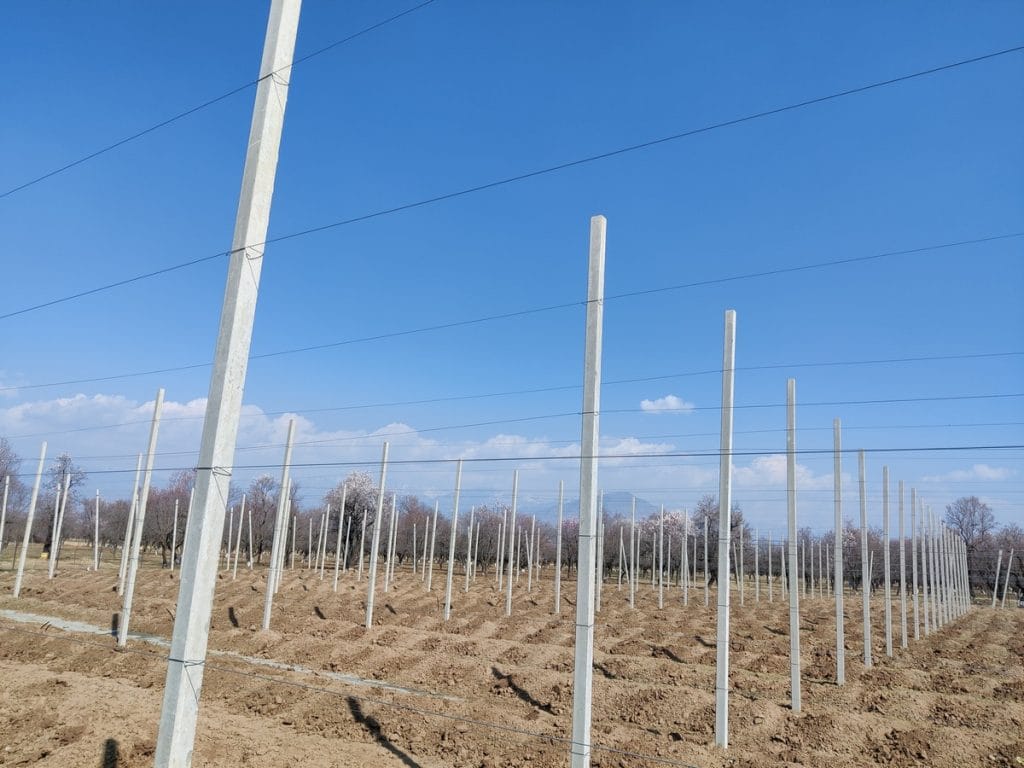
Now bereft of the tall almond trees, the Khans’ land has been planted with uniform, 6-foot-tall, high-density apple plants that are set to bear fruit this winter.
While a kilogram of almonds fetches Rs 300 compared to just Rs 100 for apples in the local markets, farmers are also factoring in time costs. An almond tree takes 8-10 years to bear fruit; new apple varieties yield fruit the very next year.
“It might just be 1-2 kg of apples, but you’re assured of some fruits for your hardship immediately. The year after that, they’ll bear twice as much, and compound over time,” said Asif. “With such an easy option available, why would a farmer spend years planting and tending to almond trees?”
Pulwama is not an isolated case. Data from the Horticulture Department show that the area under almond cultivation in J&K has steadily declined over the past two decades — from about 16,000 hectares in 2006-07 to around 5,500 hectares in 2024-25. Production has dropped as well, from roughly 18,500 tonnes in 2006-07 to about 11,000 tonnes in 2024-25.
While the almond trees on neighbouring land were spread haphazardly, with empty lots meandering in between, the Khans’ fledgling apple trees stood in tight, disciplined rows. Danish said farmers can plant nearly 100 apple trees in one kanal, as opposed to only 10-12 almond trees.
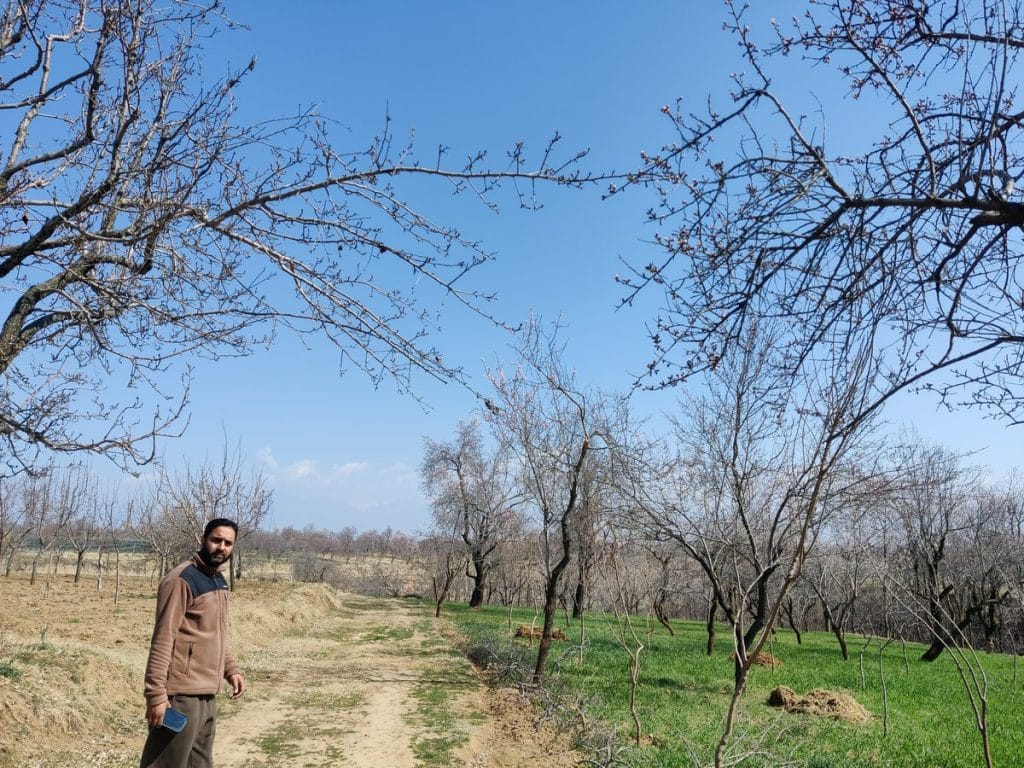
The harvest process is equally lopsided. When the time comes, the Khans will merely pluck their apples, pack them in crates, and ship them off. Almond farmers, however, have a week-long harvesting process — first knocking fruits down with long sticks, and then de-hulling drying, packing, and sealing the almonds.
“Even a child can tend to apple trees, that is how easy it is. For almond and walnut trees, the effort is sometimes not worth it,” said Asif.
Yet, walnuts have been more resilient to the apple invasion.
A special love for walnuts
The world may have woken up to walnuts as a ‘superfood’ in the last 15 years, but Kashmiris’ association with the tree goes back over 500 years. Some histories credit the Mughals for introducing it to the region in the 16th century; other sources say it arrived much earlier.
“You can go to any house in Budgam, Kupwara, Uri, and see every family will have a walnut tree in their backyard,” said Ahmed. “They see it as an investment in our future.”
Walnut trees, or juglans, can reach 100 ft in height and may survive up to a century while continuing to bear fruit. Most of the trees in Budgam, one of the state’s largest walnut-producing districts, were planted more than 50 years ago and are still productive.
There’s never been a culture of using heavy inputs on trees, growing newer hybrid varieties, or even wearing protective gear during harvest. That’s why the average productivity of walnuts in Kashmir is much less than in other countries
-Waheed Rehman, researcher at Sher-e-Kashmir University of Agricultural Sciences and Technology
This longevity, however, is also part of the problem. The Valley’s walnut industry largely relies on ageing trees and traditional cultivation methods. The story is the same across districts, from Budgam to Kupwara, Shopian, and Anantnag.
Most farmers still rely on time-consuming manual harvesting methods, said Waheed Rehman, a researcher at Sher-e-Kashmir University of Agricultural Sciences and Technology who studied walnut harvesting in Kashmir for his PhD. Wielding a large stick, they climb onto the precarious branches, hitting the tree lightly until the ripe walnuts fall to the ground and are collected.
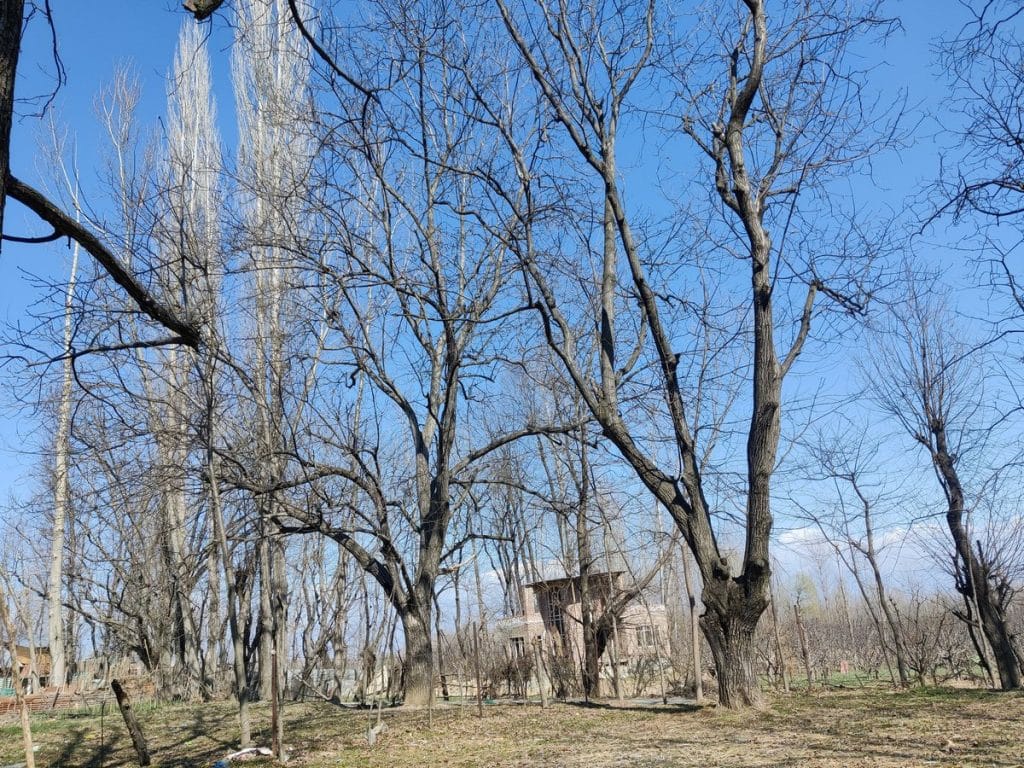
“There’s never been a culture of using heavy inputs on trees, growing newer hybrid varieties, or even wearing protective gear during harvest,” said Rehman. “That’s why the average productivity of walnuts in Kashmir is much less than in other countries.”
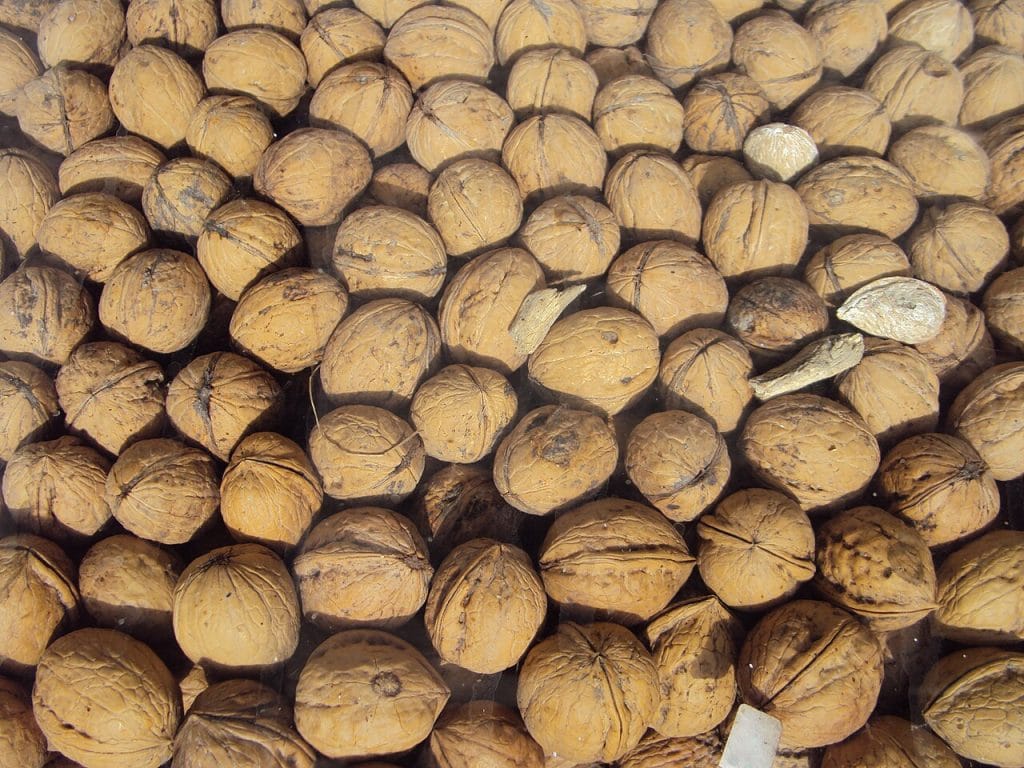
Kashmir’s walnut production is much higher than almonds — almost 300,000 out of the total 307,000 metric tonnes in the country were produced by the state in 2023-24. While India exported 2,000 metric tonnes of walnuts in that year, it also imported 55,000 metric tonnes, signifying a high domestic demand that Kashmiri production isn’t able to fulfill.
India wants more nuts
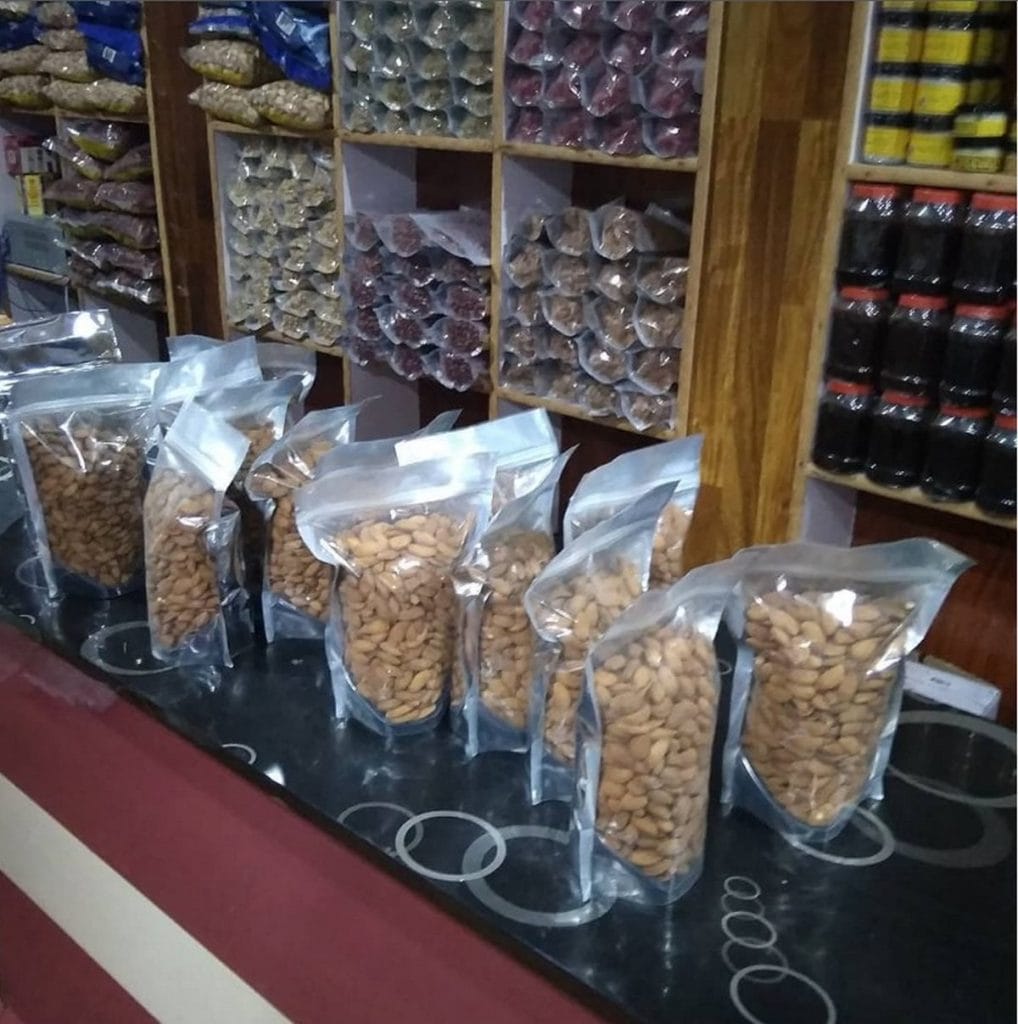
A dry fruit store near Dal Lake sells Californian almonds for Rs 1,000 per kg, even as Kashmiri almonds cost Rs 1,200. When a couple from Ranchi veers toward the international variety, the proprietor tries to steer them to the local ones.
“Look, these are premium quality — you can press them between your fingers and see the oil ooze out,” he said, squeezing an almond to prove his point.
From the daily ritual of soaked almonds to walnuts popped for brain power, India’s appetite for dry fruits is growing rapidly. A November 2025 report by Ken Research cited the Household Consumption Survey of 2023, which found that Indians’ monthly per capita expenditure on nuts and dry fruits rose by 62 per cent since 2015.
“We have more health consciousness and higher disposable incomes, so Indians no longer see dry fruits as festive treats but as nutrition staples,” said Sohail Budhiya, export manager at Megansh Food, a dry fruits exporting company. “Of course, we want more dry fruits, and we want them cheaper.”
The growing market presents an opportunity not only for Kashmiri farmers but for the broader Indian industry. The Ken Research report notes that the consumer shift could spur investment in growing, processing, and storage infrastructure.
India currently processes less than 5 per cent of its total horticultural output, while cold-chain infrastructure handles only about 30 per cent of the country’s dry fruit production. The report recommends expanding processing and storage infrastructure, along with policy reforms to attract FDI in the sector.
“The domestic dry-fruit industry remains highly fragmented, with the top ten players now accounting for approximately 33% of the total market share,” read the report. “India stands at a pivotal point: it can either remain a buyer of global produce or become a processor of global value.”
Also Read: Delhi tulip festival wilted in days. 5 lakh imported bulbs, Rs 2 crore, slow aatmanirbharta
Heritage vs harvest
In Kashmir, there is a clash between preserving its horticultural heritage and bringing about a walnut renaissance.
A 1969 law, the Jammu and Kashmir Preservation of Specified Trees Act, forbids felling any walnut tree on public or private land without the permission of the Revenue Department. The Act has kept walnut orchards from going the way almonds did with apples, as no farmer can simply rip out old trees. But it has also frozen the industry around ageing, low-yield trees.
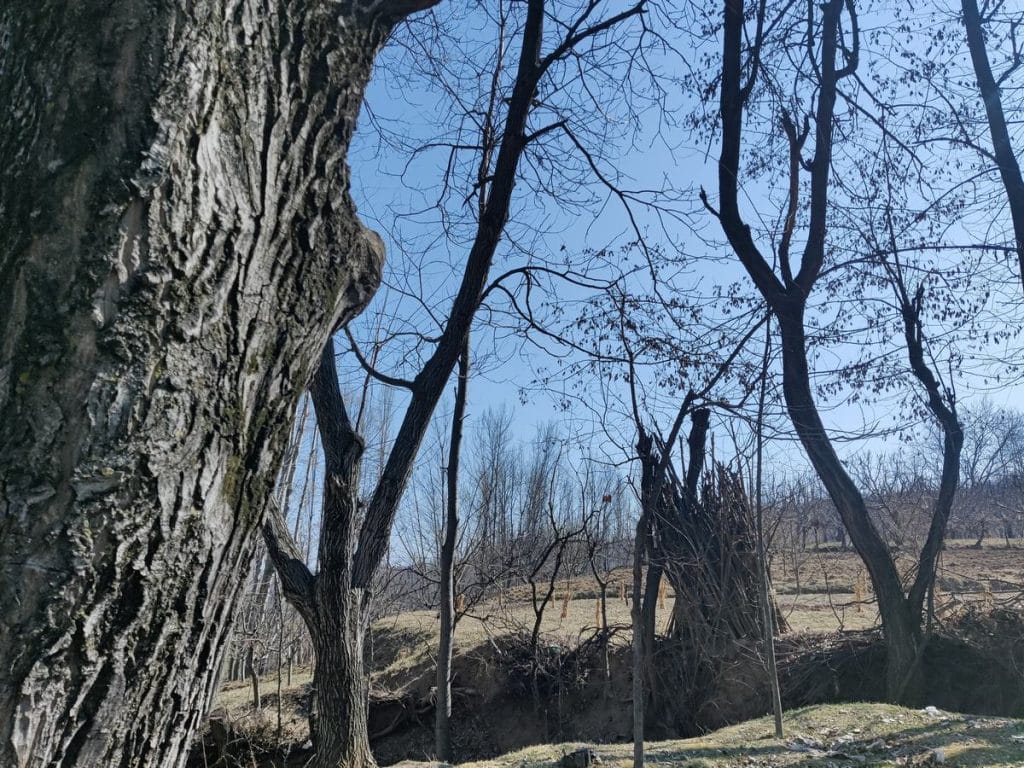
The result is near-stagnant growth. Over the last 20 years, walnut production has crawled from 220,000 tonnes in 2006-07 to only 290,000 tonnes in 2024-25 — an average growth rate of 1.5 per cent a year. The J&K Horticulture Department has itself flagged that without scientific management and better inputs, the industry has more or less plateaued despite potential for growth.
And the gigantic walnut trees that punctuate Budgam’s green landscape also exact a human cost. The manual harvesting often endangers the lives of the young men climbing the trees to bring down the walnuts from the highest branches. A local newspaper report last year said that in the 2025 harvesting season alone, five people had died and more than 100 had suffered injuries such as fractures and broken limbs across Kashmir.
“People are not willing to grow new walnut trees because they don’t want the same fate for their children — wait years for fruits, endanger your life during harvest, and all for your walnuts to be priced out of the market by imported maal,” said Ahmed.
(Edited by Asavari Singh)
the farmers will benefit from structured and technology support. it will help them get the best out of their traditional advantages
So what is the issue!