





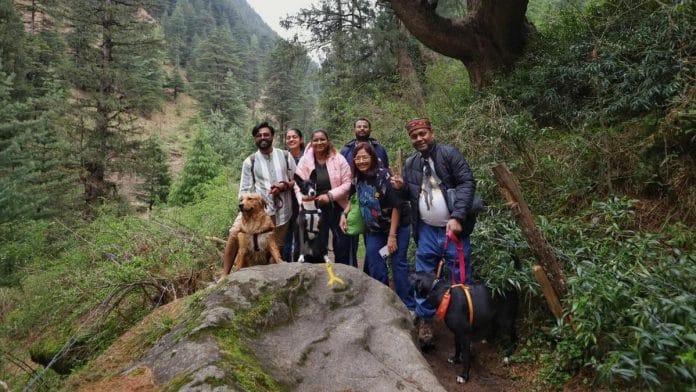



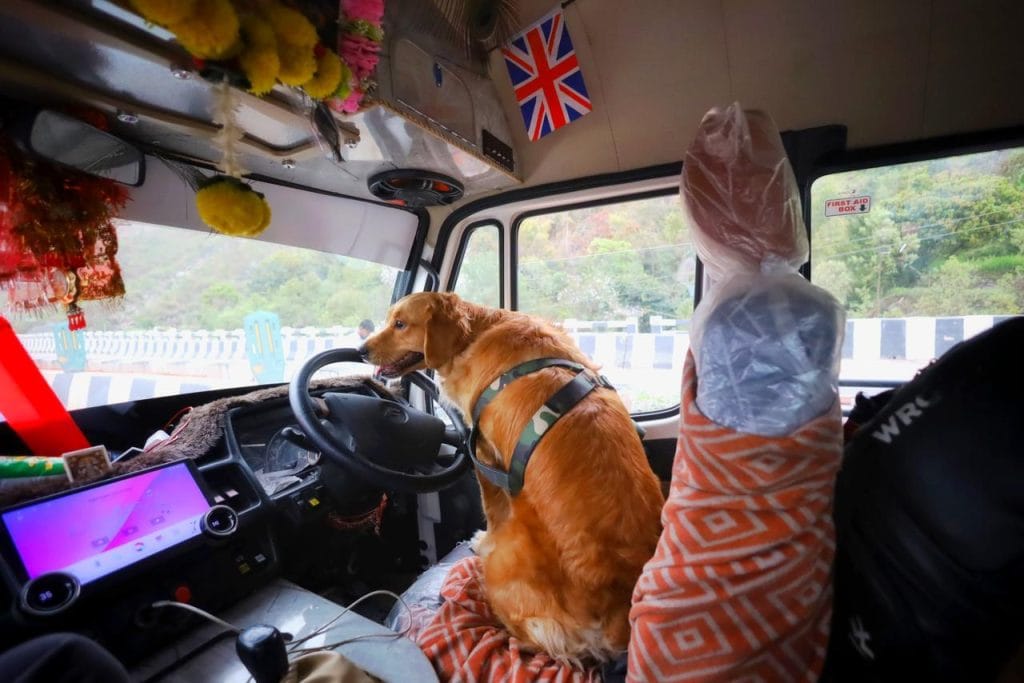
Delhi, Kullu-Manali: Suzie, Zoey, and Taco are on their way to Himachal’s Sajla Waterfall — leashes clipped, tails twitching, entirely unaware of what their humans have planned. But as the smog and din of Delhi give way to pine trees and rushing water, they excitedly crane their heads out of the Tempo Traveller, the breeze blowing their ears back.
It’s an all-girls’ trip for the three dogs. A vacation planned entirely around them by their respective human ‘parents’.
Suzie leads with her wagging tail, barely containing her excitement, while Taco pauses every few steps to inspect and taste the forest greenery. Zoey trails behind, looking a little lost out of her familiar comfort zone.
It’s a dog’s day out.
“Travelling exposes dogs to new environments, making them more confident. It adds to their experience,” said Debjani Dey, who calls herself the ‘mother’ of six-year-old Zoey. She planned the trip with Furgetaway, a travel company that specialises in ‘pet adventures’.
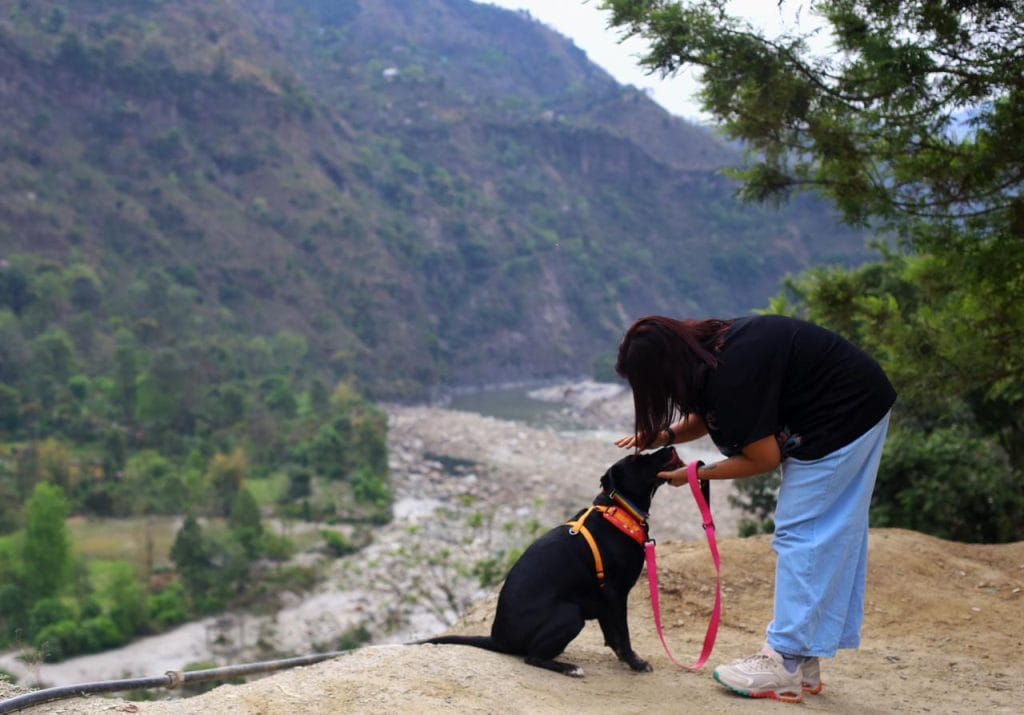
Until a few years ago, travelling with a pet in India was synonymous with relocation and paperwork hassles. And vacations meant relying on helpful family members or boarding facilities. But now many more people are travelling with their dogs for pleasure and even planning the whole trip around them.
Globally, the pet travel market—dubbed the ‘pawprint economy’—is estimated to increase from $2 billion to $4.6 billion by 2032. India is rapidly catching up, driven by a rise in DINK (Double Income, No Kids) couples who view their dogs as ‘children’ deserving of bespoke experiences. They want curated wonder and adventure—snow, forest trails, waterfalls — for their pets and are willing to pay for it.
Our trips are not for humans — they are for pets. Humans just happen to enjoy them
-Khusshbu Ojha, Furgetaway co-founder
Now a small group of niche travel companies is stepping in to meet that demand, with prices depending on the destination and length of the trip. For an all-inclusive Furgetaway trip from Delhi for a long weekend, Debjani and her husband Arunava paid around Rs 38,000. Pet Travel Diaries’ packages—including destinations such as Tamil Nadu, Sikkim, and Goa—range from around Rs 59,000 to Rs 1.5 lakh. Other companies such as Paw’dventure, Pawcation India, and Breakaway also curate tailored vacations with pets.
The market began to change during the pandemic, when more people adopted or bought pets to cope with loneliness. These dogs and cats came to be called ‘Covid babies’. In the past four years, airlines, hotels, and travel platforms have started adjusting. Akasa Air was among the early movers with pet-friendly policies. Platforms such as MakeMyTrip and Airbnb expanded listings that welcome pets. A 2025 Agoda study reported an 87 per cent global rise in pet-friendly accommodation listings year on year, with India being one of the main drivers. Furgetaway claims to have grown bookings eightfold since its launch in 2024.
“This is a rising market in India. Both demand and supply are growing almost simultaneously. People are willing to spend on their pets, and that is pushing the market forward. It is no longer about leaving pets behind, travelling with them is slowly becoming part of the plan,” said Sanjay Chakrabarti, founder of Tag8, an Indian company that makes pet trackers.
Also Read: A Delhi couple keeps climbing Ghazipur landfill to feed 400 dogs. Chicken, rice & dahi
One muddy trail & 3 families
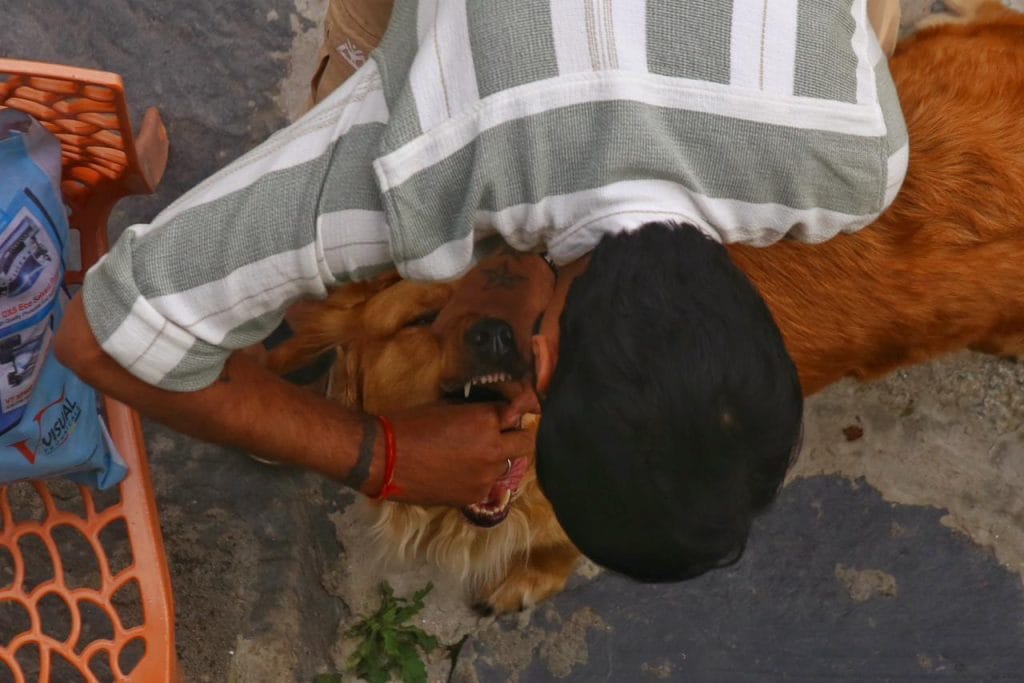
This is Suzie’s second trip to the mountains. The two-year-old golden retriever leads the pack on the trail, pulling the leash and her ‘father’ Himanshu Sharma — who is trying his best to keep up in slippers on the muddy road.
“Oye Suzie ruk (stop),” Sharma calls out, but the only command that works is “Batau tujhe?” (Shall I scold you?) when her retriever energy takes over. She traces her way through pine, rocks, and mud, takes a U-turn and hides behind Himanshu when a mountain dog appears and then charges forward again. It’s nothing like their neighbourhood in Rohini and she can barely contain herself.
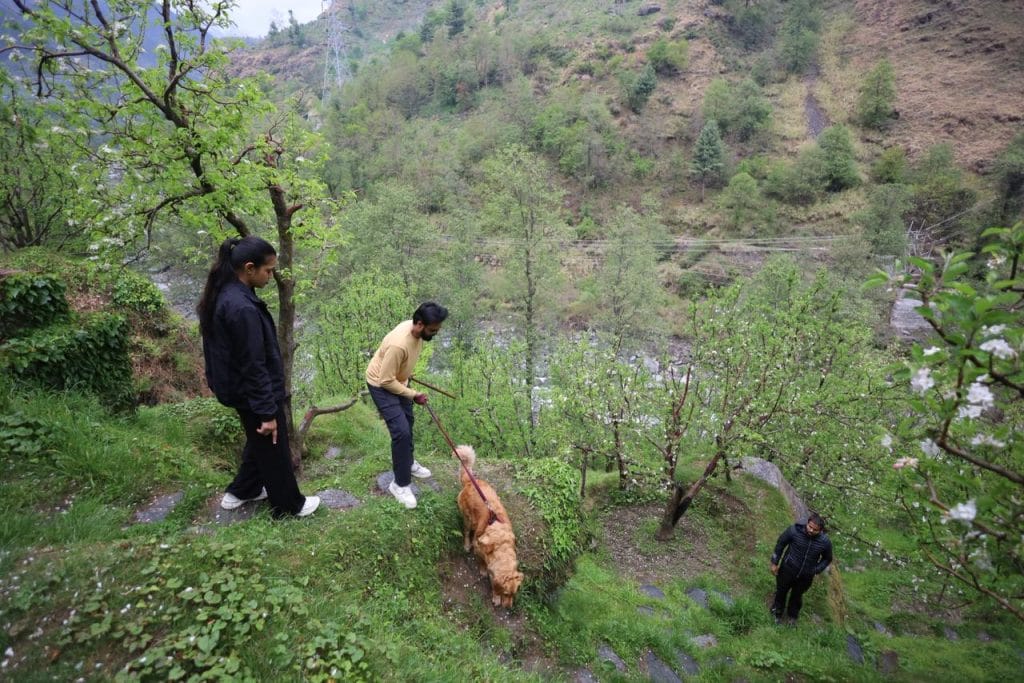
Suzie has been the centre of the Sharma household since she arrived as a year-old puppy, and this trip is a gift—a sensory “reset” after her second heat cycle. It’s a phase that can leave female dogs physically drained and low on energy. It has become a ritual for the family to take her to the mountains after her cycles are over. The first trip was to Kumaon in October last year.
“I was clueless how to handle taking care of her. I managed, but soon after she had a UTI,” he said, while being dragged up the trail. “She deserved a retreat, and we knew mountains, water and greenery would be the best.”
I want her to see what I see. As long as she’s with me, I want to show her as much of the world as I can
-Himanshu, ‘parent’ to Suzie
Like any doting parent, he wants to broaden her horizons too.
“I want her to see what I see. As long as she’s with me, I want to show her as much of the world as I can.”
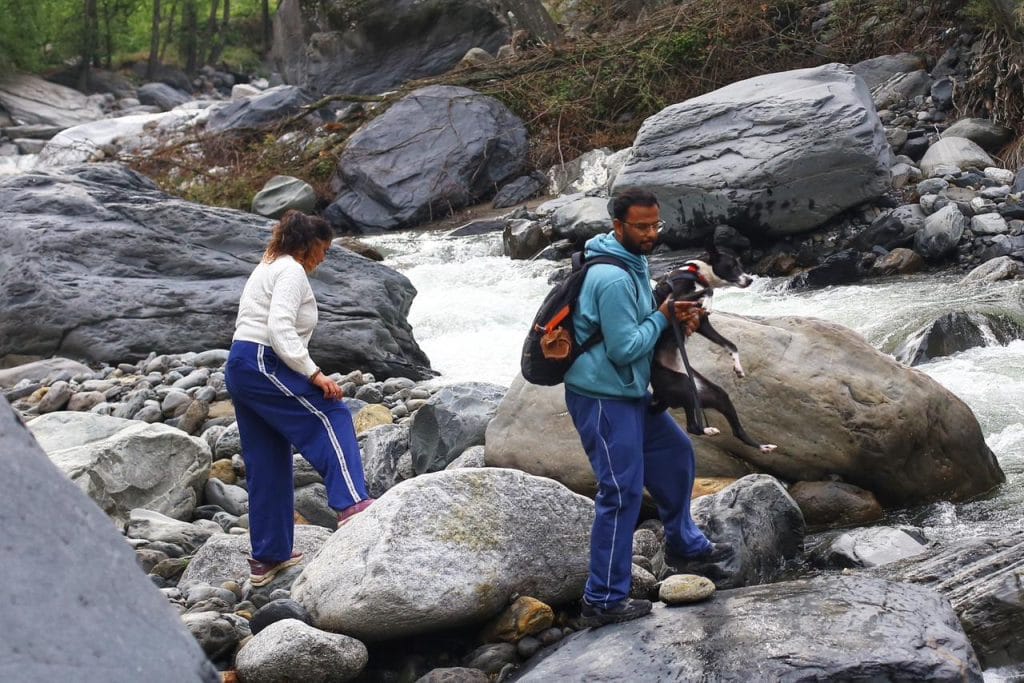
Behind Suzie, Bhawana and Shubhaseesh Srivastava are on an adventure of their own. While Bhawana holds the leash of the frisky frisky black indie with a white bib, Shubhaseesh is laden with their darling’s belongings — a coat in case it rains, medicines to prevent nausea, and towels to dry off after a dip in the water.
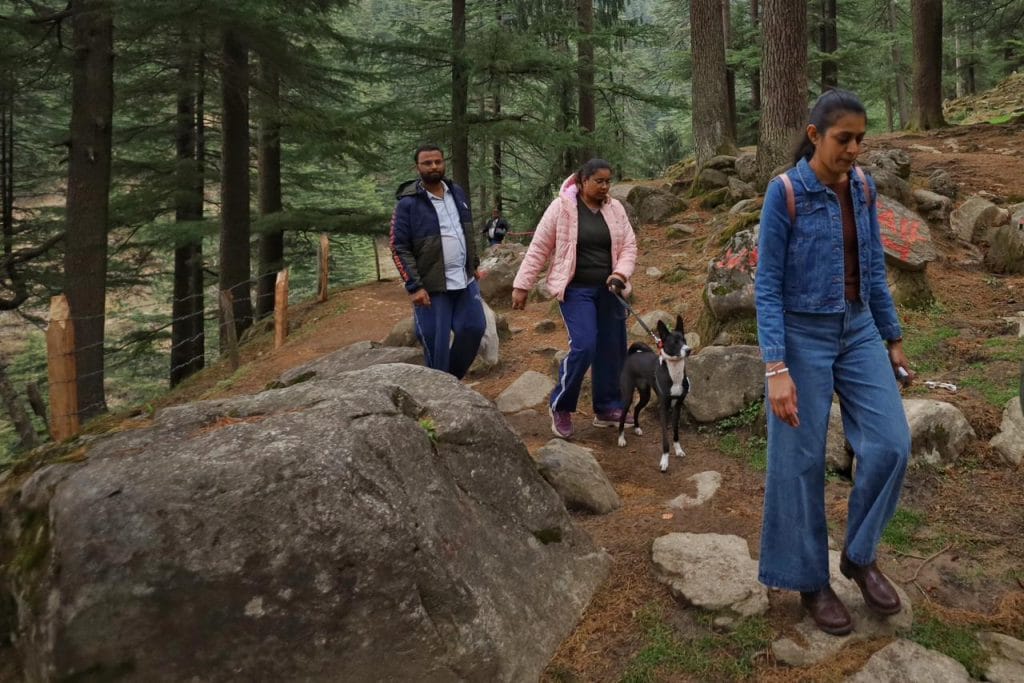
Bhawana found Taco, aka Lado, in her housing society a year ago and brought her home. The newly married couple joke that in the economy of 2026, this is the closest they’ve come to having a child. The effort is no less, from carrying her when she is tired to feeding her by hand to finding ways to keep her engaged.
“I do not like travelling anymore. This trip is only for Taco,” said Bhawana.
As they tramp through the woods, the couple act just like the quintessential Indian parents.
“Stop! Why don’t you listen?” yells Bhawana, a little shrill and exasperated as Taco darts from one point to another. A free spirit let loose in the Himalayas, Taco pays no heed until she gets a warning tap on the back.
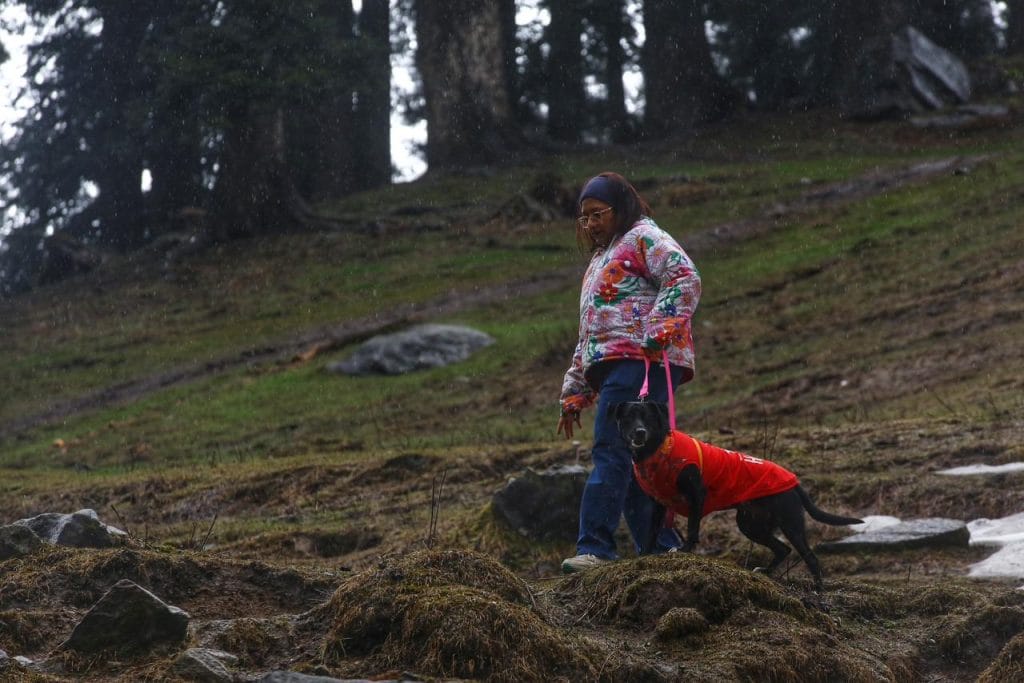
Zoey, a six-year-old Labrador-Indie mix in a red-and-yellow shirt and Queer Pride collar, is more reticent. Debjani and Arunava, her parents, had informed the group about her moody, introverted nature. A Covid baby, Zoey needs her space.
Finally, the group reaches the end of the 1-kilometre trek to the waterfall. But they have to wait. There’s a queue and the crowd will have to disperse before the dogs can have their turn. As soon as Furgetaway coordinator Ayush Singh finds a secluded spot, they get the green signal.
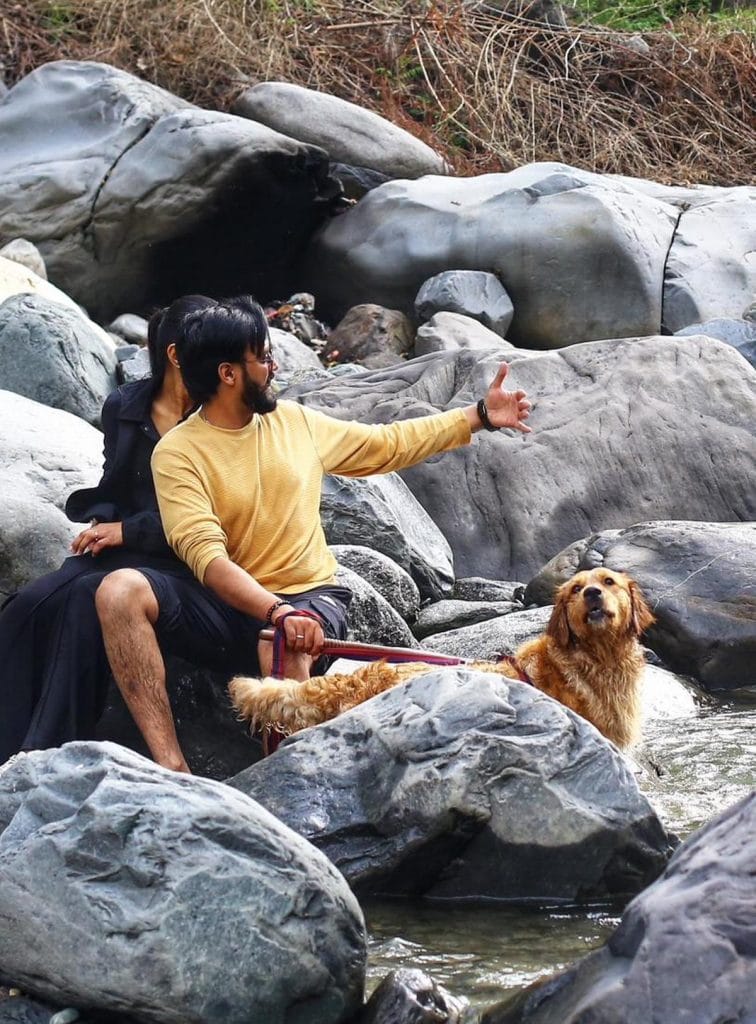
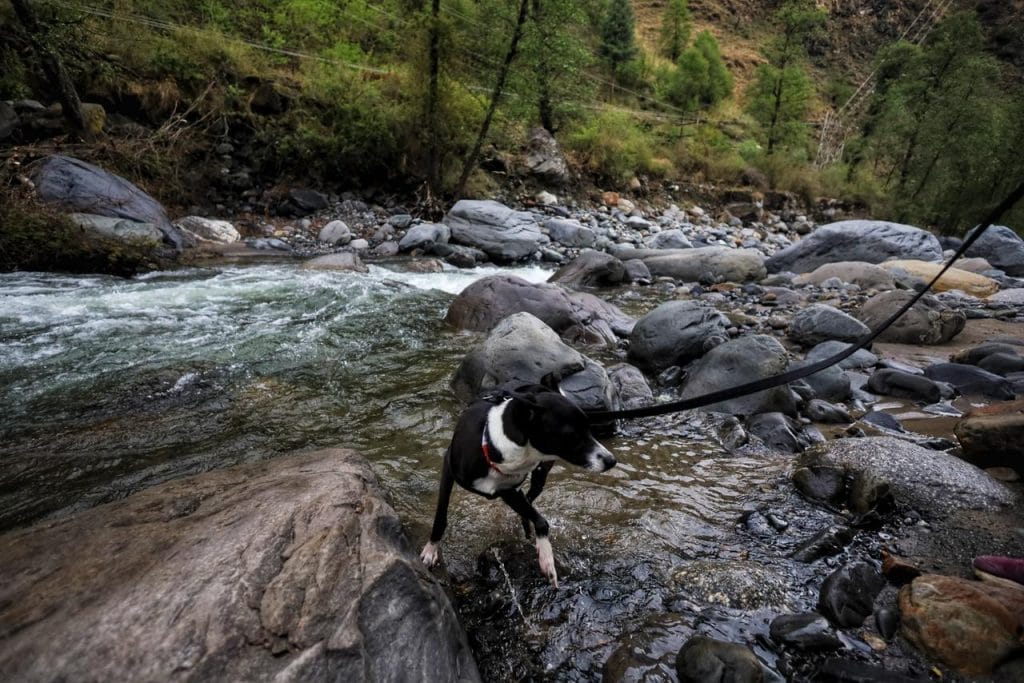
Zoey is the first to rush in. Still restrained by her leash, she soaks her small black paws in the cold water, while Taco follows suit, a little more gingerly.
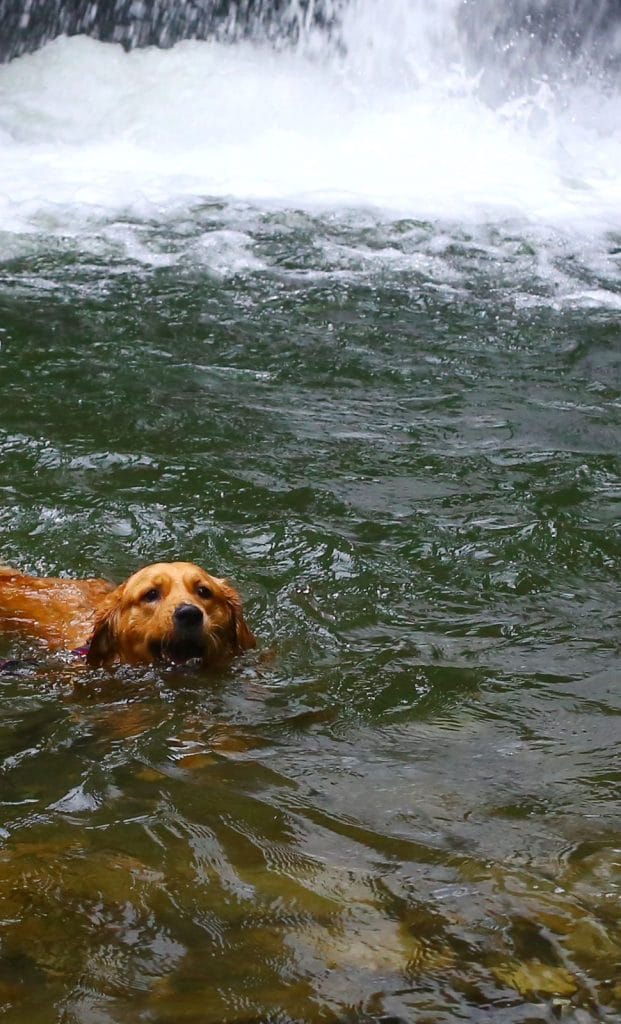
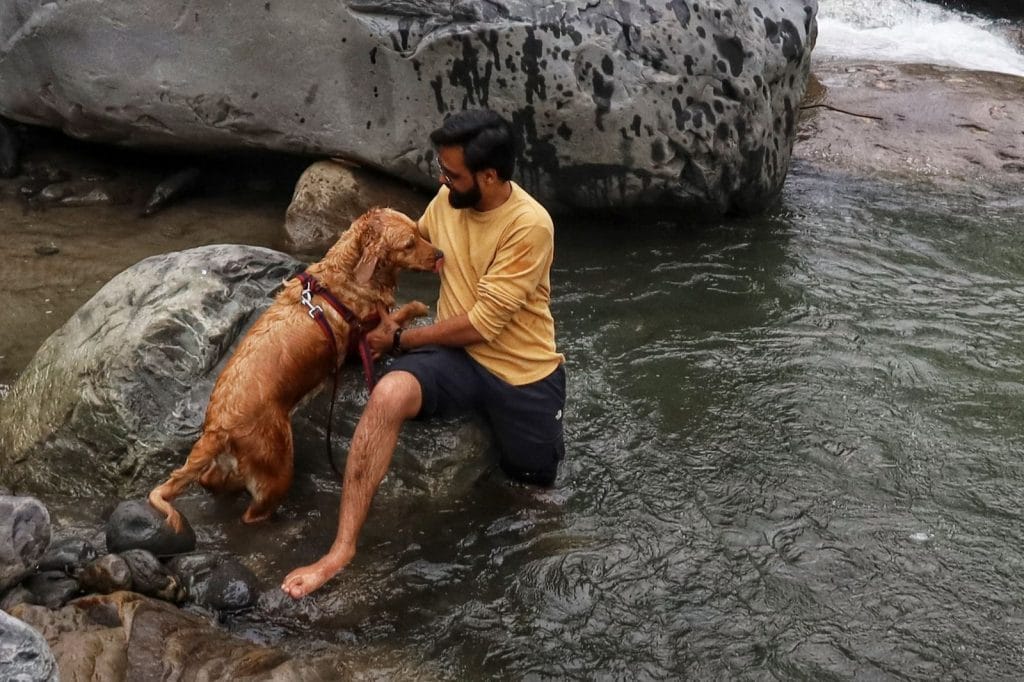
Suzie, however, has bigger plans. She looks expectantly at Himanshu and barks, insistent. He unclips the leash. She hops into the icy water and swims like a professional swimmer. He follows after her, marvelling that he didn’t know she was such a good swimmer.
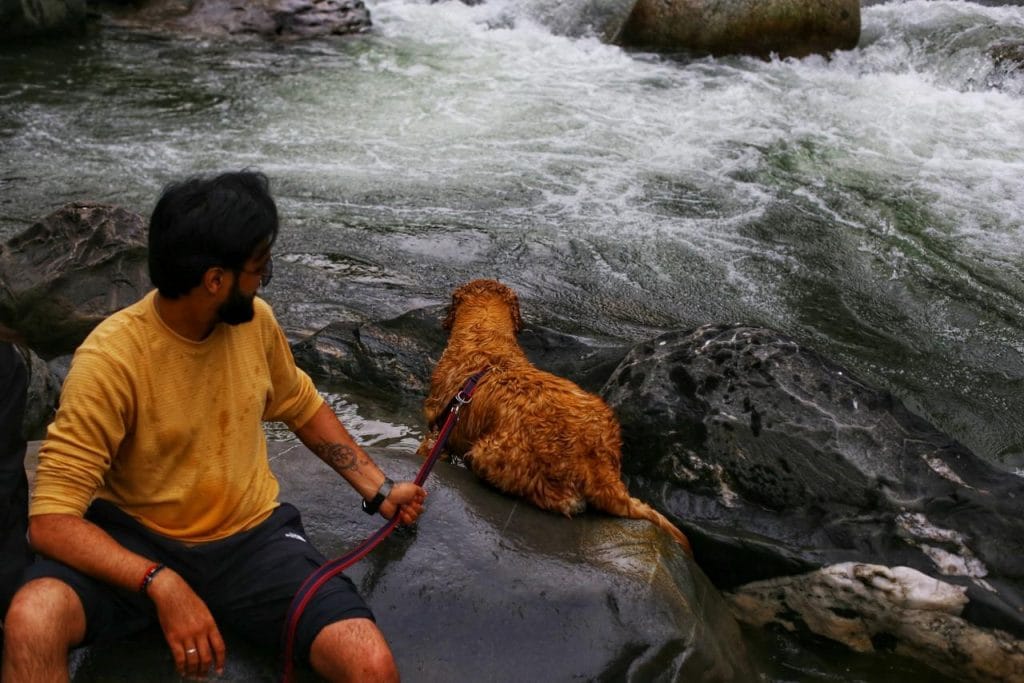
“Our trips are not for humans — they are for pets,” said Khusshbu Ojha, one of the co-founders of Furgetaway. “Humans just happen to enjoy them.”
Putting together a pack
It all began two years ago, when Sumeet Chilwal was denied entry at a restaurant with his dog Simba. And so he started a group of pet owners who wanted to travel together. That group became Furgetaway. The mission was to make travelling with pets simpler and more accessible.
Today, he runs the business, co-founder Khusshbu Ojha manages the community, and Neha Pawar handles sales and marketing.
“It was a niche market. There was demand, but there was no system,” said Chakrabarti.
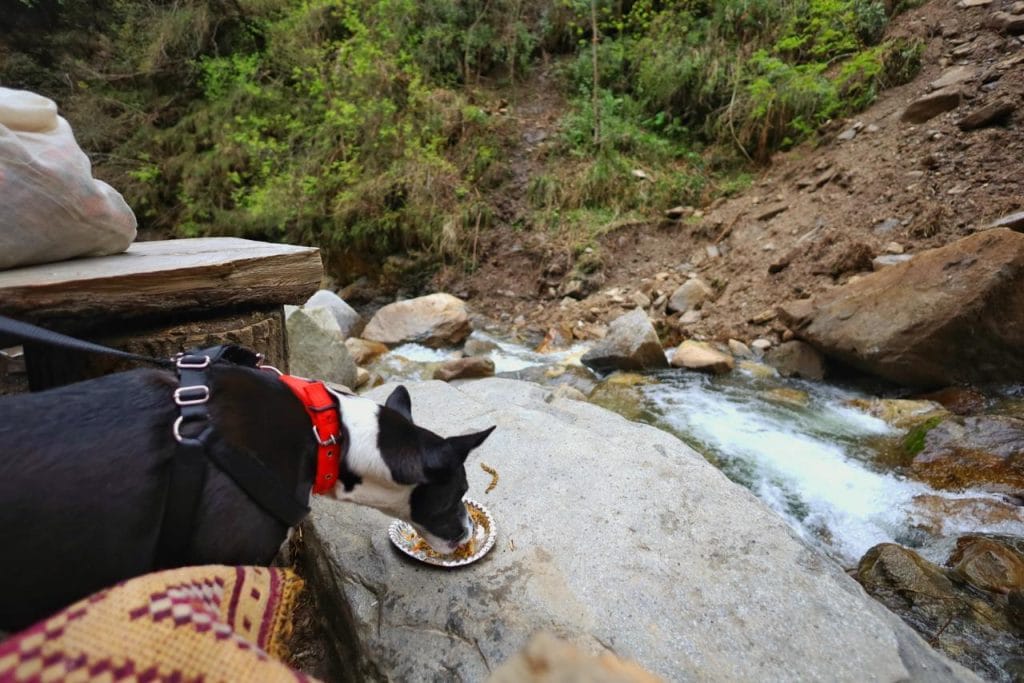
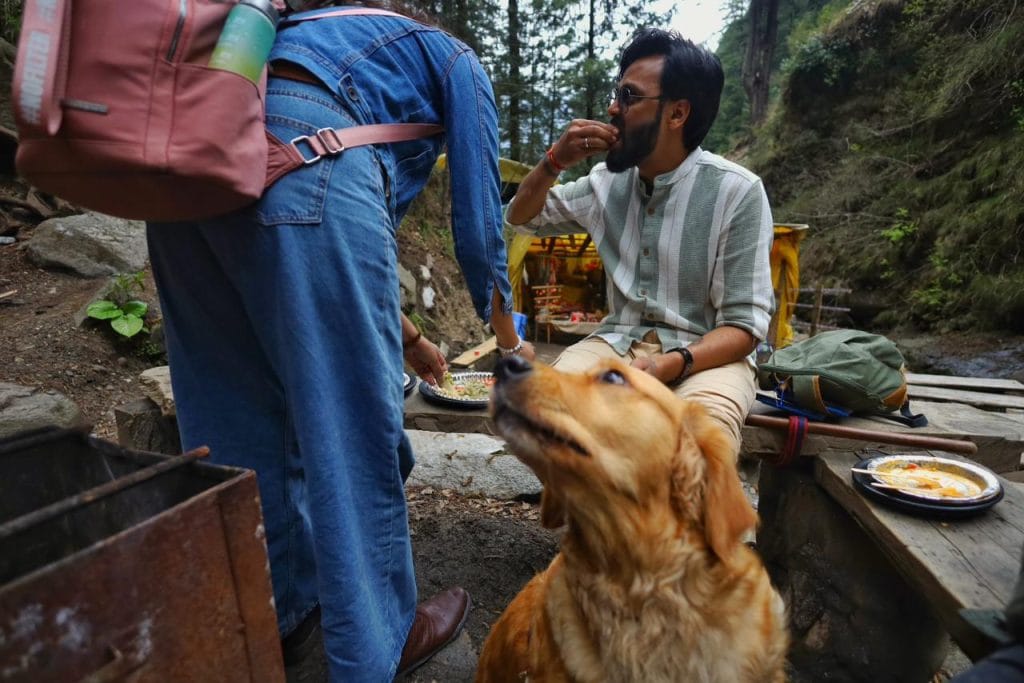
Chilwal said he spent months scouting Himachal Pradesh and Uttarakhand to suss out the pet-friendliness of stays, cafes, and adventure spots. He also coached homestay owners on how to make their properties genuinely pet-friendly. Most places they choose already have dogs on the premises.
You are free from the constant stress of worrying whether your dog will be welcomed
-Debjani, parent to Zoey
“Honestly, in all our trips, we have rarely seen dogs cause any damage. Not a broken lamp, not a scratched wall. But kids? That is a different story. Yet people are far more accepting of that. It is just about perception,” said Chilwal.
Ojha, who has been a solo traveller with her five-year-old Beagle Mishty, pointed out that travelling with a likeminded group can be reassuring for many pet-owners.
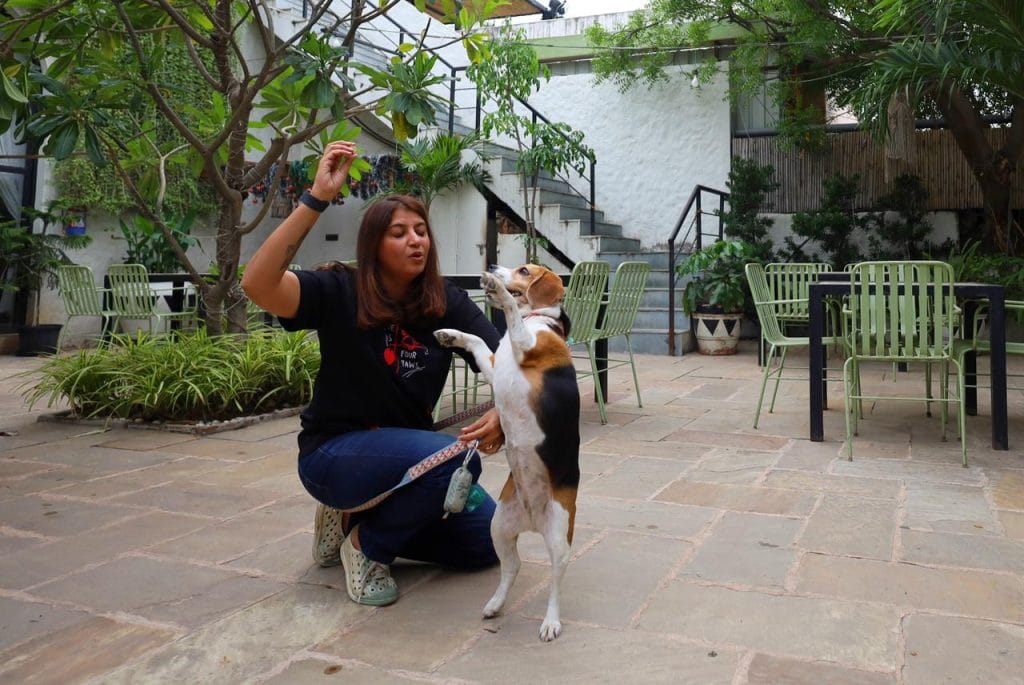
“I did not want to go somewhere unfamiliar,” she said. “I was anxious. What if she runs away? What if something happens? When you travel alone, you are already on edge. With a dog, it doubles.”
After teaming up with Chilwal and Simba, she has taken Mishty to snow, waterfalls, rivers, mountains, and beaches. They are now constantly looking out for new trips for pets.
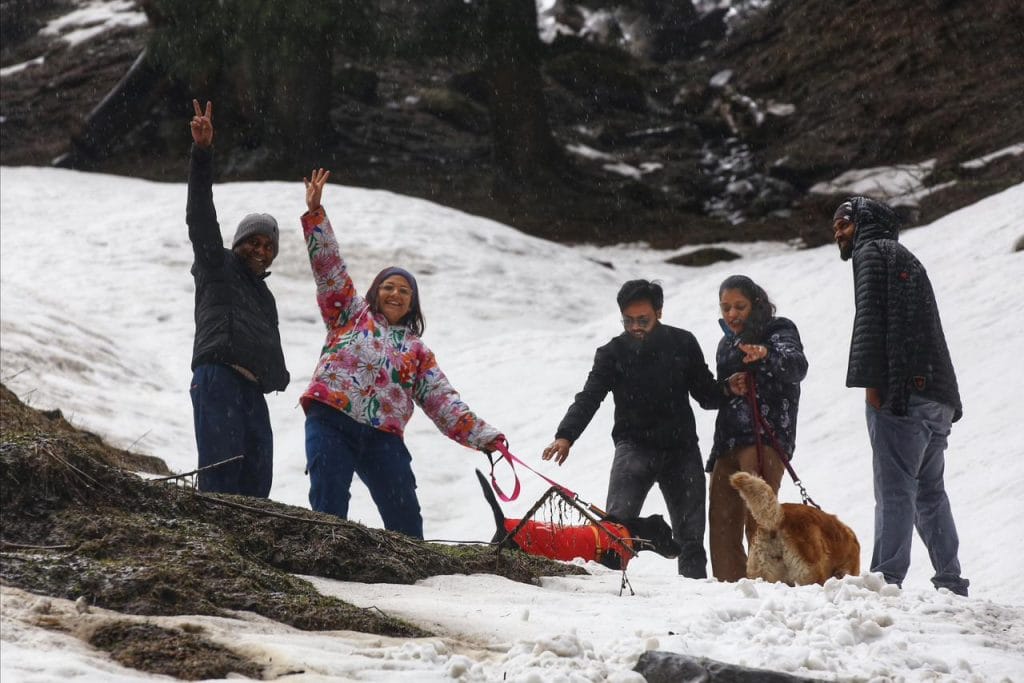
The trek to Sajla Falls was one of their finds. So was Kalzang Dhaba, where an elderly woman serves what many call the most authentic — and perhaps the best — siddu (a fermented steamed bread) in the region.
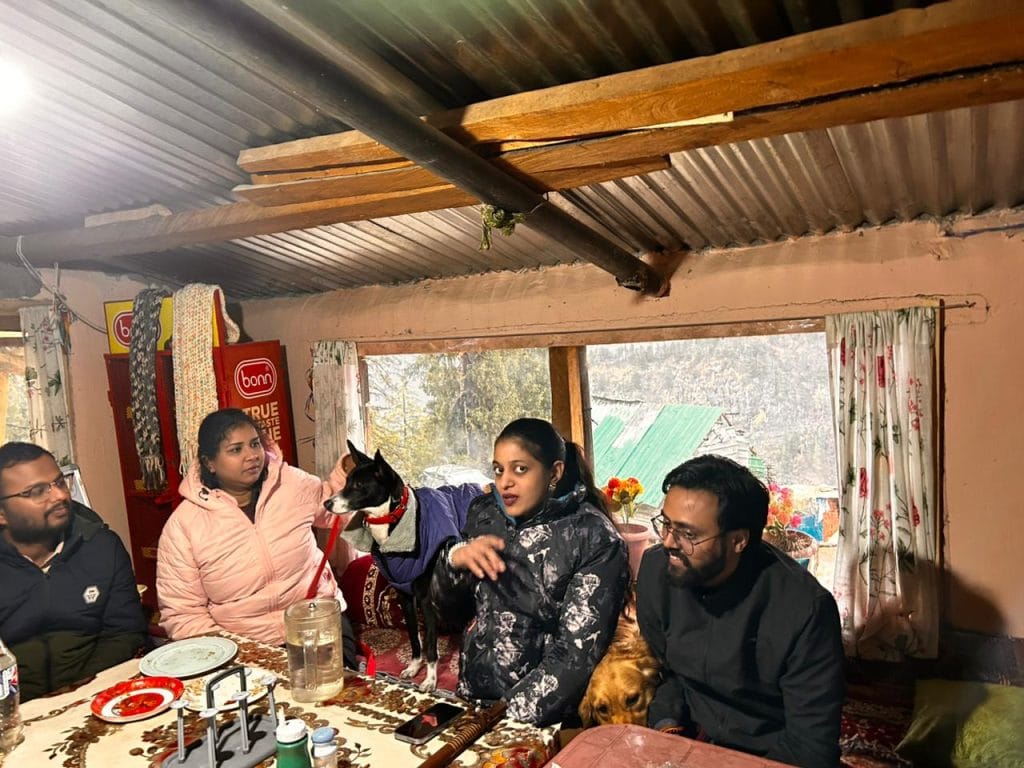
By late afternoon, it had started to snow. The dogs rolled in it, then settled down to rest while their humans warmed up with plates of homemade momos, Maggi, and fresh, steaming siddu.
Safety and acceptance in numbers
To ensure a safe stay, the team selects properties that are fenced and secluded so that pets can roam freely. The Manali stay was one such place — a cosy retreat tucked into the mountains with a river flowing alongside. Itineraries are designed to be slow and mindful.
Furgetaway is as much a community as it is a travel company, according to Ojha. Its larger network has nearly 10,000 members. The inner group — Furgetaway Circle, about 700 strong — is harder to get into.
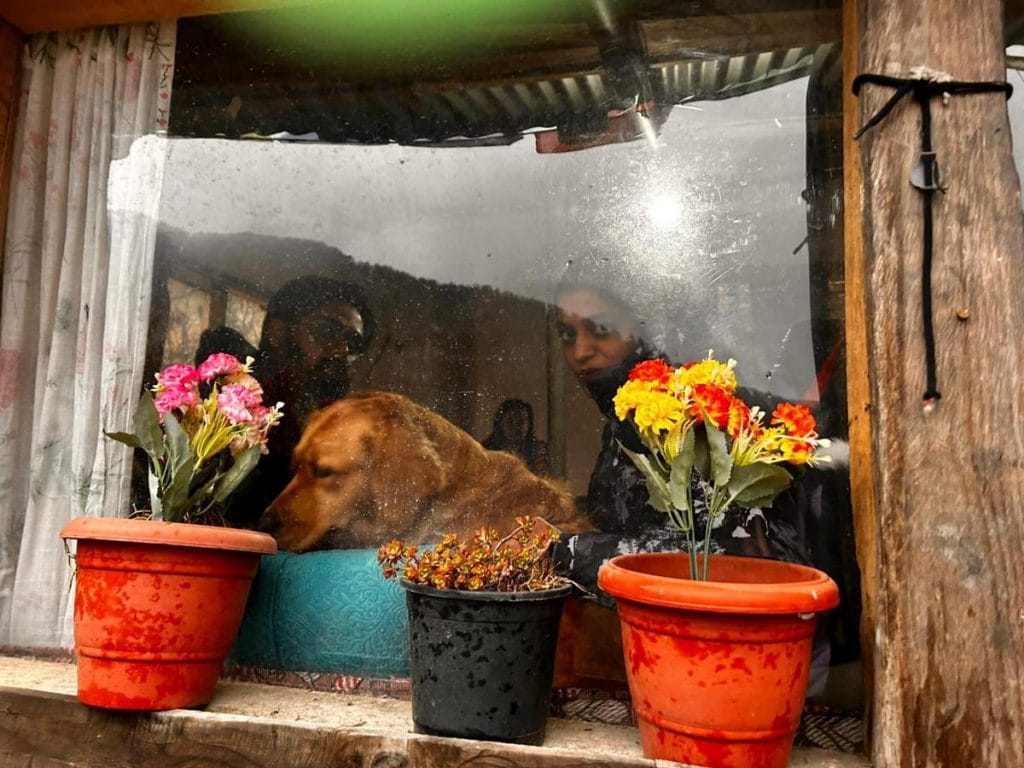
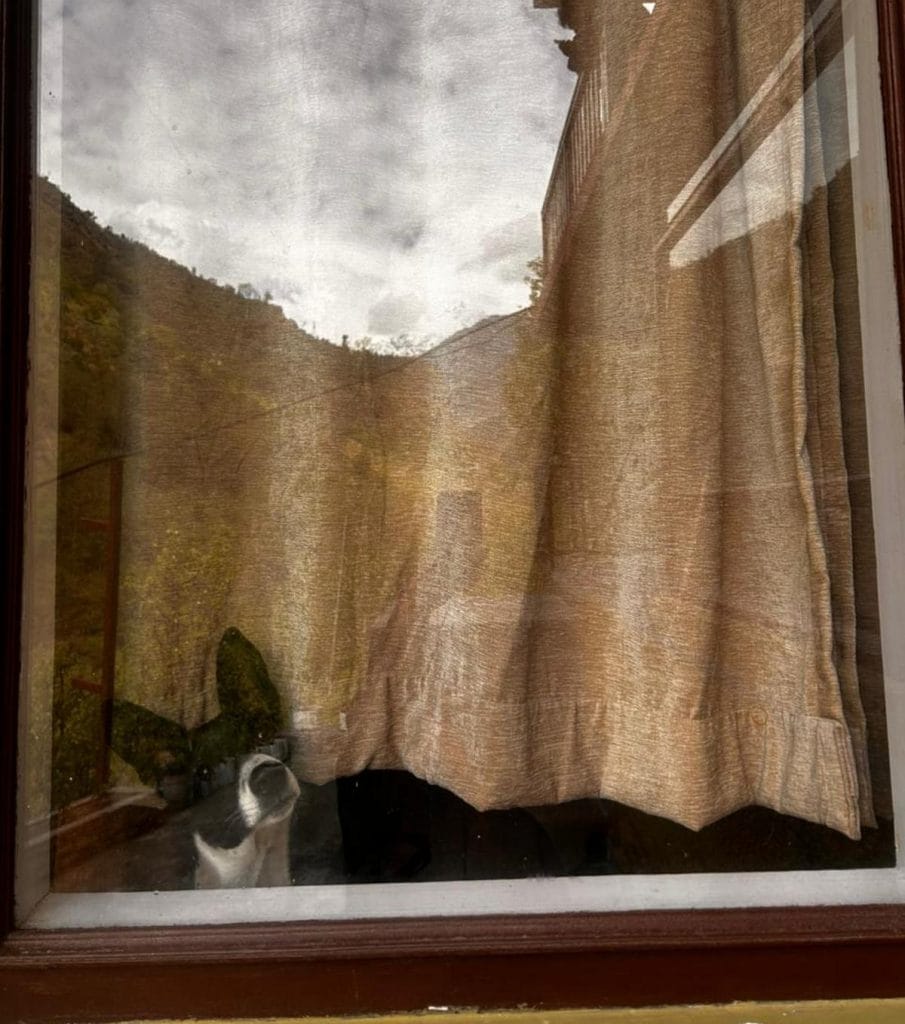
Ojha, who personally vets members, said the rules are strict: “No forwards, no good morning messages. Only pet-related conversations — health, behaviour, travel.” She added that they book at least a couple of group trips each week from Delhi, while destinations such as Goa and Spiti depend on the season.
“More and more people are eager to travel with their pets, even solo women travellers who want the safety of a group,” said marketing head Neha Pawar.
Sometimes I feel humans do not deserve dogs, they are so pure
-Arunava, parent to Zoey
Bhashwati Chakraborty, who has taken multiple trips with her five-year-old German Shepherd, said she is now much more comfortable travelling.
“When you are alone, even with your dog, you hesitate before going to certain places, especially if they are isolated. Safety is always in the back of your mind. But in a group, that hesitation fades. There is a comfort in numbers, and that makes the experience much more freeing,” she added.
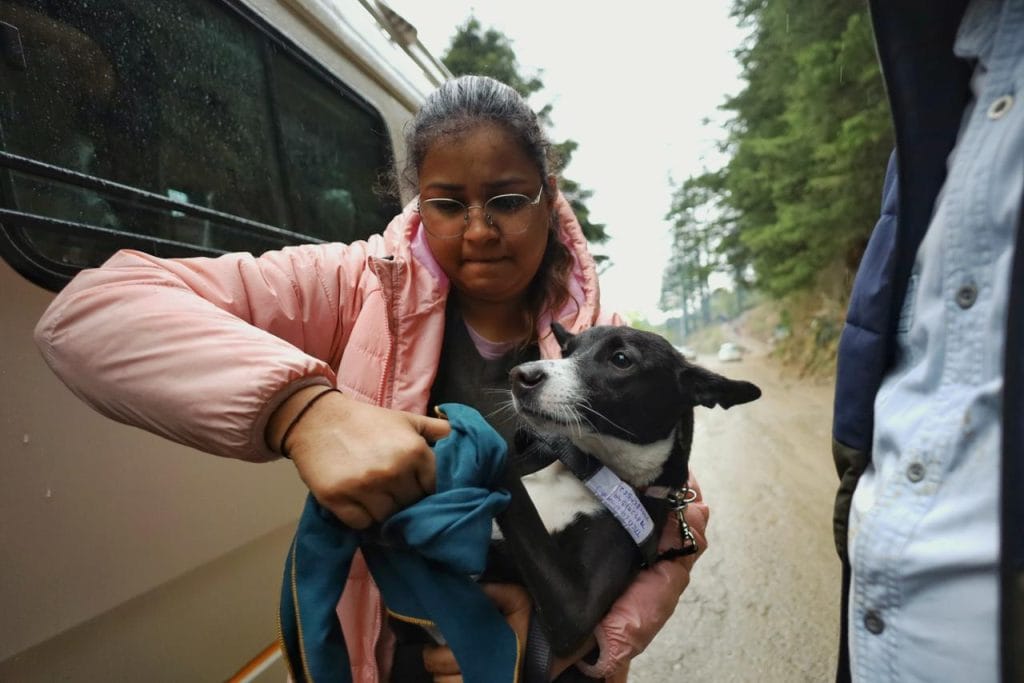
For many pet owners, the relief is also about not having to apologise for their dog’s existence at check-in desks.
“You are free from the constant stress of worrying whether your dog will be welcomed,” said Debjani.
A dog-first agenda
Before the trip started, a WhatsApp group had already been set up with care instructions —how to handle motion sickness on the bus, dinner plans, and items to carry, such as poop bags.
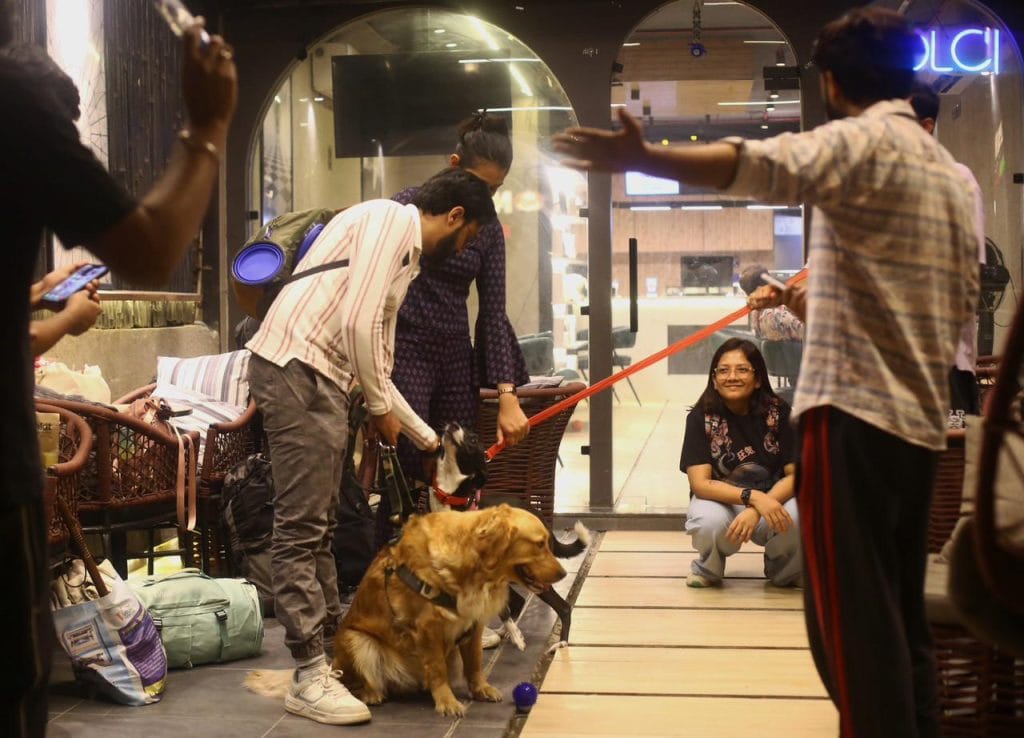
The families were asked to reach a pet-friendly cafe in Janakpuri between 9 and 9:30 on Thursday evening. Zoey travelled from Gurugram, Suzie from Rohini, Taco from Ghaziabad. One traveller from Mumbai was supposed to join them, but missed the trip after train tickets were not confirmed.
All the dogs had their own bags: clothes, medicines, towels, food, and treats. While the families of Suzie and Zoey made last-minute checks, Bhawana ran across the cafe with Taco — “Lado! Pee pee,” she said, a used Huggie in hand.
What most places call ‘pet-friendly’ comes with a long list of restrictions. Dogs are not allowed on beds, in pools, sometimes not even in common areas. That is not real inclusion but tolerance with conditions
Sumeet Chilwal, co-founder of Furgetaway
Before boarding the minibus, trip head Aakash Tiwari read out a set of dos and don’ts. Each parent listened carefully. The dogs sniffed each other.
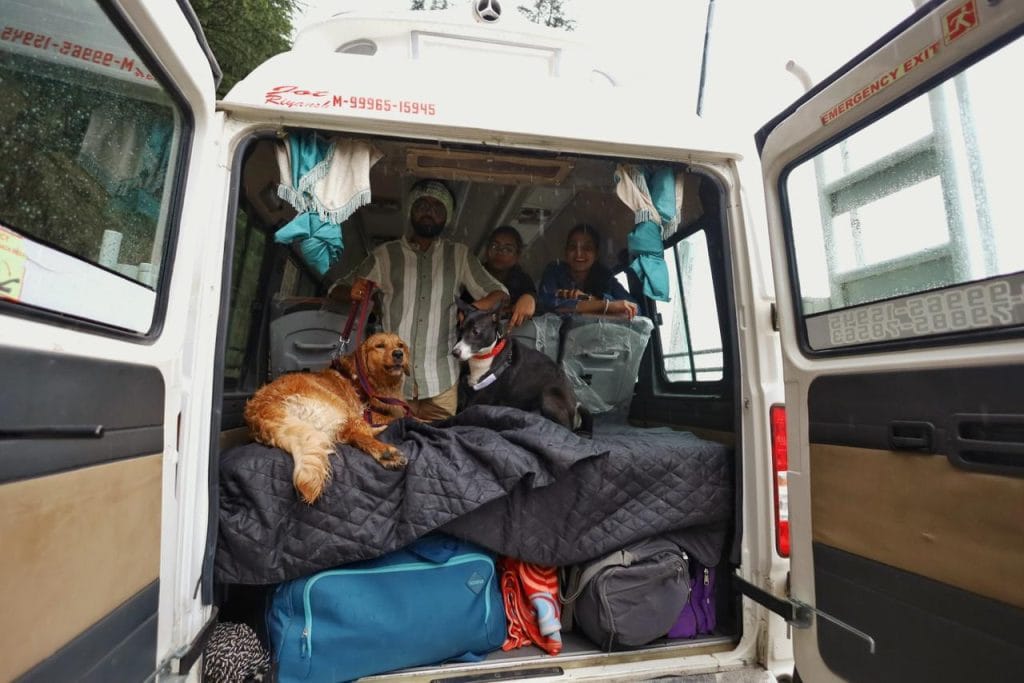
All set, the team allotted seats on the bus. Suzie went first, tail wagging nonstop, two paws up, struggling to climb until Himanshu pushed her in, with a fond “there you go”. Zoey climbed the stairs like an ace. Taco, the youngest, bounded up last.
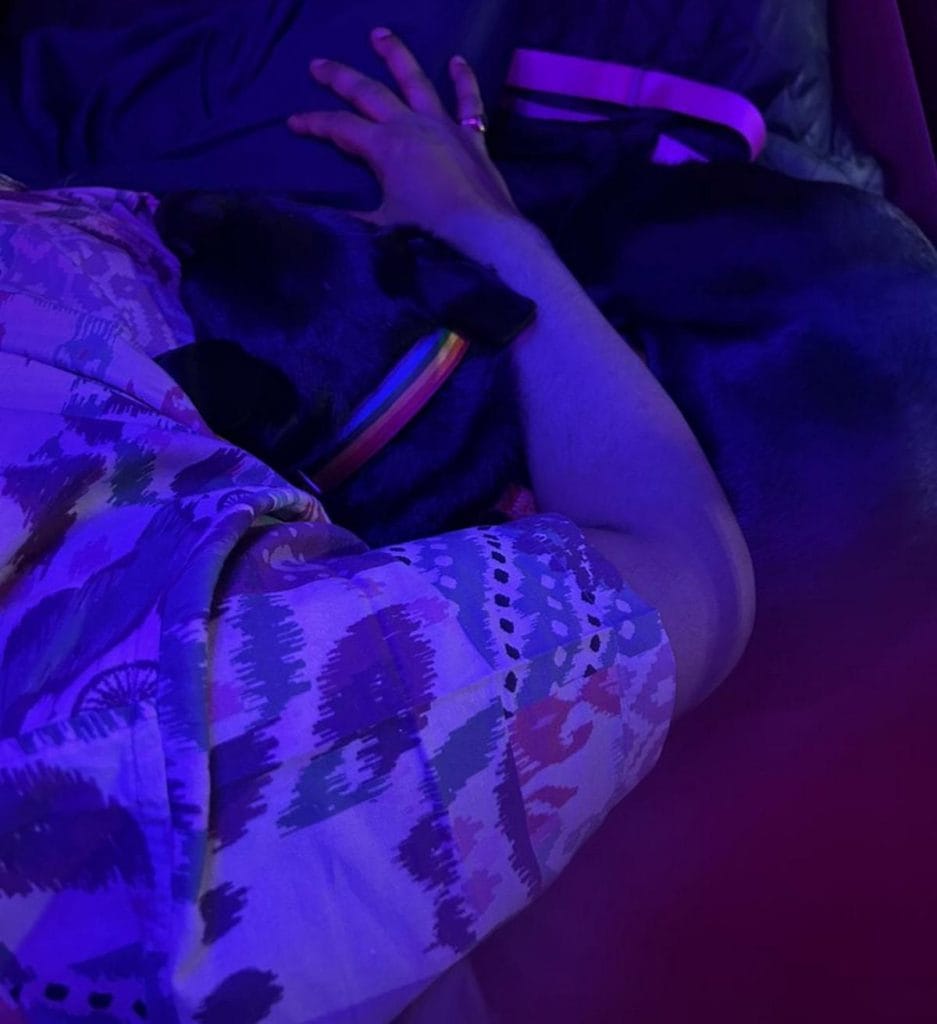
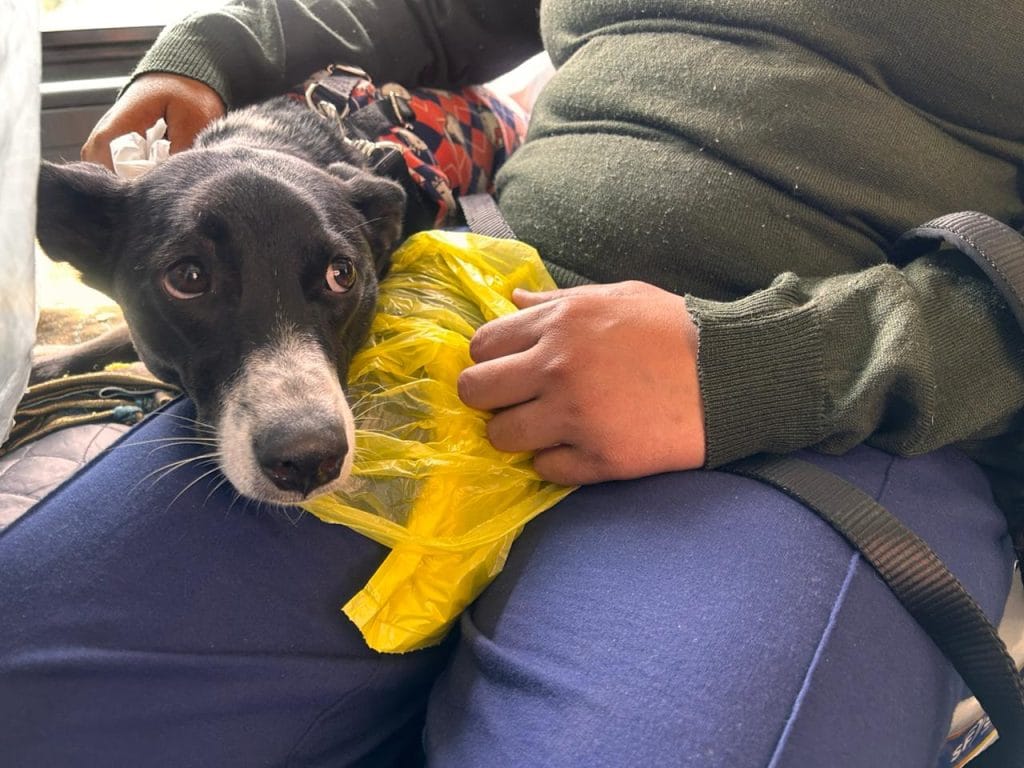
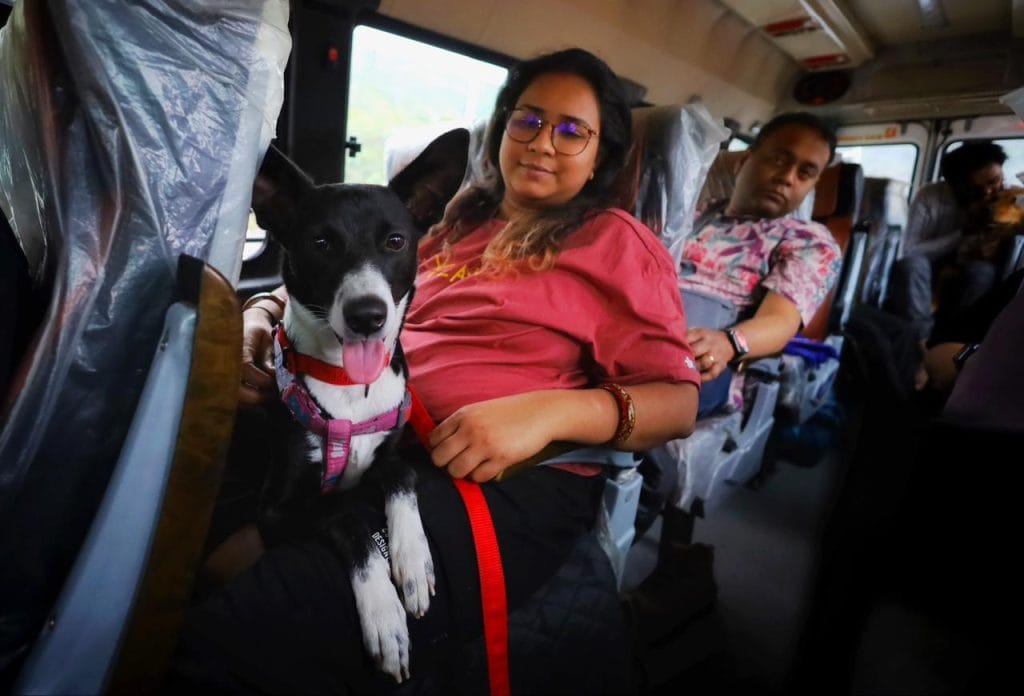
It was a longer ride than a regular overnight bus. The itinerary was built around the dogs: pee breaks, feeding stops, strolling time. At the first dhaba halt, the humans ran to the washroom while the dogs walked around. Deep into the night, the pet parents were still on duty — exchanging seats, adjusting positions. Taco rested her head on Bhawana’s lap. Zoey slept on Arunava’s. Suzie squeezed herself between Himanshu and his partner Srishti. All three would occasionally peer out of the window, then settle back down.
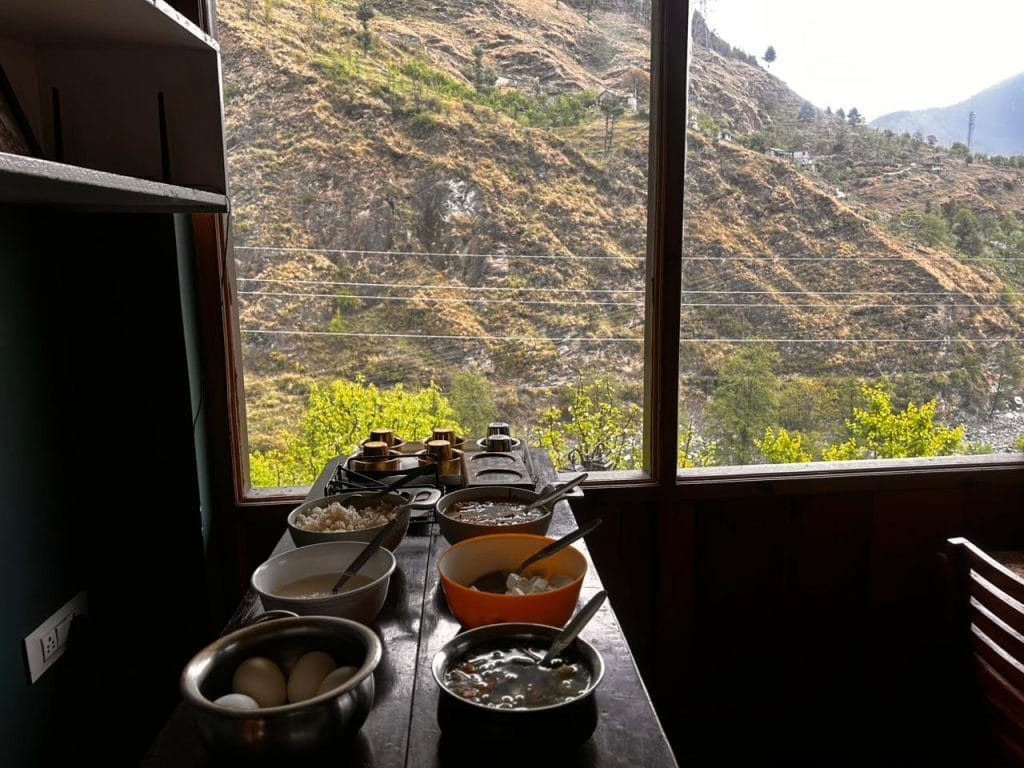
Traffic and landslides delayed the group by two hours. By the time they reached the homestay, lunch was waiting: chicken, eggs, vegetable stew, rice, and roti, much of it suitable for the pets to consume. The dogs were fed first, then the humans. Everyone was bright-eyed and bushy-tailed for the trek afterwards.
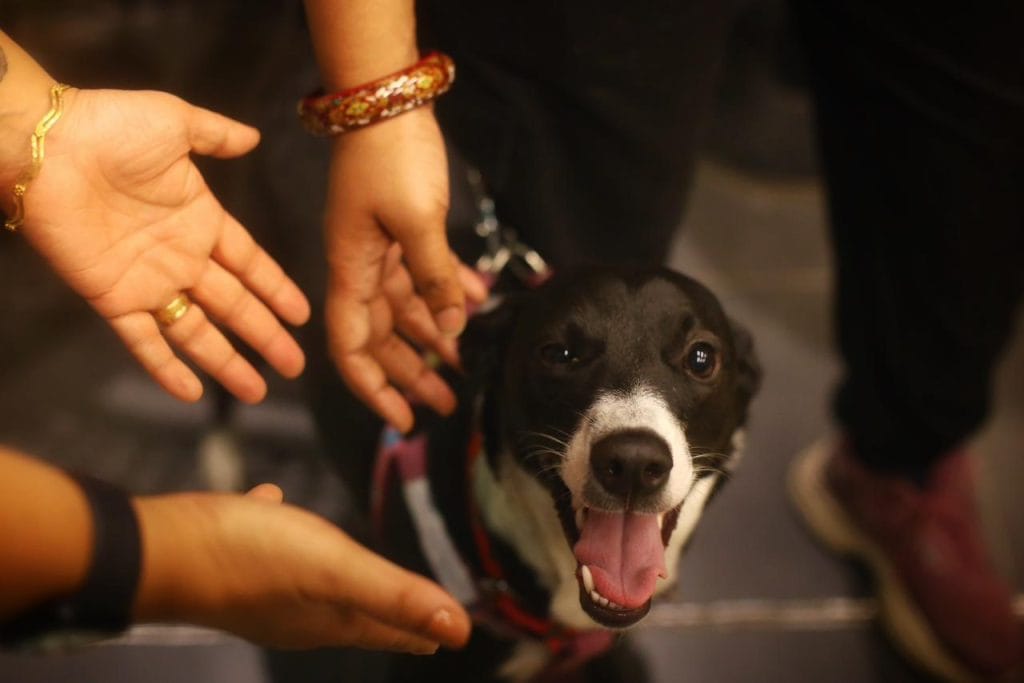
Back at the homestay after the day’s exertions, all the dogs drifted off to sleep one by one as the people chatted.
For a while they swapped their love stories, but the topic of conversation kept returning to the slumbering trio at their feet.
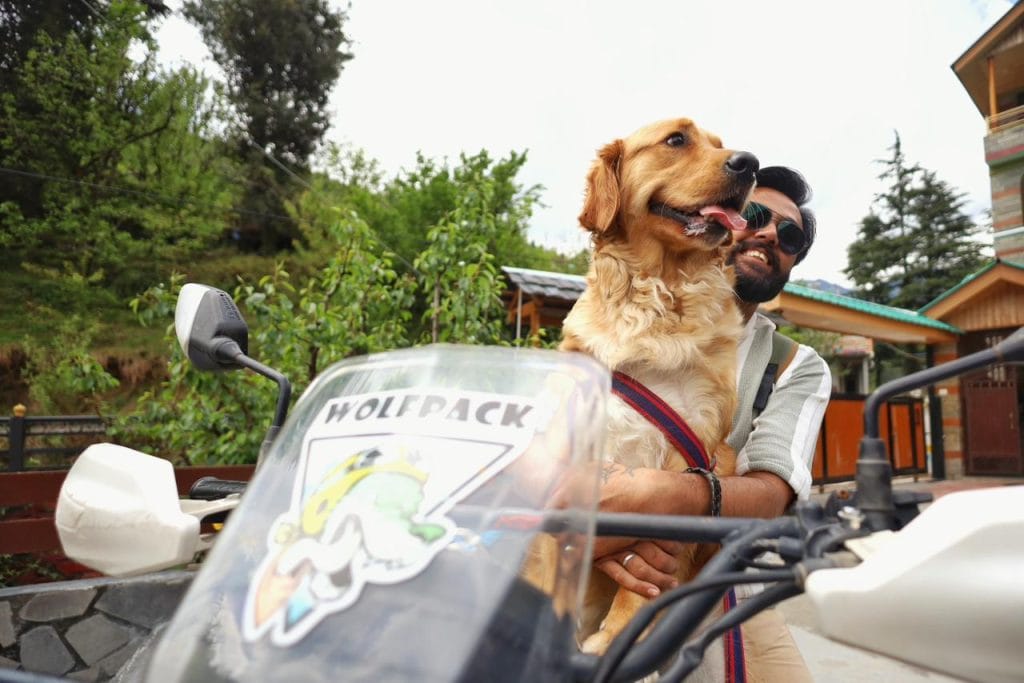
Himanshu said he wanted to take Suzie to Goa and Spiti. Debjani spoke about Zoey’s love of beaches and recalled a trip to West Bengal. “It was impossible to get out of the water,” she said.
Sleep schedules and eating plans were discussed threadbare. Arunava hung on to every word.
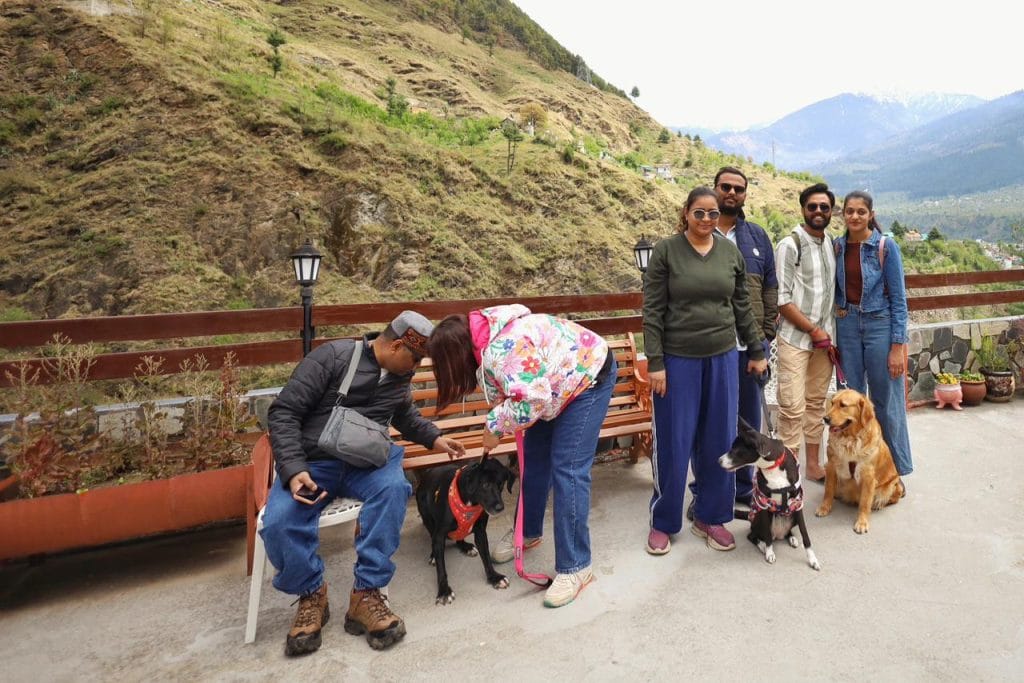
“When you meet other pet parents, you are constantly learning about behaviour, about care, about things you did not even realise you were missing. It is not just travel, it is an exchange. And that has helped me become a better pet parent,” he said.
For Bhawana, however, just being able to relax was payoff enough.
“There is no sense of judgment,” said Bhawana. “We do not need to always wash hands, and there is so much compassion.”
Also Read: Bhairav the ‘divine dog’ returns to Bijnor after rescue—devotion nearly killed him
The limits of ‘pet-friendly’
In the last two years, Furgetaway has expanded its reach across India, including expeditions to Spiti Valley and Goa. Some of these trips have even included visits to temples. It’s not always been well-received.
When a group of pet parents entered the premises of a Shiv Temple in Kumaon to share a spiritual moment with their dogs, they enjoyed a warm darshan and the pandit even put tilaks on the animals.
The company later posted pictures and videos on their Instagram handle, where they have nearly 21,000 followers. One of the reels got over 1,200 replies, mostly people asking for more details. However, they also received abusive calls and messages for taking the dogs to the temple, said Vinayak, operational head.
Both Chilwal and Ojha draw a distinction between “pet-friendly” and merely “pet-tolerant” environments — a complaint shared by all three sets of parents on the trip. In India, most hospitality spaces still don’t factor in pets.
“India is not truly pet-friendly yet—we are still getting there,” said Chilwal. “What most places call ‘pet-friendly’ comes with a long list of restrictions. Dogs are not allowed on beds, in pools, sometimes not even in common areas. That is not real inclusion but tolerance with conditions.”
At the resort in Manali, Zoey retreated into a corner while Suzie and Taco ran around on leashes. Some guests came to pet them but others recoiled in fright. “Sometimes I feel humans do not deserve dogs, they are so pure,” said Arunava Chakrabarti.
(Edited by Asavari Singh)