





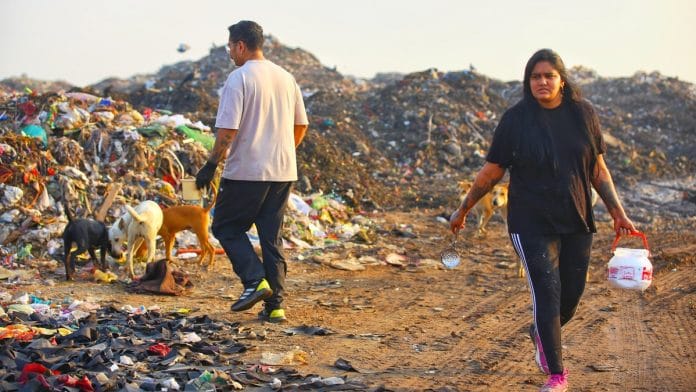



New Delhi: Handsome, Zepto, and Sautan come running the moment they spot Vasundhara Anand and Kunaal Bose trudging up the Ghazipur waste mountain. Their eyes light up and their tails wag furiously. They know what the big plastic buckets mean.
Every alternate morning, the couple drives from their home in South Delhi’s New Friends Colony to this 70-acre landfill, carrying containers of rice, chicken, and broth for the dogs—by their estimate, over 400—that live on the trash slopes. By the time they reach the top, their sneakers are dark with muck. Neither of them seems to notice. Their work, they say, is not just about feeding animals but also getting them vaccinated and sterilised.
India is in the middle of a bitter fight over what to do with its stray dogs. Neighbourhoods are increasingly polarised about feeders as well. While the Supreme Court clarified in January that it was not directing authorities to remove all strays from the streets, it also said that it would hold feeders accountable for dog bite cases. Amid this messy debate, Anand and Bose are making a counter-intuitive argument: feeding is not the problem but the starting point for population management under the Animal Birth Control (ABC) Rules that the court has repeatedly said must be enforced.
“Feeding marks the first step and the beginning. If you don’t feed, you cannot vaccinate, you cannot sterilise, and you cannot even understand where the dogs are,” said Anand, who has been feeding stray dogs in Delhi for the past decade.
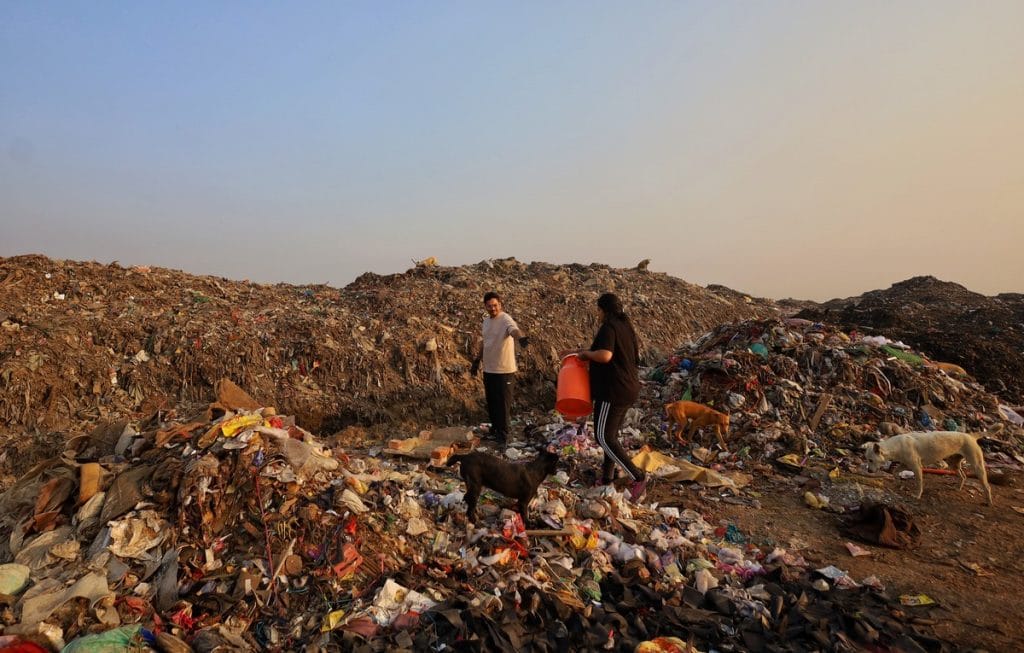
Since they began coming to Ghazipur in February 2025, they say they have sterilised around 100 dogs on this landfill alone. So far, they are lone warriors here.
“Dogs in Ghazipur are malnourished. It is difficult for them to find food,” said 35-year-old Anand, who runs an advertising agency with Bose as well as a non-profit for dogs, Kvaab Welfare Foundation. Despite the mountains of waste, little of it is edible, with dogs relying on carcasses and scraps of rotten food.
“Dogs that live in residential and market areas generally have someone looking out for them. Places like landfills are dangerous for both humans and animals,” said Keren Nazareth, a senior director with Humane World for Animals, which has worked with municipal authorities in Uttar Pradesh, Uttarakhand, and Gujarat in successful mass sterilisation drives. “Those who are able to reach and provide care and nutrition to the dogs that live here should ensure that they get them sterilised and vaccinated too.”
The process is slow but visible. Areas that once had frequent litters gradually see fewer puppies as sterilisation increases. Packs stabilise. People who once ignored the animals begin to recognise individual dogs
-Kunaal Bose
Critics of stray feeding argue that it inflates populations and concentrates aggressive dogs in residential areas, but animal welfare groups maintain that feeding has the opposite effect when combined with sterilisation. Nazareth notes that feeders play an essential role in ABC programmes—“We bring in hundreds of dogs because of the help that feeders provide.”
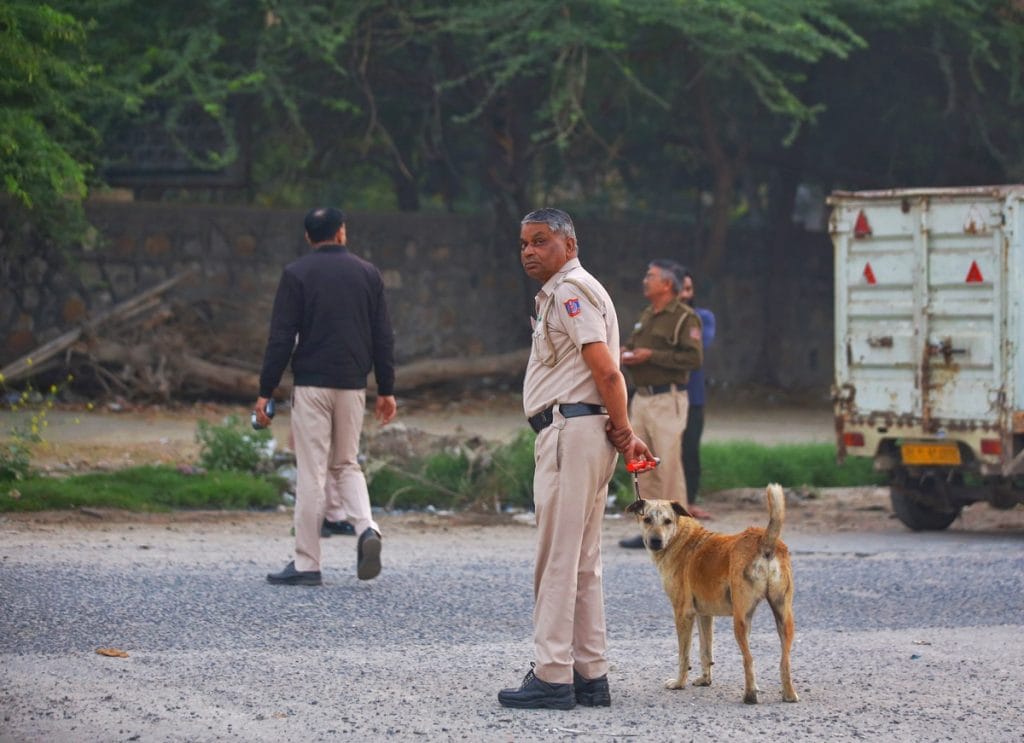
The feeding-to-sterilisation pathway is still nascent in Delhi. While the Delhi government has created nearly 290 feeding spots since October 2025, this has not yet become a substantive funnel for sterilising the approximately 10 lakh street dogs in the city.
“Delhi really needs to step up its sterilisation efforts. Several cities such as Lucknow, Dehradun, Jaipur, Goa and Chennai have made significant progress, and even Bhutan has managed to sterilise a majority of its street dog population. Delhi has the infrastructure, with over 20 centres, but the pace of sterilisation needs to increase substantially,” said Shaurya Agarwal, police associate, PETA India.
ThePrint tried contacting MCD Mayor Raja Iqbal Singh via WhatsApp, calls, and email, but no response was received.
Also Read: Assam went to war on Kaziranga poachers. Rhinos are winning
A moveable feast
Nobody questions Anand and Bose at the Ghazipur entry gate. By now everyone knows them as animal lovers who feed the strays that live on the waste mountain. They get out of the car and, for the most part, avoid wearing protective gear.
“We want to communicate with the dogs and people here,” said Bose. “Masks and gloves create distance and give people a bad impression.” It has taken months to get to this point, where everyone here, animal or human, recognises and trusts them.
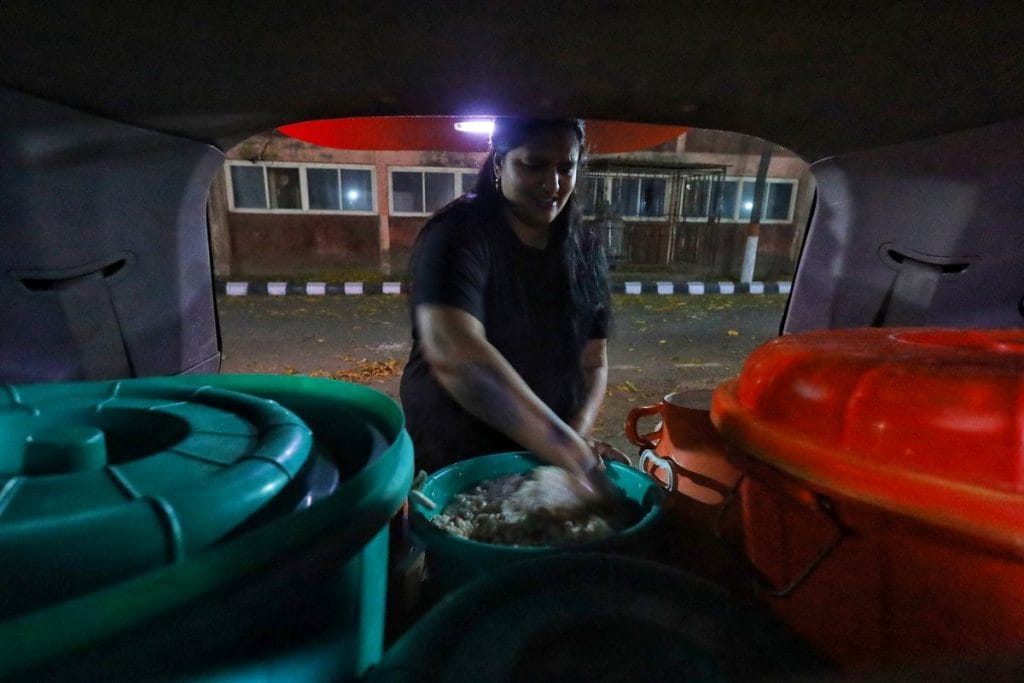
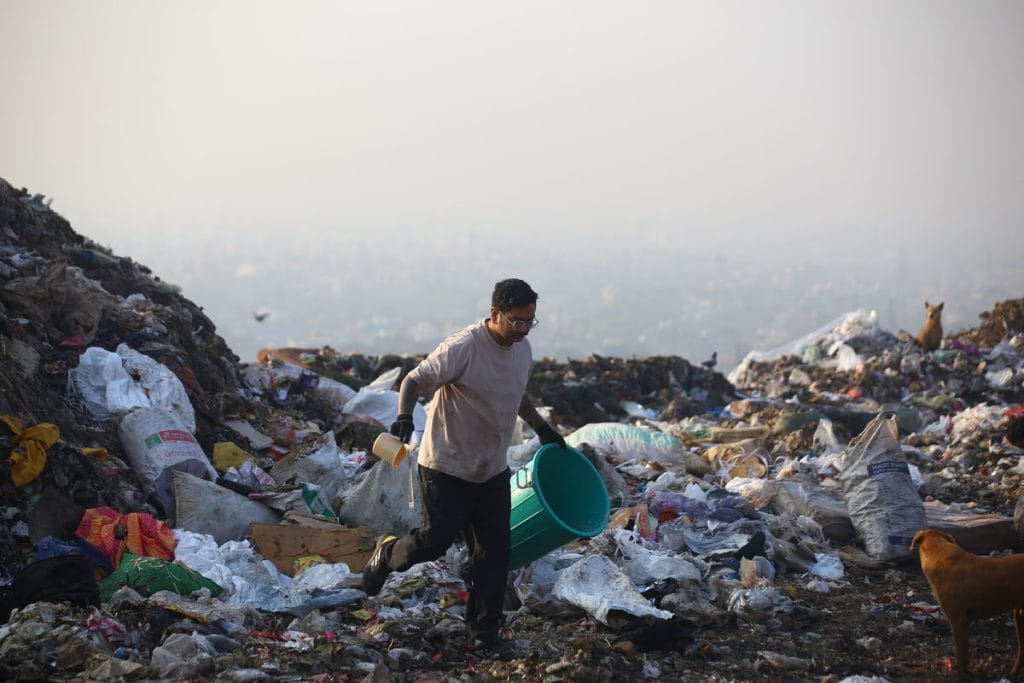
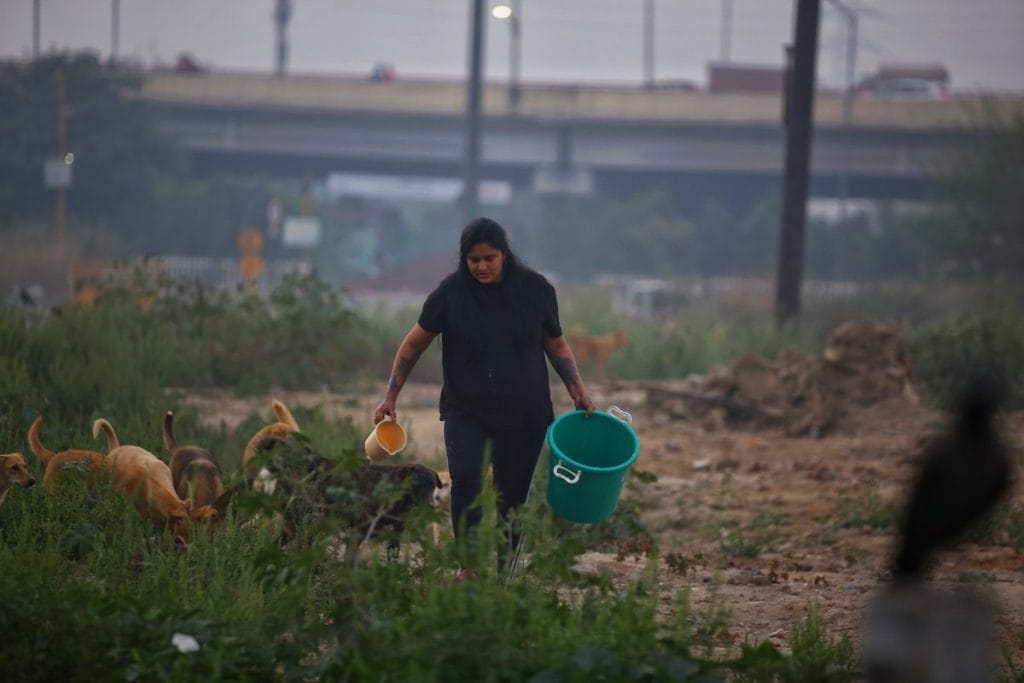
Bose opens the trunk and starts calling. “Aaaaa… aaaa.” Anand is already at the containers, lifting the heavy red bucket of broth, mixing in the chicken and rice. Handsome allows himself to be petted briefly. Sautan and the others wait at a distance, close enough to watch, not close enough to touch. They do not bark. They just want food.
This is the end of a feeding circuit that starts at 3.30 am, winding from stops such as Connaught Place and Okhla before terminating at Ghazipur. They usually reach the landfill around 7 am. Any earlier and it is too dark—the area is known to attract drug users—and any later human activity begins on the site.
Empathy is contagious. If you keep showing up and doing the work, people begin to see the difference
-Vasundhara Anand
What they have packed for the day’s run is enough for a small army: 150 kg of rice and chicken, 40 kg of dry kibble, 40 litres of broth, 20 litres of water, 10 kg of wet cat food, and 10 kg of curd, a concession to the summer heat. They have been sourcing from Paw Eats, a Jamia-based cloud kitchen for animal feeders, for four years. The seat pockets are stuffed with medicines, pain spray, and bowls. And then it’s time to go deeper into the landfill.
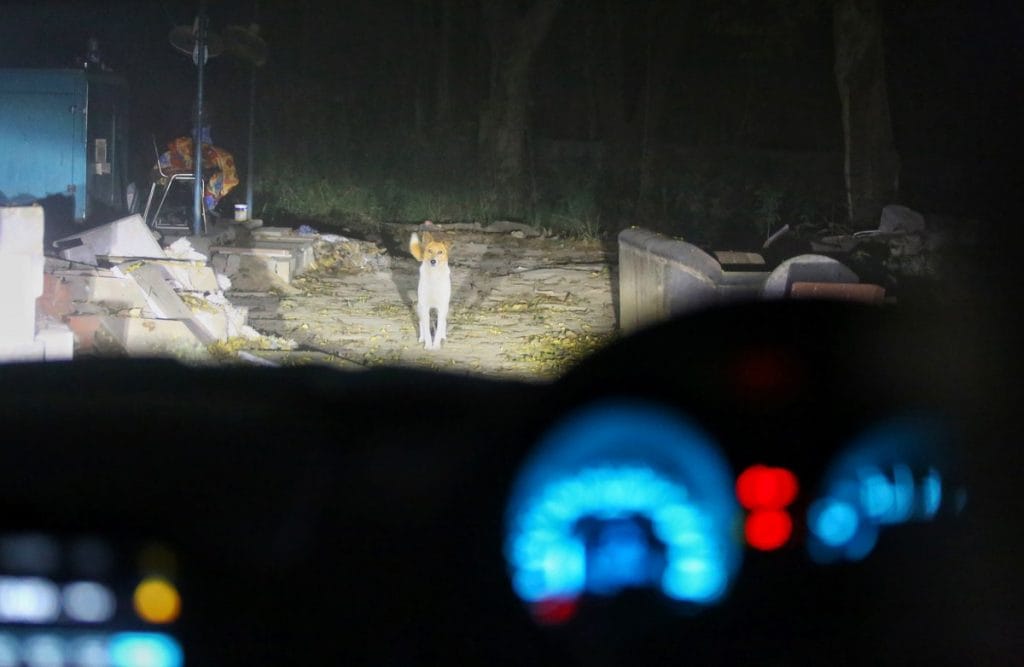
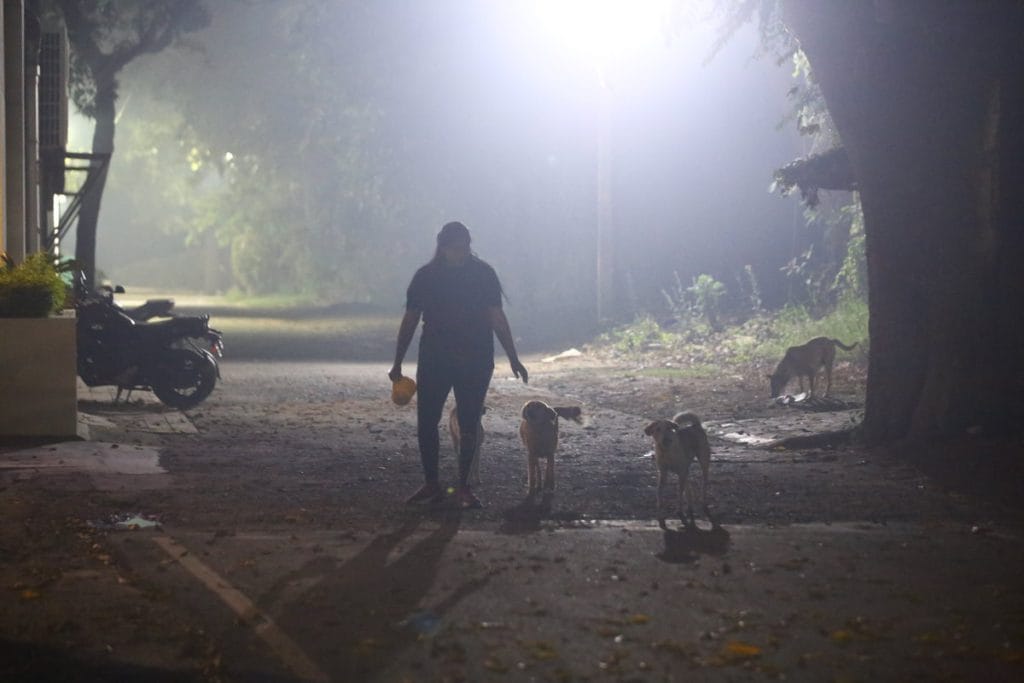
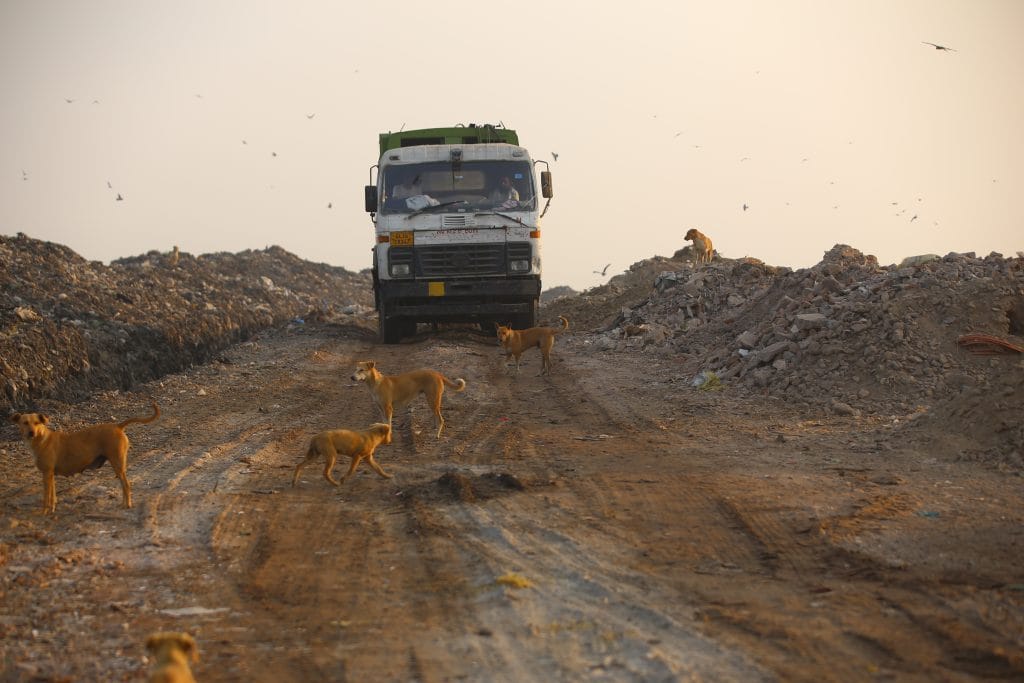
Since the couple started feeding dogs at Ghazipur a year ago, they’ve become more adventurous. From just feeding dogs at the entry point, they’ve gradually moved upward to the top of the mountain. Bose drives up at a crawl—10 km per hour—with a few dogs bounding by the side of the car.
“It is not easy and safe to drive on the landfill. I once saw a bulldozer roll down,” said Bose. Along the way, the two strategise about where to stop and which new areas to check for dogs that might have migrated.
“You save your dahi,” he bickered gently with his wife. “We both have our own priorities.” All windows rolled down, the stench from the waste grows stronger as the car climbs higher, but the pair wave their hands out and call the dogs.
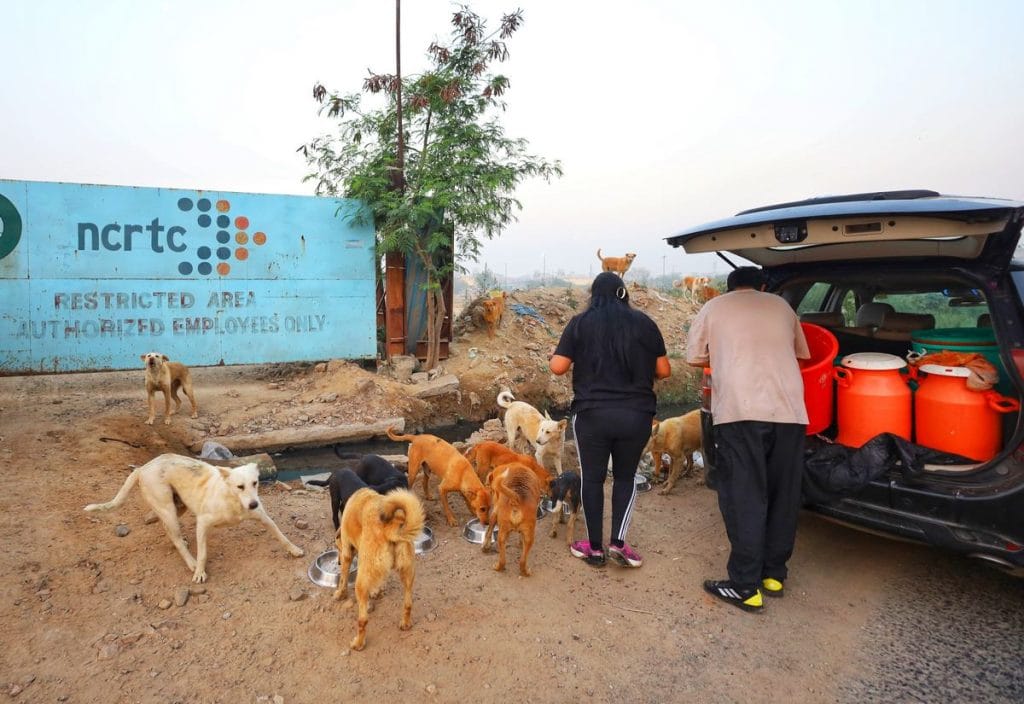
Bose and Anand have named the terrain after the dogs— Handsome Point, Sharmili Point, Maternity Ward — but the topography changes shape constantly as fresh waste is dumped and old waste is bulldozed to make room.
“New roads come in as the garbage is shifted,” said Bose, steering around one that had not been there the day before.
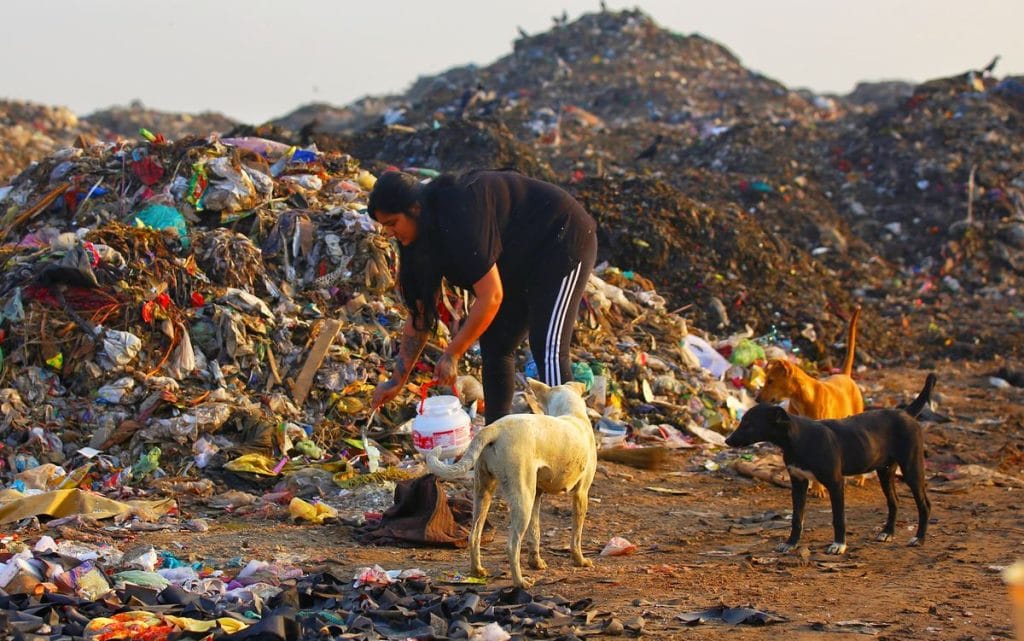
The landfill came into existence in 1984 and officially hit its capacity in 2002, yet it continues to take in the city’s waste. It was estimated in 2019 to be standing about 65 metres high. It is a place of hazardous gases, frequent fires, including a major one in 2024, and even landslide-like disasters involving torrents of deadly garbage.
The ascent here is a treacherous one. A few months ago, the couple’s car got stuck in the muck and had to be pulled free by ragpickers.
“When the waste is bulldozed, methane gas can be seen rising,” said Anand. Yet, amid the toxic fumes, she finds a reason to keep returning.
First food, then ABC
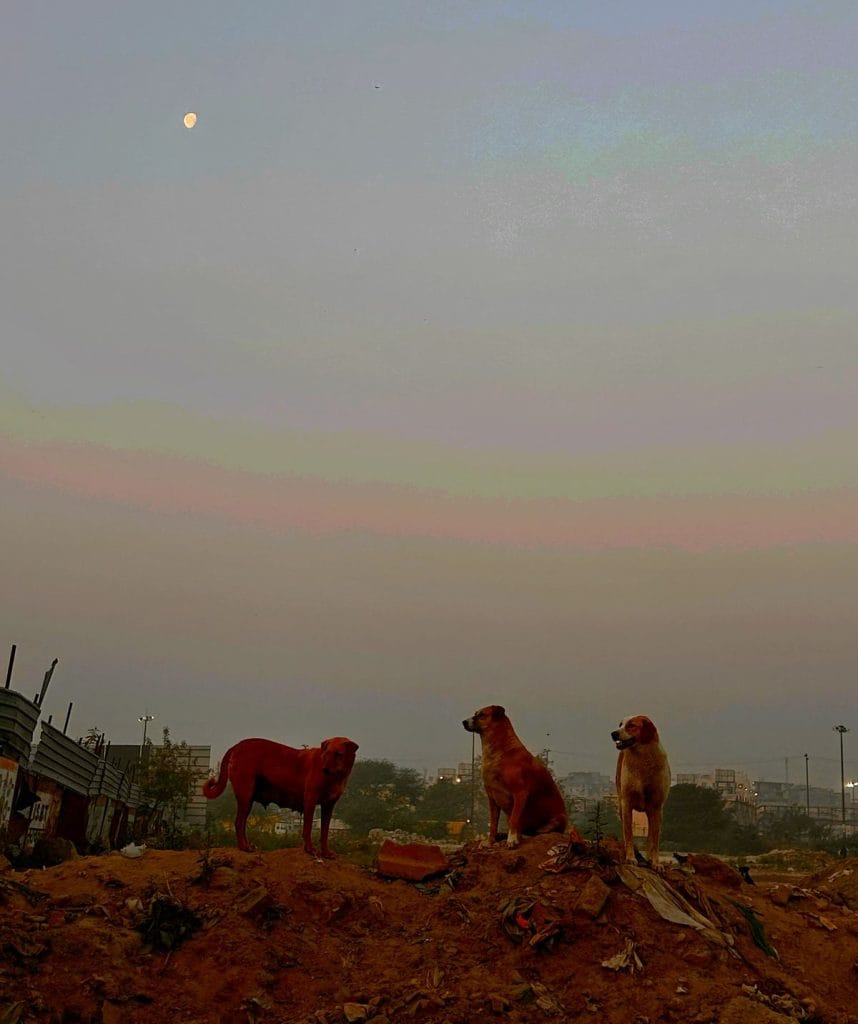
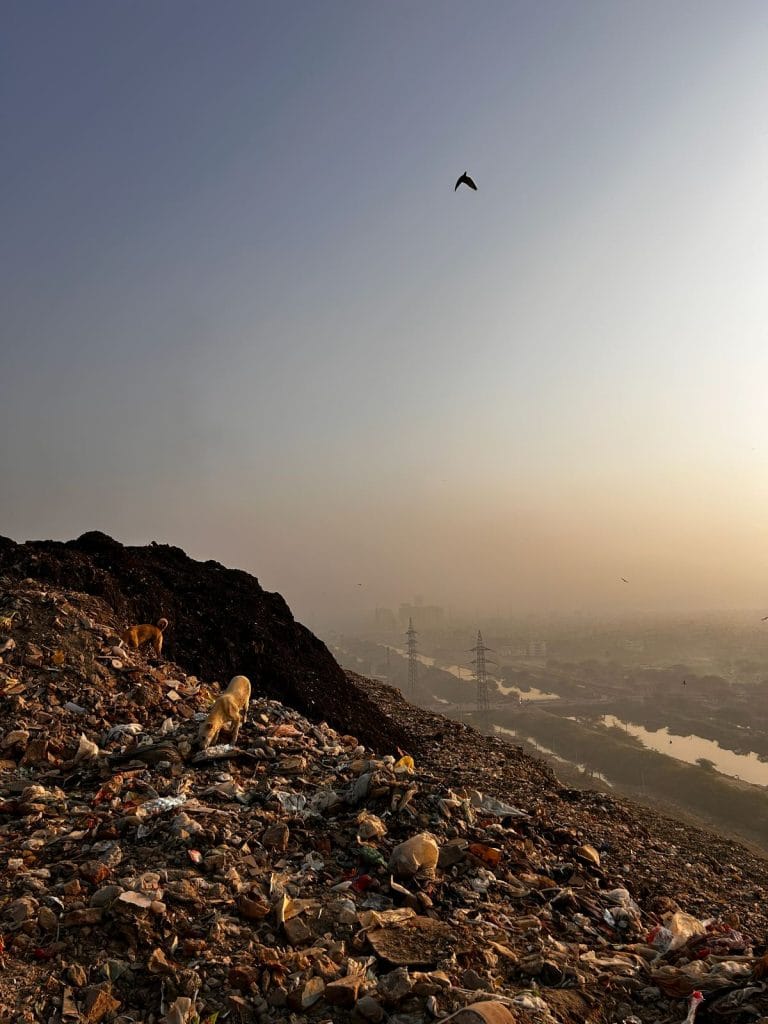
The dogs scattered across the landfill seem to know the car is coming before it arrives, as if word has spread from the valley to the mountaintop. Silhouetted against a Delhi smothered in smog, they wait for the only consistent source of care they know.
Near the ‘summit’, Bose spreads a plastic sheet over the uneven ground while Anand lays out the food. Within moments, six to ten dogs gather around, circling eagerly. The food is devoured in seconds. The dogs linger anyway, eyes fixed on the containers, hoping for more food.
Many assume that dogs living in a giant dump yard can find plenty to eat. But the reality is starkly different. What reaches Ghazipur is largely plastic, cloth, medical waste, and scrap — not food.
“The dogs on the top of the landfill have almost no food source. It’s just trash. That’s why feeding there becomes critical,” said Bose. They make sure all the dogs get water and curd for hydration as well.
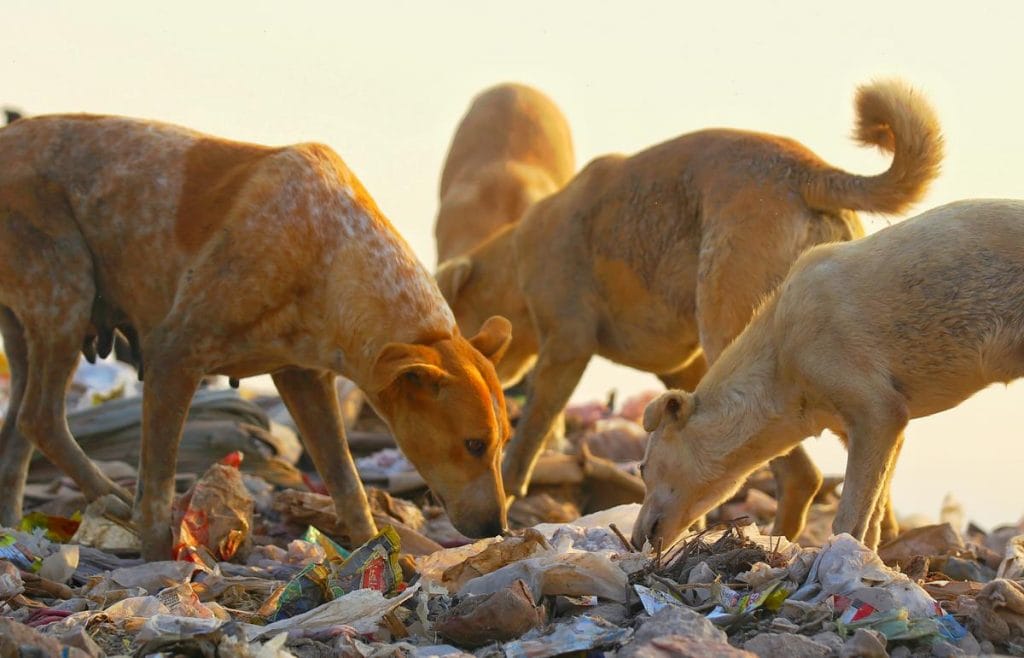
“Summers for the dogs here are going to be really difficult,” fretted Anand.
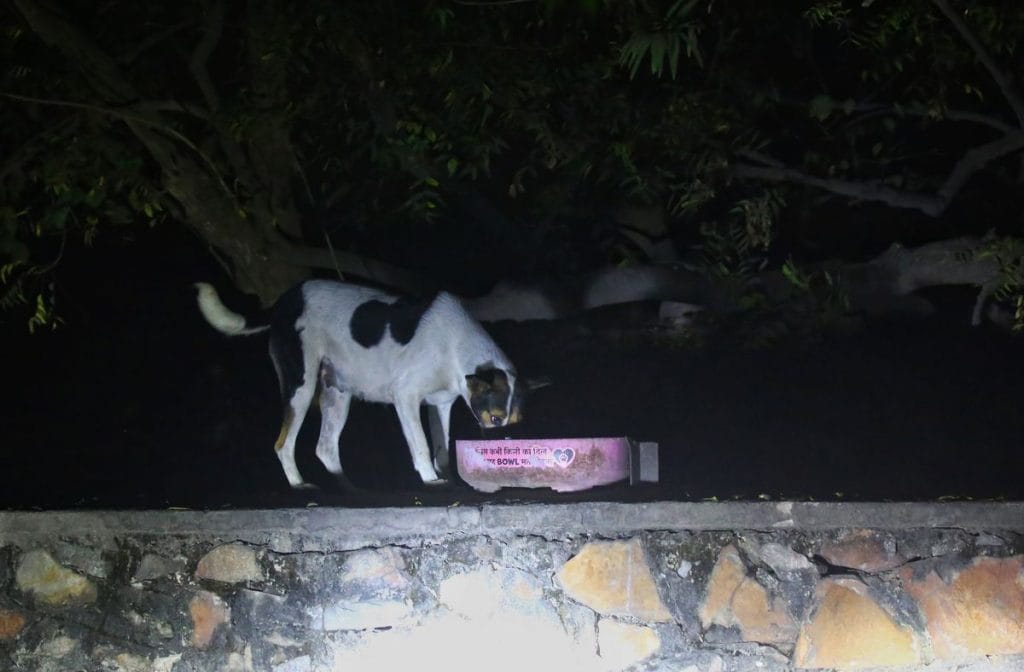
The couple, who say they bonded over their affinity for animals and fell in “puppy love”, started out rescuing sick and injured dogs in 2016. However, they directed more of their energy to feeding during the Covid lockdowns, when many strays were left without the scraps they once received from shopkeepers and residents. Across the city, feeders came to the rescue, leaving out the familiar pink bowls in office complexes, construction sites, and empty plots where dogs had little access to food. But until Anand and Bose took the plunge, no one ventured, again and again, into the desolate expanse of Ghazipur.
The government can bring in technology that can help map feeders, locations that are safe to be used as feeding spots and provide clear guidelines to feeders and in turn leverage the feeder network to identify unsterilised dogs, or dogs in need of help
-Keren Nazareth, senior director, Humane World for Animals
Over the past year, the strays have become a little more comfortable with the couple’s presence. A well-fed dog is calmer and healthier, resulting in fewer fights, less disease, and fewer conflicts with humans. The next step is vaccination and sterilisation.
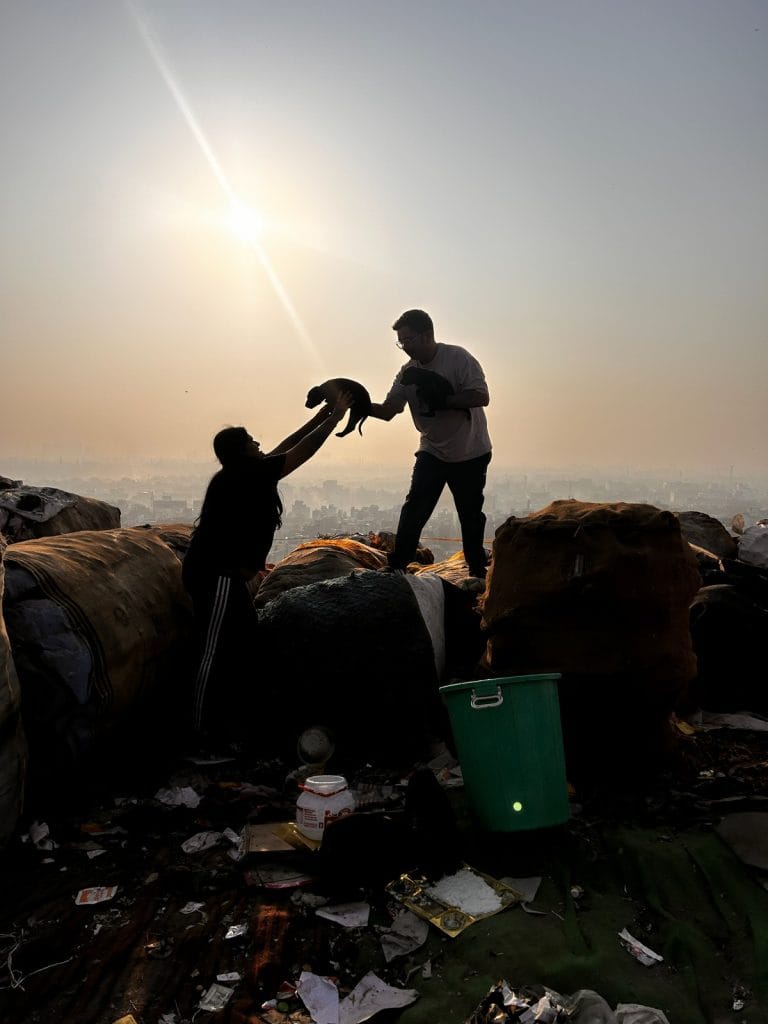
Given the vastness of the Ghazipur landfill site, picking up dogs for sterilisation is not easy. Sometimes the dogs run away when they see the ambulance, frightened by the sudden movement and noise. Many dogs are already wary after accidents or encounters with people, so rescuers sometimes use nets to safely lift and transport them. Occasionally, though, the couple is able to pick up dogs directly in their car if there’s enough familiarity.
The dogs are taken to an authorised ABC centre. After surgery and recovery, usually within four days, they are released back at the Ghazipur location.
With consistent feeding and sterilisation, the number of dogs in the areas where the couple works is declining.
“The process is slow but visible. Areas that once had frequent litters gradually see fewer puppies as sterilisation increases. Packs stabilise. People who once ignored the animals begin to recognise individual dogs,” said Bose.
There are huge divisions in Delhi over whether stray dogs should be fed or not, but Pune has demonstrated encouraging links between feeding and sterilisations. Dog feeders have supported the Pune Municipal Corporation’s Animal Birth Control programme for years by building trust with dogs and making them easier to capture for sterilisation. The city’s stray dog population declined by 42.87 per cent between 2018 and 2023. Following recent Supreme Court directions, the corporation also asked feeders to submit applications listing feeding locations, timings, and the number of dogs fed so designated feeding spots could be created.
Nazareth said government support is necessary so that feeding is carried out safely for both residents and animals.
“The government can bring in technology that can help map feeders, locations that are safe to be used as feeding spots and provide clear guidelines to feeders and in turn leverage the feeder network to identify unsterilised dogs, or dogs in need of help,” she added.
Also Read: British Raj determined what kind of dog was acceptable in India—pets vs strays
‘Empathy is contagious’
As the couple pour water into a makeshift bowl made from discarded plastic for the second time that morning, a pack of dogs gathers quickly to quench their thirst. Earlier, leaving a bowl here to refill would be an exercise in futility. It would either be drowned in garbage or picked up, and there’d be no one to fill it. But now they have an informal team keeping an eye.
A nearby ragpicker tells them not to worry— “We will arrange something for the dogs, aap log chinta mat kijiye.” A compassionate community has taken root in the wasteland.
“Empathy is contagious. If you keep showing up and doing the work, people begin to see the difference,” Anand said. She did her bachelor’s and master’s in fine arts in Delhi but comes from a village in Jharkhand where caring for animals was part of everyday life. Her mother’s daily routine included feeding cows and stray animals.
Over time, the couple say, their work has changed the people around them as well. Ghazipur has become the proof of this. Workers who would be annoyed by the couple’s arrival now open the landfill gates with a smile.
More importantly, they’ve opened their hearts for the dogs. At the entrance, a guard ran up to ask for medicine for an injured dog called Morty. As Anand and Bose fed one pack, a brown-yellow dog hovered at a distance. A worker told them the dog was guarding a litter of puppies nearby. Twice now, landfill workers have helped them rescue pups.
When the couple first began feeding dogs in different parts of Delhi, many people objected. Over the years, attitudes shifted. Residents now call them about injured dogs or keep them updated on vaccination schedules.
“The same people who once asked us not to feed dogs are now the ones calling to say, ‘This dog has an injury, can you come and check?’” Anand said. “That’s the biggest impact you can hope for.”
On the Instagram handle of Kvaab Welfare Foundation, they post updates on their Ghazipur dogs. Two puppies, Zumato and Swaggy, bounding happily as swarms of vultures circle overhead, get an outpouring of affection. “Keechad mein kamal ke phool khil gaye yeh toh,” said one comment — lotuses blooming in mud. There is well-meaning advice too: don’t feed on paper, they’ll eat the carbon; why not relocate them from that toxic land?
The couple crowdfund part of the food and medical costs. They say people have been kind.
But they also encounter hostility, in the comments and on calls. They have two kinds of detractors—people who dislike animals, and people who resent them for not responding fast enough to rescue calls. Their phones keep on buzzing with requests for rescues.
“The growing network helps animals in distress reach us faster, but it also means we receive far more requests than we can realistically handle,” said Bose. There are often snarky comments even in the most heartwarming videos, such as, “Take the dog home if you love him so much.”
The discourse on animals has hardened in the past few years, Anand lamented. She fears that legal battles and the ongoing debates over the Supreme Court’s stance on stray management act as “ammunition” for those who already harbour a dislike for animals.
Indifference toward animal cruelty is a slippery slope, according to her.
“You normalise violence in small ways first. Eventually it spills into other parts of society,” she warned.
By 8 am, the buckets are empty. The plastic tubs are packed back into the car as a few dogs watch, tails a-wag. Soon, Anand and Bose will return with another trunk full of food.
“Some people will understand, some won’t,” Bose said. “But the dogs still need to eat.”
(Edited by Asavari Singh)