





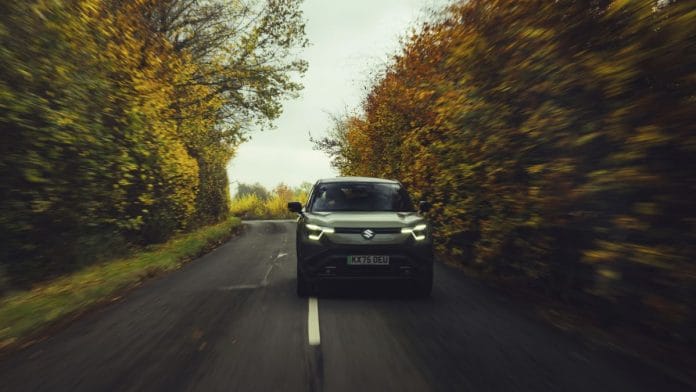



Maruti Suzuki has dipped into its archives—and India’s collective memory—to sell its newest electric SUV. In its latest advertisement for the eVitara, the carmaker resurrected a 1990s commercial featuring a wide-eyed boy called Kancha. The template is the same, the message is the same, but the communication is slightly different.
Nostalgia is a powerful emotion, one that marketers across industries chase relentlessly, but tapping into it successfully is far from simple, especially in the world of automobiles. But Maruti Suzuki’s campaign, launched earlier this month, hit the mark.
The original commercial highlighted the brand’s extensive service network, with a famous dialogue or rather gesture.
The central theme of the original ad, which has become iconic, involved two people on a journey who meet Kancha. He consistently responds by shaking his head to questions about nearby amenities like hotels, roads, or internet access. But, when asked about Maruti’s service station, he responded with a nod.
The new e-Vitara commercial recreates this theme, updating the dialogue to focus on modern concerns—an electric vehicle charging stations—to emphasise that the brand’s network and trust have stayed timeless.
It recreates the 1990 ad almost frame by frame, updating only the car and the final question.
For decades, automakers have attempted to revive emotions attached to iconic models, jingles, and imagery, but most soon realise that nostalgia behaves like a double-edged sword, one wrong note, and the magic evaporates. This is precisely what makes nostalgia-driven automotive campaigns so challenging. But Maruti, with its new ad, succeeded.
Also read: Dharmendra was the king of everyman advertising, Rajdoot bikes to Ford tractors
‘Peace of mind ownership’
By revisiting a 1990s classic, the brand brings back memories of older Maruti cars. It positions the new electric eVitara as a modern, advanced SUV that carries forward the legacy.
Through this, they create an emotional bridge, suggesting this new EV is a natural, worthy successor.
“It doesn’t matter if it’s a recreation of a 90s ad, the concept works. And, while nostalgia does play a role, I don’t think majority people would remember the 90s ad. What makes this commercial stand out is its clear messaging,” said Ketan Thakkar, Editor, Autocar Professional.
Maruti Suzuki’s Grand Vitara remake highlights how delicate that equation is.
Thakkar explained that back in time, the Maruti Grand Vitara catered to the anxiety of people regarding service. And, today that anxiety has shifted to charging stations.
“Maruti always stands for ‘peace of mind ownership.’ They communicated it back in the 90s and now again. This ad targets those who are probably sitting on the fence and are reluctant to buy EV cars because of the charging problem,” he added.
A nostalgic ad must whisper to older consumers, while speaking boldly to younger ones. It must remind, not repeat and Maruti has done that successfully.
(Edited by Theres Sudeep)