








New Delhi: The number of immigrants in major cities in the United States has declined significantly in the past year following President Donald Trump’s immigration crackdown, according to data released by the US Census Bureau on 26 March.
The data, covering the year through 1 July 2025, captures the early months of Trump’s second term, that started in January 2025, and reflects the fallout from his acceleration of the Immigration and Customs Enforcement (ICE) operations.
According to the data, even though the overall population grew by 1.8 million, the population growth rate for metropolitan areas fell to 0.6 per cent in 2025 from 1.1 per cent in 2024, signalling how the US population growth depends on migration at a time of falling birth rates and an ageing population.
Impact on border regions
The most dramatic shifts were concentrated in three metropolitan areas across states along the US–Mexico border, where immigration plays an outsized role in local population change.
Laredo (Texas), Yuma (Arizona), and El Centro (California), recorded the steepest drops in growth rates. Laredo’s population growth fell sharply from 3.2 per cent in 2023–24 to just 0.2 per cent in 2024–25. Yuma’s growth slowed down from 3.3 per cent to 1.4 per cent, meanwhile, El Centro slipped from 1.2 per cent growth into a -0.7 per cent decline.
“These shifts were largely due to lower levels of net international migration (NIM), which declined nationwide. Nine out of 10 US counties experienced lower NIM levels between 1 July 2024 and 30 June 2025, compared to the year prior. The one in ten counties that did not see a drop in international migration did not see an increase either,” the report noted.
All three regions had previously seen a major growth attributed to an influx of migrants, which demographers describe as a “rise-and-fall” effect in border communities.
Also Read: Priest, spouses, and trafficking victims are now subjected to social media vetting for US visas
Effects of a migration slowdown
The Census Bureau data shows that nine in ten US counties experienced lower net international migration compared to the previous year. Crucially, one in ten counties did not see a decline in the population rate, but also did not register an increase in population.
This broad-based slowdown has translated into weaker population growth across the country. Major metropolitan areas that typically attract large numbers of immigrants in the US have also felt the impact.
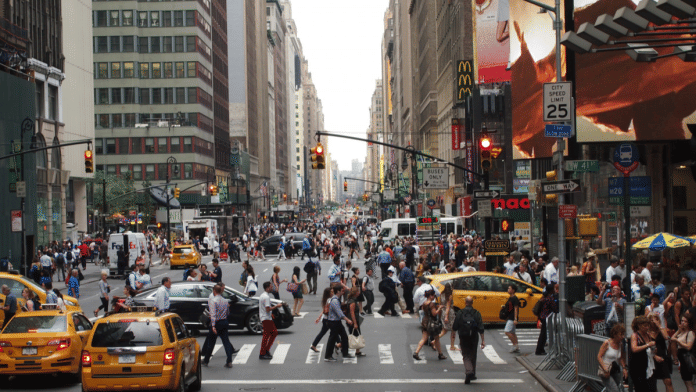
New York, which had held the spot of being the fastest-growing metropolitan in 2024, fell to 13th place in 2025 as the number of migrants in the city dwindled.
Gateways like Los Angeles and Miami still showed the highest number of migrants, but the difference between the numbers in 2024 and 2025 was stark. LA had an overall decline by 53,934; whereas Miami showed a decline of 10,115 in numbers. In contrast, Sun Belt metros across the southern extent, such as Houston and Dallas, witnessed an overall population gain, followed by Atlanta, Phoenix, and Charlotte.
The reports also mention that even though the growth in larger cities slowed down, it saw growth in smaller metros and exurban areas like Ocala (Florida) and Myrtle Beach (South Carolina). Such fringe areas show population growth driven by domestic migration, specifically retirees.
Some areas, in New York, however, still managed a modest population growth thanks to a “natural increase”, the report noted. This is due to the number of births outpacing the number of deaths. But in many others, particularly those with older populations such as Pittsburgh and parts of Florida, deaths exceeded births.
While migration trends dominated nationally, environmental shocks also played a role in affecting the slow population growth in the country.
Counties along Florida’s Gulf Coast saw population losses following destructive hurricanes, including Hurricane Helene and Hurricane Milton.
(Edited by Insha Jalil Waziri)