








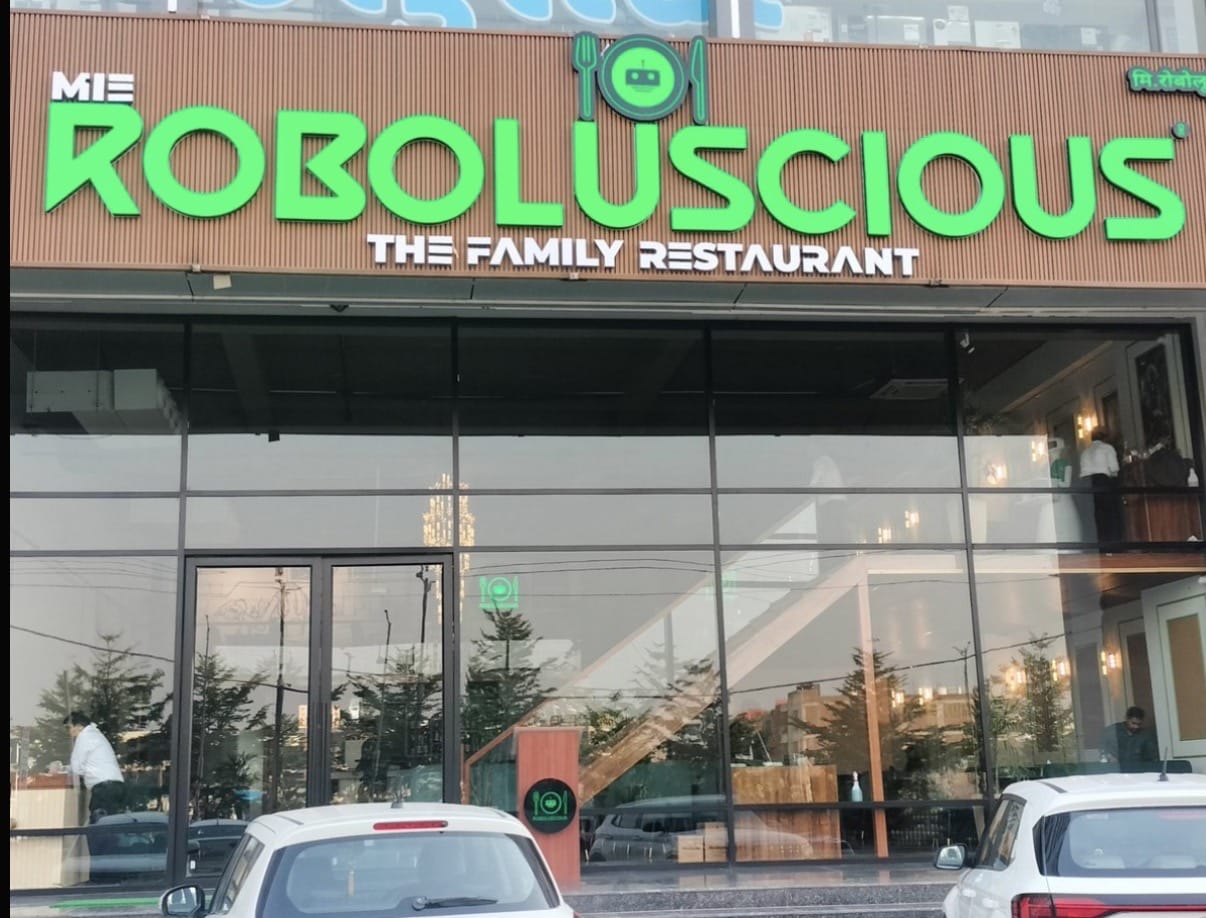
New Delhi: Kunwaldeep Singh has found a go-to spot for his dates in Mohali. And it’s not just the food that keeps bringing him back to Mie.Roboluscious. At this restaurant, orders are served by Nishi, Nishu and Nisha, who have earned the title of the city’s ‘most efficient servers’ for the past three years. Their service is precise, polite and flawless. But there’s a catch: they aren’t human. They are robots.
“Technology wows everyone. These three [robots] are bringing a Japan-like experience to Mohali,” Singh said. “And it isn’t expensive either. With time, the technology will only get better and spread across the country.”
It is this mix of novelty and accessibility that is driving curiosity around robotic service in India’s food and beverage (F&B) industry. One of the country’s largest service sectors, it supports over eight million jobs, second only to agriculture. The arrival of robots, even in a limited role, has therefore sparked quiet concern.
India’s earlier experiments with restaurant robots were bittersweet. The first wave began in 2017 but lasted only two years before being shut down. Now, high-end properties such as Roseate Hotels & Restaurants and Hilton Gurugram Baani City Centre, along with smaller establishments like Mie.Roboluscious in Mohali, Cafe Safar in Mumbai, and Vintage Madras in Chennai, are leading the way.
For now, robots are largely limited to serving food and enhancing efficiency. But the roadmap is broader: room service deliveries, luggage handling, greater customer interaction, and even concierge-like roles are being explored.
The shift, however, is not being positioned as disruption. Industry insiders push back against fears of job losses, now visible in the IT sector where AI is replacing people. Instead, they argue automation could elevate the workforce, freeing human staff for guest-facing roles, which require empathy, judgement and personalisation.
“It’s co-dependency. If anything, robots will help equip the workforce. They will be more trained, and therefore better paid,” said Jishu Bansal, owner of Mie.Roboluscious. “Robots aren’t replacing the workforce; they can’t. They will only aid it.”
Bansal is also mindful of perception. He does not factor robots when pricing the menu to avoid concerns of affordability.
“I have overheard people say, ‘Let’s not go inside. It has robots, it must be expensive’,” he said. A table for two costs around Rs 2,000, and he intends to keep it that way. He is able to do so because the robots were developed by his brother, who works with DRDO.
“It’s not a one-time wonder. Customer retention has been great. By the end of the year, we plan to bring Nishi, Nishu and Nisha to Delhi as well,” the 24-year-old added.
Supporting cast
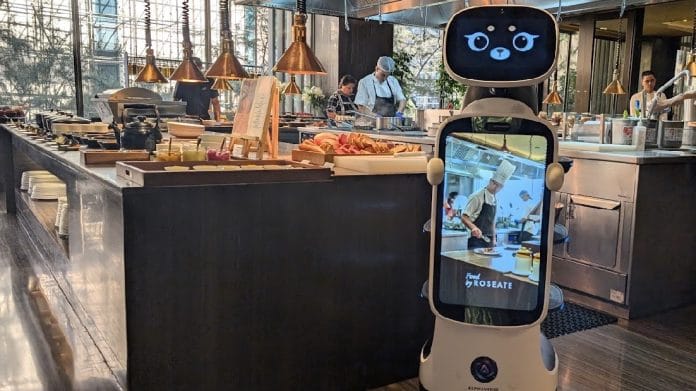
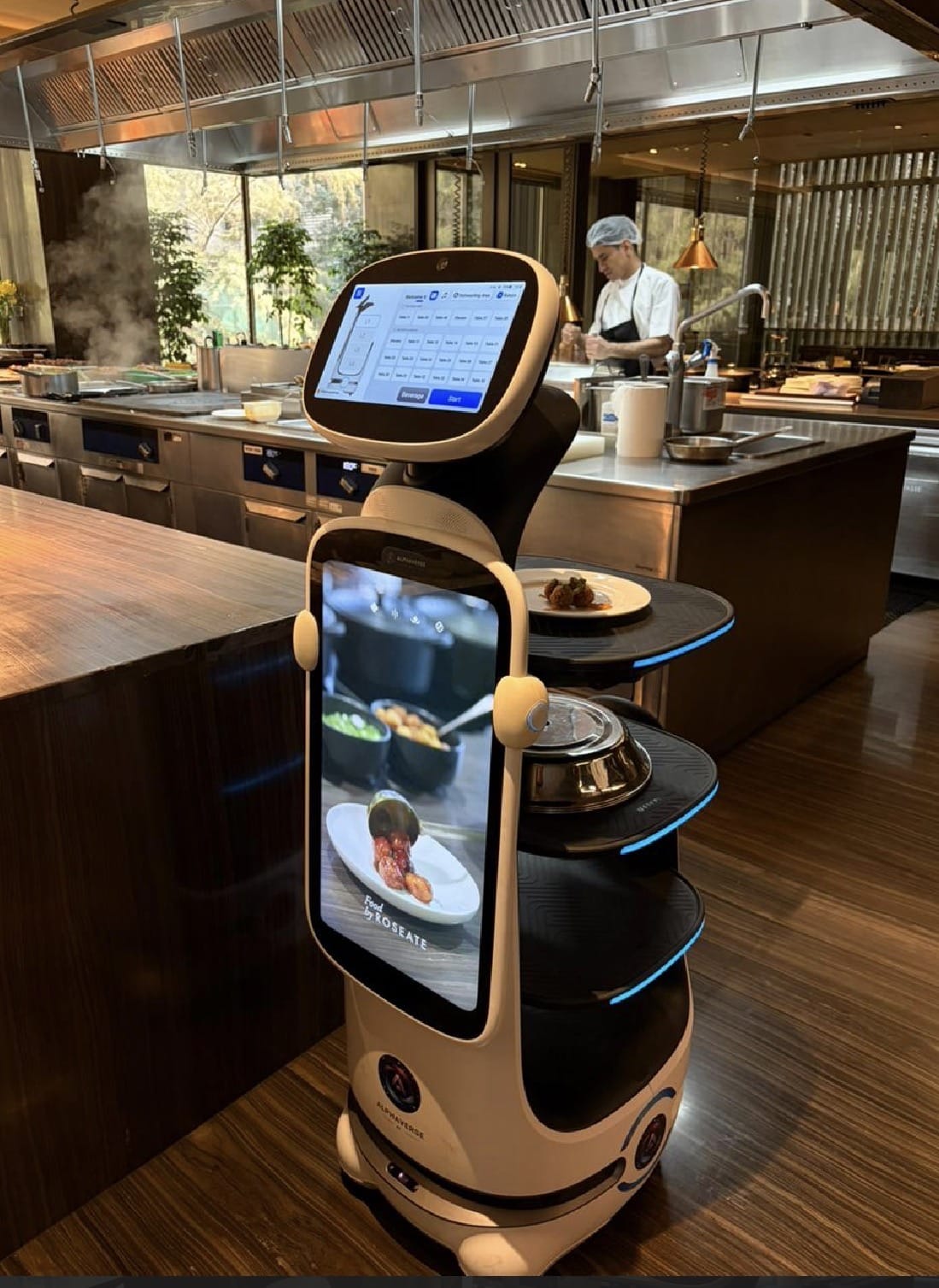
At DEL, the restaurant inside Roseate House, New Delhi, a white, 140-cm-tall robot with animated eyes glides silently to a table and pauses. Diners lean forward, picking up their plates as the machine completes its delivery.
For Roseate Hotels & Resorts CEO Kush Kapoor, robotic servers are far from a gimmick. The decision, he said, was driven by data. Reports from National Restaurant Association of India highlighted a sharp post-pandemic surge in dining, with an estimated 1,056 crore Indians eating out every night.
“Restaurants are getting busier. Footfalls have multiplied. We saw it as the need of the hour. Robots are being used to aid staff,” Kapoor told ThePrint.
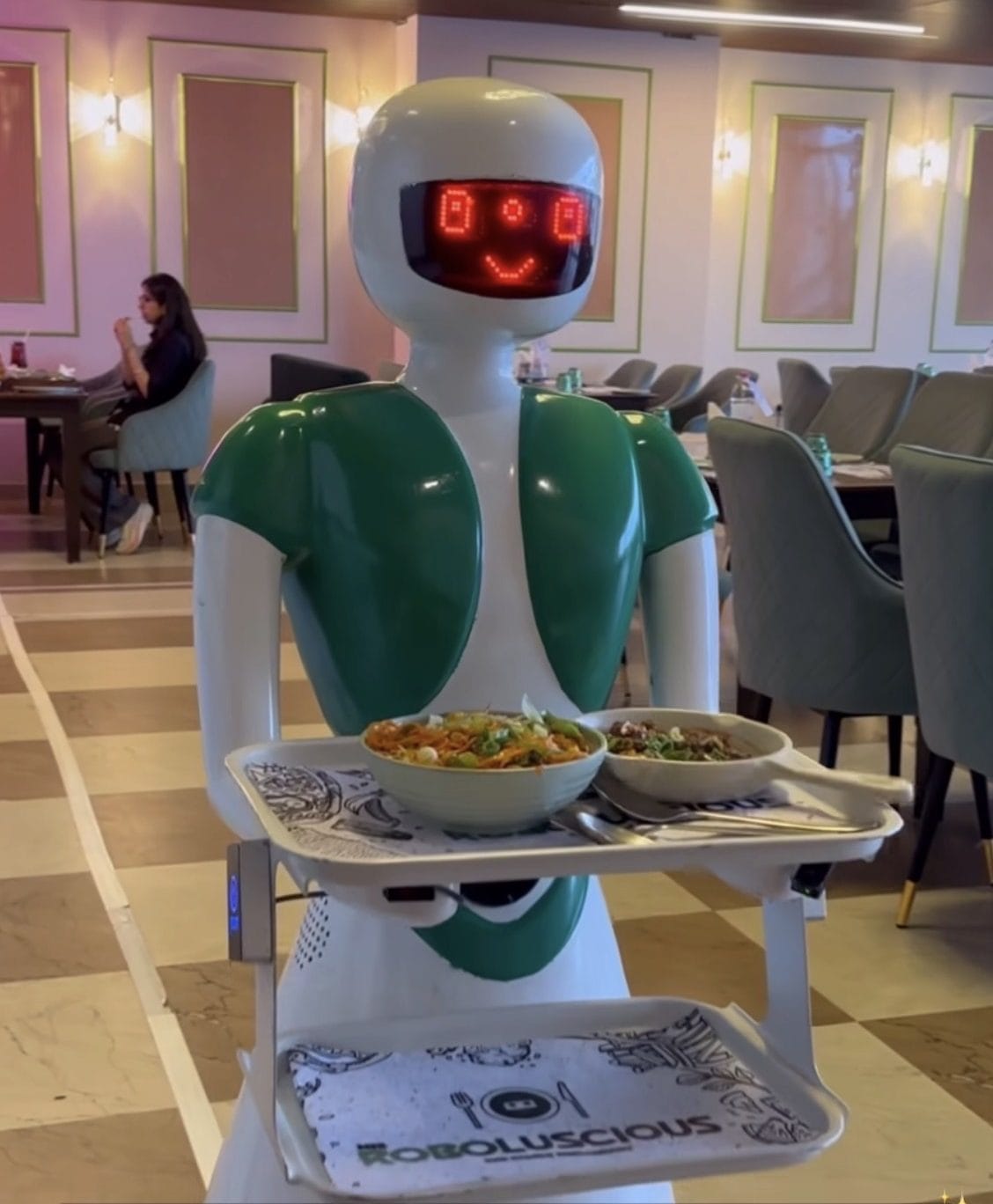
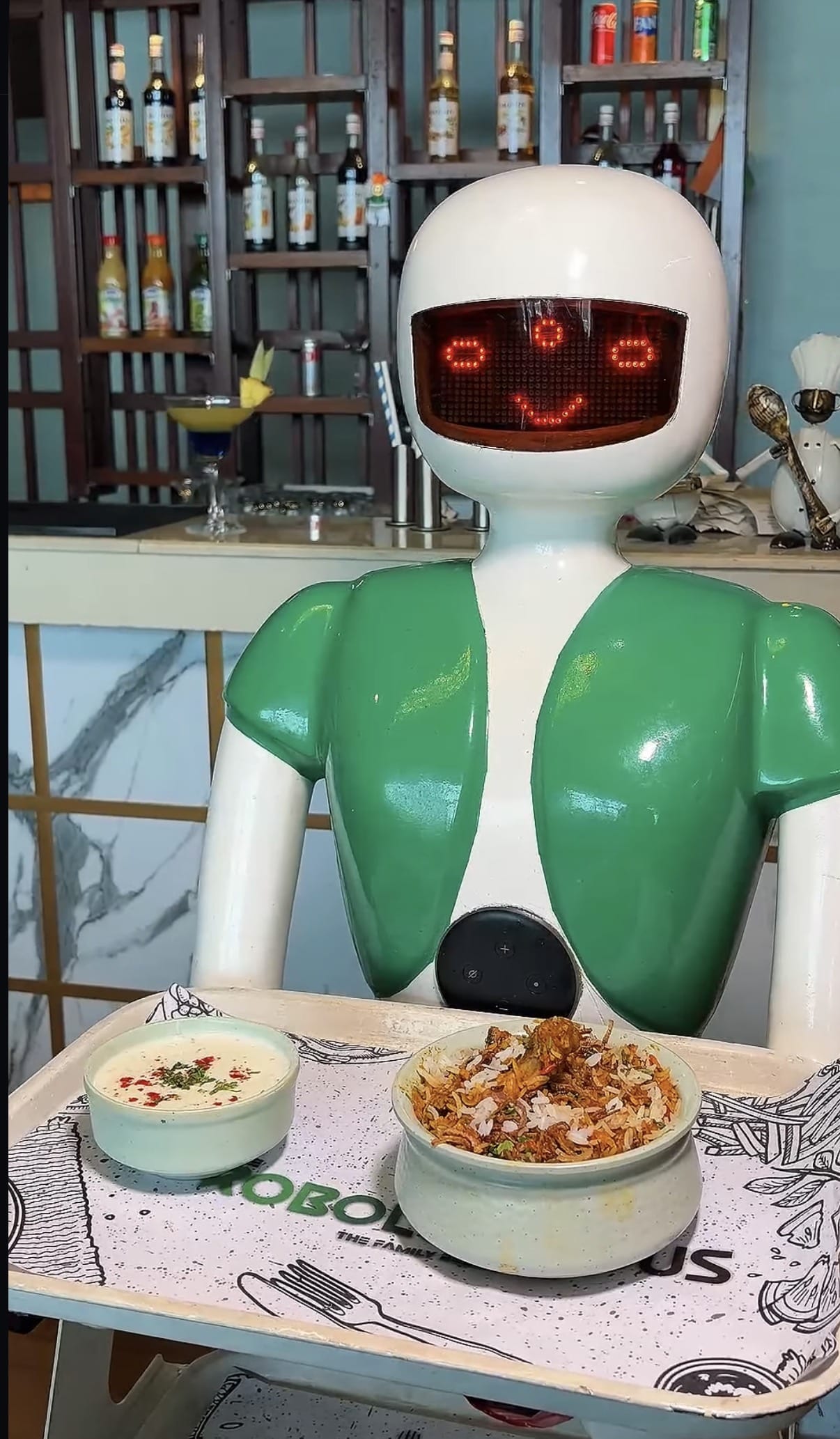
At any given time, four to five servers attend to guests in the 132-seater restaurant. When footfall rises, the floor manager turns to his ace card. Programmed with table numbers, the robot delivers dishes while human servers remain on the floor, engaging with guests.
The system reduces the constant back-and-forth between kitchen and dining area, easing pressure on staff and allowing them to focus on service quality.
Robotic servers, in effect, are emerging as a supporting cast rather than main leads. They handle repetitive tasks like carrying dishes, while human staff focus on interaction. They also double up as marketing tools.
“Orders don’t get delayed. Guests are excited. They click pictures and videos, which becomes marketing in itself. It’s an added advantage that doesn’t cost us anything,” Kapoor said.
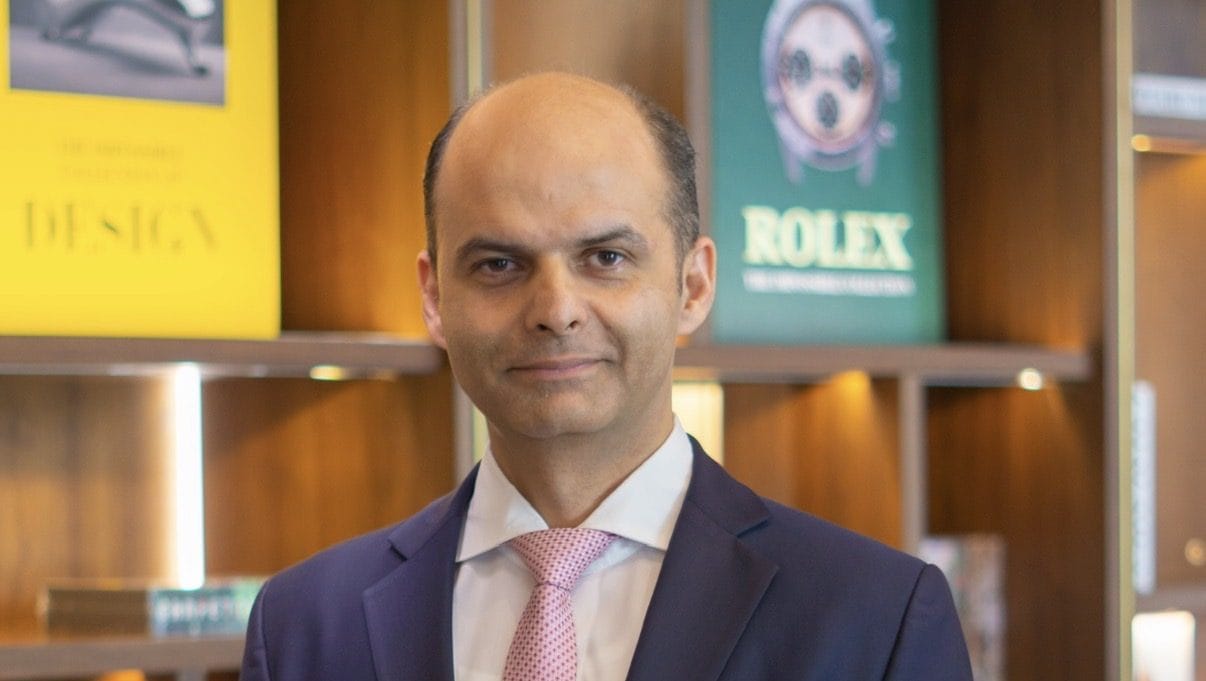
At Hilton Gurugram Baani City Centre, the experiment is set for a tech-led upgrade. Starting 25 April, a robot will serve welcome drinks in the lobby.
The hotel has mapped its lobby to choreograph the robot’s movement across five designated spots. At each stop, it will pause briefly, about 10 seconds, allowing guests to pick up beverages.
“It is currently a pilot. If it works, we could extend this to room service and banquets,” said Harkaran, the hotel’s General Manager.
For the hotel, the idea is less about being a gimmick and more about rethinking workforce efficiency.
“If someone is stationed only to serve welcome drinks, there is limited scope for growth. That same person can instead be engaged in more meaningful roles,” he said.
Bir Singh, CSO and co-founder of Addverb, said service robots are designed to operate safely in human-centric environments, with sensors, vision systems and ergonomic builds that allow seamless movement in tight spaces.
But the pricing can vary — from Rs 1.5 lakh to Rs 10 lakh depending on features and autonomy.
Kapoor said Roseate works with start-ups to co-develop solutions instead of importing Chinese robots.
“We don’t adopt technology blindly; we co-create it,” he said.
A disappointing past
Jeet Basa’s Robot Chef in Bhubaneswar, launched in 2019, struggled to sustain itself.
“In India, robots in restaurants are more about amusement than solving problems,” said Basa, a civil engineer and food entrepreneur based in Odisha. He soon realised that he still needed human staff to plate dishes and manage the machines.
“So, what is the point? You can get eyeballs in a crowded market by using robots, but it isn’t feasible,” he said.
When he launched the restaurant, the investment in the robot didn’t burn a hole in his pocket as the robot was ‘Made in India’. Today, however, Chinese models dominate the market and “things have improved,” he noted.
There were operational hiccups. Children tampered with controls, service was disrupted, and customers struggled to connect with the concept. While first-time curiosity drove footfall, repeat visits were rare.
India’s first robot-themed restaurant, launched in Chennai in 2017 by restaurateur Venkatesh Rajendran and architect Karthik Kannan, eventually shut down despite initial buzz.
Privacy concerns have also surfaced, as automated systems rely on sensors and cameras that may collect sensitive customer data.
“Robots can malfunction mid-service, lack emotional intelligence, and require high investment,” said chef Nishant Chaubey. “Communication is an essential element of the dining experience and robots can never outdo humans.”
That doesn’t mean all experiences were negative. Staff weren’t intimidated, not feared losing their jobs.
“We treated it as a friend, not an enemy,” said Janmejay Nayak, a former manager at Robot Chef. “If anything, it made our jobs easier.”
Additionally, the robot servers helped them tackle a major problem: the cribbing customers.
“People who would start cribbing about the delay were entertained and distracted by the robots. By the time they would click pictures and videos to their heart’s content, their food was ready,” he said.
Meanwhile, at Mie.Robolicious, floor manager Nitin said that working with robots isn’t a cakewalk. They come with their own set of challenges.
“Once in a day, sometimes, they don’t work properly. Right now, their role is just to take the order, but even there, they make mistakes,” he said. “Once, I placed a meal and entered Table 2, but it reached Table 5 or somewhere else. Sometimes it just stops midway also.”
Lack of clarity
Kapoor attributed earlier failures to a lack of clarity around real operational needs. Rather than copying trends, he emphasised on identifying specific pain points and collaborating with startups to build tailored solutions.
This approach has worked well for Bansal, too. His brother in DRDO is now building robots that would take customer orders as well.
“Others are spending Rs 5-7 lakh on technology a year. But, when we build, it is one-tenth less than what we spend on purchasing. And the benefits are greater,” said Kapoor, who has a strong personal interest in AI and is currently pursuing advanced studies while collaborating with an IIT Dean to explore its intersection with Ayurveda.
Like Bansal, Roseate also treats technological upgrades as a continuous process, introducing new innovations almost every month.
“Robots are being developed to assist with tasks such as transporting luggage and delivering in-room dining orders, especially during late-night rush periods,” he added.
(Edited by Prashant Dixit)