





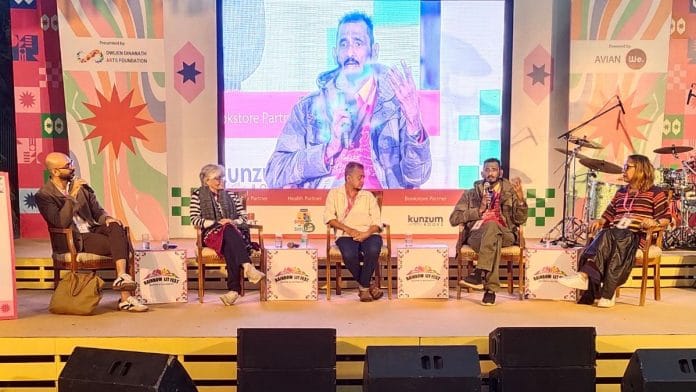



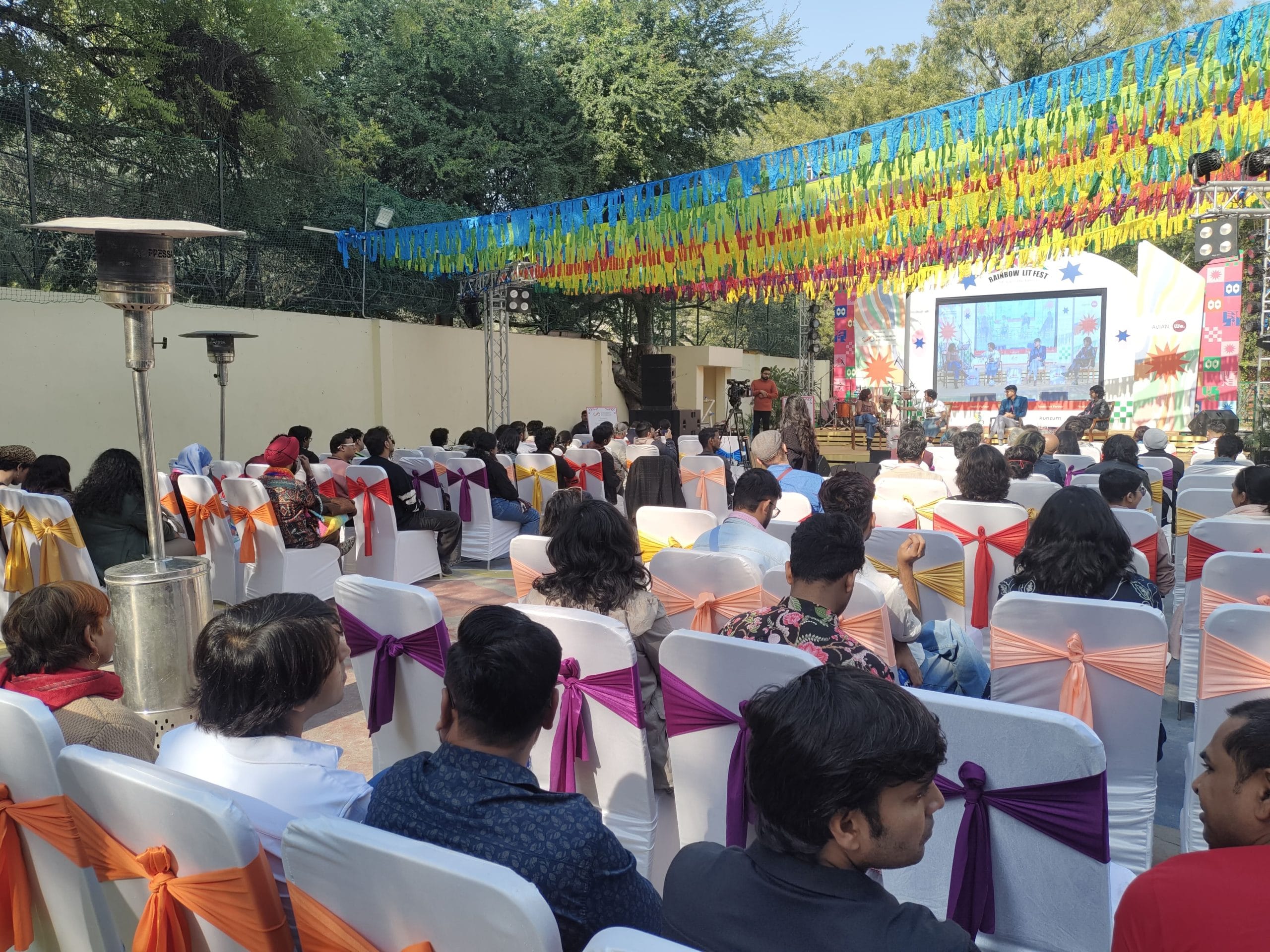
New Delhi: The Rainbow Lit Fest in New Delhi was an explosion of colour. Tattoos, shimmer makeup, leather jackets, pherans, and shawls hugged each other, as faux complaints were exchanged. No one had seen each other in forever, and everyone was an aggrieved party.
But beneath the overflowing love was a certain tension — between respectability and radicalism, ‘margins’ and ‘centre’, age and youth.
The fifth edition of the literature festival — organised on 6 and 7 December at Gulmohar Park Club — featured 18 panels on subjects ranging from love and parenting to kink and ageing. Five short films were screened, and there were over 40 sessions. People showed up in droves, gathering under the rainbow canopy with not just warmth, but something far more crucial: difference of opinion.
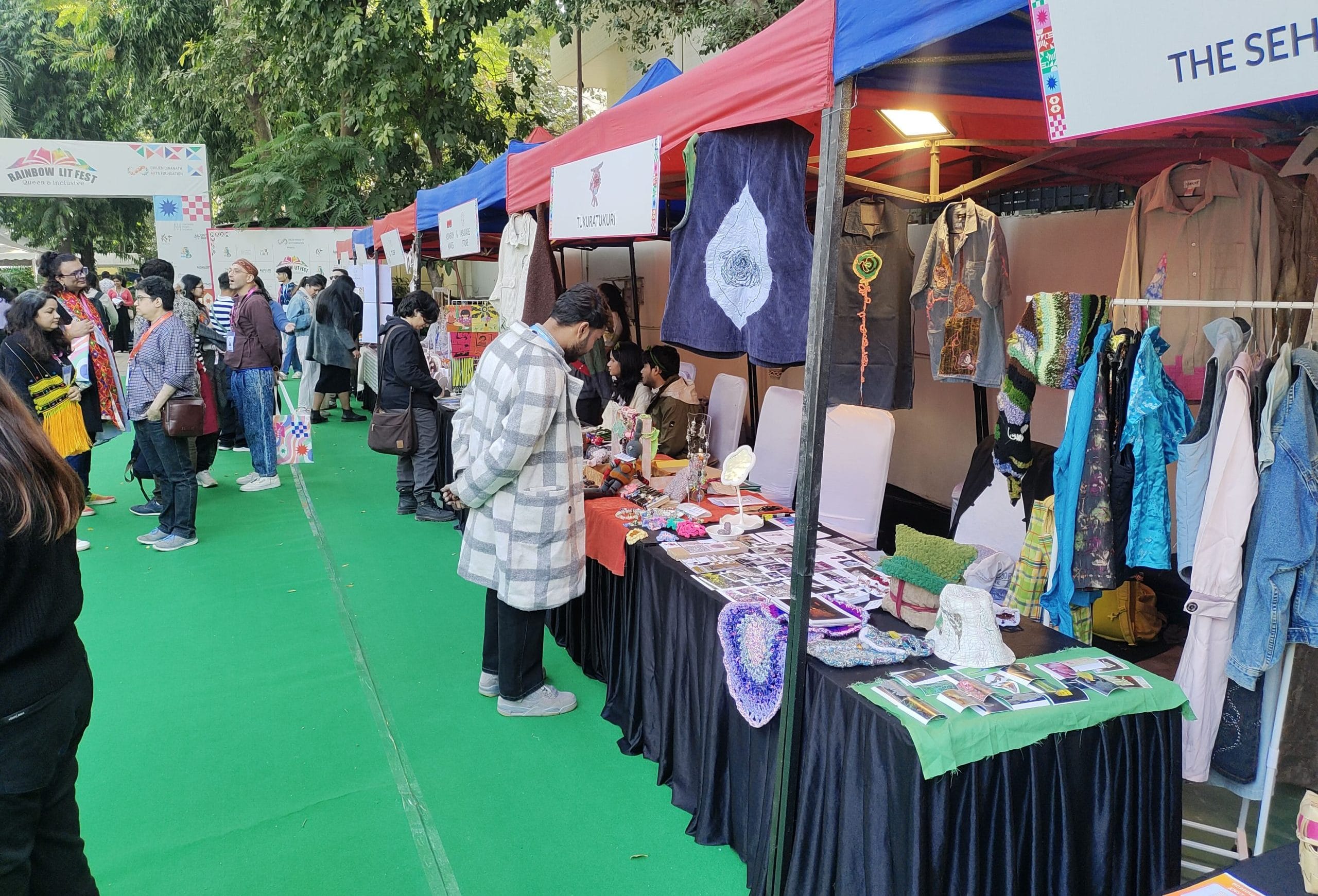
At the first panel discussion of the festival, titled Morality and Sexuality, writer and sexuality educator Jaya Sharma addressed the elephant in the room — the conflict between ‘good’ queers and ‘bad’ queers.
“Respectability is on the rise, and it worries me. It means bad things for those of us who are not good queers,” Sharma said. She was joined on the panel by author Sindhu Rajasekaran, activist Vani Viswanathan, and psychotherapist Prachi Gangwani, with NCP (SP) national spokesperson Anish Gawande as moderator.
“Families will accept you if you do queer desire plus monogamy plus marriage plus top-of-the-hierarchy behaviour. And for those of us who don’t, it’s punishment, whether it’s in families, with colleagues, or in our professions,” Sharma added.
In its fight for acceptance, the queer movement worldwide adopted the tagline “love is love”. It used the monogamous relationship to show that queer people, too, were human. But this had a huge cost. Marriage equality became the queer struggle, and ‘transgression’ became a bad word.
While Sharma’s critique of respectability politics isn’t new, her solution to it is. She doesn’t want the bad queers — the non-monogamist, gender-non-conforming, and kinky individuals — to get into an ‘us vs them’ battle with those who want to assimilate.
“What might help is recognising that all of us have some anxiety around at least some of our desires. Having taboo desires is the one thing that binds us all. So rather than embracing respectability, what if we could embrace perversion?” she said.
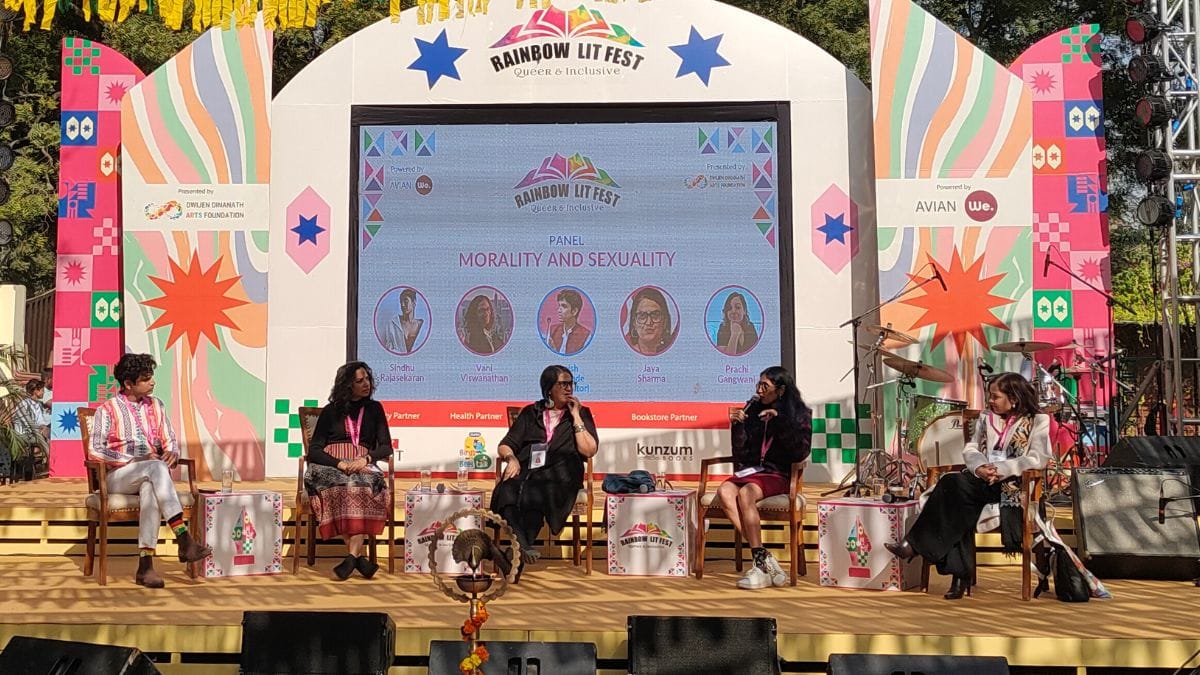
Gawande, ever the politician, was quick to step in for the marriage-minded gay and lesbian people. “If somebody wants respectability, can we be okay with letting them have it, while not having it ourselves? Does making space for respectability make you complicit in it?” he said.
Speaking in the context of the marriage equality case, Gawande said that the courtroom sharpens tensions — it’s down to whose fight is taken forward. But as a politician, he occupies a more equitable space, where he can support causes even if they don’t affect him firsthand.
“If someone wants to get married and have a family, that’s fine. I might not want that, but we’re a country of 1.5 billion people,” he added.
Speaking from the margins
It was a year of several firsts for Rainbow Lit Fest. It was the first time the festival introduced accessibility features for people with disabilities, including ramps, ISL interpreters, and a quiet room. The lattermost is especially important to Rituparna Borah, a queer indigenous activist who is a person with disability.
“When we talk about disability inclusion, it mostly means ramps. That too, no one thinks about how they should be made — some are so steep… But to acknowledge that people with psychosocial disabilities, ADHD, autism are also here, it’s very important,” she said.
It is also the first time that the organising committee collaborated with other activists and educators to organise panels. Sharma organised one on the politics of kinkiness, Dalit poet and geography professor Dhiren Borisa organised a panel on Dalit Bahujan queer experiences, and PhD scholar Vaivab Das put together a panel on LGBTQ+ spaces in universities.
But even as the fest made this sincere attempt at inclusivity, people were looking for more. Among audience members and panelists alike, the perception was that the fest was an elite space. The tickets were too pricey for some, the food for others. And everyone was looking for ‘diverse people’. The conversation came to a head during the panel titled Stories From The Margins, Stories That Speak Queer.
The discussion featured three young panellists — Khushwant Karkan, Shravani Bogale, and Shreya, with Sudipta Das as the moderator. As they began speaking, there was trepidation in their voices.
Karkan voiced his fear that something dehaati would slip out when he interacted with people in a savarna-dominated space such as the festival. Bogale echoed his nervousness around voicing ideas and how they would be received by the audience. When the mic passed to the third panelist, Shreya, she put the angst in words.
“When I first walked into this space, I was enraged. Everywhere I looked, the confident people were the savarna people. And on this panel, we feel a pit in our stomach, and we worry about whether we can occupy this space. The fact that we’re the ones feeling this, it enrages me the most,” she said.
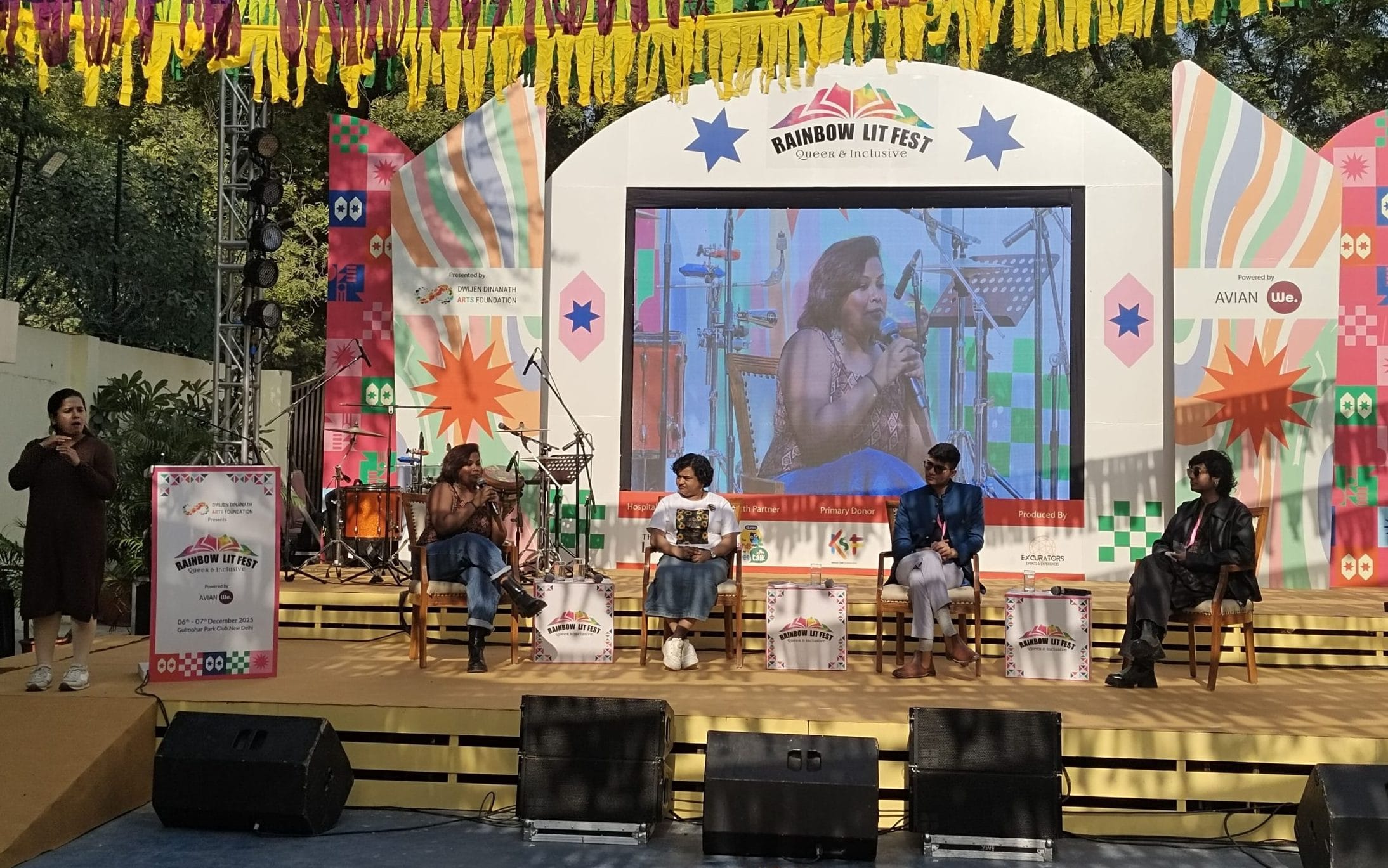
Bogale repeated what anti-caste queer activists have long said: the fight for marriage equality or wanting acceptance from families is too remote for Dalit Bahujan folks.
“The struggle for Dalit Bahujan queer folks is much more layered. It starts with protecting themselves from caste-based oppression, overcoming economic inequalities. For us, the struggle is being offered a voice in queer spaces. Not just in a tokenistic manner — centre our voice. Until that happens, queer liberation won’t happen”, she said, speaking in Hindi.
Sharif D Rangnekar, founder of Rainbow Lit Fest, wants more diverse voices in the festival. The limitation for him, however, is a fund crunch.
“We are an elite fest for sure — predominantly English, followed by Hindi… But if you can’t get more people from smaller towns and cities, who cannot afford the flight, then we will keep failing the idea of inclusion. And if we want to live up to that, then we need the funds to bring in people from different places,” he told ThePrint.
He plans on adopting a more aggressive approach to funding. He doesn’t want the Rainbow Lit Fest to get ‘bigger’ — with more panels or panellists — but he wants it to keep becoming more inclusive.
Sudipta Das looks at the problem differently.
“For a lot of marginal people, they’re not constantly thinking about what kind of networking can happen at Queer Lit Fest. It often doesn’t materialise into anything substantial for them. So we might have to reflect on what exactly we’re offering here that could attract people from diverse experiences and contexts,” he said.
Also read: Demon Hunters to A Chip Odyssey, Taiwan Film Festival has a message for Indian audiences
Ageing as a queer person
Contrary to expectations, the panel on ageing as a queer person, called Queer Time, was quite a jovial affair. R Raj Rao, Maya Sharma, Rudrani Chettri, and Rumi Harish were in conversation with moderator Ankur Paliwal.
“I see ageing as a Right-wing thing. There’s the ashrama dharma, vanaprastha, and sanyaas, and renunciation. I don’t think queer people need to buy into that,” writer and academic Rao said.
According to him, straight people become so invested in their children that they stop caring about their appearance. Indian men are notorious for it, Rao said. But queer people are free of all that.
“We’re on the market forever. I might meet someone at an event such as this, and we might find each other interesting,” he added, drawing a few chuckles.
Maya Sharma agreed. “There’s the idea that desire fades away as a person ages. I feel that it only grows, sometimes a bit too much,” she said in Hindi, and the audience broke out into laughter.
The conversation turned sombre as Chettri highlighted that many transwomen don’t live to the age of 50. “There are no jobs, no security, so a lot of transfeminine people take up sex work, and the effort to earn and secure your life becomes messy. A lot of people don’t even cross 35,” she said.
Even the shelter homes under the government’s Garima Greh scheme have an age limit of 18 to 60. The scheme assumes 60 as the upper age limit on a trans person’s life.
A friction point emerged during the Q&A session when an audience member asked panellists to share a piece of advice they had received from queer elders. Rao dismissed it, calling advice-seeking a residue of conservatism. Hindustani classical vocalist Harish elaborated on his point.
“I don’t believe in anyone advising anyone else. It’s a preachy kind of nonsense. The question comes from a typical Indian guru-shishya understanding, which is hopelessly bad,” Harish said.
In a conversation with ThePrint, Rao also said that a sense of history is disappearing among today’s queer people.
“You can’t think that 2018 is the starting point for the movement. What about Ismat Chughtai’s Lihaaf, and the obscenity trial? There’s Suniti Namjoshi, Saleem Kidwai… I haven’t heard these names come up at all today,” he said.
Whether it is Dalit literature or women’s writing, Rao said, there is an inseparable sense of history. But the Indian queer community is notorious for this amnesia. And there may be some truth to his words.
(Edited by Aamaan Alam Khan)