





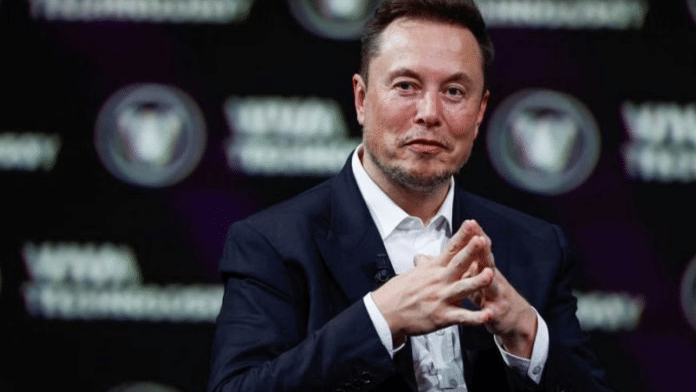



New Delhi: Elon Musk wants the terms ‘indigenous’ and ‘native’ to be broadened to include Europeans. In an X post Monday, the Tesla CEO wrote that if words such as ‘First Nations’ could be used in the American context, they should also include French and Spanish people. It wasn’t an innocent suggestion. It set off a robust debate on colonialism, oppression and also a pushback against post-modern language originally invented to signify history and marginalisation.
“If one is to use the term ‘First Nations’ or ‘Indigenous Peoples’ or ‘Native Americans’ in the Americas and Antipodes, then, in fairness, it should also apply to English, French, Spanish and other such peoples in Europe,” he wrote.
But what are these three terms, and are they synonymous with one another?
Historical usage
First Nations is specific to Canada, and Native Americans is mostly used in the US. And the term indigenous is broader, referring to tribal and aboriginal populations across the globe.
‘First Nation’ is one of three groupings of indigenous people in Canada, states The Canadian Encyclopedia. Unlike Métis and Inuit, most First Nations hold reserve lands in the North American country.
According to the Native American Rights Fund (NARF), the term ‘Native American’ came into existence in the 1960s. The US government has historically used words such as ‘Indian’ or ‘American Indian’ to refer to these communities.
“The terms American Indians and Alaska Natives denote the cultural distinction between the Indigenous peoples of the continental United States and those of Alaska,” read the NARF website.
While the UN hasn’t adopted a single definition for the word ‘indigenous’, owing to the diversity of indigenous people worldwide, it is often associated with populations that feature:
- Historical continuity with pre-colonial and/or pre-settler societies
- Strong link to territories and surrounding natural resources
- Distinct social, economic, or political systems
- Distinct language, culture, and beliefs
- Non-dominant groups of society
The link with colonisation, especially, has been highlighted by several X users in the comments on Musk’s post.
Also read: CBSE postpones board exams for students in UAE, Iran. ‘Children can’t study amid airstrikes’
Reactions
Proponents of remigration—accounts that often post against migration and the supposedly liberal pursuit of diversity—were quick to agree with Musk.
“We Europeans aren’t even ‘allowed’ to call ourselves the indigenous peoples of our own homelands in Europe, where we’re rapidly becoming a minority. It seems terms like ‘indigenous’ and ‘native’ are reserved for anyone and everyone except White people,” wrote Eva Vlaardingerbroek, a Dutch far-Right political commentator and activist.
“We have a right to exist as natives,” wrote Martin Sellner, a proponent of remigration.
A large section of the commenters is asking how long one’s ancestors must occupy a land to be considered indigenous. And then there are the voices of reason, drowned out by ‘hot takes’.
“‘Indigenous’ isn’t just about being first, it’s about being colonised, displaced, and marginalised by outsiders. Europeans weren’t colonised in that same way in their own lands,” a comment read.
“Terms like ‘First Nations,’ ‘Indigenous Peoples,’ and ‘Native Americans’ emerged from specific histories of colonisation and displacement… they recognise distinct political, legal, and cultural experiences shaped by those histories,” wrote English ecology educator Clement.
A meme summed up how outlandish Musk’s reasoning is. It featured a photo of Julie Andrews from The Sound of Music with the text: “Elizabeth Warren does her tribal dance surrounded by her Indian ancestors”.
It shows that even if the words ‘indigenous’ and ‘native’ weren’t closely tied to colonisation, they still carry clues about culture and belief that simply don’t translate to the realities of White Europeans.
Like this? pic.twitter.com/PZBhRK65Eh
— John's Memes (@Johnsmemes) March 2, 2026
(Edited by Saptak Datta)