








New Delhi: Worried about AI taking jobs? Find meaning elsewhere. That, in essence, was Zoho co-founder Sridhar Vembu’s take in a recent X post. For him, humanity is moving toward reorganising itself around labour that’s not all about getting paid.
“If our notion of self-worth comes from the economic value we add, or if it comes from our intellectual pretense (cough), AI may pose a serious challenge to our self-worth,” he wrote, adding that endeavours such as caring for children and the elderly, playing classical music, or taking up farming for the love of it would be the kinds of ‘jobs’ that survive. It was a Dharmic spin on AI doomerism.
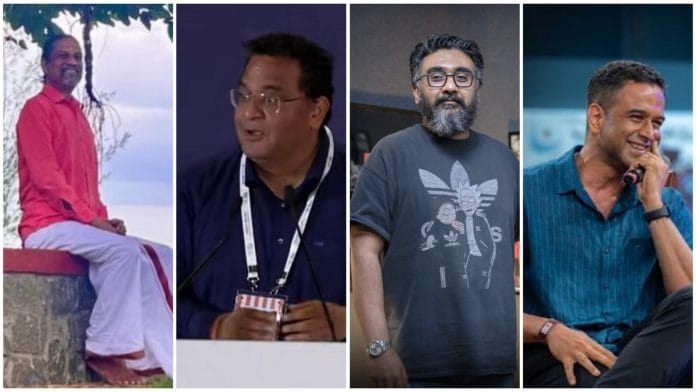
India’s C-suites are deeply divided on the AI question and the future of jobs. And their differing views are driven by economic, technological, and philosophical concerns. From Vembu advocating for a life beyond economic value to Paytm’s Vijay Shekhar Sharma evangelising of AI even as a CFO, to Zerodha’s Nithin Kamath implementing an internal policy promising no layoffs due to new technology — India’s top CEOs often air their views on how the AI juggernaut will affect the Indian workforce.
Vembu, who regularly engages with AI developments on X, struck a nerve with his February post on the future of work.
If our notion of self-worth comes from the economic value we add, or if it comes our intellectual pretense (*cough*), AI may pose a serious challenge to our self-worth.
On the other hand no one takes up activities like taking care of children, teaching children, taking care of…
— Sridhar Vembu (@svembu) February 27, 2026
“Creativity and care are going nowhere as are Bhava and Anubhava,” said one reply among the 173 comments. But another questioned whether it was “hypocritical” that he was encouraging young people to seek “low value” jobs while making dollars through Zoho, a global SaaS company. The debate also included the contention that the arts too would dry up without funds and patronage.
Vembu conceded there was a fork in the road.
“If/when technology creates the surplus, without the jobs, it becomes a question of political economy on how people get to consume that surplus. Nature, nurture, culture, art, sports, music, entertainment and spirituality are all avenues for people to keep themselves busy. The other political economic solution is Universal Basic Income. Some societies will pick the first path and others will pick the second path and still others will combine the two,” he predicted.
But not every CEO is thinking in such long-horizon terms. Others are focused on what businesses and workers should be doing with AI right now.
Also Read: Fear & despair outside Oracle office. ‘It was ruthless, we’re all replaceable’
The AI evangelist
One of the most vocal proponents of going ‘AI first’— words that have sent a chill down many a spine— is Paytm’s Vijay Shekhar Sharma.
“Sooner or later, we will have to start using AI as an employee or even as a CFO,” he said last July. However, he has consistently framed this as a ‘revolution’ rather than a wave of redundancies.
At the AI summit held in Delhi in February, Sharma noted that while most conversations around artificial intelligence revolve around job losses and chatbot supremacy, the technology can deepen credit access and bring meaningful financial inclusion to the last mile.
“AI is no longer just about chat or photo edits; it is moving into business, finance, agriculture, and industry, solving real-world problems at scale,” he said. “This is not about job loss; it is about AI-led abundance, and India will lead this revolution from the front.”
Sharma’s evangelism puts him firmly in the camp of global tech leaders such as former Google CEO Eric Schmidt, who has said that professionals in fields from art to medicine could become irrelevant if they don’t adapt. Nvidia’s Jensen Huang has also argued that people who avoid learning AI risk losing their jobs to those who embrace it.
Sharma has been on this track for a while. In 2021, he re-shared a decade-old post on X in which he’d predicted that “a smartphone can do everything, including creating new business models.” In 2025, Paytm became the only Indian company on Morgan Stanley’s Global AI Adoption Leaders list, along with the likes of Tencent and Alibaba.
Last October, Paytm launched Soundbox, a payments device with a built-in AI assistant that speaks 11 languages. Sharma called it a leap comparable to the shift from feature phones to smartphones.
“It takes a lot of time for technology to mature and become magical. AI is there now,” he added.
It takes a lot of time for technology to mature and become magical. 🤩
AI is there now.
When we envisaged AI Soundbox, soon it was clear that it won’t be just a payment device anymore. 🤖
It would rather be like a smartphone in the age of feature phones. QR was like a rotary… pic.twitter.com/1sFReKzTzo
— Vijay Shekhar Sharma (@vijayshekhar) October 9, 2025
‘AI made us QA’
Kunal Shah, the founder of fintech app CRED, has a knack for sparking debate on LinkedIn with sharp, one-line takes on AI and the future of work.
One of his most pointed: “AI has made all of us QA” — a pithy way of saying that as AI takes over the doing, humans are increasingly left checking its work.
Shah has alluded to this idea in several posts over time, arguing that the real skill now is knowing how to direct AI rather than compete with it.
“Two kinds of people use AI: 1) Obsesses over its mistakes and finds reasons not to use it. 2) Exploits its strengths and works around its flaws to become dangerously productive Use AI like an army of high-IQ interns. Not like an expert you’re trying to catch being wrong,” he wrote last month.
But he’s also frank about what this shift means for those just starting out. Amid sweeping job cuts at companies from Meta to Oracle and a hiring slump in India, Shah offered a prediction: “AI may force freshers to become entrepreneurs due to a lack of entry-level jobs.”
The post drew nearly 500 replies. Among those pushing back was Mukesh Kumar, founder of convverse.ai: “A fresher with a curious mindset, willingness to solve problems with AI tools can add very high value.”
However, Shah has also hinted subtly at what AI can’t easily replace.
“AI made me realize a clear sign of intelligence is someone’s ability to quickly grasp something complex without needing a ton of context,” he wrote in one of his widely discussed LinkedIn posts. The statement had many commenters offering their own interpretations of what Shah meant.
“Exactly!! Smarter models just need a hint, and dumb models require a ton of context and still get it wrong—and the same applies to humans,” said one user.
Also Read: What are India’s CEOs saying about Gen Z? ‘Enjoy working with them’ to ‘nightmare’
‘Give teams time to adapt’
If Vembu is AI’s philosopher and Sharma its evangelist, Nithin Kamath is a pragmatist who has explicitly outlined where AI doesn’t work yet.
In a post on X in March, the founder of Zerodha, one of India’s largest brokerage platforms, took on a question that many retail traders have been asking: can AI help them make money?
“My honest answer is not really,” he wrote. “The people actually making consistent money in markets are high-frequency trading firms, market makers, prop desks etc that have built infrastructural and data moats over years… AI can make you more disciplined, but not smarter.”
People keep asking me if AI can help them make money from trading. My honest answer is not really.
As long as there's a human in the loop, you're still dealing with the same creature driven by fear and greed, and that human will keep making the same mistakes. But beyond…
— Nithin Kamath (@Nithin0dha) March 31, 2026
Kamath has been walking a similar, balanced line since the first flush of the LLM wave. In 2023, he posted a long thread on X about AI’s impact on financial services.
“It feels to me like we’re at the beginning of a massive shift in how financial services will work,” he wrote, adding that users may soon create their own interfaces using AI prompts—effectively turning platforms like Zerodha into streamlined backend “pipes”.
In the same thread, he also discussed the practical ramifications of this for businesses and their employees.
“It’ll take a few years for us to see the real impact of AI on humanity. Businesses with financial freedom should, if nothing else, give their teams that helped build the business time to adapt.”
While he acknowledged that AI has the power to take away jobs and disrupt society, he outlined how his company was trying to stem the tide at least internally.
“We’ve just created an internal AI policy @zerodha to give clarity to the team, given the AI/job loss anxiety. This is our stance: ‘We will not fire anyone on the team just because we have implemented a new piece of technology that makes an earlier job redundant’,” he posted.
This is the second part of a series tracking what India’s CEOs are saying about changing workplace trends, dynamics, and lifestyle.
(Edited by Asavari Singh)