





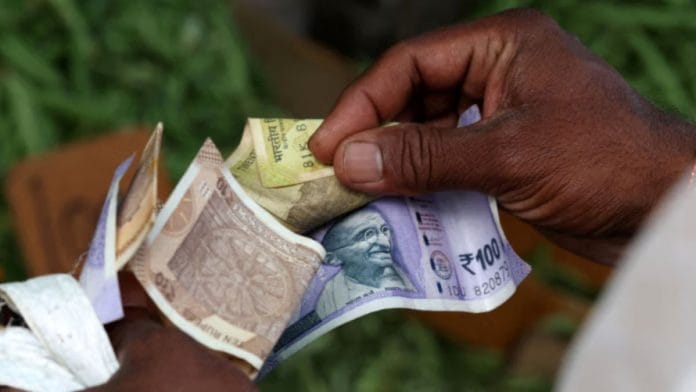



New Delhi: India’s giving economy does not begin in boardrooms or corporate foundations. It begins at home—in packets of rice handed to a neighbour, small cash offerings at temples and mosques, and hours spent volunteering in community relief. These everyday acts add up to an estimated Rs 540 billion a year in household philanthropy, according to a new study published by the Centre for Social Impact and Philanthropy at Ashoka University.
The report, ‘How India Gives 2025’, challenges the long-held assumption that organised philanthropy in India is driven primarily by institutional or Corporate Social Responsibility (CSR) funding. Based on interviews with 7,000 respondents across 20 states spanning urban and rural India, the study finds that 68 per cent of households give in some form, whether through cash, in-kind contributions, or volunteering.
Drawing on survey data and National Sample Survey consumption patterns to estimate annual contributions, the study argues that ordinary households form a larger pillar of India’s philanthropy landscape than official data often reflects.
Indian households making donations
The report found that 48 per cent of the people donated in the form of food, clothing and household goods. And nearly 44 per cent are making cash donations to various non-profit organisations. Around 33 per cent of Indians are either volunteering with non-profit and religious institutions or community groups.
According to the report, the donated food was given to community kitchens. Those who choose to volunteer participate in activities such as disaster relief organised by religious institutions.
Jinny Uppal, head of the Centre for Social Impact and Philanthropy at Ashoka University, said that there is widespread generosity in India and it is culturally embedded in Indians.
“India is a very generous country,” she told the BBC. “Our findings suggest that ordinary households play a much larger role than is commonly acknowledged.”
The survey also focused on the recipients, domestic workers, beggars, and the non-religious institutions.
The respondents revealed that the amount of donations they have made over a period of two months, from March to April 2025. Their responses were extrapolated to determine the approximate annual estimates.
However, there are fewer religious festivals in India during this time. The donations can increase during the festive season.
Also read: You’re not stupid because you’re bad at maths. It’s just your biology
Donations to faith
The study found that most of the giving is driven by ‘proximity’ and ‘faith’, BBC reported. In rural India, most people give to religious institutions, whereas in urban spaces, 40-45 per cent of people donate to religious institutions and to the beggars.
The report also found that these donations are made on in-person requests rather than online campaigns. While households headed by men made more donations to religious causes, female-headed homes supported destitute individuals.
But donations are not just from the affluent. Even with low incomes, about half of households report giving and as money comes in, participation climbs to 70 per cent, the report finds.
Although Indians are making donations in billions, it makes up only 15 per cent of the total private donations to the organised social sector.
(Edited by Saptak Datta)