





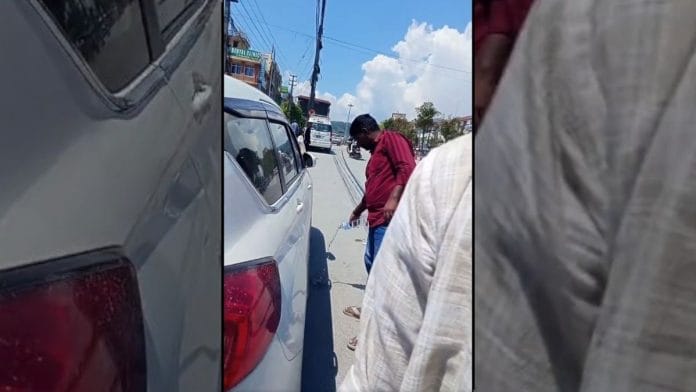



New Delhi: A viral video of two Indian tourists spitting gutkha on a street in Nepal has spotlighted the recurring and relentless problem of poor street hygiene that plagues Indian tourists. It has sparked a debate on social media and is being dubbed a ‘global embarrassment’.
In the video, a local resident is heard calmly schooling the two Indian tourists who seem visibly ashamed.
“This is not India, this is Nepal. Please, don’t make it dirty. Clean it with water. India is such a big country, and you guys are making the streets of Nepal dirty,” the man said to the tourist duo in Nepal.
The local man added that before apologising one must think of their actions.
The video shared by Nikhil Saini on X Wednesday shows a Nepali citizen reprimanding them and making them clean the area they had spat on. The tourists are then seen apologising profusely while the man makes a stark comment: ‘This is not India’.
“These gutka pichkari lovers have caused the highest level of embarrassment for Indians across the globe. Video from Nepal shows a local forcing such gutka spitters to clean their own mess. If the govt bans these pichkari spitting habits, half of India’s cleanliness problem would already be solved”, Saini wrote.
Most agreed with him. Some are even ready to pay extra tax to solve the issue, given that the government brings some rules into place in India.
“Mein extra separate tax dedunga bas inka kuch krwado (I will pay extra taxes, but tackle such people), an X user wrote.
Also read: Who is Nazia Elahi, now making anti-Muslim speeches in ‘Hindu Dharam’ tour
‘The Ajay Devgn squad’
They have been dubbed the ‘Ajay Devgn squad’, and their ‘invincible’ behaviour is now being dissected. ‘Make a separate country for them,” another X user said.
Another said: “A new movement should be started. Just like cibil score, there should be civic sense score for each individual. Only if the score is above a certain level, passport will be issued.”
Public spitting remains a large sanitation and public health concern in India, largely because of the widespread use of chewing tobacco and paan, which leaves red stains on streets and walls. Although it is punishable by fines of up to Rs 5,000, weak enforcement has allowed the practice to persist, resulting in high cleaning costs and increased health risks.
Despite being prohibited under various municipal laws and often addressed under Section 4 of the Epidemic Diseases Act, implementation of these regulations continues to be inconsistent.
(Edited by Saptak Datta)