








Before Akshay Kumar got his ‘Khiladi’ tag in the 1992 film of the same name, there was the inspiration for it. Khel Khel Mein set the template for the Indian college caper-cum-whodunnit in 1975, the same year that Amitabh Bachchan perfected his persona as the angry young man in Sholay and Deewaar.
Directed by Ravi Tandon and adapted from the French novel Good Children Don’t Kill, the film stars Rishi Kapoor, Neetu Singh and Rakesh Roshan as college friends whose pranks spiral out of control. It starts out like a breezy college comedy, but around the one-hour mark, things get darker and the bodies soon start stacking up.
In Khel Khel Mein, their third film together, future spouses Rishi Kapoor and Neetu Singh cemented their famous on-screen chemistry. But it is Rakesh Roshan, never known for his success in leading roles, who steals the show, with a glint in his eye and plenty of grey in his character. The way the trio execute their ‘crimes’ makes for interesting watching in an era where tech has transformed scams and surveillance alike.
The film also had a soundtrack with staying power, and songs such as ‘Ek Main Aur Ek Tu’ are hummable even after 50 years.
Also Read: Saath Saath begins where most Bollywood love stories end—after the wedding
From prank to murder
The film is set in a Shimla college, where newcomer Ajay (Rishi Kapoor) becomes friendly with Vikram (Rakesh Roshan) and Nisha (Neetu Singh), who like to pass the time by getting into all kinds of mischief. One prank goes too far. Vikram spurs on his two friends to join him in sending a fake extortion letter to a stingy jeweller, Ghanshyamdass Johri (Jankidass).
As Vikram dictates, a rather reluctant Ajay types the letter on a portable typewriter, demanding the princely sum of Rs 5,000, along with a death threat if the police are called. Nisha, reading the letter over, spots that Rs 50,000 has been typed instead of 5,000 (“this will be enough to kill him”) but they decide to run with it. None of them expect the money to be delivered to the designated spot, but their victim ends up depositing it.
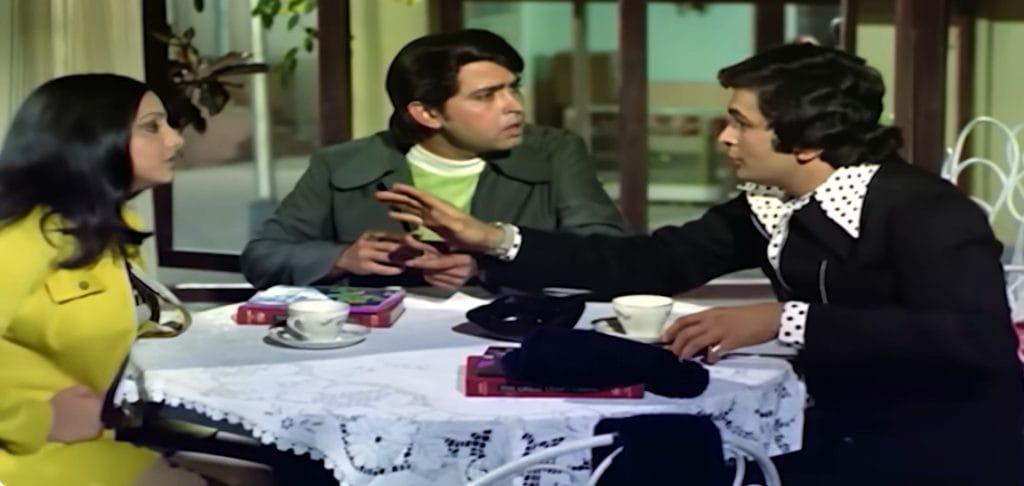
It’s from this point on that things get dark. Ghanshyamdass turns up dead and Ajay and Nisha are the prime suspects. To add to their woes, a stranger keeps stalking them, even as they frantically try to find proof of their innocence. Two others end up dying, including one of the main characters, and the final reveal of the killer comes as a satisfying twist.
While the movie shares many plot points with Abbas-Mastan’s Khiladi, it’s also quite different. In 1992, the typewriter was gone, the extortion was done over the phone, and the sum had grown to Rs 5 lakh.
Roshan steals the show
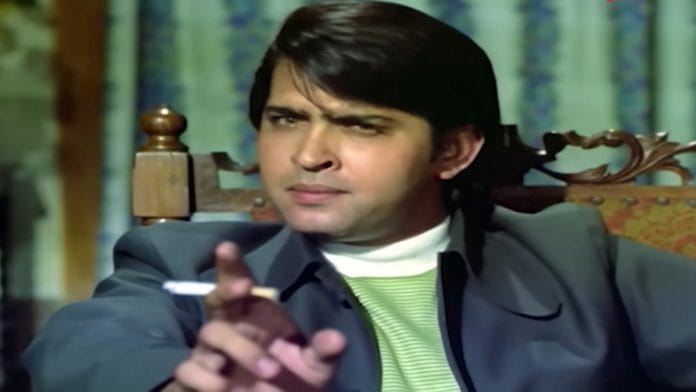
The surprise package of the film is Rakesh Roshan, who plays the slick, spoilt Vikram. From his manner of speaking to his dialogue delivery, Roshan balances the character between likeable and lounge lizard. Despite having less screen time, he nearly outshines Rishi Kapoor.
He is the ringmaster of the trio, asserting his authority over Ajay and Nisha with ease, with a cigarette in hand and complete confidence in uttering the most outrageous things.
When Ajay wants to return the money, Vikram shuts him down: “He won’t see it as if you’ve taken a loan and have come to return it with interest.” His excuse for carrying a gun is equally glib.
“Even kids carry knives nowadays, I thought I should at least have a gun. I got it for Rs 1800,” Vikram tells a frightened Ajay. The very next minute, when a professor catches him smoking, he replies instantly, “I am on leave today,” without fumbling for a second.
Kapoor, though, plays the familiar ‘good boy’ —the earnest student who gets the highest marks, sings on stage, and romances Nisha. But he does not quite have the same edge as Roshan.
Neetu Singh’s character, though not merely a prop, has relatively little to do beyond playing second fiddle to the two men who take most of the decisions— from playing pranks to finding the murderer. Kapoor and Singh, who would go on to appear together in films like Rafoo Chakkar (1975) and Amar Akbar Antony (1977), nevertheless have impeccable chemistry.
Also Read: Gora Aur Kala is 1970’s Bollywood tackling racism. If anything, it makes it worse
Songs that stuck
While the film has several amusing exchanges and builds tension effectively, it falters in its dialogues, written by writer-actor Kader Khan, who would later craft iconic lines in films such as Muqaddar Ka Sikandar (1978), Agneepath (1988), and Shahenshah (1990). However, the music makes up for the lack of crackling one-liners.
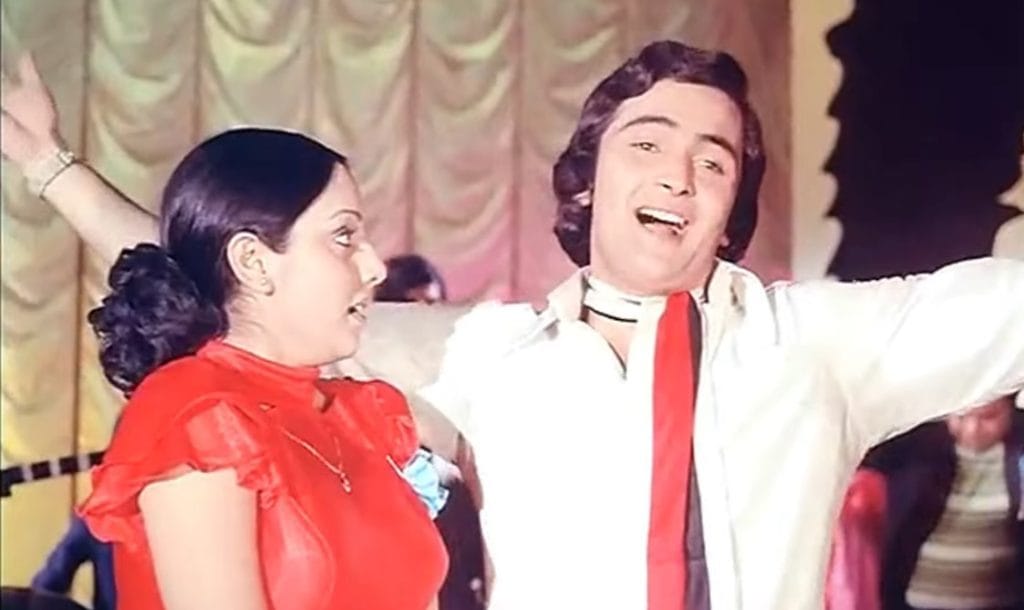
The film’s soundtrack exudes youthful energy, with songs like Humne Tumko Dekha, Ek Main Aur Ek Tu, and Khullam Khullam Pyar Karenge. Composed by R D Burman to lyrics by Gulshan Bawra, the songs were chartbusters that established the friendship between the trio as well as the romance between Ajay and Nisha.
Kapoor performing on stage with his guitar in Humne Tumko Dekha is a precursor to later moments such as Om Shanti Om in Karz and Sochenge Tumhe Pyar in Deewana (1992). The film also gives Kapoor room to show off his dancing.
The costumes of the three actors add to the charm. From the brightly coloured co-ord sets and dresses worn by Neetu Singh to Rishi Kapoor’s spread-collar shirts and Rakesh Roshan’s full-sleeved T-shirts paired with jackets and neck chains, the film is a lesson in 1970s college fashion.
For those fond of looking for clues: about two minutes into the opening credits, a young Mithun Chakraborty can be spotted in a group of college students, a year before his debut in Mrigayaa.
Views are personal.
(Edited by Asavari Singh)