








New Delhi: Taking her dog out for a walk in her Gurugram housing society nearly cost Ruchika Rs 500. No sooner had her “bachha” relieved himself than an eagle-eyed resident waylaid her and called the RWA president, threatening a fine for not using one of the designated spots. She escaped the fine only because she cleaned up immediately.
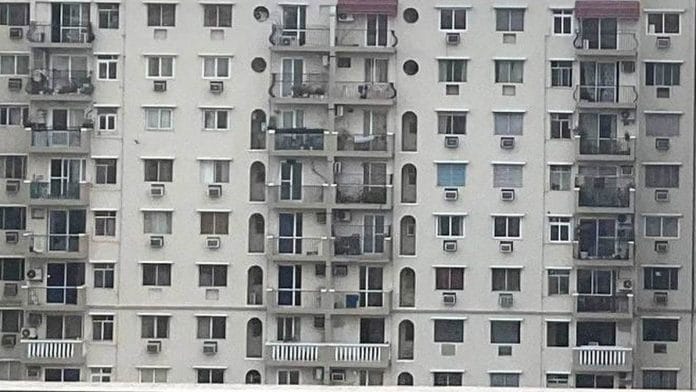
RWA rules are often strict and arbitrary, but they’re also increasingly being monetised. Everyday irritants are turning into billable offences, whether it’s pets relieving themselves in the wrong spot, noise at the wrong hour, or ‘eyesores’ such as clothes drying on balconies.
“We constantly find ourselves navigating a maze of rules and restrictions. It often creates friction within societies and divides residents into opposing groups, and now it costs money too,” Ruchika said. “There is sometimes a fine even if you enter your lift with a pet.”
Such fines are another example of RWAs acting like a law unto themselves, some residents say. In December 2025, Bengaluru police booked the Resident Welfare Association of Provident Sunworth Apartments after it collected fines running into Rs 3.3 lakh in two months. Residents were reportedly charged Rs 10,000-Rs 30,000 for ‘offences’ such as consuming “illegal substances” in their flats in lieu of being reported to the police.
Not paying dues like electricity and maintenance has become another revenue stream. Some RWAs stop at naming and shaming or threatening to withdraw the access of domestic staff, such as in the case of Uppal Southend in Gurugram. Others simply add a charge. One Gurugram resident asked in a financial advice column whether being levied Rs 200 a day for paying his electricity bill 15 days late was within norms, and was advised to complain to the Deputy Registrar of Co-operative Societies. Even not segregating waste properly can result in an RWA fine.
Legally, under cooperative housing laws such as the Societies Registration Act of 1860, RWAs cannot arbitrarily impose penalties unless such provisions are formally documented. However, through duly adopted by-laws, these internal rules are usually brought under a “code of conduct” and applied on a case-by-case basis.
While some residents see these measures as necessary, others question their fairness and legality. In the Bengaluru case, complainants alleged they were targeted because they were students and tenants, which means they easily “panicked” and ponied up the money.
“Even if residents complain about such penalty rules, the concerned government departments often say it is an internal matter. There is little oversight on RWAs, and they are just making money,” said advocate Ritu Bhariok, a Gurugram resident who has worked extensively with home buyers and RWAs.
Also Read: Delhi’s single women vs RWAs. Story of the new ‘problem tenants’
‘Can’t use our own space’
When Akshara Gupta found a suitable apartment to rent in an RWA society in Noida, she was relieved that her long search had ended. But the 32-year-old was soon confronted with a long list of rules and slapped with a penalty.
One Saturday afternoon, while setting up her new place, she used a drill to hang a few photographs. A neighbour immediately complained about the noise on the society WhatsApp group and pointed out that construction and renovation work was not allowed at 3 pm. Gupta had to pay a Rs 500 fine.
“I didn’t even know there was such a rule. The space for which I pay so much rent—I can’t even use it the way I want,” she said. She added that weekdays leave little time, while weekends come with their restrictions on construction-related noise. “How is one supposed to balance work and home if such rules exist?”
Many societies also enforce strict shifting rules. In several gated communities, moving or the entry of goods vehicles is not allowed after 5 or 6 pm. One complex in Gurugram’s DLF 2 charges a Rs 10,000 ‘lift charge’ if someone moves between apartments, said a resident asking not to be identified.
Even if high-rise developments in cities such as Gurugram and Noida bring perks like security and swimming pools, they also function as mini-fiefdoms under the grip of RWAs.
Their powers and functioning are largely derived from legal frameworks such as the Apartment Owners Association (AOA) by-laws and state-specific regulations like the Delhi RWA Act, the Haryana Apartment Ownership Act, and the Uttar Pradesh Apartment Act. But in practice, RWAs also write and enforce their own by-laws.
“People have become obsessed with living in these RWA societies, and this is why a group of people ends up dominating their lives and behaving like dictators,” said Bhariok.
In several societies, residents are not allowed to use their balconies to dry clothes or install air conditioners without facing penalties. The argument is that the aesthetics are unappealing and bring down the society’s value.
“These are unfair practices—charging penalties for using your own space—yet people continue to enforce them,” Bhariok added.
Kamal Kumar Singh, a resident of Sector 52, Noida, raised concerns about the summer season and the recurring issue of water scarcity.
“With summer approaching, they even charge extra for water if a guest visits your home,” said Singh.
Recalling an incident from last June, Singh said that when his mother-in-law stayed with him for a week, the society imposed an additional water charge of Rs 1,000, citing the presence of an extra member in the household.
“These unnecessary rules imposed by RWAs are increasing day by day, and there is little to no regulation over them,” he said. “RWAs are becoming money-generating mafias.”
Animal control
In a housing society in Faridabad, a resident was reportedly penalised Rs 1.3 lakh last August for feeding stray dogs in areas deemed “unauthorised” by the RWA. The situation escalated when the society allegedly hired bouncers to enforce the rule.
Police officials, reports said, clarified that RWAs could not charge such fines but action would depend on a formal complaint.
Pets are also not safe from the long arm of RWAs. Ruchika said her society bars pets from certain areas, including parks, and fines owners if animals foul outside designated spots, especially near homes. In Noida, Gurugram, and Greater Noida, several societies also fine residents for taking pets into lifts.
However, some residents support these rules on safety grounds.
“These kinds of rules are important because you cannot predict a dog’s behaviour or mood, and there is always a risk it may attack someone,” said Sanjay Lal of the Federation of Apartment Owners Association (FAOA) in Gurugram.
Also Read: India is becoming a Republic of RWAs. It’s the most powerful elected body
RWA parking ‘meters’
In large gated high-rise societies across Gurgaon and Noida, RWAs also double as private traffic departments with a healthy appetite for parking challans.
Societies such as Ambience Lagoon and Lotus Boulevard in Noida, among many others, restrict visitor vehicles to limited durations, with fines for overstaying.
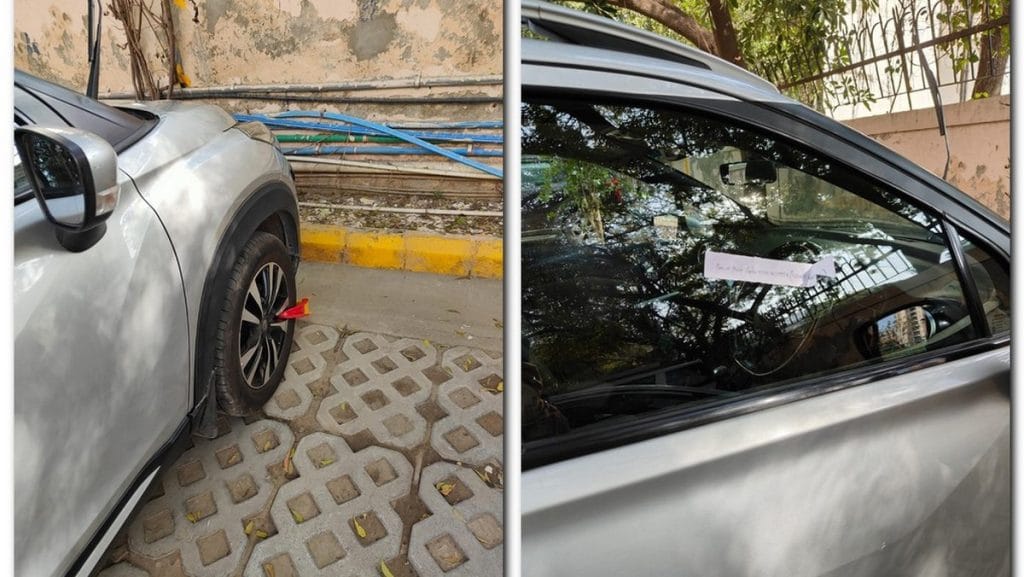
In Orchid Petals, Sector 49, Gurugram, resident Atul Gulati said he parked his car at night in the dedicated open and common area for residents and visitors. The next morning, it was clamped. A notice was pasted on the car asking him to pay Rs 500 to have it unclamped.
“They said I hadn’t taken a night pass and that the spot was not designated for me. However, I had been parking in the same space for months,” said Gulati.
As he was in a rush to drop his daughter to a college event, Gulati paid up without argument.
“This is what we face during emergencies. These rules and RWAs are making us feel caged,” he said, adding that residents are sometimes warned that failure to pay penalties could lead to electricity being cut off.
Residents also said such rules are often enforced without clear signage or prior notice. Many diktats are not even part of the formal code of conduct.
“These rules, which in some cases may even go against existing laws and regulations, are creating more problems instead of making life easier within these societies,” Gulati said.
(Edited by Asavari Singh)