





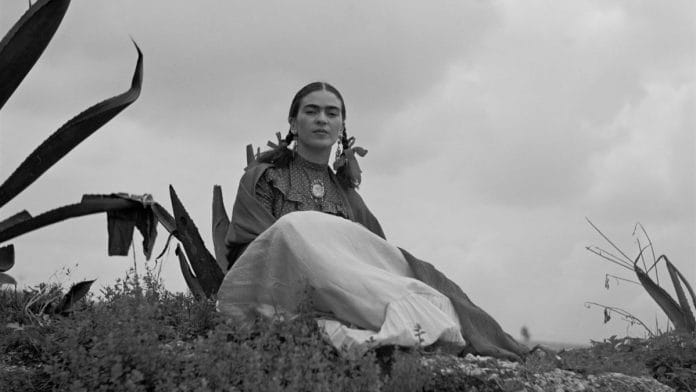



New Delhi: In Mexico, painter Frida Kahlo can be found in murals, markets, and memory. So when news came that some of her most intimate works might be sent abroad for years, her countrymen felt that they were losing a vital part of Mexico.
For decades, the Gelman Collection existed as an important set of Mexican artworks that few got to see. Created by Jacques and Natasha Gelman in the mid-20th century, it includes 18 personal paintings by Frida Kahlo and 300 Mexican artworks by Diego Rivera, José Clemente Orozco, and David Alfaro Siqueiros, along with photographs by Guillermo Kahlo and Manuel Alvarez Bravo.
After staying mostly private since 2008, the collection was bought in 2023 by the Monterrey-based Zambrano family. In January 2026, it entered a partnership with Banco Santander to manage 160 works, now called the Gelman Santander Collection.
Under this agreement, Santander handles conservation, research, and exhibitions of the artworks. The first show is at Mexico City’s Museo de Arte Moderno, which will run until July 2026. It includes 10 Kahlo paintings, such as Self-Portrait with Monkeys (1943) and Self-Portrait with Necklace (1933). These works had not been seen in Mexico for 18 years.
At first, this seemed like good news. The plan was to take care of the artworks, study them, and finally show them to the public. But things soon changed.
After the exhibition, the collection is set to travel to Santander’s Faro Santander space in Cantabria, Spain, from June 2026 to 2030, with a possible extension.
Although Mexican law allows art to be sent abroad temporarily, it is usually only for a short time. A long, renewable agreement made critics worry that the artwork might be gone for too long.
Over 350 Mexican artists, historians, and cultural figures across Mexico united in protest, accusing the authorities of an “institutional blunder” by allowing the collection abroad without public consent.
Kahlo’s work had been declared part of Mexico’s “artistic monuments” in 1983, barring permanent export and mandating repatriation by the National Institute of Fine Arts and Literature (INBAL).
Historian Francisco Berzunza, co-author of an open letter signed by nearly 400 individuals, emphasised the gravity of the situation.
“Kahlo is the most important artist in our nation’s history, yet her work is more accessible abroad than in Mexico. The decree was specifically created to prevent private collections from being taken out of the country or dispersed. That is why we are defending it so fervently,” he said.
Also read: Sikkim’s Lepcha hat to Naga shawl—new exhibition explores the stories behind Northeast textiles
‘I paint my reality’
Born in 1907 in Coyoacan, Mexico City, Kahlo filled her art with the colours, symbols, and life of Mexico—from busy markets and Aztec motifs to the political energy of post-revolutionary Mexico. Her paintings reflect her life, Mexican identity, indigenous roots, and personal pain.
Kahlo often wore Tehuana dresses from Oaxaca, celebrating Zapotec culture, and her paintings are full of native plants such as maguey and monkeys, which reference pre-Columbian traditions.
In self-portraits such as Self-Portrait with Monkeys (1943) from the Gelman Collection, she combined these cultural symbols with her own physical pain—from polio, a bus accident in 1925, and more than 30 surgeries.
Her connection to Mexico grew through her marriage to Diego Rivera, the muralist who celebrated Mexicanidad (Mexicanness) and her activism in the Communist Party alongside her father, Guillermo Kahlo, who photographed indigenous landmarks.
She rejected being called a European surrealist. “They thought I was a Surrealist, but I wasn’t. I never painted dreams. I painted my own reality,” she said.
(Edited by Prasanna Bachchhav)