





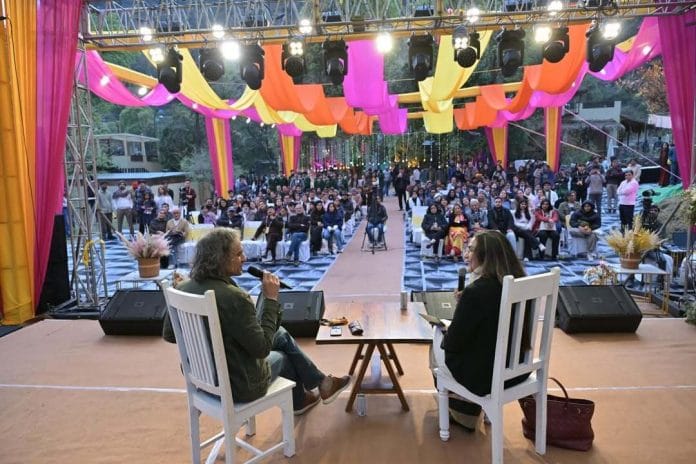



New Delhi: From poetic conversations and panels decoding geopolitics to workshops and a rock performance, the Nainital Literature Festival turned the quiet hill town into a vibrant cultural hub. The event’s warmth drew people not only from Uttarakhand but abroad, too.
Held at the picturesque Kaansya Resort in Nainital, the second edition of the festival, founded and directed by literary curator Amitabh Singh Baghel, celebrated literature from 13 to 15 March in the foothills of the Kumaon Himalayas. It brought together a diverse array of authors, filmmakers, influencers, poets, and performers. Food historian Pushpesh Pant, also the mentor of the festival, mythologist Devdutt Pattanaik, poet Jerry Pinto, filmmakers Imtiaz Ali, Vibhu Puri, and Nagesh Kukunoor, former parliamentarian Subhashini Ali, Australian author John Zubrzycki, and marketing consultant Suhel Seth, among others, were present at the three-day festival.
While steeped in literature, the sessions during the three days wandered freely into politics, history, wars, mythology, filmmaking, and AI.
On the first day, as amateur writers, school students, and families trickled in, the early morning chaos gave way to a soulful flute recital by BV Balalsai, setting the tone for the day.
Soon, the stage was taken over by an all-woman panel of authors — Shunali K Shroff, Vasundhara, and Richa S Mukherjee — that unpacked the craft of humour and satire in storytelling.
The discussion kicked off with a disclaimer: “This is not a male-bashing session,” said Shroff. “Patriarchy is not perpetuated by men alone”.
The authors then went on to explain why humour is a male pursuit and why women satirists don’t find an audience, leaving the guests with some uncomfortable questions.
From World War II to Jab We Met
The line-up of panel discussions throughout the three days was interspersed with poetry, dance, music, and storytelling. While a panel, ‘Forgotten In Chains’, turned the mood sombre by bringing to life the lost stories of Indian prisoners of World War 2, writer Kena Shree infused the evening with romance through her effortless storytelling on love, loss, and longing.
The second day was marked by some fiery and unapologetic sessions.
“I don’t believe that women are better than men. Women have proven themselves to be as awful as men,” said CPI(M) leader Subhashini Ali, as she took the stage with three other female authors. All of them talked about representation, crimes against women, and navigating the challenges of “charting your own path as a woman”.
Even before the audience could decide to agree or disagree with the authors’ statements, Seth delivered a scathing speech on ‘Brand India’, saying that the country’s only soft power was the “trashy Bollywood”. He argued that while India had become economically relevant lately, it still fails to market itself effectively.
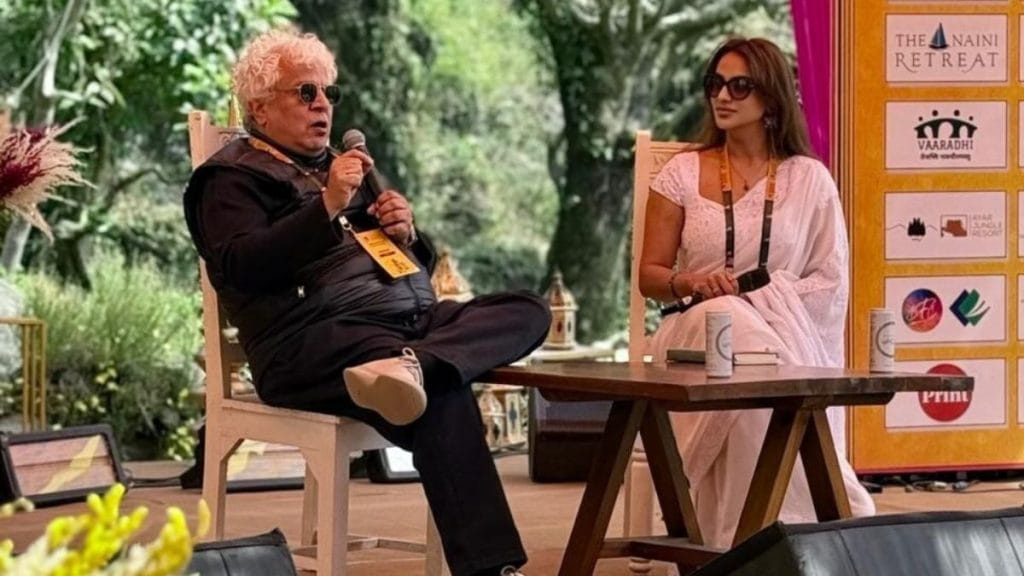
Post lunch, during ‘Hyderabad Connection’, filmmaker Nagesh Kukunoor reflected on his journey in the industry — from how he had to shoot Hyderabad Blues (1998) in just 17 days due to a funding crunch to why he never revisits a film after making it.
As the sun went down and the cold had set in, author Amitabha Bagchi, writer Ashok Pande, poet Jerry Pinto, actor-poet Murad Ali, and Baghel assembled on the stage for what can be described as a poetic face-off—minus the aggression.
The third and final day proved to be a treat for cinephiles, amateur filmmakers and those who still can’t get over Jab We Met’s Geet, as film director Imitiaz Ali showed up for a fun chat and a longer-than-usual Q&A session.
All eyes remained glued to the stage for well over an hour as the director took the audience behind the scenes of Amar Singh Chamkila (2024), and talked about his favourite characters, common themes in his films, sufism, poetry, and responsible filmmaking.
Also read: A Bhutan bar mixes local stories and culture in its cocktails
An open–to–all event
Most literature festivals are conducted with one primary goal — to assemble thinkers, authors, poets, and celebrate literature. But the Nainital Literature Festival is also making sure that such events can be accessed by all, marking this year the second edition that was kept ticket-free.
“The idea behind keeping the festival ticket-free came from my passion for promoting literature and making it inclusive, accessible to one and all,” said Baghel, who also curated the Koshala Literature Festival in Lucknow in 2024 and the Jindal Literature Festival in Hisar, Haryana, last year.
But hosting a literature festival comes with its challenges, especially when it’s an independent event without the backing of a major banner.
“Funds are a very big challenge. We don’t get sufficient support from organisations at large and have to rely primarily upon our friends and personal contacts,” said the festival curator.
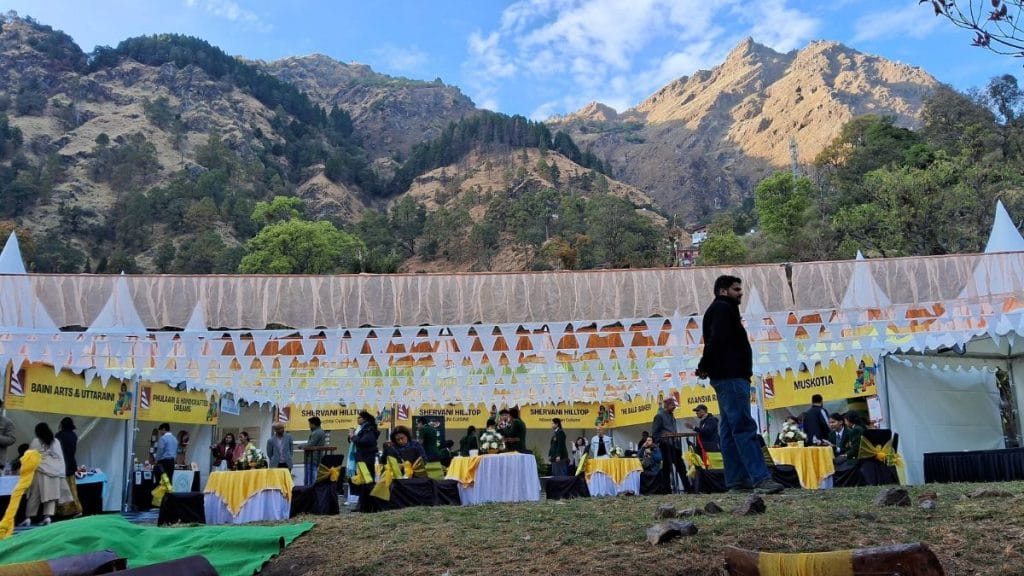
For Baghel, while a culturally rich city like Lucknow has plenty of platforms to celebrate literature, there was a need to bring a festival to Hisar and Nainital.
“There is a dearth of social and cultural activities of this scale in these two places,” he said, adding that when it comes to Nainital, the town doesn’t just offer pleasant weather and serene lakes, but an intimate setting.
“That particular setting makes it very easy for the speakers and audience to connect,” Baghel added.
The festival didn’t chase exclusivity. Instead, it made sure that every session — be it Jerry Pinto’s evocative poetry or Devdutt Pattanaik’s challenging popular beliefs — was followed by a Q&A and an informal meet-and-greet between speakers and attendees, fostering conversations both on and off the stage.
(Edited by Saptak Datta)