








Jaipur: A jewellery museum needn’t just be about elite social groups, wealth and beauty. That’s the key takeaway from Jaipur’s Amrapali Museum.
The story of Indian jewellery is, at its heart, India’s history. The Harappa Gallery at Delhi’s National Museum is replete with displays of jewellery from the Indus Valley Civilisation. The National Museum of Egyptian Civilisation in Cairo exhibits jewellery of the great pharaohs and queens. The City Palace Museum in Udaipur displays jewellery from the royal family alongside weapons.
The Amrapali Museum dedicated a quiet evening to Indian jewellery and heritage to introduce to the world a new floor of their museum. It offered a glimpse into Jaipur’s heritage with the city’s rich and famous in attendance, dressed in their brocade and banarasis.
“Jewellery is a living archive of India’s social, spiritual, and artistic history. Each ornament carries stories of trade routes, rituals, beliefs, craftsmanship, and the everyday lives of the people who wore them,” Tarang Arora, CEO and Creative Director at Amrapali Jewels told ThePrint.
The museum was bathed in soft lighting, with guests dressed in their finest showing off heirloom jewellery pieces. Toting glasses of wine, patrons made their way through the three floors of the museum and to the Amrapali store.
From a crown for a religious idol, a large-scale trishul and a silver carved door, to intricately embroidered gold and silver textiles, a large palki (palanquin) for idols and up-cycled jewellery, the museum traces the many ways in which gold and silver have been an integral part of Indian culture and heritage.
The evening titled “A Journey Through Silver & Gold” was a nod to the recent book Silver & Gold: Visions of Arcadia by Usha R Balakrishnan. It was written for and about the Amrapali brand and also about its new exhibition, a focal point of which is the use of silver and gold in religious works, textiles, jewellery but also objects of daily use.
Selfie spot to upcycled jewels
Arora said that the “new floor is designed as a journey rather than a single gallery.” It starts from the staircase on the second level basement, where displays of tribal and traditional jewellery lead the visitor to the hall below, allowing for an immersive experience.
He described the new floor as “a conversation between the past and the present, where traditional forms meet contemporary craftsmanship.” The pieces on display here range from silver to beaded ornaments used across the country by different communities.
One portion of the display titled “Recomposed Histories”, is dedicated to pieces which were damaged over time and were later fixed. It’s aimed at “building compositions from legacy elements”. The reimagined pieces emerge from historic craftsmanship and breathe new life into an otherwise lost or fragmented piece.
The new floor also features an immersive experience and an audio-visual hall, along with a designated selfie spot.
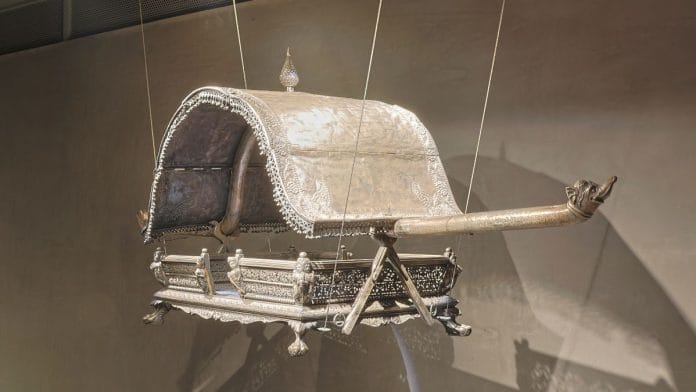
The star of the selfie spot is a small silver palki from Gujarat, which was used during Jain rituals where the idol was taken around the town/village during religious processions.
Another fascinating object on display is a conch shell from either Nepal or Tibet, which was also used for religious purposes. It is assumed to be a Buddhist religious item, adorned with gold and semi-precious stones. And a silver engraved necklace for an elephant, presumably used by royalty in North India.
“Jewellery does not exist in isolation.” “Displaying only jewellery would have presented an incomplete narrative. By bringing together pieces of history from across the Indian subcontinent, it offers a fuller, more immersive context, where jewellery is seen not merely as adornment, but as a reflection of civilisation, identity, and continuity across time,” Arora explained.
Also read: Inside Tamil Nadu’s Karaikudi, India’s first private museum dedicated to Chettinad Jewellery
Religion and jewellery
The museum also houses several pieces of religious art and artefacts. Sections such as “Silver in Practice and Ritual” explain how the metal was valued not just for its “beauty and purity but also its cultural and protective significance across rites of passage”.
“Much of India’s jewellery traditions evolved in close dialogue with religious imagery. Ornaments worn by deities inspired those worn by people, and sacred symbols found their way into everyday adornment. By foregrounding religious art, we want to show this deep interconnection between devotion and design,” Arora explained.
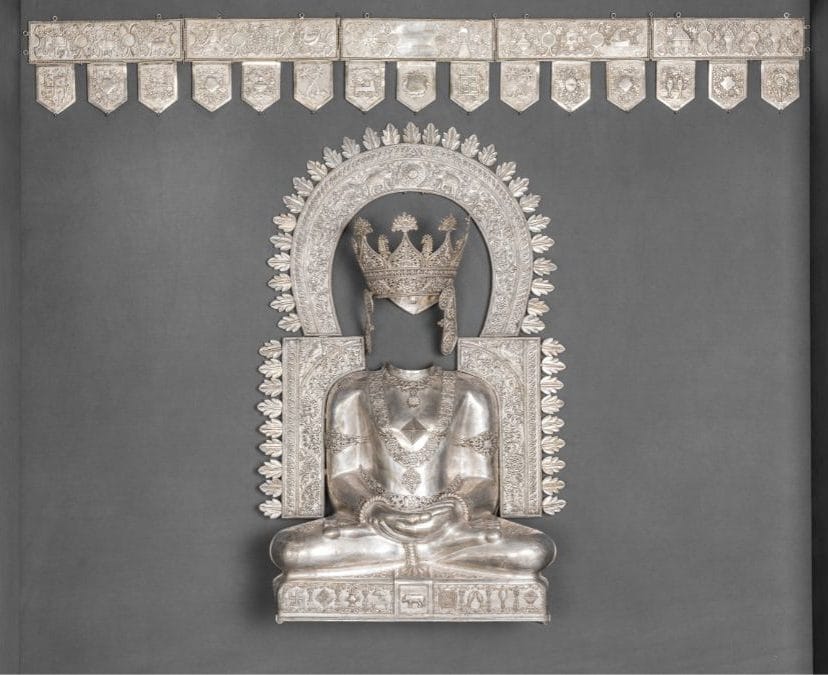
The first basement floor, accessed via a spiral staircase, greets the visitor with a large display of religious jewellery and temple art, setting the tone for the exhibition that follows. The highlight of the display is a faceless silver figure shield at the centre that was used for deities in Jain temples. The idol cover is supposed to represent Vimalanatha, the thirteenth Jain Tirthankara, and is said to be from Gujarat.
Also read: What’s the big deal about the Harappa Dancing Girl that even a replica is stolen
The museum
The Amrapali Museum in Jaipur opened its doors on 20 January 2018. It has the largest collection of historic Indian and tribal jewellery in the world, and currently has approximately 1,500-1,800 objects on display, spanning from the early 18th century through the 20th century, with some exceptional pieces that are even older.
Founders Rajiv Arora and Rajesh Ajmera collected the works displayed in the museum over the years; some were family heirlooms, others they procured during their travels across the Indian subcontinent.
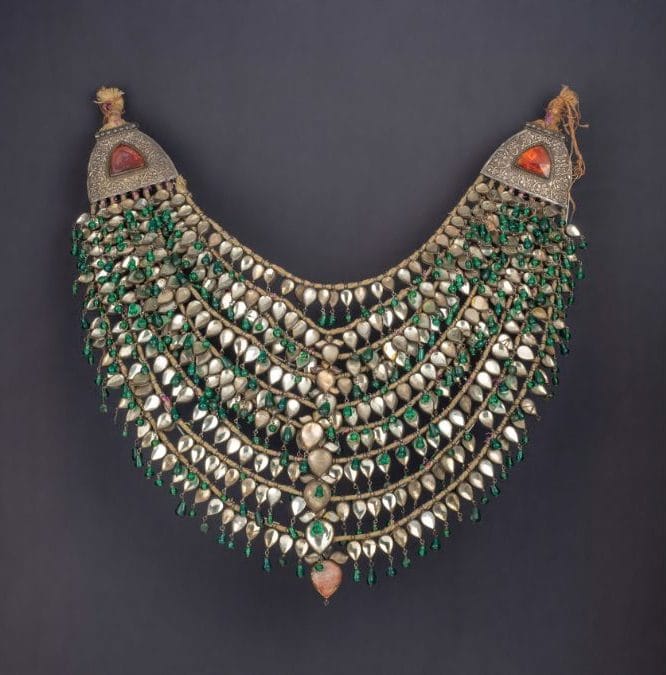
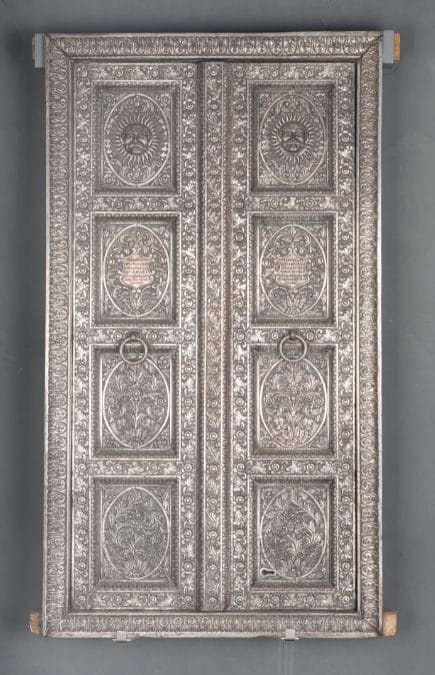
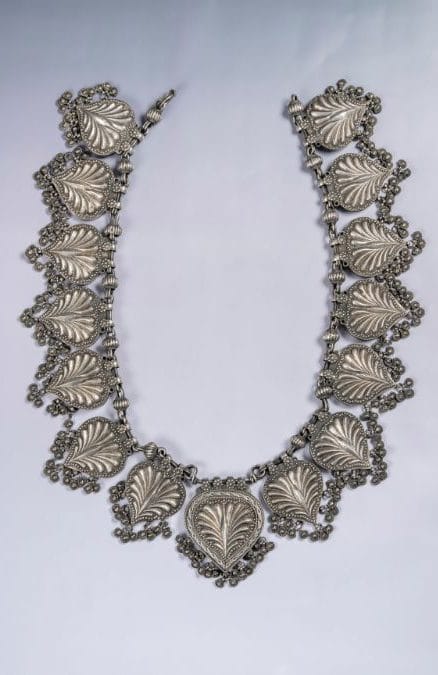
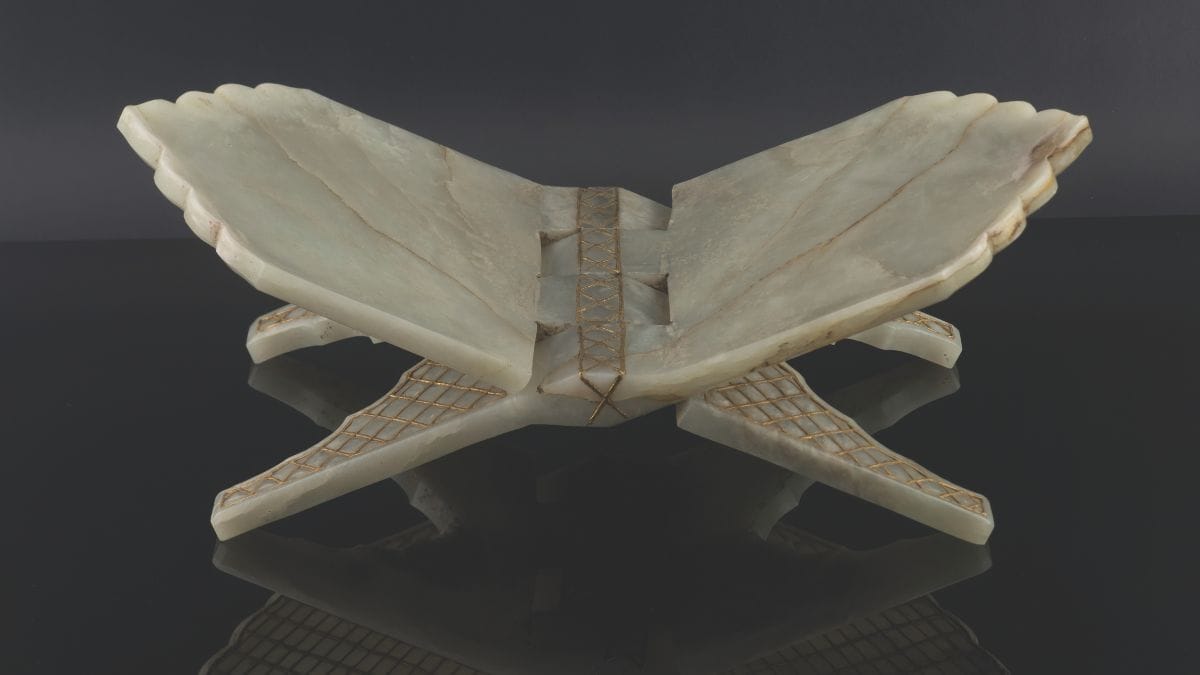
The older part of the museum include stunning artefacts such as a 20th century Gujarati silver chariot with elaborate Jain carvings and iconography; a 19th century multi-strand haar (necklace) from either Awadh or Varanasi; a jade bookstand or rahel presumably for a Quran from Northern India and of Mughal origin; a silver temple door from Punjab; a yellow cloth with an ornate embroidery of the Hindu deity Surya Dev and his chariot; and an edict from King Edward VII, found in Calcutta and written by the King of Faridkot in 1905.
(Edited by Theres Sudeep)