





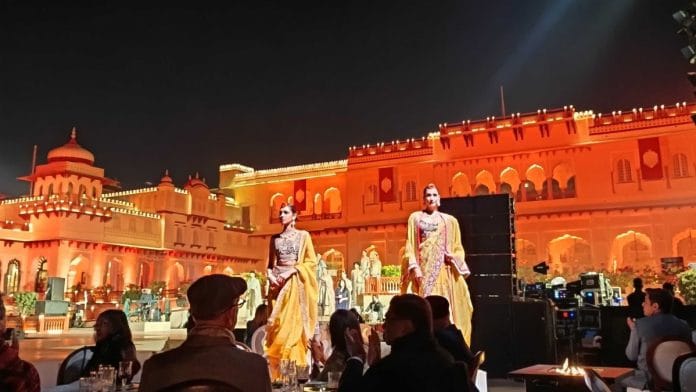



Jaipur: The Mughal lawns of Rambagh Palace were decorated like a Sabyasachi bride—each corner glowing with just enough light. The anchor on stage was literally wearing her wedding lehenga, designed by the Bengali designer. And shining sarods on stage were in the company of their masters—Amaan and Ayaan Ali Bangash. Uniformed servers glided past electric fire pits, anticipating the needs of an audience made up of the country’s wealthiest people—C-suites, artists, media heads, socialites, and members of the royal family. It was nothing unexpected; the Taj Hotels property was hosting the group’s inaugural heritage festival, Ninaad.
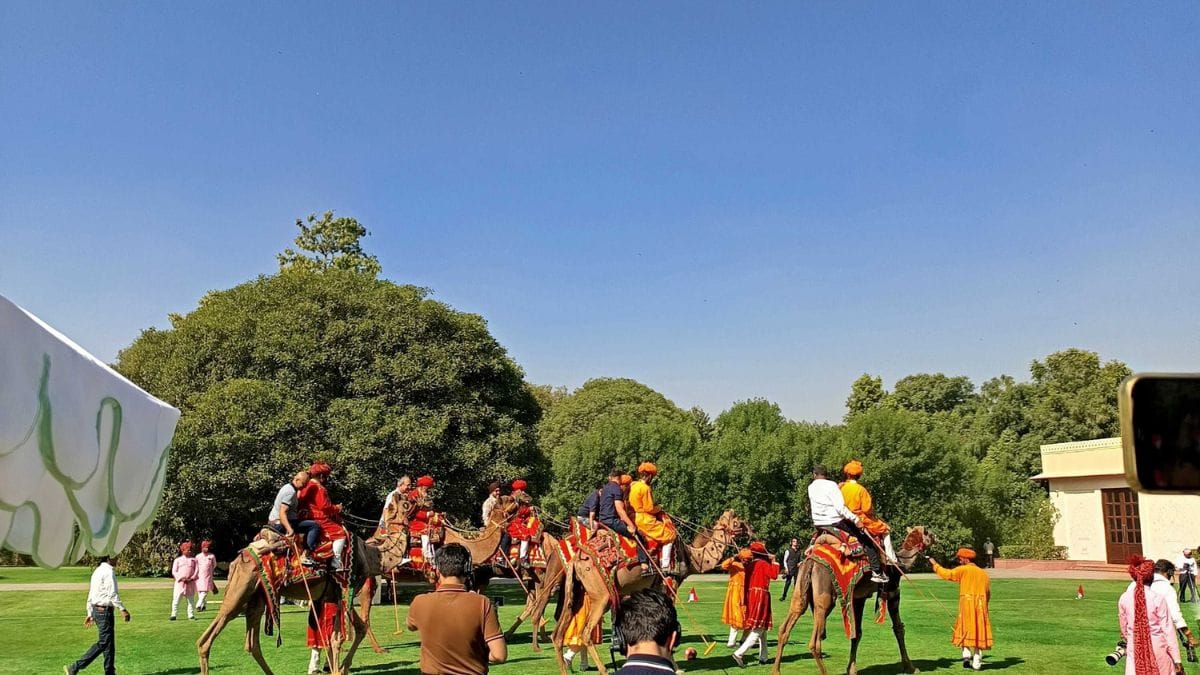
From a royal dinner under the stars, an afternoon of camel polo, Anamika Khanna’s couture showcase and poet-comedian Shailesh Lodha’s performance—each event of the two-day festival was curated with deliberate extravagance. Conceived over months, Ninaad is the brainchild of Puneet Chhatwal, CEO of Indian Hotels Company Limited—an exercise in cultural patronage where scale and precision mattered.
As Chhatwal was giving his welcome speech, he pointed out how the crowd came from across the world—a representative from the British High Commission was sitting right in front, one individual had travelled from the Baltics. Gayatri Devi’s grandson Maharaj Vijit Singh was also present, so was Kanwar Rameshwar Singh Jamwal—one of the biggest names associated with the Tata group and his celebrity columnist wife Nisha JamVwal.
That access, however, came at a price. While the guest list was largely invitation-only, those without one could buy their way in—for Rs 5 lakh plus taxes. By the time the festival began, it was clear that almost everyone in the room already knew each other, a reminder of how small the upper-class world is. There was only one problem that had coloured the festivities—it was all happening during the IndiGo fiasco. A lot of guests couldn’t make it. Chhatwal called it “tumultuous times”.
“If these flight cancellations happen next year, we will organise chartered flights for our guests,” he said, to a knowing laughter. But considering the high-profile guest list, one can assume that he wasn’t joking. Nothing but the best was offered to the guests, whether it was meals crafted by master chefs, or the jewellery showcase at the Gyan museum—it was all about treating people with Rajasthan’s rich traditions.
“The dialogue between music and architecture, artistry and legacy, is what Ninaad aspires to achieve, and seeing it come alive in that moment was deeply fulfilling,” said Parveen Chander, Executive Vice President, Commercial, of the Indian Hotels Company Limited.
Also read: The Taj Hotel: Jamsetji Tata’s love letter to his hometown
Custodians of culture
At Ninaad, exclusivity was intentional. Taj, which calls itself the custodian of Indian heritage, is out to protect traditions. But not everyone has access to it. Shailesh Lodha, who, by the way, gave the festival its name, was one of the few to acknowledge this dynamic aloud. In Sanskrit, Ninaad means the sound of flowing water. Tasked with making the room laugh, he remarked that this was an audience that only manages to politely smile at the punchline.
“Why aren’t you guys laughing? Have you all forgotten how to do that?” he said at the beginning of his set, which wasn’t initially landing as he had expected. Between asking people to get off their phones and playfully mocking the Hindi language used by the English-speaking patrons, Lodha was trying to invite them into a larger conversation—about class, legacy, and the dire state of comedy and poetry in India. To stitch these threads together and make them more palatable, he often reached for a familiar device: Jokes about wives, a reliably responsive trope for an Indian audience.
He was confident that he would receive a standing ovation by the end of his set. In the Maharani Mahal of the five-star hotel, he was commenting on the death of whimsy in society brought on by cellphones, and saying things like “jebo se insaan bade nahi hote (Having more money doesn’t make people great)”. Addressing the organisers, he also joked about how luxury hotels stress him out. At one point, the poet narrated an incident in which a staff member picked up a five-rupee coin he had dropped, obliging him, by the unspoken rules of such spaces, to tip Rs 50 in return. The hotel staff waiting by the door couldn’t stop laughing.
Making a commentary on the comedy scene of the country, Lodha dropped a lethal verse to roaring claps: “Gaali se taali nahi chaiye, hum kavita leke khade hue hain (I don’t need crass jokes to win applause, I am standing here with my poetry).” But even while offering family-friendly material, Lodha didn’t want to be recorded.
“Please turn away those cameras,” he eventually requested. They were making him “scared”. Even after being told that it was all being recorded for internal viewing, he wasn’t convinced. “Nothing is internal in this climate.”
Also read: 200-year-old lodge, dolphin-watching: Travel brands luring rich Indians
Vegan requests, sporty executives
The weekend wasn’t just about sit-down dinners, free-flowing alcohol, and Starbucks lattes. As Rambagh’s 400 peacocks called from the gardens, the rich and famous traded formality for a touch of sport—camel polo. As men and women competed against each other between two goal posts, the crowd was hooting and clapping to show support. In the backdrop, the hotel staff was quietly rushing to present the Mediterranean lunch spread. Hospitality peaked here.
If a dustbin lay just out of reach, a waiter would quietly step in to carry it themselves. Staging an event like Ninaad required an entire army of such attentive professionals. Culinary students were also drafted as volunteers, hopping eagerly from table to table–it was all a seamless orchestration.
On day one, during the royal feast of Rajasthani delicacies, one guest said that she couldn’t eat any of it—she was vegan. Moments later, a waiter appeared with a homely plate of rice, dal, and mixed vegetables. The only people who didn’t get this special treatment were the models from Anamika Khanna’s showcase, who were to stay away from the elite crowd and slip out from the back after the show. Asked to eat where the staff dinner was organised, one model still tried her luck at the main bar.
“Sorry, we have been told not to serve artists”—she was turned away. Rude, perhaps—but entirely on-brand.
(Edited by Theres Sudeep)