





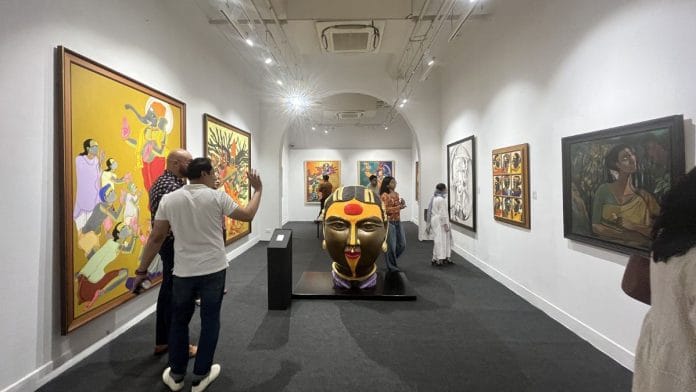



New Delhi: While most of Bikaner House descended into chaos, prepping for the Rajasthan Utsav, one area remained unflappable — the ShowKeen exhibition by AstaGuru auction house. The event was a “taster” to understand the different palates of Delhiites.
The exhibition by the auction house on modern and contemporary Indian art was on display from 14-15 March, with a special preview on 13 March.
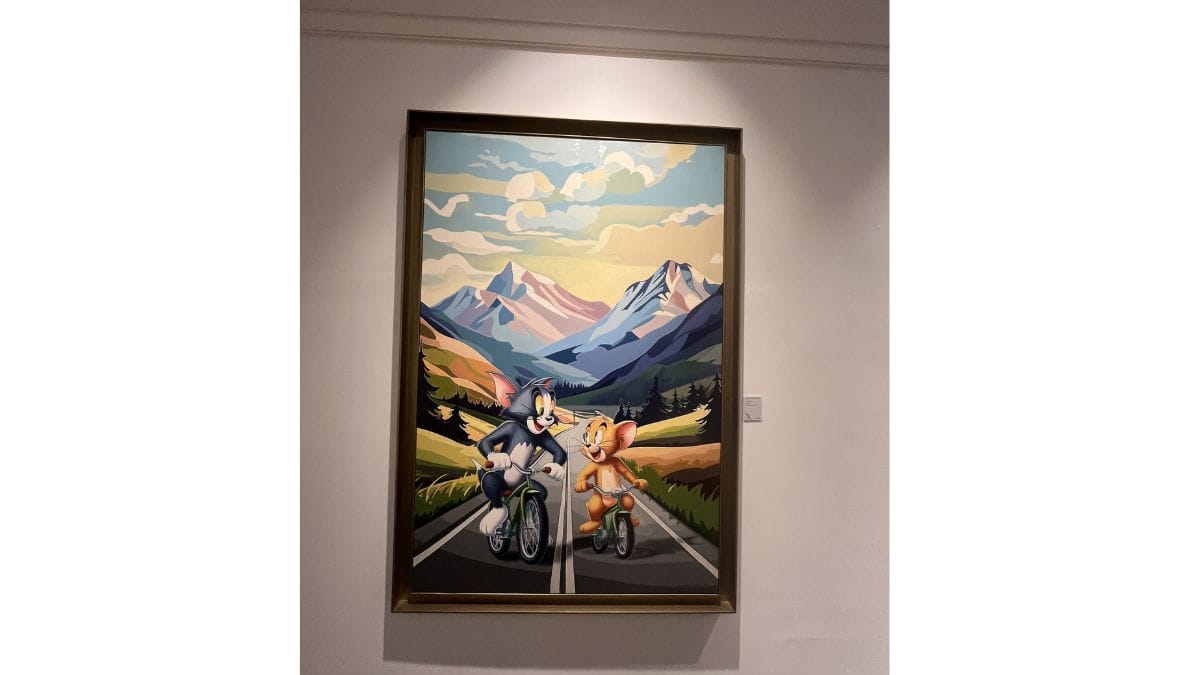
Walking into the hall, visitors were welcomed by various sculptures by Himmat Shah on either side. Straight ahead, there was a large painting of the cartoon duo Tom and Jerry by artist Suryakant Lokhande, highlighting the range of the pieces on display. The exhibition was well attended by college students, families, and the elderly.
Following ShowKeen’s success in Mumbai, it was the first of its kind in the city and was catered to fit the varying tastes of its residents. “After the overwhelming appreciation we received in Mumbai, bringing ShowKeen to Delhi was a natural and exciting progression,” said Manoj Mansukhani, Director of Marketing at AstaGuru Auction House.
“Delhi has long been a vital hub for art and culture. With this expansion, we aim to deepen our engagement with collectors and patrons across regions, offering them an elevated and immersive experience of exceptional art,” said Mansukhani.
The artists on display were either sourced or maintained a close working relationship with the auction house.
The first floor
Mansukhani explained that the curatorial aspect of the exhibition, “Presenting at Bikaner House brought a unique character to the experience. The setting allowed for a more immersive engagement with modern and contemporary Indian art, where collectors could slow down, reflect, and engage in meaningful conversations. It reaffirmed our belief that the right environment plays a vital role in how art is experienced and ultimately, how it is collected.”
Featuring artists such as Jagannath Mohapatra, KK Hebbar, Thota Vaikuntam, and CD Mistry, among others.
Mistry’s distinct style can be seen in two paintings on display, which, from afar, look as though they were tufted or painted on a fabric. Deeply influenced by temple murals, wall paintings in villages, and textiles, the Gujarati artist’s inspirations are visible in his depictions of motifs in bright, bold hues.
Hebbar’s surrealism can be studied in one quiet room featuring his works, including a 24 by 107 inch untitled painting of peacocks made with mixed media on board in 1968. The captivating pieces take up a whole wall and demand every visitor’s attention. Accompanying it on an adjacent wall is a large sun chariot sculpture made with iron.
Also read: What Arundhati Roy said about her 1989 film. ‘Radically different from what goes on today’
The modern masters
Leading to the second floor, the jovial nature of the art changes to something more sombre, starting with an untitled piece by Chittrovanu Mazumdar.
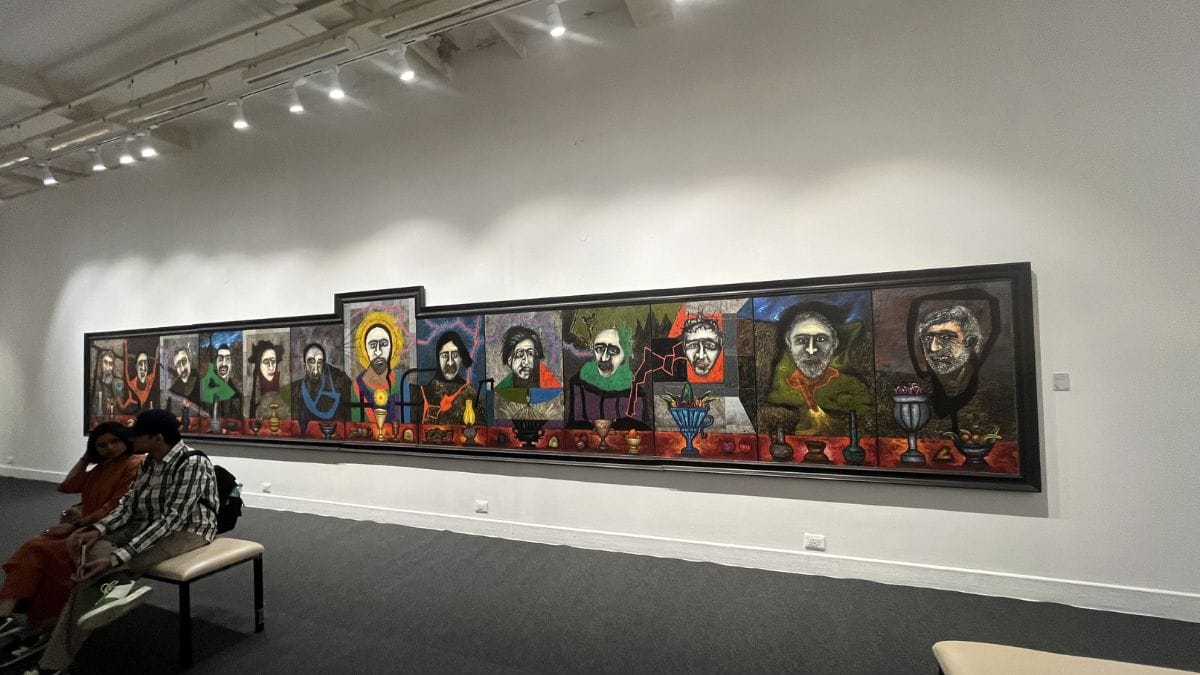
The hallway, framed with several works by Mazumdar, opens to a large hall with Manu Parekh’s The Last Supper taking centre stage. The 54 by 396 inch acrylic and oil on board painting features remarkable portraits of Jesus Christ and his 12 apostles. The stunning details by Parekh demand the attention of everyone who wanders in.
The same room features several of Gurcharan Singh’s works as well. The Punjabi artist’s figurative paintings are reminiscent of Renaissance paintings and a comic strip.
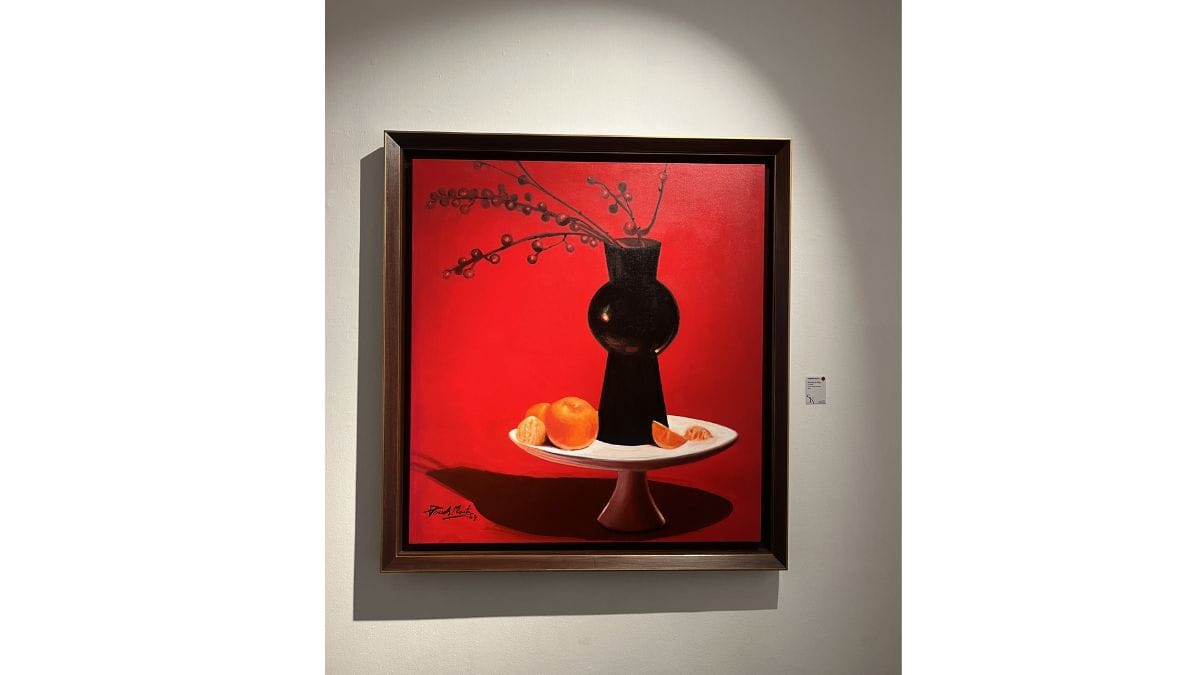
The adjacent room features Paresh Maity, including a bronze sculpture titled The Grace and a realist painting from 2009 called The Life in Still. Other works by the artist grace the walls and remind one of bygone eras along the Varanasi Ghat.
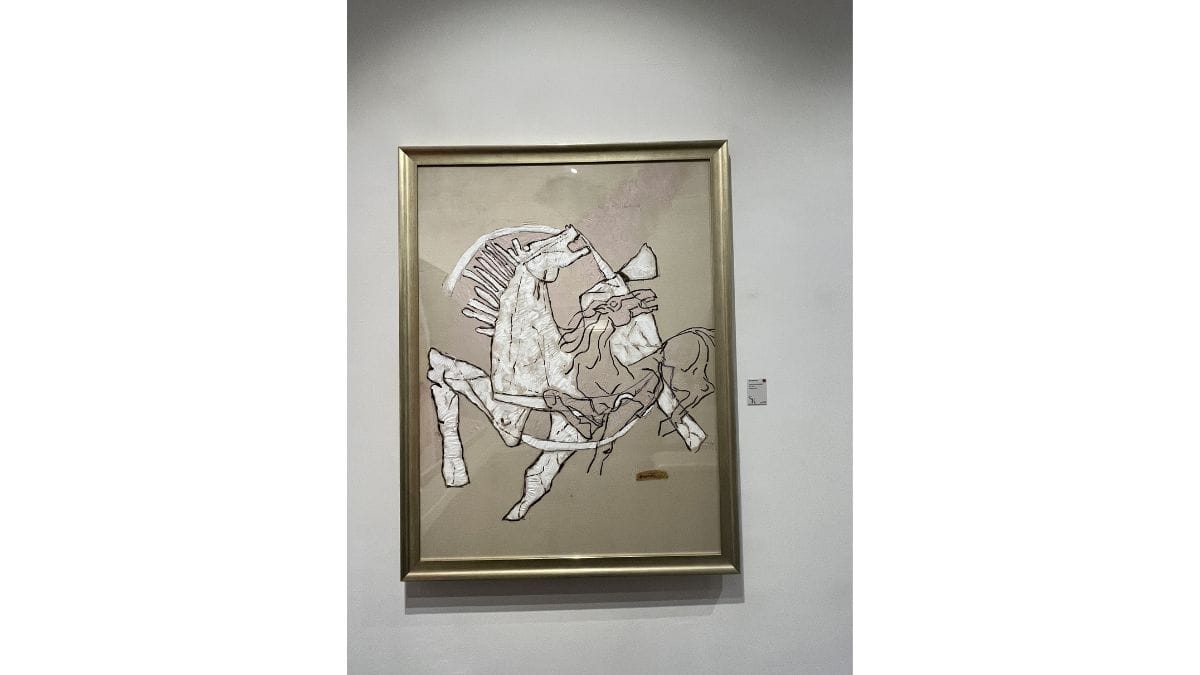
The last hall opens to two large works by MF Husain. One is an untitled acrylic on board, and another features his iconic horses. The exhibition also boasts a portrait of former Prime Minister Jawaharlal Nehru by Husain.
The hall had several works by Krishen Khanna on display, including a small bronze statue of a boy playing the trumpet titled Shiv Kumar Sippy Trumpet Walla. Khanna’s paintings reflect his interest in music, with many pieces depicting bandwallas (band players).
Ram Kumar is placed at the end of the hall. His pieces remind viewers of a world of black and white pictures or something out of a dream. One painting in particular resembles a house from the film The Cabinet of Dr Caligari (1920).
Delhi-based interior designer Soumya, who is also an artist, learnt about the exhibition from Instagram. She came to learn more about the discipline and also to draw inspiration as she ventures into different mediums beyond charcoal.
“I like to see the intricate work. This is also something that is not very traditional. This is also a kind of abstractism. But it shows the time and detail, the kind of work put into making this particular piece of art,” Soumya said while admiring a painting of Mohapatra’s.
Two college students from Madhya Pradesh and Karnataka, who were taking pictures with Parekh’s work, said that they found the exhibition interesting but not educational. “We don’t know much about art. So, it is hard for us to understand what the pictures mean or what the artist is trying to say. We had to look it up.”
The student added that it would have been better had the organisers put placards explaining the works as well.
(Edited by Ratan Priya)