





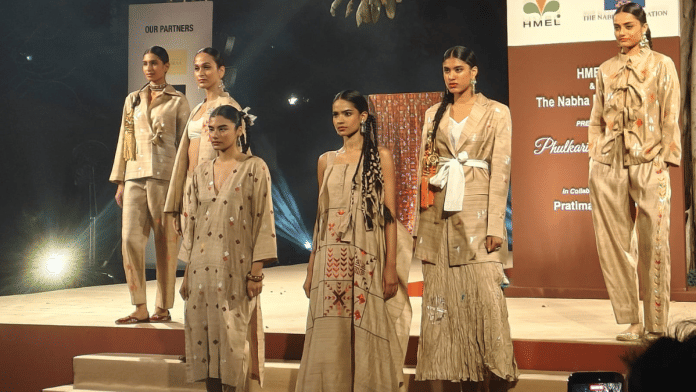



New Delhi: A phulkari-inspired fashion show in Delhi on 25 March brought together a blend of vintage and contemporary styles through the designs of Pratima Pandey. The event ‘The Soul of Punjab, Reimagined’, which also featured an exhibition, live demonstration, and a panel discussion, showcased Pandey’s and the phulkari weavers’ work. The event was organised by the Nabha Foundation in collaboration with HPCL-Mittal Energy Ltd (HMEL) at the National Crafts Museum and Hastkala Academy, with Attorney General R Venkataramani as the chief guest.
Pandey’s collection, titled ‘Marzi,’ reimagines the craft through cropped jackets, dhoti-inspired forms, and sheer skirts, along with the more traditional salwar suits, lehengas, and sarees. From beige to blue, the colour palette also presented the versatility of the fabric used for the phulkari.
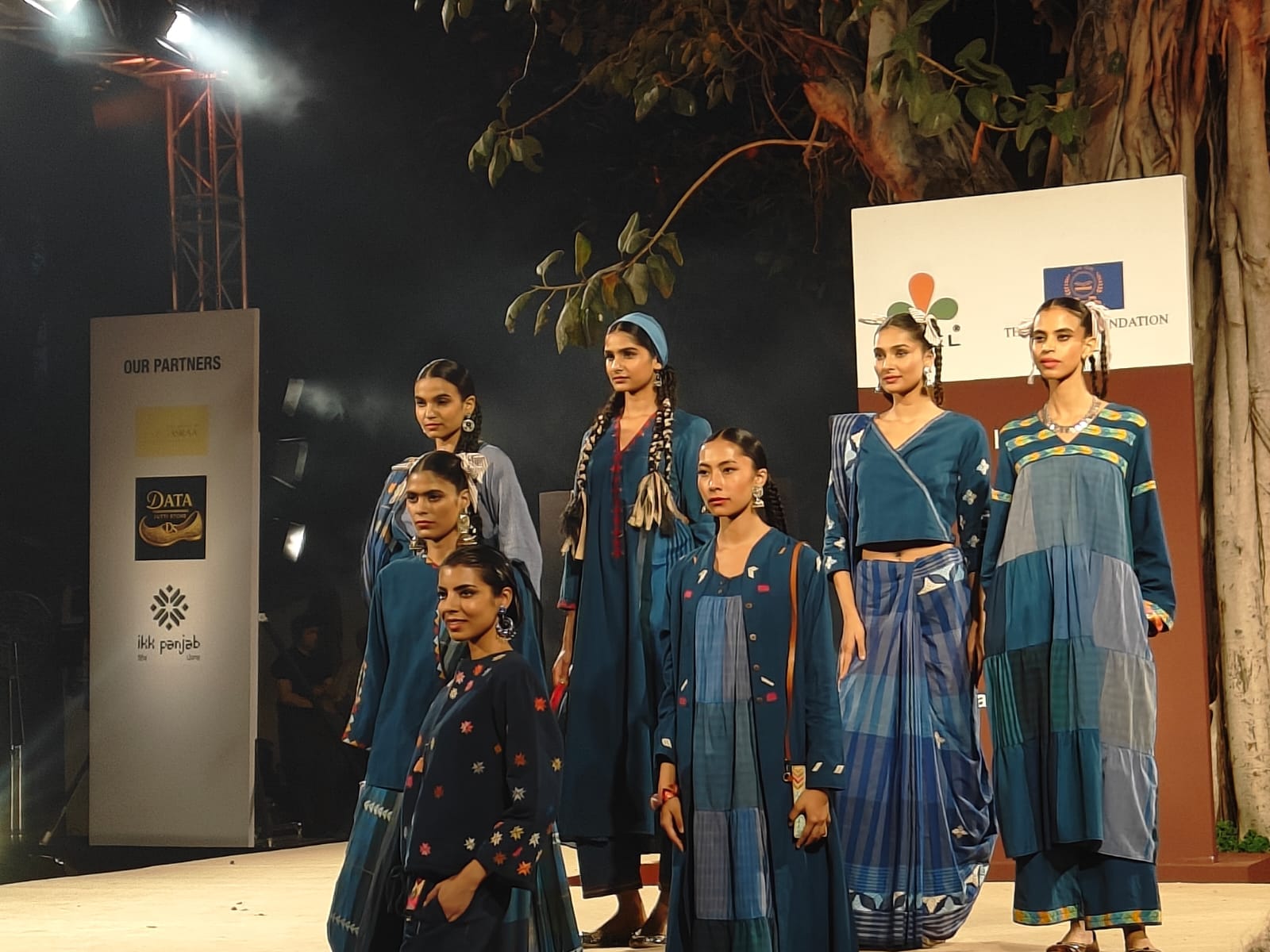
Punjabi singer Amreen Gill set the mood for the evening, starting with the traditional ‘Ik Onkar’ as models trotted up and down the runway, followed by renditions of other popular Punjabi numbers.
Most models were styled in traditional Punjabi fashion, featuring long braids and colourful parandis. They wore embroidered mojaris and held potlis as they walked the runway. Leftover fabric was also made into ribbons to be worn in the hair, the designer later explained.
Venkatramani took the opportunity to express his joy at being present at the fashion show.
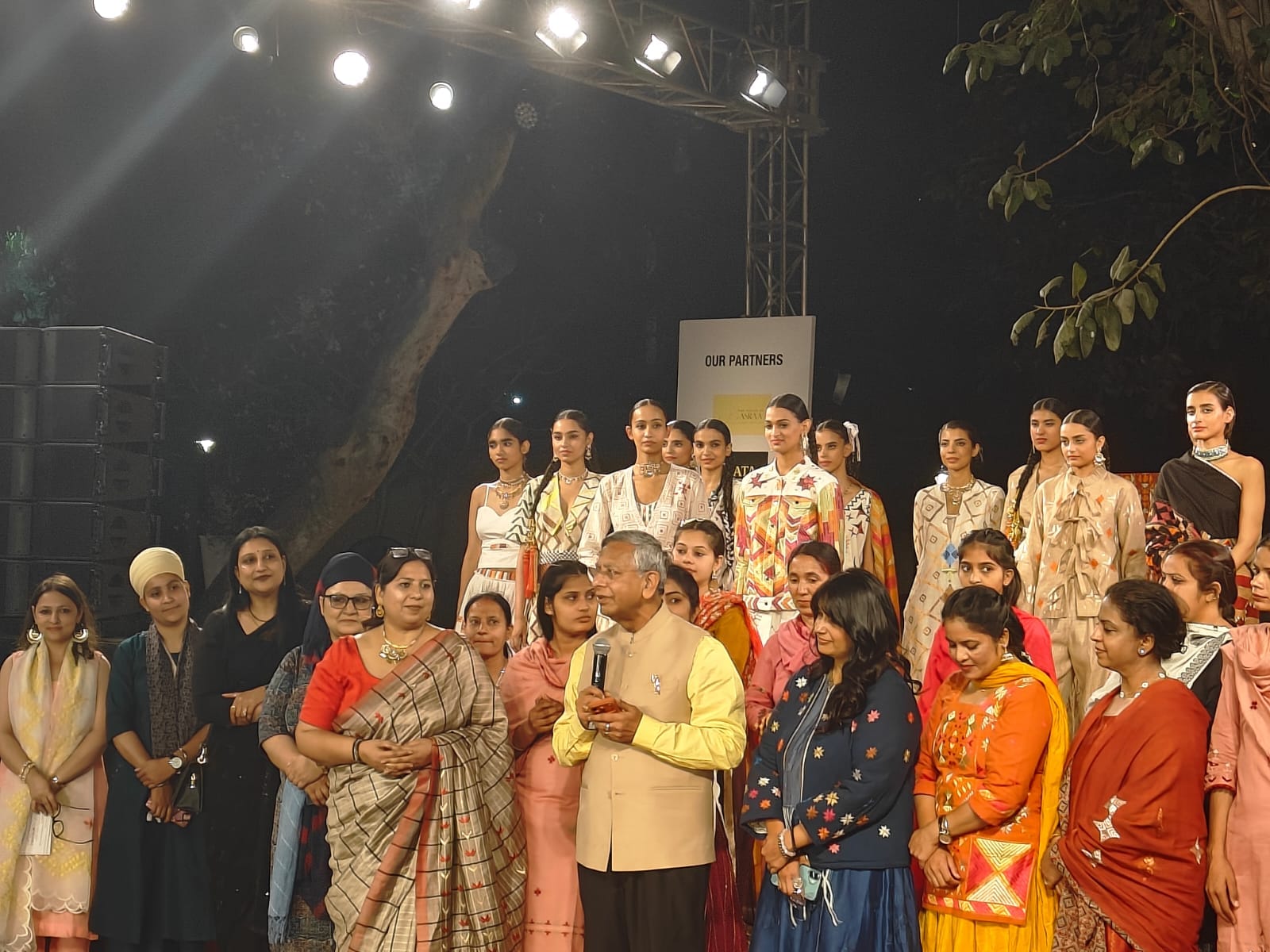
“I’m glad I’m not talking about law and justice. I am glad to be part of the women’s power displayed here,” he quipped.
Showing over telling
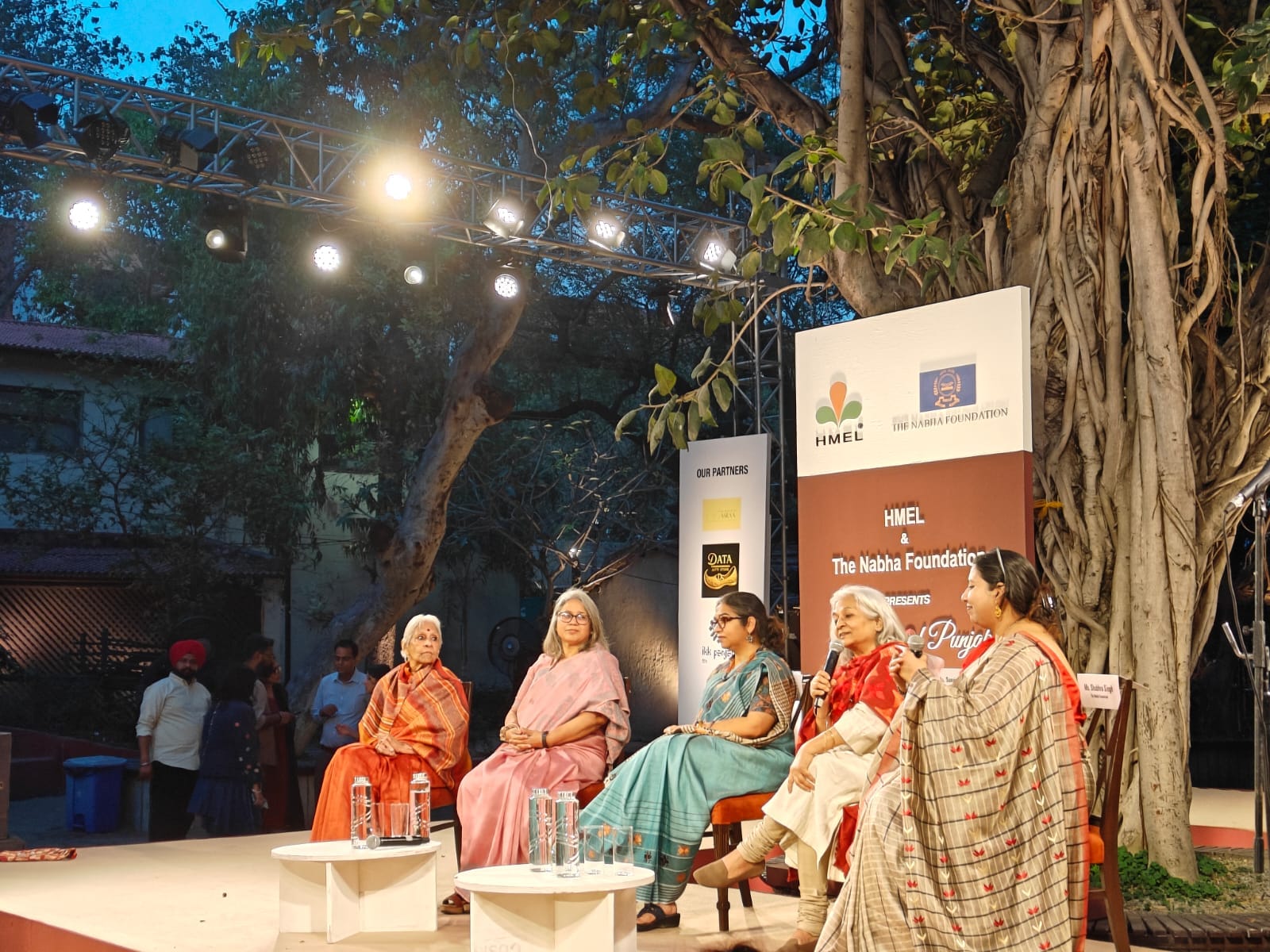
The fashion show was preceded by a panel that included politician and activist Jaya Jaitly, who conceptualised and launched Dilli Haat nearly 30 years ago; designer Sunaina Suneja; Amrit Raj, Development Commissioner of handicrafts for the Ministry of Textiles; and Tanu Kashyap, director general of the National Institute of Fashion Technology (NIFT). Shubhra Singh, executive director of the Nabha Foundation, was the moderator.
While speaking about promoting handicrafts and textiles of India, Jaitly emphasised the importance of “showing” over telling.
“Education is also through seeing how the skill is worked on, and for that, it’s necessary to be genuine in your bazaars or wherever you sell. There is a need to demonstrate, to tell about the process, and then the customer also feels a certain human connection of learning, meeting the maker, and it makes a lot of difference. That’s why it’s good that at least in government programmes, if not in the private ones,” said Jaitly.
She also shared an anecdote about how a Kashmiri shawl maker in Dilli Haat managed to sell his products at a much better price when he sat and wove outside his store, showing off his skill.
Also Read: Threads that bind: A history of Punjab through phulkari embroidery
The importance of phulkari
The panel discussed themes of livelihood, education and sustainability while discussing the work of weavers with the Nabha Foundation.
Phulkari has been an integral part of a woman’s life in Punjab, where phulkari shawls would be gifted to brides as dowry. Religious ceremonies, weddings, and births also used the craft as a form of storytelling or self-expression. Phulkari,
The artisans trained by the Nabha Foundation practice the original techniques of darn stitches done by counting threads, not by using any stamp or tracing on the cloth.
Suneja, who has worked with weavers, mentioned that they have become very skilled and can now make a full motif in under 45 minutes. Meanwhile, Raj highlighted government initiatives to promote handicrafts.
“We are trying to teach the non-customer, and the government is trying to get as many educational videos to schools and colleges. We are also in touch with colleges to start a craft fest, like we have music fests, which the government is willing to fund.
The Nabha Foundation launched the Phulkari Traditional Craft Program in 2007. The foundation seeks to improve the economic and social status of women in Nabha through Phulkari, revive traditional Phulkari craft and popularise it globally and increase economic opportunities for women in Nabha.
The program currently supports sustainable livelihoods for more than 400 women artisans from below-the-poverty-line and marginalised rural families across Punjab. Many of those weavers also walked the runway to loud cheers and claps after the models finished their walk.
(Edited by Insha Jalil Waziri)